
What Does “Feels Like” Temperature Mean?
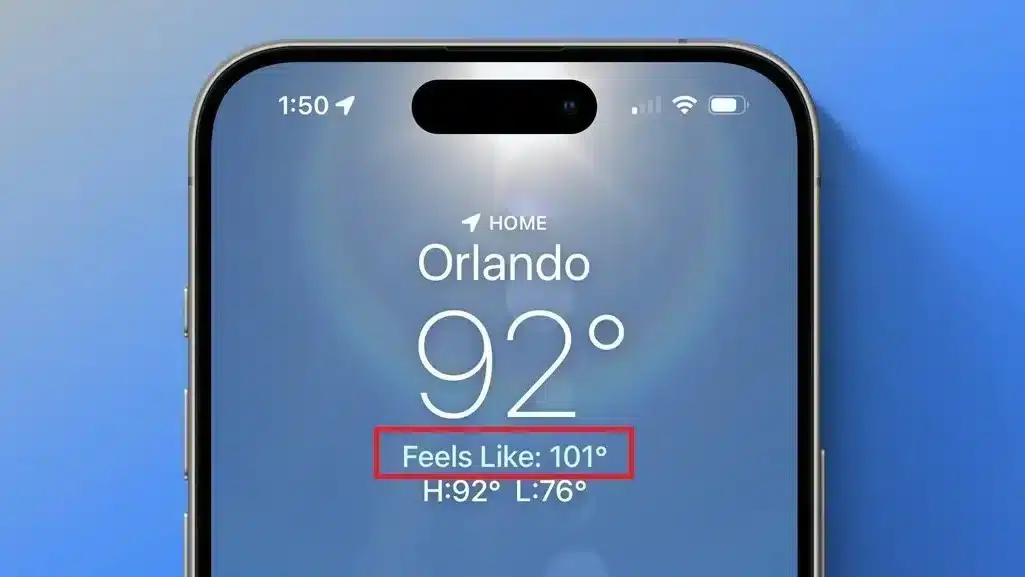
The temperature on your thermometer is only part of the story. Two days can show the same air temperature and feel completely different depending on how windy it is, how humid the air is, and how much sun is hitting your skin. The “feels like” temperature, sometimes called apparent temperature, combines all of these factors into a single number that better reflects what your body actually experiences outdoors.
A 40°F day with a 20 mph wind feels closer to 28°F on exposed skin. An 85°F afternoon with 80% humidity feels more like 99°F. These are not minor differences. They have real implications for how you dress, how long you stay outside, and whether outdoor activity is safe.
How the “Feels Like” Temperature Is Calculated
There is no single universal formula for feels like temperature. Different conditions call for different calculations, and our tool applies the right one automatically based on your inputs.
Wind chill applies when air temperature is below 50°F (10°C) and wind speed is above 3 mph. It uses the National Weather Service formula developed in 2001, which is based on the rate of heat loss from exposed facial skin. Wind accelerates the transfer of heat away from the body, making cold air feel colder than it actually is.
Heat index applies when temperature is above 80°F (27°C) and relative humidity is above 40%. It uses the NWS Rothfusz regression equation, which models how humidity affects the body’s ability to cool itself through sweat evaporation. The more humid the air, the less efficiently sweat evaporates, and the hotter you feel.
Solar radiation adjustment adds up to 15°F (8°C) on top of either formula depending on sun intensity. Direct full sun adds meaningful heat load to the body beyond what air temperature alone suggests. This is why a shaded 85°F feels noticeably cooler than 85°F in direct sunlight.
Middle range conditions (50 to 80°F) apply a lighter adjustment based on humidity and wind. Neither wind chill nor heat index dominates in this range, but both still influence comfort.
Wind Chill Explained

Wind chill is the most misunderstood weather measurement. It does not affect inanimate objects: a car engine, a pipe, or a glass of water will not freeze faster because of wind chill. It only describes how quickly heat leaves exposed human skin.
The key variable is wind speed. Still air acts as an insulating layer around the skin. Wind constantly replaces that warm air with cold air, dramatically increasing the rate of heat loss. At 20°F with no wind, exposed skin loses heat at a certain rate. At 20°F with a 30 mph wind, that same skin loses heat at a rate equivalent to -15°F in still air.
This is why wind chill warnings are taken seriously by meteorologists. The actual temperature may be above the threshold for frostbite, but the wind chill equivalent may not be.
Heat Index Explained
The heat index works on the opposite principle. Your body cools itself primarily by sweating. As sweat evaporates from the skin, it carries heat away. This process is highly efficient in dry air but almost useless in saturated air.
When relative humidity is high, sweat cannot evaporate quickly. Heat builds up in the body rather than dissipating. A temperature of 90°F at 90% humidity produces a heat index of around 119°F, well into the extreme danger category. The same temperature at 20% humidity produces a heat index of only 87°F.
This is why humid heat feels so much more punishing than dry heat. Your cooling system is compromised.
How Sun Exposure Changes the “Feels Like” Temperature

The NWS wind chill and heat index formulas both assume you are in the shade. In direct sunlight, solar radiation adds a significant additional heat load to the body, typically 10 to 15°F depending on the intensity of the sun, your skin tone, and what you are wearing.
This is a meaningful adjustment for anyone spending time outdoors in summer. Gardening, running, or working outside in full mid-day sun on an 88°F day may feel closer to 100°F even if the official heat index is only 93°F.
Our calculator adds a solar adjustment of up to 15°F for full sun conditions on top of the base formula result.
“Feels Like” Temperature and Outdoor Safety
Understanding your real feels like temperature is practical safety information.
In cold conditions, wind chill is the key number for frostbite and hypothermia risk. The NWS issues wind chill warnings when the wind chill equivalent reaches -20°F or below. At that level, exposed skin can develop frostbite in under 30 minutes.
In hot conditions, the heat index is the key number for heat exhaustion and heat stroke risk. The NWS issues heat advisories when the heat index is expected to reach 100 to 105°F for two or more hours. Above 103°F is considered dangerous and above 125°F is considered potentially fatal with prolonged exposure.
Neither threshold applies to the air temperature alone. Both are based on the combined effect of temperature, humidity, wind, and sun, which is exactly what our feels like calculator measures.
Get Accurate Local Data With a Weather Station
The accuracy of any feels like calculation depends entirely on the accuracy of your inputs. A regional forecast temperature measured miles away may not reflect the actual conditions in your backyard. Local terrain, building heat absorption, and microclimates can all produce meaningful differences.
A home weather station gives you real-time temperature, humidity, and wind speed measured at your exact location. Feed those readings into our calculator and you have a genuine local feels like temperature, not an approximation based on data from elsewhere.
See our guide to the best home weather stations for recommendations at every budget. The Ambient Weather WS-2902C measures all three inputs the calculator needs and displays your current feels like temperature directly on its console.

Reviewed by Ed Oswald
Expert Reviewer, Weather Station Advisor
Ed has personally installed and tested every weather station model included in this tool across multiple home environments. He has covered consumer technology and weather instruments for Digital Trends, PC World, and the New York Times for over 20 years.
Read Ed’s full bio →