

A rain gauge is one of the simplest weather instruments you can own, but the difference between a good one and a bad one is larger than most people expect. A cheap conical gauge can read 20% low in heavy rain. The right model, correctly installed, will tell you within a hundredth of an inch how much fell overnight.
With a rain gauge, you can prevent overwatering, save money, and monitor the overall weather in your area. Rain gauges are perfect for gardeners, weather enthusiasts, and help you track weather patterns for your home, town, or farm.
Here’s how to choose the best rain gauge.
At A Glance: Our Top 5 Picks for Rain Gauges in 2026
- Most Accurate: Climalytic TROPO Precipitation Gauge
- Most Accurate Runner-Up: Stratus Precision Rain Gauge
- Best Overall: Ambient Weather WS-2902C
- Best Wireless Rain Gauge: ECOWITT WH5360B
- Best Budget Option: AcuRite 00850A2
Ensure you purchase an accurate rain gauge with a durable construction that can withstand harsh weather conditions. To help you, we’ve combed through the market to find the best rain gauge overall.
Our team of editors independently research, test, and recommend the best products to help you navigate when shopping online. This post contains compensated links, and if you make a purchase using the links included, we may earn a commission. To learn more, read our disclaimer.
| IMAGE | PRODUCT | |
|---|---|---|
Most Accurate  | Climalytic TROPO Precipitation Gauge
| VIEW ON AMAZON → |
Most Accurate Runner-Up  | Stratus Precision Rain Gauge
| VIEW ON AMAZON → |
Best Overall 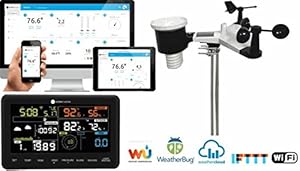 | Ambient Weather WS-2902C
| VIEW ON AMAZON → |
Best Wireless Rain Gauge  | ECOWITT WH5360B
| VIEW ON AMAZON → |
Best Budget Option  | AcuRite 00850A2
| VIEW ON AMAZON → |
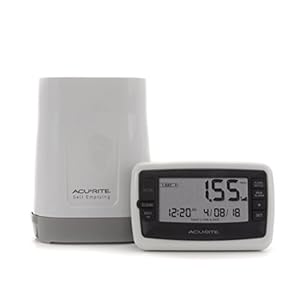 | AcuRite 00899 Wireless Rain Gauge
| VIEW ON AMAZON → |
 | Netatmo Rain Gauge
| VIEW ON AMAZON → |
 | Taylor Jumbo Jr. 20" Easy Read
| VIEW ON AMAZON → |
 | La Crosse 705-109
| VIEW ON AMAZON → |
If accuracy is your priority, the TROPO has replaced the Stratus Precision as our top pick for analog rain gauges. It measures to the hundredth of an inch and is built to the same standards used by CoCoRaHS observers and NWS-trained spotters.
The steeper funnel design handles wind-driven rain more accurately than the Stratus, and the 13.5-inch capacity outer cylinder means you're rarely emptying it mid-storm. The inner cylinder is noticeably easier to read as the graduations are larger and the glass is clearer. A handle and pour spout on the outer cylinder make emptying after heavy events far less messy. Optional bird spikes are a thoughtful addition anyone who's found droppings in their gauge will appreciate.
The TROPO costs more than the Stratus, but it's a better instrument. If you're reporting to CoCoRaHS, filing spotter reports with your local NWS office, or simply want the most honest rainfall number possible, this is the gauge to buy.
2. Most Accurate Runner-Up: Stratus Precision Rain Gauge
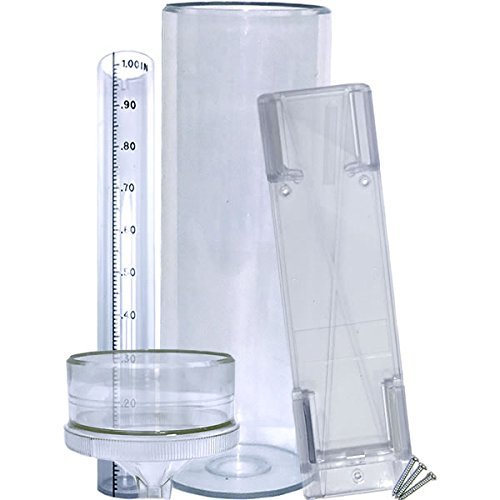
The Stratus has been the standard analog rain gauge in the United States for decades, and it earns that reputation. Built to National Weather Service specifications, it's used by official observers across the country. The inner cylinder measures the first inch of rainfall to the hundredth of an inch; the outer can hold up to 11 inches for later measurement.
We've moved it to the runner-up spot because the TROPO is a measurable improvement. But the Stratus remains a strong choice, especially since it's more widely available and less expensive. If the TROPO is out of budget, the Stratus will not let you down.
The inside cylinder measures the first inch of rainfall to the hundredth of an inch, and the outer cylinder can hold volumes over one inch up to 11 inches for later measurement. The Stratus also comes with a mounting bracket, so you can easily install the unit on a fence post or panel.
While this rain gauge requires a bit of preparation to use correctly and obtain accurate measurements, you will not get this level of accuracy from even the best digital models.
What we recommend for those that desire both accuracy and convenience is to purchase this gauge in conjunction with one of the digital rain gauges below. This way, you can still have the convenience of remote monitoring but you will also have the accuracy of a calibrated analog rain gauge.
Click here to check the price of the 2nd most accurate rain gauge: the Stratus Precision on Amazon
3. Best Overall: Ambient Weather WS-2902C WiFi Smart Weather Station
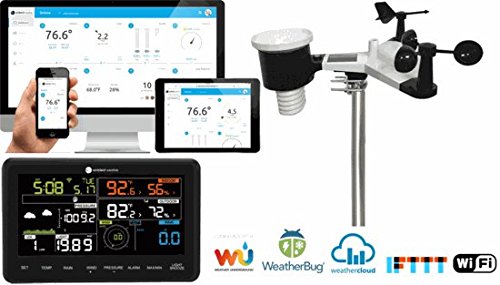
The Ambient Weather WS-2902C isn’t just a rain gauge but a complete home weather station. Why are we recommending a weather station in a rain gauge buying guide? Well, we believe that you’ll get more value out of a fully-featured home weather station rather than a basic rain gauge—especially if you’re about to pay up for a digital wireless rain gauge.
The WS-2902C is accurate, it’s consistently shown outstanding performance in our testing, and it has an extensive feature list that impresses even the most passionate weather enthusiasts.
Like most home weather stations, the WS-2902C offers these basic functions:
- Rainfall measurement
- Indoor/Outdoor temperature & humidity
- Barometric pressure
- Wind speed and direction
- Forecast
- Date and time
- High and low temperatures
But that’s not all. The WS-2902C provides more advanced functionality as well, including:
- UV and solar radiation
- Dew point
- Heat index
- Wind chill
- High and low readings for all parameters
- Alerts for all parameters
- Smart home integration
- Remote monitoring and reporting
- Additional sensor support
While more expensive than your standard wireless rain gauge, we feel the WS-2902C is worth it because it provides a full home monitoring experience, and that is why we think it’s the best overall option for a weather geek and meteorologist.
Accuracy
Ambient Weather has produced quality weather stations for years. Based on our own experience and the reviews of the WS-2902C by other owners, this latest model is also a high-quality station.
If you’d like to see our review and comparison of the WS-2902C against other models on the market, please read our home weather station guide.
The rain gauge in the WS-2902C uses a tipping bucket mechanism, precisely calibrated so that it provides accurate precipitation measurements to within 10% of the actual rainfall. While that might seem like a lot, the measurement error will be less than a tenth of an inch for most rainstorms.
Internet Connectivity and Smart Home Integration
WiFi connectivity allows you to connect to the Ambient Weather Network, where you can view your data remotely from your smartphone and receive alerts. Smart home integration within the WS-2902C allows you to connect it to other devices within your home or ask for current conditions via Google Assistant or Amazon Alexa.
Some will find the WS-2902C’s IFTTT support very useful. Among the weather stations fit for gardeners, WS-2902C is commendable.
If you have a home sprinkler system, you could use rainfall data from the WS-2902C to trigger your sprinklers to turn off when a certain amount of rain hits your garden, saving you money on your water bill. But other data from the station can trigger your smart lights, blinds, and more. The applications of the data are endless.
Click here to check the price of the Ambient Weather WS-2902C on Amazon
4. Best Wireless Rain Gauge: ECOWITT WH5360B High Precision Wireless Digital Rain Gauge
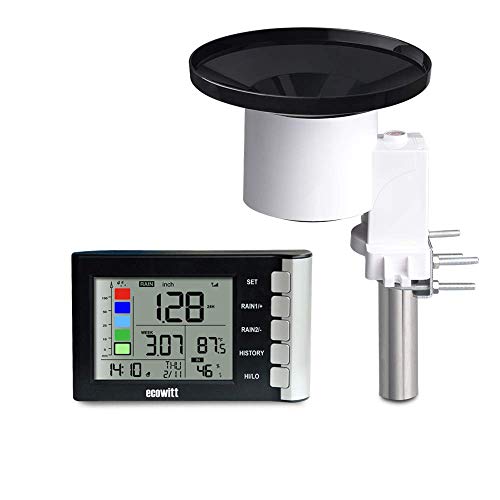
We recommend the WS-2902C if you’re going the digital route. However, if you don’t need a weather station’s extra features and only want to measure rainfall, then the ECOWITT WH5360B high precision wireless rain gauge is a great alternative.
With accuracy to within 5% of actual rainfall, the ECOWITT is slightly more accurate than the WS-2902C. You’ll be able to place the self emptying rain gauge anywhere within about 300 feet of the console.
Note, the WH5360B is not internet-connected, meaning all rainfall data is stored locally on the console, and you won’t be able to view it remotely on your phone.
That said, the console itself can store up to two years of rain records and display information on maximum rain rate, hourly and last 24-hour rainfall, daily, weekly, monthly, yearly precipitation records, and more. The console also displays information on indoor temperature and humidity.
You can set customizable alerts to have the WH5360B sound an alarm when rain rate, rain event, indoor temperature, and humidity exceed preset levels, so you know when dangerous flood conditions are present or when to turn off the sprinklers.
Although the complete weather stations can be more helpful to farmers, we think the self-emptying WH5360B is one of the best rain gauges for gardeners and homesteaders who want accurate measurements but don’t need a fully-featured weather station.
5. Best Budget Option: AcuRite 00850A2 5-Inch Easy-Read Rain Gauge

If you’re looking for a cheap way to monitor rainfall at a glance, and can accept some inaccuracy, the best budget option out there is the AcuRite 00850A2 5-Inch Easy-Read.
This gauge can measure up to 5 inches of rain at a time, and as rain falls, the shape of the rain gauge causes the water to magnify the printed measurement lines on the back of the unit by about 35%. The magnification allows you to read how much rain has fallen without struggling to see.
However, the lower price does bring about some disadvantages. While measurements in smaller rain events won’t be affected as much, heavier rain and storms will have a greater error margin. If you live in a rainy area, those errors can add up over time.
But as long as that’s not a significant issue, the AcuRite’s Easy-Read gauge is worthy of consideration for those on a super tight budget.
6. Best for Metric Measurements: OutdoorHome 6” Rain Gauge

Weather Station Advisor readers hail from across the world, so we’d be remiss not to include a metric rain gauge in our list. Here, we recommend the heavy duty OutdoorHome 6” Rain Gauge. It has the same conical design as AcuRite’s model above. However, it can measure an additional inch, and the imperial and metric scale is printed on the front of the gauge.
In rainy climates, the OutdoorHome 6” Rain Gauge might make more sense since you won’t need to empty it quite as much. While the conical design does introduce some error into your readings, it’s not enough to shy away from recommending it.
Another reason we recommend the OutdoorHome unit is for the high-quality weather-resistant plastic used to make it. It will not crack or discolor due to heat, cold, or sunlight, and long-term owners report years of use without replacing it. It’s also easy to install as it comes with a mounting bracket and screws.
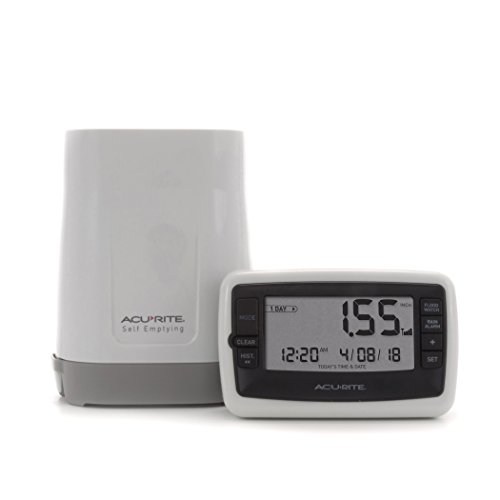
We recommended AcuRite previously in this list, but the company deserves a second mention for its self emptying wireless rain gauge. If you found the ECOWITT a bit expensive, this might be a good alternative. Like the ECOWITT, it stores rainfall data, but in a slightly different way.
“Event Mode” is useful to monitor specific rainfall events, whether they be a brief 10-minute rain shower or a 2-day deluge. The event ends after eight hours of no rainfall detection.
The console stores the last 7 hours of data in its memory along with time and date. “7 Day Mode” stores daily rainfall for the past seven days, and “Week Mode” totals weekly rainfall for the past seven weeks. Finally, A/B mode allows you to recall total rainfall, which you can clear at any time.
The AcuRite 00899 wireless rain gauge also has a neat “Flood Watch Alarm” that monitors rainfall rates that could lead to flooding. If you live near a river or stream, this feature could be handy.
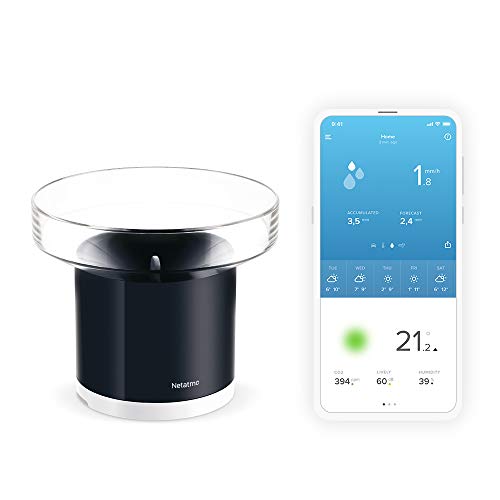
We had the opportunity to test the Netatmo Rain Gauge almost five years ago when the company first released it as part of one of the first “smart” personal weather stations on the market.
Netatmo is a French company, so the unit itself is calibrated to measure to a tenth of a millimeter—which is about 0.004”. You’ll need to round up or down to the nearest hundredth of an inch to get your measurement. We found the Netatmo rain gauge to be generally accurate during our tests. Although, in heavier rainstorms, it tended to measure more rain than had fallen.
Still, these totals fell within the 10% margin we consider acceptable for digital rain gauges. The Netatmo device shines with its smart home capabilities, offering access via IFTTT or the Amazon Alexa digital assistant.

If AcuRite’s Easy Read Rain Gauge isn’t large enough for you to read at a distance, then Taylor’s Jumbo Jr. 20” Easy Read is a great alternative solution. At 20 inches tall, it is visible from up to 50 feet away.
A red ball inside the tube floats on top of the water, allowing you to quickly see how much rain has fallen. The funnel includes a filter to prevent debris from clogging the inner tube, and the included stake secures the gauge in a suitable position.
A word of caution: your measurements will not be as precise as other options on this list. But if you’re willing to trade that off for being able to read it at a considerable distance (and stay much drier as a result), we’d recommend considering the Jumbo Jr. Easy Read.
The La Crosse 705-109 waterfall gauge is similar to the above recommendations, and it’s a decent low-priced alternative that you can attach to your deck. We’d recommend placing it on the included stake to prevent “splash back” from your deck railing that will mess with your accuracy by over measuring rainfall.
Large numbers are printed on the front of the La Crosse gauge in .1” increments, and a floating piece of red plastic allows you to take a quick measurement from a distance. The rain gauge can measure up to six inches of rain, and the whole unit slides out of the mount for easy cleaning.
We’d recommend looking at other options first, as this gauge’s accuracy is probably its weakest point. But the option to attach it to a deck or wall makes it useful in certain situations where you might not have a clear area to place a stake.
How to Choose the Best Rain Gauge
Let’s take a look at the factors you need to consider and the features you should look for when buying a rain gauge so you end up with the best model for your specific needs.
Analog vs. Digital: The Most Important Decision
This is the first question to answer, because the two types serve fundamentally different purposes.
Analog gauges are the cylindrical type you read by hand. They are the scientifically accepted standard for precipitation measurement. Models like the TROPO and Stratus meet National Weather Service specifications and are approved for use by CoCoRaHS observers. They can even be used to measure snowfall. If you need a verifiable, defensible measurement, analog is the only answer.
Digital gauges use a tipping bucket mechanism. As rain falls into the collector, small cups fill and tip over, each representing 0.01 inches of rainfall. The data transmits wirelessly to an indoor console. They're far more convenient, but they have known accuracy limitations: in very heavy rain, the buckets may not tip fast enough, causing undercounts. In very light drizzle, they can miss small totals entirely. For scientific reporting, digital gauges are generally not acceptable. For gardening and home use, they're excellent.
Most buyers should choose digital. CoCoRaHS observers and NWS spotters should choose analog.
Accuracy
A gauge's construction affects its accuracy. You'll want the rain gauge opening to be at least four inches in diameter. This is why you see the large funnels on the top of many gauges. The way a gauge is marked matters as well: many cheap analog gauges are marked to the tenth of an inch, whereas official measurements are taken to the nearest hundredth.
Installation
Even the best rain gauges won’t be able to overcome a lousy install, meaning your readings will be inaccurate if you don’t place the unit in an optimal position. For the best results, use a model with a mounting bracket and install the gauge 2-5 feet off the ground on the side of a fence post or pole.
You’ll also want the gauge’s mouth to be above the pole or post you mount it on. Placing the opening above the post prevents rain that hits the post from splashing back into the gauge itself. Use a spirit level to ensure the mouth of the gauge itself is level.
Be sure to position the unit away from obstructions that can block precipitation like tall buildings and trees.
Ideally, place the gauge in an area at a distance twice as far away as the height of the nearest obstruction (e.g., set the gauge 20 feet away from 10-foot tall trees). No worries if you can’t do this, just put it in the most open area on your property for best results.
For more information on installing and measuring rainfall correctly, please read our article on how to use a rain gauge to measure rainfall at your home.
Construction and Durability
As a general rule, the cheaper the model, the shorter its usable life. Gauges are made of plastic—cheaper forms of plastic discolor in sunlight over time and can become brittle due to hot and cold extremes. We strongly recommend purchasing the best model you can afford to get the most accurate results and the longest usable life.
Measuring Capacity
Measuring capacity will vary among analog rain gauges, but we recommend that you purchase one with at least a four-inch capacity to prevent losing out on rain in extreme storms if the measure overflows.
One of the benefits of a digital model is an unlimited measuring capacity. However, a professional analog gauge like the Stratus Precision, has an 11” capacity, which you’ll likely never exceed during its functional life.
Ease of Use
From an ease-of-use perspective, a digital rain gauge is far more convenient. You’ll never have to go outside to take a measurement, and they’re easy to read and maintain. However, even the Stratus isn’t challenging to use - it just requires a bit more time to learn the procedure.
Final Thoughts
For gardeners and weather enthusiasts alike, a rain gauge is an essential tool to have. With the digital models and smart home connectivity, the data you obtain can be used to optimize your smart sprinkler system or alert you ahead of time of extreme rain or sprinklers that are about to cause a flood.
One of the best rain gauges overall and our top recommendation for the most accurate results is the Stratus Precision rain gauge.
If you’re looking for a digital rain gauge’s convenience and internet connectivity, we recommend the Ambient Weather WS-2902C weather station. The WS-2902C offers more value for money than a wireless rain gauge with its smart home connectivity and an extensive list of instruments for a complete view of the weather conditions.
Happy weather watching!



I’ve added a rain gauge to my garden, but find the readings to be inaccurate to my neighbor’s unit. What could be causing the different readings?
A rain gauge has a few challenges that can influence the accuracy of the readings. For starters, if the unit is mounted near an obstruction like a tree, fence, roof, or wall, it will affect the reading. Extreme winds also affect the readings as it makes the rain fall askew, making an accurate reading impossible.
Does the size of a rain gauge’s opening influence the accuracy of the measurement?
The opening size determines the accuracy of the rain gauge. Smaller openings will have a greater chance of error, while larger openings have a better reading with a smaller calibration for error.