
What Is the UV Index?
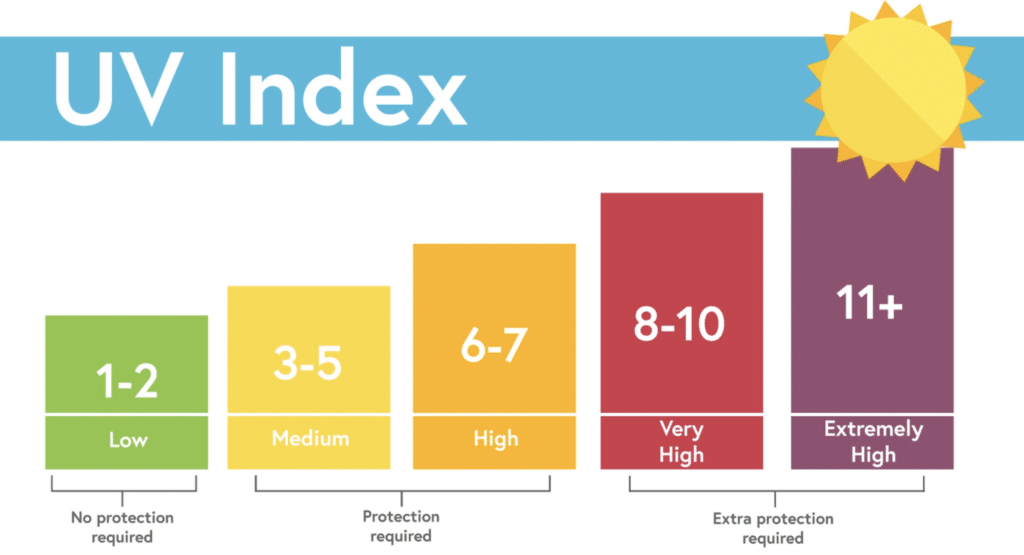
The UV Index is a standardised scale developed by the World Health Organization that measures the intensity of ultraviolet radiation from the sun at a given location and time. It runs from 0 (no UV) to 11 and above (extreme), with each level corresponding to a specific risk of skin and eye damage for unprotected people.
The scale was designed to give the public a simple, actionable number that translates complex atmospheric UV data into practical advice. A UV Index of 3 calls for some protection. A UV Index of 8 means you can burn in as little as 15 minutes if you have fair skin and no sunscreen.
Your home weather station can measure UV index directly if it includes a UV sensor. The Ambient Weather WS-2902C includes both a UV sensor and a solar radiation sensor, giving you real-time UV readings at your exact location rather than relying on the nearest reporting station which may be miles away.
How UV Index Varies Through the Year
UV intensity is not constant. It follows a strong seasonal pattern driven by the angle of the sun relative to the Earth’s surface. In the northern hemisphere, UV peaks around June and July when the sun is highest in the sky. By December and January, UV levels in most of the US drop to 2 or 3 even on clear days.
Latitude plays a major role. At the same time of year, someone in Miami faces roughly double the UV index of someone in Seattle. Altitude matters too: UV intensity increases by roughly 4% for every 300 metres of elevation, which is why skiing at altitude in spring sunshine carries a surprisingly high burn risk.
Cloud cover is one of the biggest variables. A completely clear sky allows full UV penetration. A thin cloud layer blocks only around 25% of UV. Even a heavily overcast sky lets through 50% or more, which is why people often burn on cloudy days when they drop their guard.
Understanding Your Skin Type
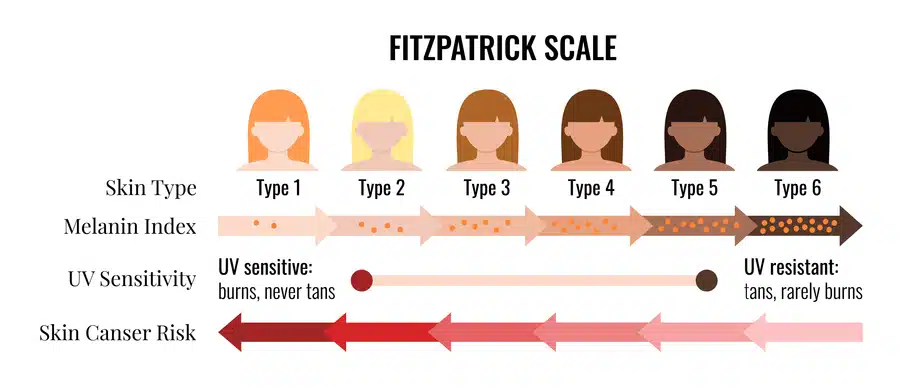
The calculator uses the Fitzpatrick skin type scale, a dermatological classification developed in 1975 that categorizes skin by its response to UV exposure.
Type I (very fair, freckled) always burns and never tans. At UV Index 8, unprotected Type I skin can begin to burn in around 10 minutes.
Type II (fair) usually burns and tans minimally. Slightly more resistant than Type I but still highly vulnerable to high UV.
Type III (medium) sometimes burns and tans gradually. Most common skin type among people of European descent.
Type IV (olive) rarely burns and tans easily. More natural protection but SPF is still recommended at high UV levels.
Type V (brown) very rarely burns. Significant natural melanin protection, though eye damage risk remains the same for all skin types.
Type VI (dark) almost never burns but is not immune to UV-related skin damage and still benefits from sun protection at extreme UV levels.
Regardless of skin type, UV Index 11 or above poses a risk of eye damage for everyone. UV-blocking sunglasses are non-negotiable at extreme UV levels.
How to Use UV Index Data From Your Weather Station
If your weather station includes a UV sensor, you can use real-time readings to make better decisions about outdoor activities throughout the day. UV index typically peaks between 11am and 3pm and drops sharply in the late afternoon.
Monitoring the UV index alongside temperature and humidity gives you a complete picture of outdoor conditions. A day that feels comfortable temperature-wise can still carry a very high UV index, particularly in spring and early summer when temperatures haven’t yet peaked but the sun angle is already high.
Cross-reference your station’s UV readings with our barometric pressure forecast tool. Falling pressure often signals incoming cloud cover, which will reduce UV levels, while rising pressure typically means clearer skies and higher UV intensity.
Sun Protection That Actually Works
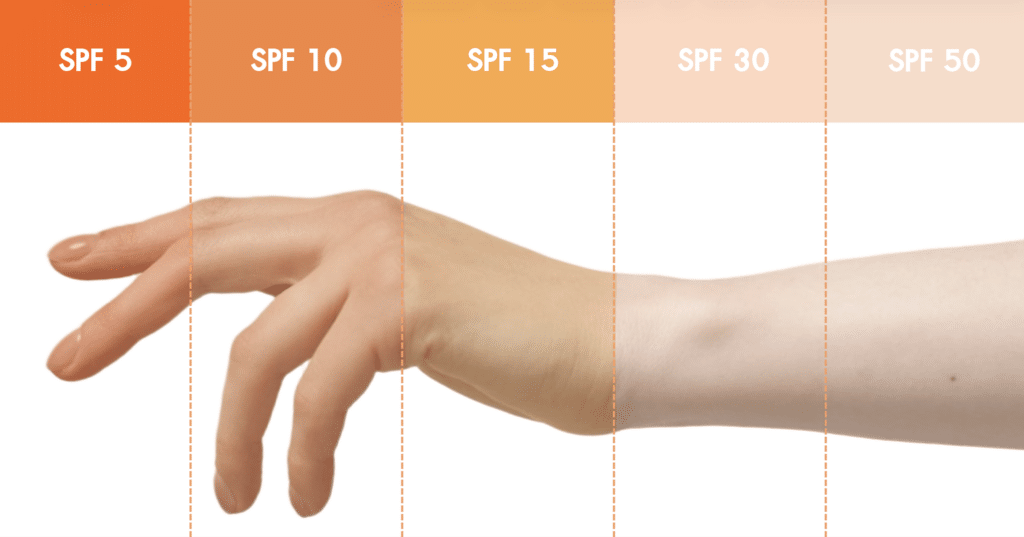
Sunscreen SPF is a multiplier on your natural burn time. SPF 30 means it takes 30 times longer to burn than unprotected skin. If your natural burn time at the current UV index is 10 minutes, SPF 30 extends that to around 300 minutes, but only if applied correctly and reapplied regularly.
Most people apply far less sunscreen than the tested amount, reducing effective protection significantly. The standard recommendation is one ounce (a shot glass worth) for a full body application.
Water, sand, and snow dramatically increase UV exposure by reflecting radiation onto skin that would otherwise be shaded. Snow reflects up to 80% of UV, nearly doubling effective exposure in alpine conditions.

Reviewed by Ed Oswald
Lead Reviewer, Weather Station Advisor
Ed has covered consumer technology and weather instruments for Digital Trends, PC World, and the New York Times for over 20 years. He has personally tested every station recommended on this page.