
What Is Wind Chill?

Wind chill is the temperature it “feels like” outside when the combined effect of cold air and wind is taken into account. When wind blows across exposed skin, it strips away the thin layer of warm air your body naturally produces, accelerating heat loss and making the cold feel far more intense than the actual air temperature.
The concept of wind chill has been around since the 1940s, when Antarctic explorers Paul Siple and Charles Passel first developed a formula to quantify how quickly water froze in windy conditions. Their research laid the groundwork for modern wind chill calculations. The formula was significantly updated in 2001 by the National Weather Service and Environment Canada to better reflect how wind affects the human body specifically – not just inanimate objects. The updated formula is the basis of this wind chill calculator.
It’s worth noting that wind chill is a human perception index. It describes how cold your skin feels, not the actual air temperature. A wind chill of -10°F doesn’t mean the air is -10°F – it means your exposed skin is losing heat at the same rate it would if the air were -10°F with no wind.
How Is Wind Chill Calculated?
The NWS Wind Chill Temperature Index uses a straightforward formula that takes two inputs: air temperature and wind speed. The formula calculates how quickly exposed skin loses heat based on those two variables.
Wind chill only applies under specific conditions: temperatures must be at or below 50°F (10°C) and wind speeds must be above 3 mph (5 km/h). Below those thresholds, wind has a negligible effect on how cold you feel.
One important clarification: wind chill does not affect inanimate objects the same way it affects people. A car engine, a pipe, or a glass of water will not cool below the actual air temperature due to wind chill. Wind chill is strictly a measure of how quickly human skin loses heat, nothing more.
Our calculator above uses the official 2001 NWS formula and is valid for both imperial (°F/mph) and metric (°C/km/h) units.
Wind Chill and Frostbite Risk
The colder the wind chill, the faster frostbite can develop on exposed skin. Frostbite occurs when skin and underlying tissue actually freeze, and it can cause permanent damage if not treated promptly.
Here’s a general guide to frostbite risk based on wind chill:
Low risk (above 10°F / -12°C): Frostbite is unlikely for most people with normal cold weather clothing. Discomfort is possible but tissue damage is not a significant concern.
Moderate risk (-10°F to 10°F / -23°C to -12°C): Frostbite can occur on exposed skin within 30 minutes or more. Cover all exposed skin and limit time outdoors.
High risk (-25°F to -10°F / -32°C to -23°C): Frostbite can develop in 10 to 30 minutes on exposed skin. Outdoor activities should be limited and all skin covered.
Extreme risk (below -25°F / -32°C): Frostbite can occur in under 5 minutes on exposed skin. Avoid outdoor exposure where possible.
Early signs of frostbite include redness, numbness, and a tingling or burning sensation. As frostbite progresses, skin may turn white, gray, or waxy and become hard to the touch. If you suspect frostbite, get indoors immediately, warm the affected area gradually, and seek medical attention.
Hypothermia is a separate but related danger. When your core body temperature drops too low, confusion, slurred speech, and uncontrollable shivering set in. This is a medical emergency – call 911 immediately.
Does Wind Chill Affect How Quickly Water Freezes?
No – and this is one of the most common misconceptions about wind chill. Wind chill only affects living tissue and exposed skin. It does not change the freezing point of water, cause pipes to freeze faster, or make your car engine cool below the actual air temperature.
Water freezes at 32°F (0°C) regardless of wind speed. A pipe exposed to 20°F air will not freeze any faster because the wind is blowing at 30 mph; it will still only cool to the actual air temperature of 20°F, just slightly faster due to convection. The wind chill value of that scenario is irrelevant to the pipe.
This distinction matters practically: if you’re worried about frozen pipes, look at the actual air temperature forecast, not the wind chill.
Wind Chill vs. Heat Index
Wind chill and heat index are two sides of the same coin. Both are “feels like” temperature indexes: wind chill measures how cold temperatures feel in winter, while the heat index measures how hot temperatures feel in summer when humidity is factored in.
Just as wind accelerates heat loss from your body in cold weather, high humidity in summer prevents your body from cooling itself effectively through sweat evaporation, making hot days feel even hotter.
Both indexes are tools for assessing the real-world impact of weather conditions on the human body, and both are used by the NWS to issue weather advisories and warnings.
Wind Chill Safety Tips

Knowing the wind chill is only useful if you act on it. Here’s how to stay safe when temperatures drop and the wind picks up:
Dress in layers. Trap warm air close to your body with a moisture-wicking base layer, an insulating middle layer, and a wind-resistant outer shell. Avoid cotton, which retains moisture and accelerates heat loss.
Protect your extremities. Frostbite strikes fingers, toes, ears, and nose first. Wear insulated gloves, warm socks, a hat that covers your ears, and a scarf or balaclava in extreme conditions.
Check wind chill, not just temperature. A 20°F day with 30 mph winds feels like -3°F. Always check the wind chill forecast before heading outside, especially for extended outdoor activities.
Limit time outdoors. When wind chills drop below -20°F (-29°C), limit outdoor exposure to short periods and take warming breaks indoors.
Keep pets inside. Dogs and cats are just as vulnerable to frostbite and hypothermia as humans. If it’s too cold for you, it’s too cold for them.
Watch for warning signs. Red, white, or grayish-yellow skin, numbness, and hard or waxy-feeling skin are early signs of frostbite. Shivering, confusion, and slurred speech are signs of hypothermia. Seek warmth and medical attention immediately.
Why Wind Chill Varies by Location
Not all wind chill is created equal. Where you live has a significant impact on how often and how severely you experience dangerous wind chill conditions.
Coastal areas tend to experience higher wind speeds due to unobstructed airflow over open water, making wind chill a frequent concern even when temperatures aren’t extremely cold.
Open plains and prairies like the American Midwest are notorious for brutal wind chills in winter. Flat terrain offers no natural windbreak, allowing Arctic air masses to sweep through unimpeded.
Urban areas benefit from the urban heat island effect and wind-blocking buildings, which can reduce effective wind chill compared to surrounding rural areas.
High elevation locations experience both colder temperatures and stronger winds, compounding wind chill effects significantly.
Forested areas offer natural wind protection. Hiking or skiing through trees dramatically reduces wind exposure compared to open ridgelines or summits.
Monitor Wind Chill From Your Own Backyard
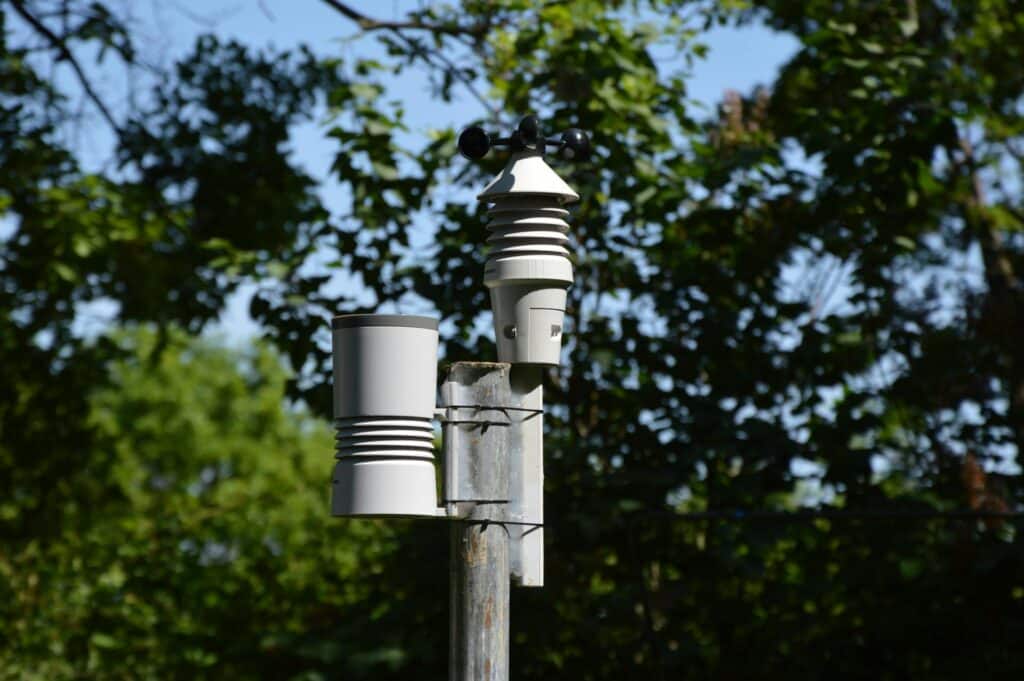
The most accurate wind chill reading you can get is one based on your exact local conditions, not a weather station miles away. A personal home weather station measures real-time temperature and wind speed right at your property, giving you a precise wind chill reading whenever you need it.
If you’re serious about monitoring conditions at home, check out our guide to the best home weather stations of 2026. We’ve tested and reviewed the top models from Davis Instruments, Ambient Weather, AcuRite, and more.

Reviewed by Ed Oswald
Expert Reviewer, Weather Station Advisor
Ed has personally installed and tested every weather station model included in this tool across multiple home environments. He has covered consumer technology and weather instruments for Digital Trends, PC World, and the New York Times for over 20 years.
Read Ed’s full bio →