

Source: Photo by Konstantin/Adobe Stock
Have you invested in a vacation home, only to worry about the comings and goings at your holiday escape when you’re not there? These escape from reality properties can still have serious issues that require monitoring.
Thankfully, with a quality home monitoring system, you’ll never be surprised by disasters in your absence. With a remote vacation home monitoring system, your home can tell you about water damage and leaks, power failures, and temperature problems.
Let’s find out which home monitoring system you should look at.
Our team of editors independently research, test, and recommend the best products to help you navigate when shopping online. This post contains compensated links, and if you make a purchase using the links included, we may earn a commission. To learn more, read our disclaimer.

There are many types of smart home sensors out there, but not every sensor will work for your property. For example, a flood sensor won’t do you much good in the mountains, but a temperature monitor will be useful in the colder months to monitor your pipes.
In most cases, these sensors will connect to the internet, so you’ll have to ensure you have WiFi connectivity. Some sensors may also have cellular connectivity options, but they’re much less common and more expensive due to the monthly cellular subscription fees. While most allow you to monitor the sensor through a companion app or website, some may also have compatibility with third-party services like IFTTT.Like a Smart Home, it allows you to use data from one smart sensor to “trigger” (control) another. For example, if you have a home weather station, you’d be able to control your sprinkler system, shutting it off automatically when enough rain has fallen. With either the sensors’ app or IFTTT, you can receive alerts when readings reach a specific threshold, or an event—like rain in the example above—causes your IFTTT settings to trigger.
Among the most common home monitoring sensors available are ones for temperature and humidity, the presence of water (leak and flood sensors), motion, and contact (open/close) sensors. Other sensors can alert you when your property loses power. Cameras can help you monitor what’s going on at your property. These cameras typically include motion-sensing capabilities, automatically alerting you to motion in its field of view while recording a video of the event.
Here are a few possible things you’d want to monitor in your vacation home:
- Door and window contact sensors can help you better secure your property and be alerted to potential break-ins as they’re occurring.
- Well-placed motion sensors will help you monitor motion inside and around the home when you’re away.
- A remote temperature monitor may help you determine HVAC equipment failure and help you to protect temperature and humidity sensitive items.
- Water leak sensors can provide warnings of water inside the house or leaking pipes.
- A wireless freezer alarm can help monitor the temperature of your freezer to ensure your food doesn’t spoil and is safe to consume.
- Power loss sensors with cellular backup can alert you to power outages at your property.
Best Remote Vacation Home Monitoring Solutions
Our list below includes seven of the best remote vacation home monitoring solutions on the market that will help you monitor and protect your vacation home or cabin from anywhere.
1. Temp Stick WiFi Remote Temperature and Humidity Sensor

The Temp Stick will monitor conditions 24/7 and alert you by text or email when the temperature or humidity reaches a dangerous level.
The device connects through WiFi, so there are no subscription fees. The user-friendly smartphone app allows you to easily change the temperature and humidity parameters and view historical data.
The Temp Stick can help prevent pipes freezing in colder climates and avoid heat damage in the summer months by notifying you if a threshold has been crossed.
Suppose you also have temperature-sensitive items or areas in your vacation home, such as a wine cellar, cigar humidor, pantry, or freezer, where precise temperature and humidity readings are required.
In that case, the Temp Stick will be very useful. In our review of the Temp Stick, we confirmed that it’s very versatile and portable.
The Temp Stick runs on 2 AA batteries, which will give you an impressive battery life of approximately one year. All your data is stored on Temp Stick’s servers, and there is no limit to the amount of data you can keep—all with no subscription fees.
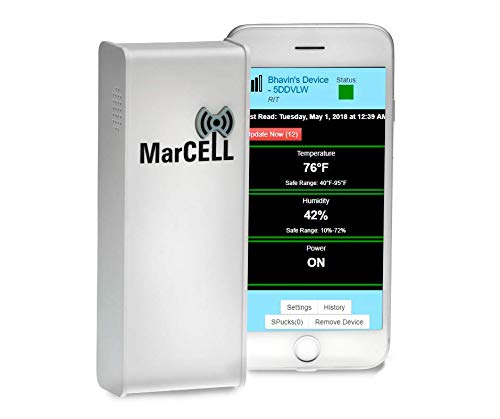
If your vacation home is in a remote area with no access to WiFi, then a cellular temperature monitoring system will be your best option. Our top cellular monitor recommendation is the MarCELL Cellular Monitoring System.
Like the Temp Stick, the MarCELL monitors room temperature and humidity. It will also alert you of any power outages, and water leak sensors can be added to the system. If any conditions exceed your preset guidelines, an alert will be sent through a phone call, text message, or email.
While the device does require continuous power because of the integrated cellular connectivity, a backup battery provides up to 48 hours of power to continue to report data if the power goes out.
One downside with the MarCELL is the need for a monthly subscription to pay for cellular connectivity. However, the cost is quite reasonable if you pay for a year in advance.
Wyze has made quite a name for itself when it comes to home monitoring, and a lot of it has to do with price. Their sensors are some of the highest quality budget sensors on the market.
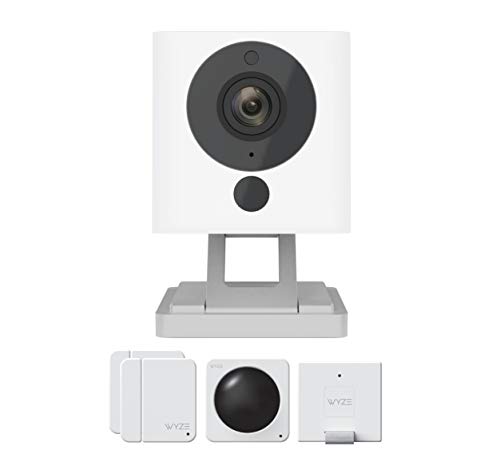
The Wyze Cam V2 1080p with Wyze Sense Starter Kit is an excellent option for your vacation home. It comes with both a camera, three sensors, and a base station to get you started.
Two contact sensors and a motion sensor are included in this particular package. Wyze also sells additional sensors if you need more, and IFTTT support is built-in.
This kit is an excellent place to start if your budget is tight.
The Wyze Outdoor Camera is Wyze’s latest creation. It takes Wyze’s popular indoor camera and adds some heft to survive the elements.
Two 2600mAh batteries allow for wireless mounting and 3-6 months of operation. Mounting is a breeze—slide two flathead screws into the base, and you don’t have to worry about it ever coming off. It’s also super easy to remove when it’s time to charge the battery.
Since the Wyze Outdoor Camera monitors what’s happening outside your vacation home, we also think this might be useful for those of you who do a lot of wildlife watching. At any time, you’ll be able to call up live video from the app or video-enabled Alexa and Google Assistant devices.
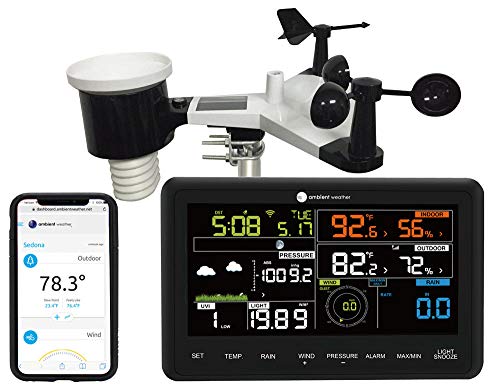
Consider purchasing a home weather station for a complete look at the weather conditions surrounding your vacation home. A weather station will help you find out what the weather’s like before you head off to your remote cabin, letting you plan and pack appropriately.
Our top pick is the affordable and very capable Ambient Weather WS-2902C. The station, powered by solar panels, can measure temperature, humidity, barometric pressure, rainfall, wind speed and direction, UV, solar radiation, and more.
It is also internet-connected with smart home capabilities, so you can monitor conditions from anywhere and control other smart home devices based on weather changes. For more information on this model, read our review of the Ambient Weather WS-2902C.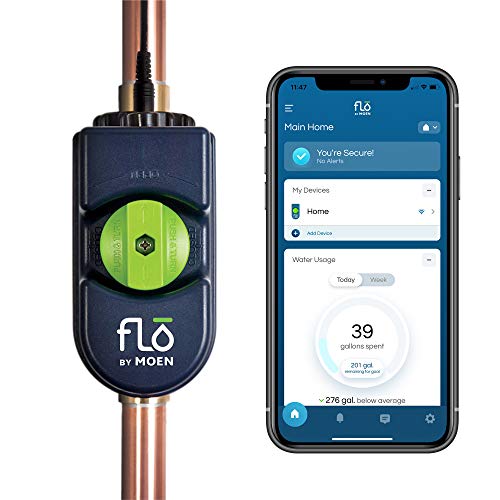
You probably know of Moen for their beautiful faucets, but the company recently started producing smart home devices. One of the first was the Flo by Moen Smart Water Shutoff, which can help you monitor your water usage and alert you to potential issues.
Through years of development, Moen created a platform to detect abnormalities and leaks within your water system. The device can turn off your water mains to automatically protect your property from damage.
While it might sound too good to be true, owners praise Flo for actually living up to its claims. Although, you will need to pay a subscription for these features.
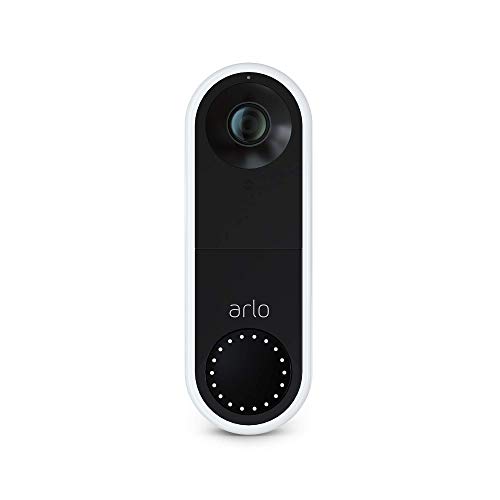
Another way to secure your vacation home on the outside is to replace your current doorbell with a video doorbell. While there are quite a few options out there, one of our favorites is the Arlo Video Doorbell.
Arlo’s video quality is one of the clearest on the market right now. We especially appreciate the doorbell’s motion detection capabilities, which can detect different types of movement, from say a person or a packet blowing past, and alert you accordingly.
You will need a subscription for many of the premium features, and it requires a pre-existing doorbell to connect to (it uses the same wiring). Either way, the installation is simple, straightforward, and the easy to follow directions don’t require you to be an electrician to understand.
Final Thoughts
We’re not at our vacation homes every day to respond to small household problems before they become larger and costlier ones. Adding smart home devices and remote sensors to your vacation home will take the stress out of upkeep and will keep your investment safe and secure.
Start small and add the sensors you require as you are able to. While there are many low-cost smart home options these days, you can easily spend hundreds if not thousands of dollars on the various sensors you might need.
So, plan out your Smart Home build ahead of time if you can. Many sensors can perform multiple functions—so knowing what you need ahead of time can save you some money in the long run.
Which are your favorite sensors?





What are some different types of home sensors I should consider adding to my home’s remote sensor system?
There are many different home sensor types that you can add to your home or holiday home to help you remain informed of changes that could affect or even endanger your home. Consider adding these:
– Temperature sensors – to tell you if the space is overheating
– Light sensors – that help remotely switch on outdoor lights or close motorized blinds
– Water sensors – to indicate if there’s flooding or excess moisture
– Window and door sensors – tracking if doors are left open or windows are broken
– Videos and cameras – to track motion and intrusion
– Weather stations – to track air pressure, rain, wind, and heat
– Smoke detectors – to help activate sprinklers or contact fire departments if there’s an indoor fire
How is setting up a remote home monitoring system different from a Smart Home setup?
A Smart Home system is an integrated system of sensors that are positioned throughout the home environment. These sensors are usually connected to a control box, which lets you set different parameters without needing to switch between interfaces.
In contrast, a remote home monitoring system is typically set by purchasing different systems, which can monitor or control various aspects of your home environment, such as temperature, water, gas, and electricity. These require individual access to make remote changes or get readings.
How do most sensors get power and how do I stop my remote sensors dying when I’m not going to be at the holiday home for months?
If sensors are wired, they will draw power from the main electrical supply. Some sensors like outdoor cameras may be solar powered, while others are fully remote and are powered by batteries. Keeping track of when batteries are replaced will help you in deciding if the current batteries will last until you can replace them.