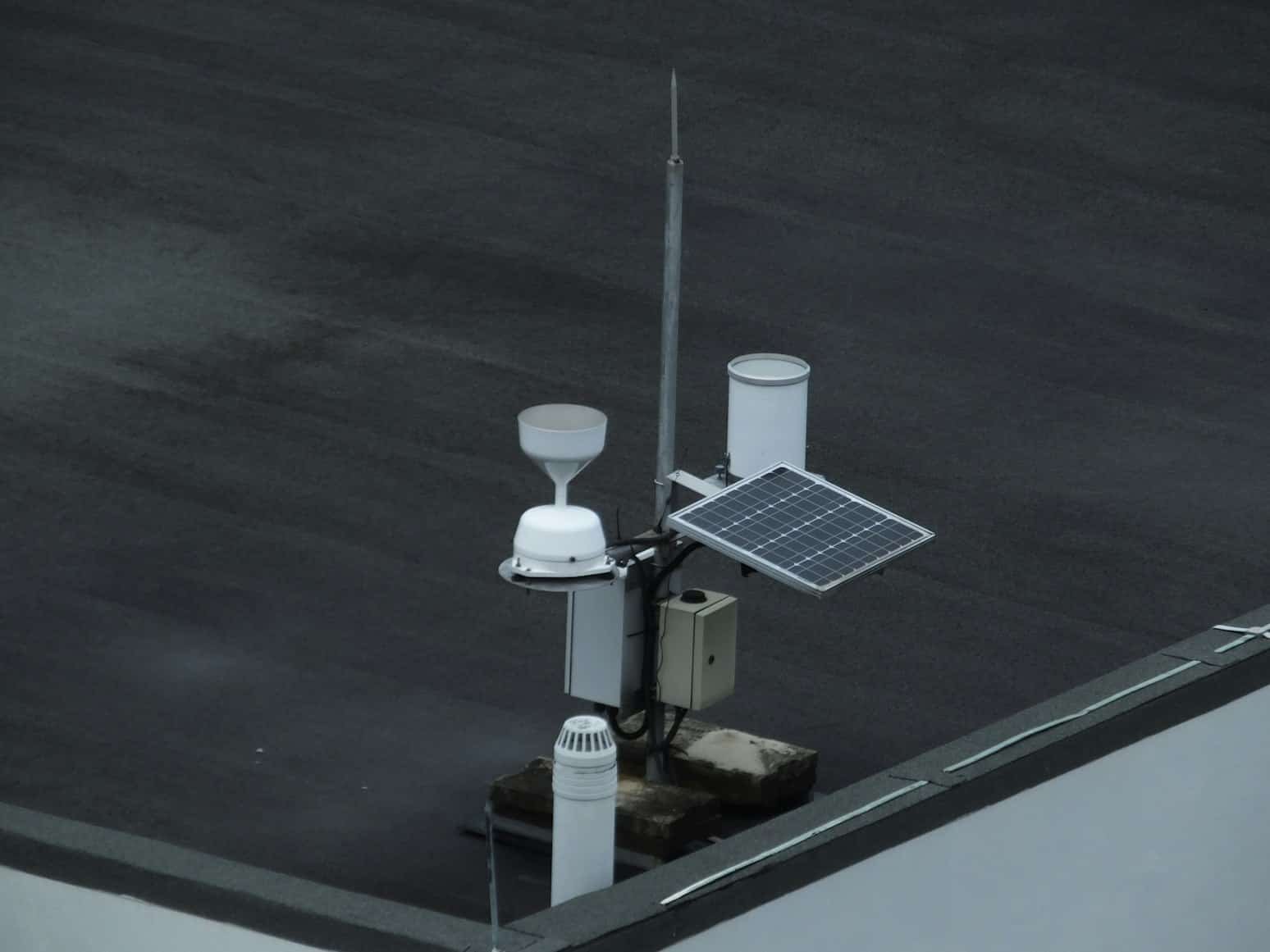
A weather station is a collection of precision instruments designed to measure the state of the atmosphere at a specific location.
From backyard hobbyist setups to professional airport arrays, every station operates on the same core principles of observation and data collection.
Understanding how these systems work reveals the remarkable science behind every forecast you read or hear.
The Thermometer: Measuring Air Temperature
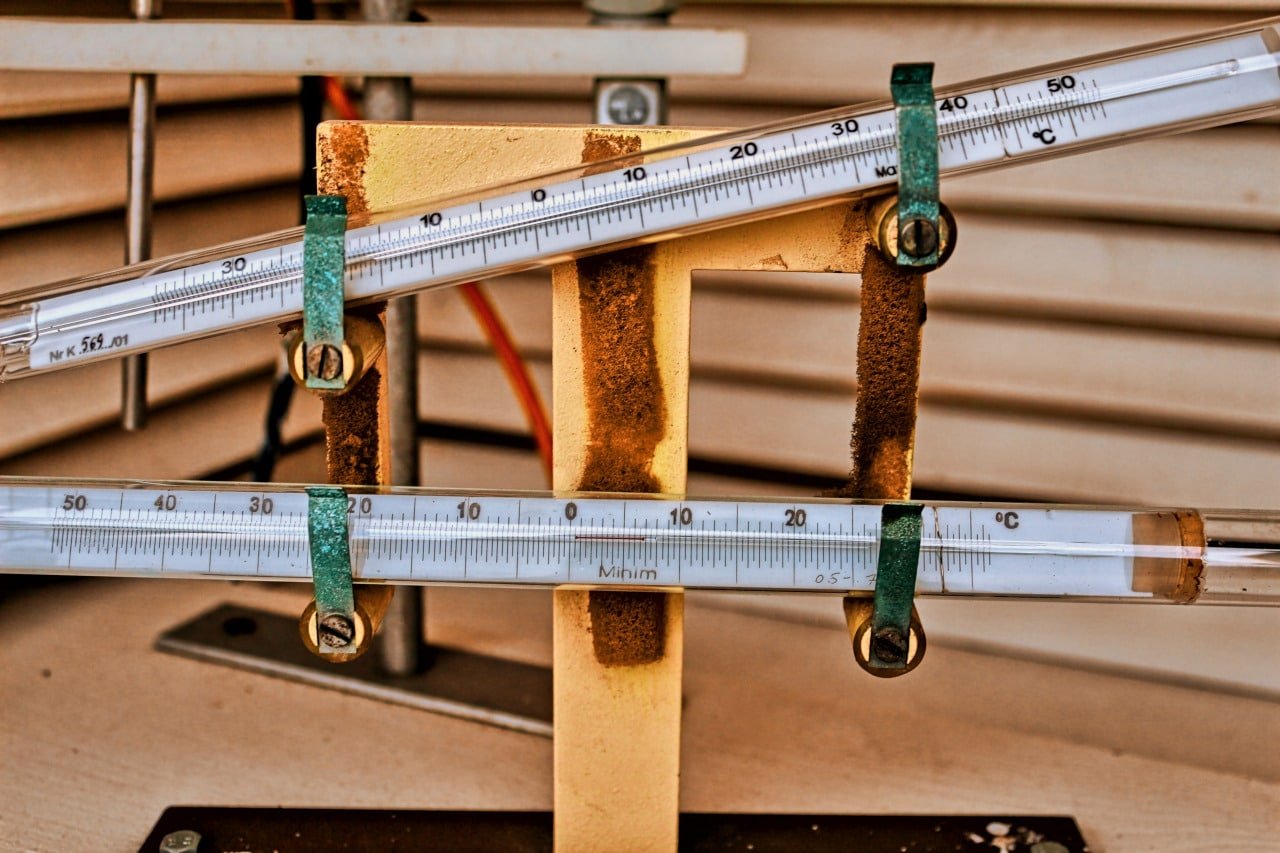
Air temperature is one of the most fundamental measurements any weather station makes.
Modern stations use electronic temperature sensors called thermistors or platinum resistance thermometers (PRTs).
These sensors change their electrical resistance in a predictable way as temperature rises or falls.
A datalogger reads that resistance and converts it into a temperature value in real time.
Sensors are housed inside a Stevenson screen, a louvered white box that shields them from direct sunlight and precipitation.
This shielding ensures the reading reflects true air temperature rather than radiant heat from the sun.
The Barometer: Reading Atmospheric Pressure

Atmospheric pressure is the weight of the air column above a given point on Earth’s surface.
Modern weather stations use electronic pressure transducers that detect tiny deformations in a sealed metal capsule as pressure changes.
Rising pressure generally signals fair weather, while falling pressure often indicates incoming storms.
Pressure is measured in hectopascals (hPa) or millibars, with sea-level standard pressure at 1013.25 hPa.
Station pressure readings are mathematically adjusted to sea level so forecasters can compare data across different elevations.
The Anemometer: Capturing Wind Speed and Direction
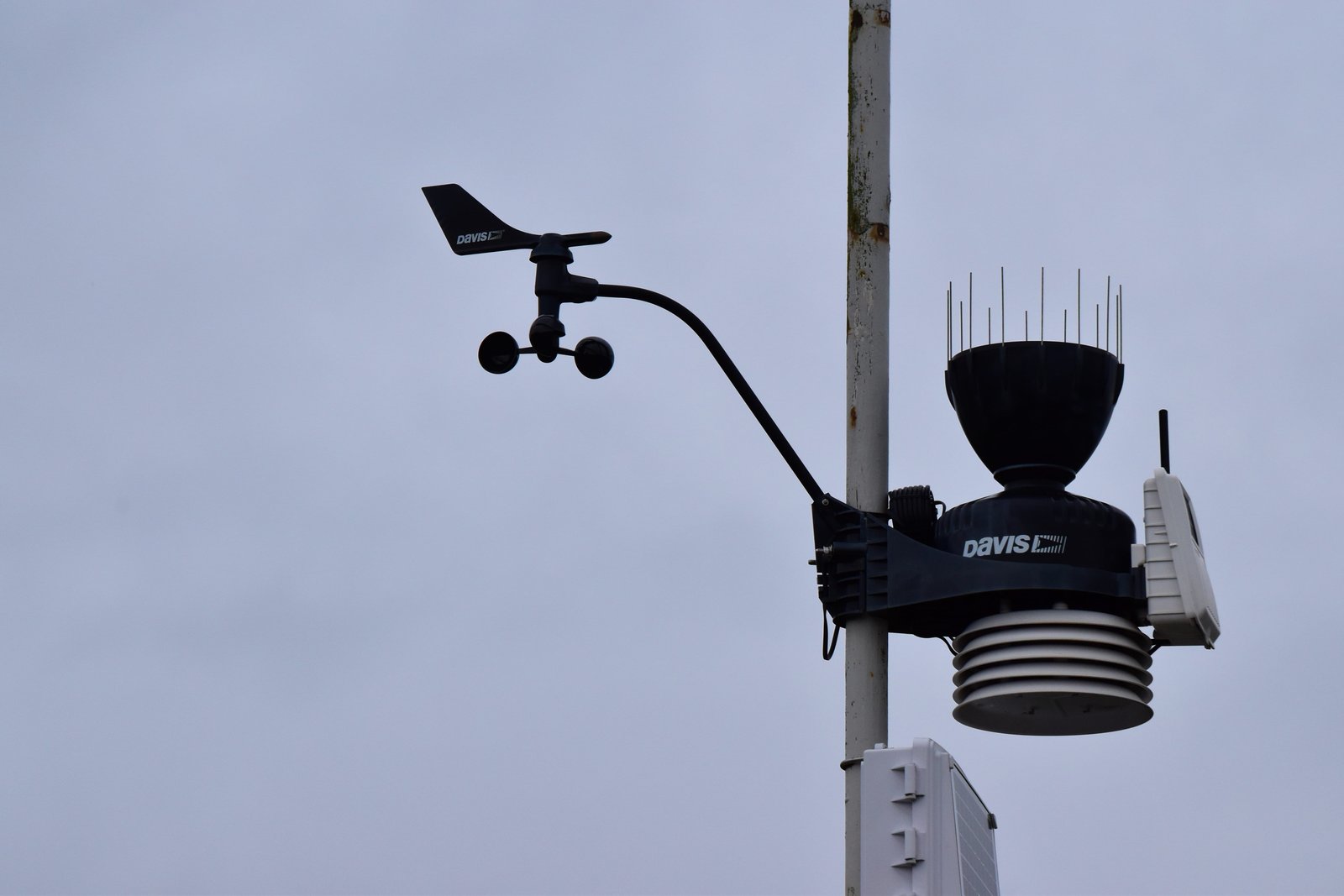
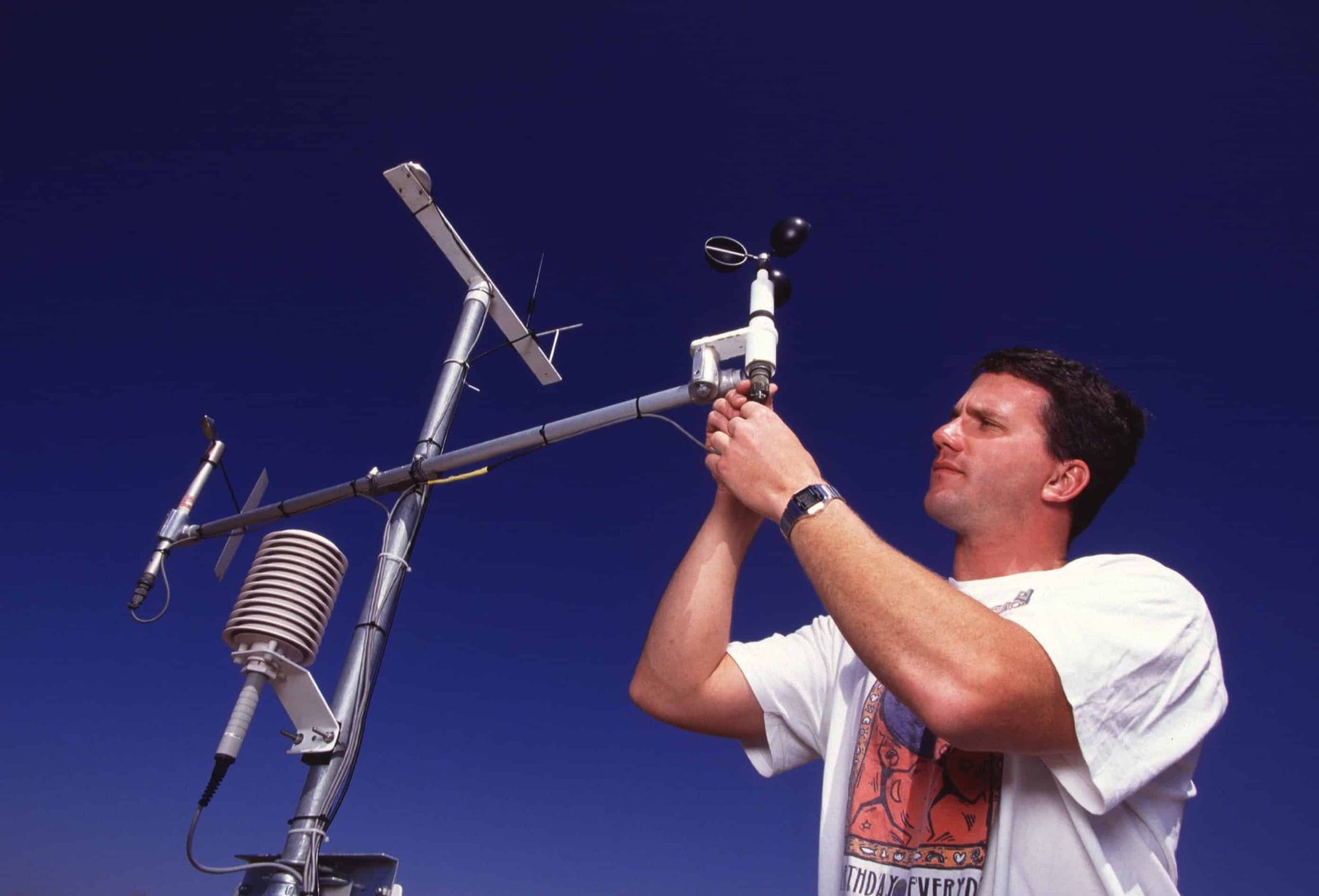
Wind speed is measured by an anemometer, one of the oldest meteorological instruments still in active use.
The most common type uses three or four rotating cups mounted on horizontal arms around a vertical shaft.
Faster wind spins the cups faster, and the rotation rate is electronically converted into a speed reading.
Wind direction is measured separately by a wind vane that pivots to align with the incoming airflow.
Ultrasonic anemometers have no moving parts and instead calculate wind speed from the travel time of sound pulses between sensors.
Both cup and ultrasonic designs report data multiple times per second to capture gusts accurately.
The Hygrometer: Quantifying Humidity
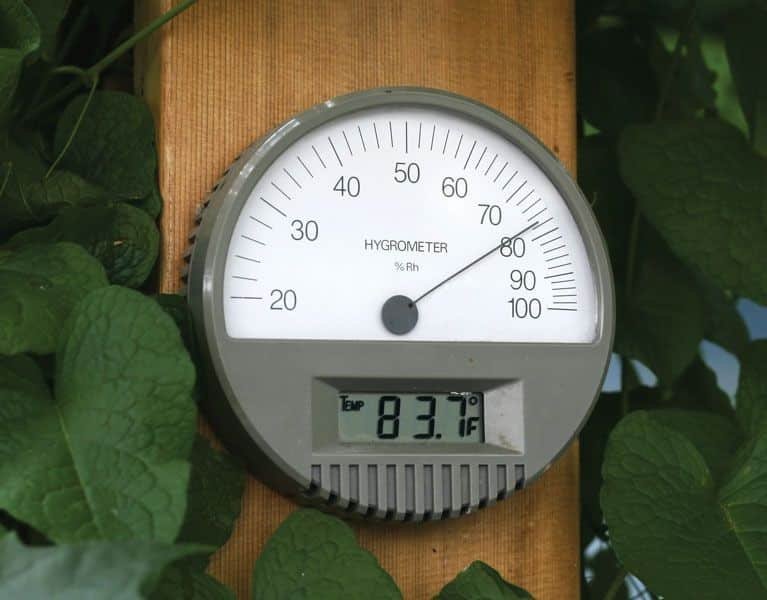
Relative humidity describes how much water vapor is in the air compared to the maximum possible at that temperature.
Most modern stations use capacitive humidity sensors made from a thin polymer film that absorbs or releases moisture.
As the film absorbs water vapor, its electrical capacitance changes in a measurable and repeatable way.
The sensor’s output is translated into a percentage representing relative humidity from 0 to 100 percent.
Accurate humidity data is critical for calculating dew point, heat index, and the likelihood of fog or precipitation.
The Rain Gauge: Counting Every Drop
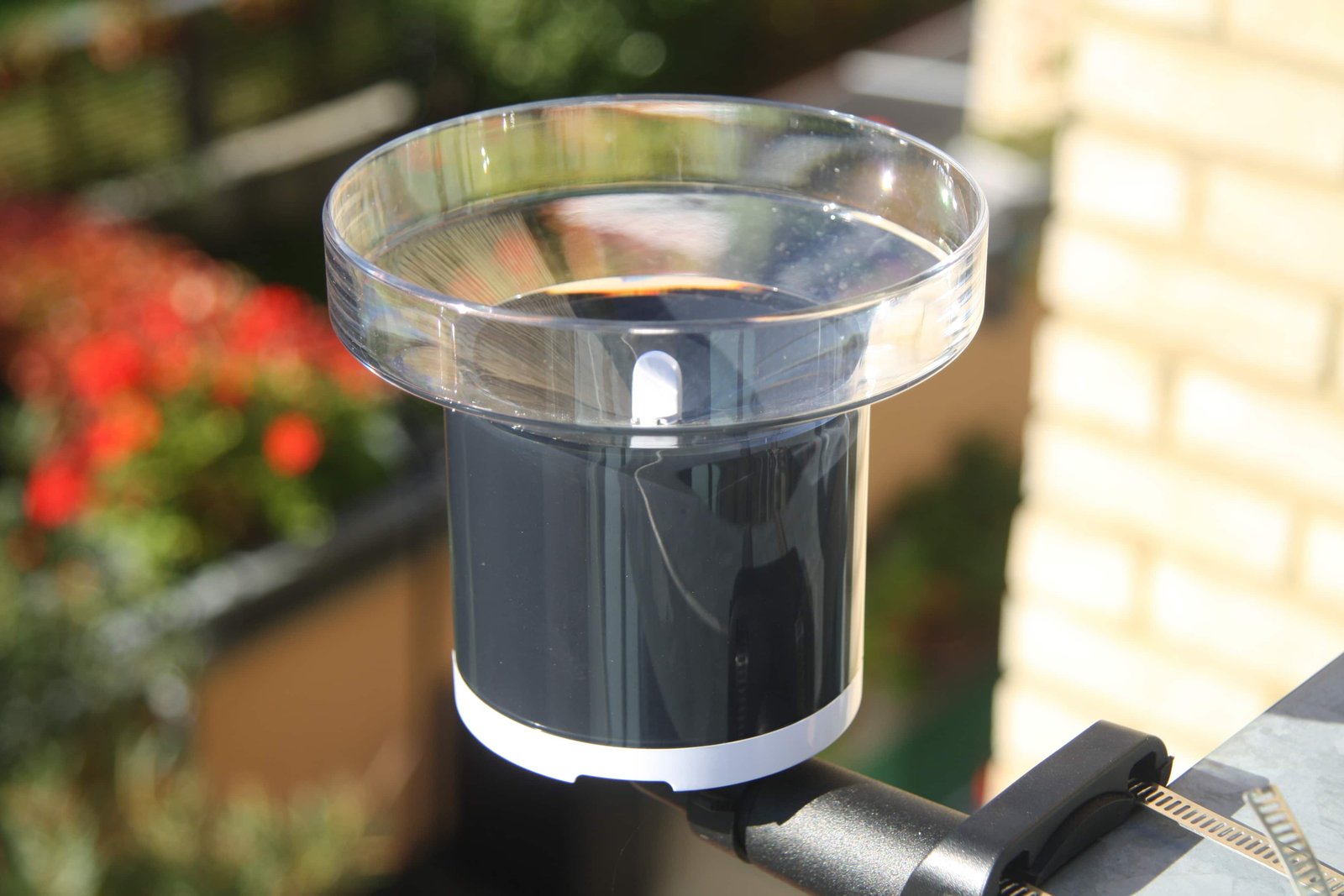
Precipitation measurement is handled by a rain gauge, which collects and quantifies falling water.
The tipping bucket design is the standard for automated stations: rainwater funnels into a small seesaw container.
Every time the bucket fills with a set amount, usually 0.2 mm or 0.01 inches, it tips and triggers an electronic counter.
Each tip is recorded with a timestamp, allowing stations to report both total accumulation and rainfall rate.
Heated gauges are used in cold climates to melt snow and ice before measurement so totals remain accurate year-round.
The Pyranometer: Measuring Solar Radiation
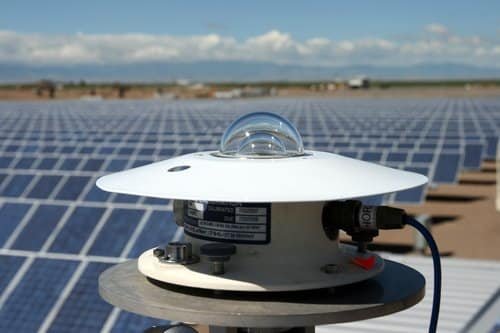
Solar radiation sensors, called pyranometers, measure the total incoming shortwave energy from the sun.
They use a thermopile detector, a stack of tiny thermoelectric junctions that generate a voltage proportional to absorbed solar energy.
The sensor is mounted under a glass dome that transmits a broad range of solar wavelengths without distortion.
Solar radiation data helps forecasters understand cloud cover, evaporation rates, and surface heating patterns.
It is also essential input for agriculture, solar energy production, and climate research models.
The Datalogger: The Brain of the Station
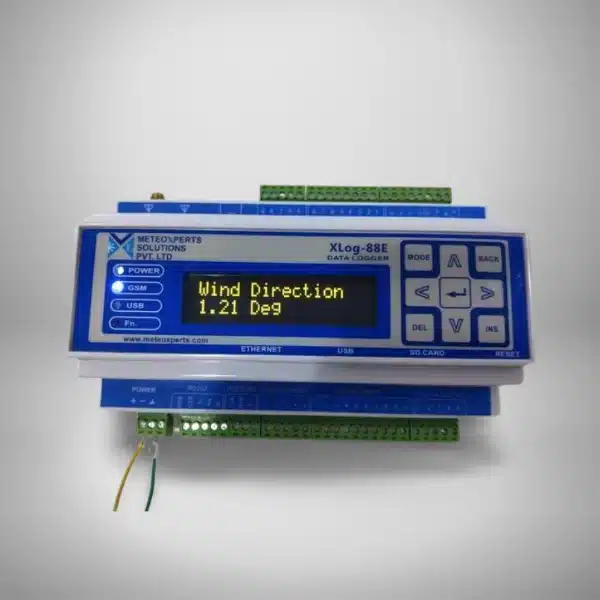
Every sensor in a weather station feeds its output into a central datalogger.
The datalogger samples each sensor at regular intervals, often every few seconds, and stores averaged values.
It applies calibration corrections to ensure readings are accurate and consistent over time.
Most modern dataloggers have onboard memory, a real-time clock, and multiple communication ports.
Data is transmitted via cellular networks, satellite links, Wi-Fi, or radio to central databases for processing.
Without a reliable datalogger, even the best sensors produce data that is fragmentary and difficult to use.
Power Systems: Keeping Stations Running
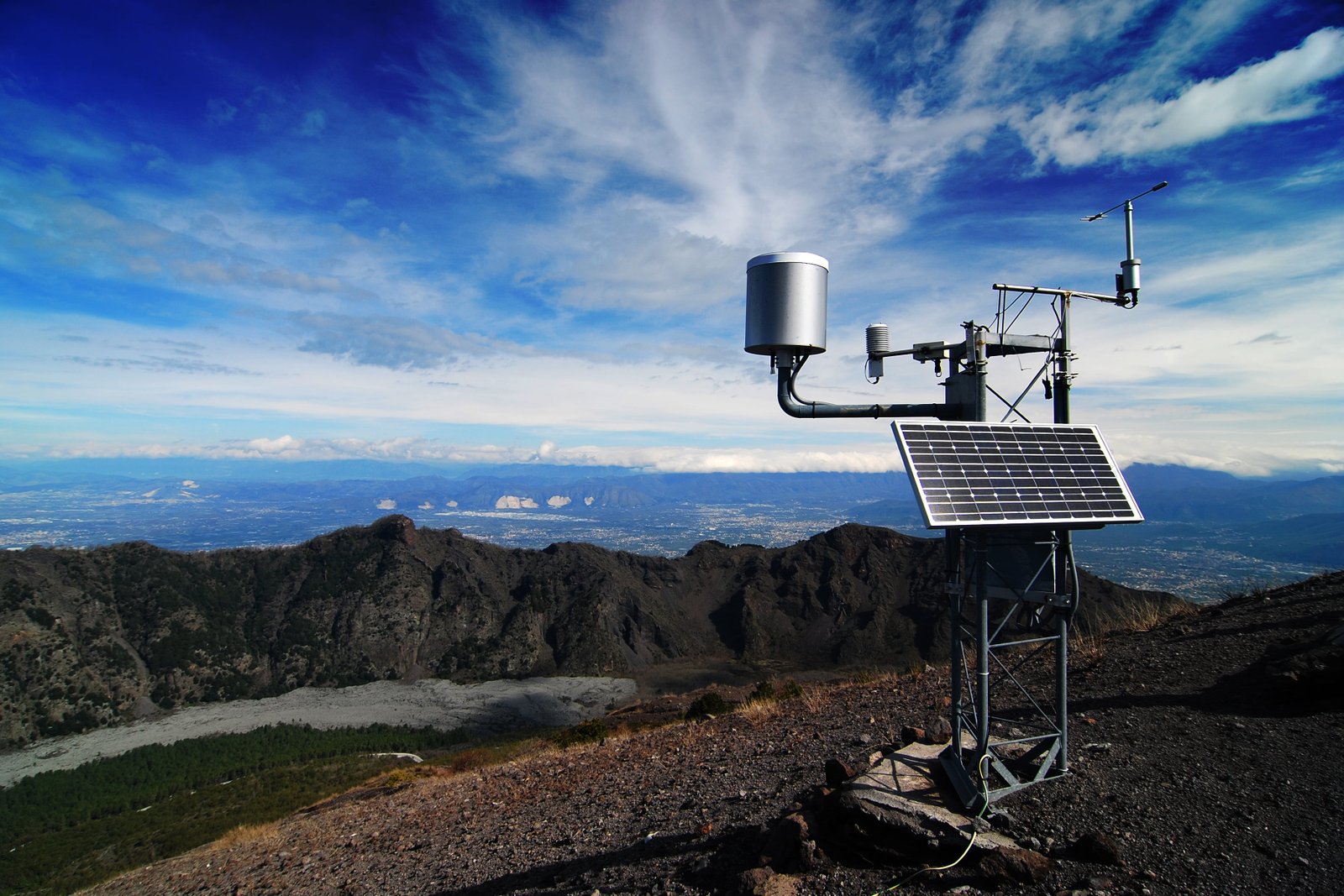
Weather stations in remote locations cannot rely on grid power and must generate their own electricity.
Most field stations use a combination of solar panels and sealed lead-acid or lithium battery banks.
The solar panel charges the battery during daylight, and the battery powers the station through the night and on cloudy days.
Small wind turbines are sometimes added in high-latitude or consistently windy locations to supplement solar output.
Power management circuits regulate voltage and protect batteries from overcharging or deep discharge.
Stations at research sites in polar regions may also use fuel cells or thermoelectric generators fueled by propane.
Networks and Data Transmission: From Station to Forecast
A single station is useful locally, but networks of stations create the broad picture forecasters need.
National meteorological services operate thousands of stations that feed data into central servers every few minutes.
Quality control algorithms automatically flag readings that fall outside expected ranges for review.
Numerical weather prediction models ingest this observational data as the starting point for their calculations.
Citizen science networks like Weather Underground and CWOP allow personal weather stations to contribute to the global dataset.
The density and quality of surface observations directly affect how accurate short-range forecasts can be.
Calibration and Maintenance: Keeping Data Trustworthy
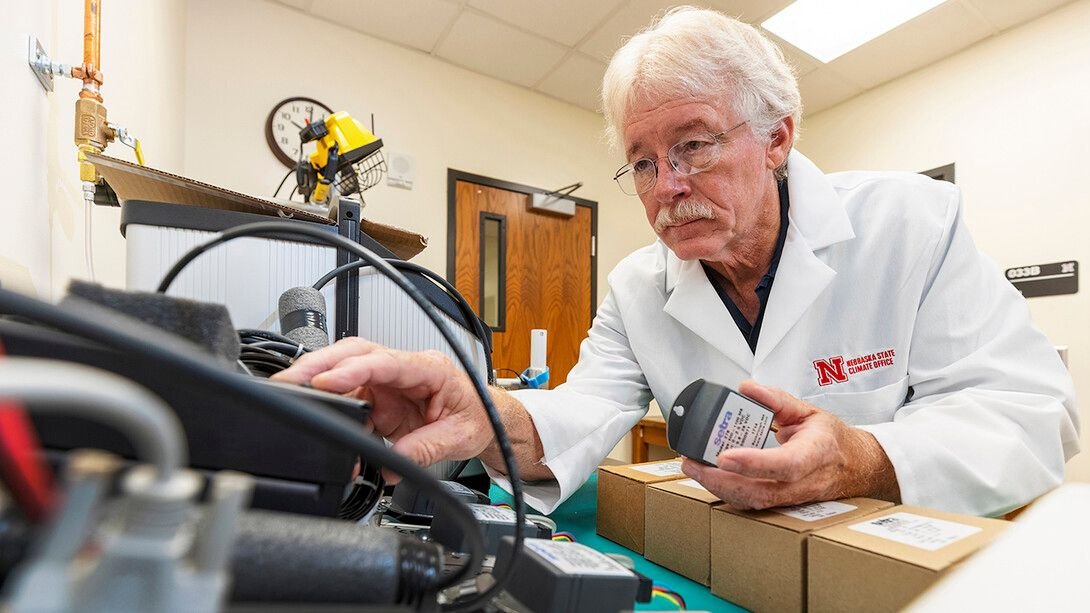
Even the best sensors drift over time and must be regularly calibrated against known reference standards.
Calibration involves comparing a sensor’s output to a certified reference instrument and applying correction factors.
Rain gauge funnels and tipping buckets are cleaned regularly to remove debris, insects, and algae.
Anemometers are inspected for worn bearings or bird damage that could slow their rotation artificially.
Radiation shields around temperature sensors are checked for discoloration or blockage that might bias readings.
Well-maintained stations can produce continuous, accurate records spanning decades, forming the backbone of climate science.