

High indoor humidity is uncomfortable and actively damages your home. Moisture that seeps into wooden beams, drywall, and flooring causes swelling, rot, and mold that can cost thousands to repair. At the same time, humidity above 50% makes your home feel significantly hotter than it actually is and can aggravate asthma, allergies, and other respiratory conditions.
The good news is that most indoor humidity problems have straightforward solutions. Whether your issue is high outdoor humidity, poor ventilation, daily activities like cooking and showering, or a structural problem like a leaky pipe, one or more of the 11 methods below will bring your home back into the EPA-recommended range of 30 to 50% relative humidity.
Why Indoor Humidity Is Bad for Your Home and Life
High humidity can cause physical damage to your home through undesirable condensation on walls or windows, inviting airborne mold and bacteria to grow and multiply.
Porous materials like wooden doors, window frames, and roof beams can begin to expand and weaken, leading to dry rot and decay, which cost thousands to repair.
Lower humidity will protect the physical structure of your home. Humidity that infiltrates wooden beams, doors, or joists can lead to swelling and cracking.
Dampness that sets into drywall or carpeting creates a breeding ground for dust mites and mold growth. Moisture can attack fine wood furnishings, floors, or walls, causing stains and damage.
Excessive humidity levels can lead to heat stroke and pneumonia if you are continuously exposed to it, not to mention how irritable being hot and sweaty will make you.
If the humidity level is too high, you will feel hotter than the actual temperature, especially in summer. You may also not experience sweat evaporation, which would normally cool your body.
The high humidity can also cause a feeling of low energy, lethargy, and drowsiness. Then when it’s time to sleep, it will also be uncomfortable. Optimal humidity is good for your health, aids sleep, and promotes daytime mental alertness. You will also breathe easier if you normally suffer from a respiratory illness like asthma or allergies.
What Is the Ideal Humidity Level For Your Home?

According to the United States Environmental Protection Agency (EPA), the ideal humidity level for your home is between 30% – 50% when the outdoor temperature is above freezing.
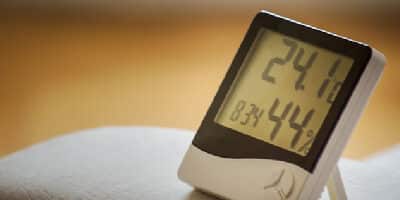
When it’s frigid outside, the EPA recommends a lower indoor humidity (15-30%) to avoid moisture condensing and adversely affecting your home. You can measure indoor humidity with an inexpensive, portable hygrometer. Read our reviews here, as these will help you find an affordable and accurate model.
If you want to understand what your temperature and humidity readings actually mean for comfort, our dew point calculator converts them instantly and shows you whether conditions are dry, comfortable, or oppressive.
Signs Your Home Has Too Much Humidity
Before reaching for a dehumidifier, it helps to identify the signs that humidity is actually the problem. Common indicators include condensation forming on windows or mirrors that lingers for hours, a musty or earthy smell in rooms or closets, visible mold or mildew on walls or grout, wood doors or windows that stick or are hard to close, and peeling paint or wallpaper. If you notice any of these, measuring with a hygrometer will confirm whether humidity is the cause.
Visible mold or mildew on walls, grout, or ceiling corners is a clear sign conditions have already exceeded healthy levels. Wood doors and windows that stick or are suddenly hard to close suggest the frames have absorbed moisture and expanded. Peeling paint or bubbling wallpaper on interior walls points to moisture working its way through from behind. If you notice any combination of these signs, measure with a hygrometer before taking action, as it tells you exactly how far outside the healthy range you are and helps you choose the right intervention.
What Are the Major Sources of High Indoor Humidity?

Your home’s indoor humidity could be above the optimal 30-50% level for several reasons. Here are the possible sources of moisture in your home:
- High outdoor humidity seeping in around poorly closing window frames and doors.
- Poor household ventilation if your house is airtight and windows are usually closed.
- Interior problems including leaky pipes or condensation on walls or on windows.
- Daily activities like hot showers, running a clothes dryer or dishwasher, and cooking.
So, to remove excess moisture in your home, keep reading below and find the interventions that best solve your particular moisture issue(s).
How to Lower Humidity in House
Reducing humidity in your home may require a simple or multi-faceted solution, depending on how many different sources of moisture you have. Finding the source of moisture and taking appropriate corrective action will lower the humidity in your house to an acceptable level.
Let’s take a look at the 11 best ways to lower humidity in your house.
Reducing Indoor Humidity When Outdoor Humidity Is High
Suppose you’re in an area where outdoor humidity is consistently 60% or greater. In that case, those sauna-like conditions will inevitably infiltrate your home to some degree.
1. Use an Air Conditioner

If high temperatures accompany elevated outdoor humidity, air conditioning will expel your home’s high humidity and heat, replacing it with cooler, drier air. Whether you have a window unit or a central air conditioning system, choose an EnergyStar-rated appliance sized correctly for the space you wish to cool and dehumidify. Ensure that the air conditioning filter is clean for greater energy efficiency.
2. Use a Dehumidifier

If you’re experiencing high humidity without sky-rocketing temperatures, a dehumidifier may solve your problem. Portable units will allow you to remove moisture in the most humid rooms first.
Whole-house dehumidifiers that connect directly to your HVAC system are also available. These are appropriate where humidity is elevated for most or all of the year.
Remember to keep doors and windows closed for best results when using an air conditioner or dehumidifier.
How Quickly Can You Lower Indoor Humidity?
Most people want to know what to expect before committing to a fix. The honest answer depends on the source and severity of the problem.
An air conditioner or dehumidifier running continuously in a closed room can reduce humidity by 10 to 20 percentage points within a few hours under typical conditions. If your home is at 70% relative humidity and you run a correctly sized dehumidifier with doors and windows closed, you should see meaningful improvement within half a day. Getting down to and maintaining the EPA-recommended 30 to 50% range consistently may take a few days if humidity has been elevated for a long time and materials like drywall and carpeting have absorbed significant moisture.
Ventilation-based solutions like opening windows and running exhaust fans work more slowly. They help prevent humidity from building further but are less effective at rapidly reducing levels that are already high. If you need fast results, active removal with a dehumidifier or air conditioner is the more reliable approach. Ventilation works best as a long-term prevention strategy once levels are under control.
Reducing Indoor Humidity When Your Home Is Poorly Ventilated
Developers built newer houses to be airtight as a means of conserving energy. While this is good practice, it prevents air exchange with the outside. Furthermore, newly built houses release significant moisture from construction materials in the first few years.
Your sealed home will inevitably hold onto that moisture, resulting in high indoor humidity.
3. Ventilate Your Home

Ceiling fans are the best way to circulate indoor air. Standing pedestal fans or tower fans are good, too. But to get rid of humidity from the inside, you need a way for the damp air to get out.
To naturally reduce humidity in a room, you can open windows. If humidity is a problem throughout your home, open windows on each side of the house to create a cross flow of air.
Ideally, this strategy works best when it’s less humid outside. But even if outside humidity is about the same as indoor humidity, the movement of air inside will at least make it feel momentarily cooler.
Cracking a window open for a short time may yield a noticeable improvement. Also, keep all interior doors open to facilitate air circulation.
How to Decrease Indoor Humidity from Interior Problems in Your Home
Whether you own or rent your home, you must remain vigilant about unwanted water intrusion (liquid or vapor). If not, problems worsen over time, possibly necessitating expensive repairs.
4. Check and Fix Leaks
A regular quick check around all toilets, showers, bathtubs, and sinks may uncover water droplets. Wiping joints connecting pipes or shut-off valves with a thin paper tissue may reveal unseen moisture or leaks. Repair or replace broken pipes immediately.
5. Insulate Walls and Roofs
Look for condensation on walls, ceilings, and windows. The visible liquid often appears when warm saturated air comes into contact with a surface that is at a lower temperature. Adding water-repelling insulation will minimize this problem.
Adhesive-backed insulating foam strips or caulking around windows and doors will also help to keep warm air out.
6. Add a Plastic Barrier Against the Soil
Wet soil around your home’s foundation or abutting against a crawl space contributes to indoor humidity. Placing a thick plastic sheet between the earth and your home or crawl space will eliminate the issue.
Reducing Indoor Humidity From Daily Activities
Cooking, showering, and using the dishwasher or clothes dryer all contribute to indoor humidity. Unvented gas appliances and firewood do, too. In total, daily activities in an average size household release up to three gallons of moisture into indoor air every day.
7. Run Exhaust Fans
Exhaust fans are excellent at pulling humidity out of your home spaces’ air and sending it skyward. They perform the task so well that if you don’t have them, it’s definitely worth installing them in your kitchen, bathroom, and laundry. Ensure they send humid air outside, instead of moving it to your attic or your living space! Leave exhaust fans operating during and after cooking and showering for maximum effectiveness.
8. Minimize Ways of Sending Steam into Your Airspace
In the kitchen, keep stove top pots covered when cooking. When you remove a dish from the oven, keep it covered until it cools before lifting the lid.
Invest in a slow cooker that produces less vapor. Use warm or cold water instead of hot to wash dishes (either by hand or in the dishwasher). Similarly, shower with warm water instead of hot in the bathroom and keep shower times short.
9. Dry Clothes Outside
Both clothes dryers and drying racks set up inside add to indoor humidity. Place the rack outside instead. A discrete, retractable clothesline is more suitable for drying heavier loads of clean laundry.
10. Move Plants Outside, Weather Permitting
Like all plants, houseplants continuously release water vapor into the air during normal metabolic processes (transpiration). Occasionally moving them outdoors reduces their contribution to indoor humidity.
When inside, cover damp soil as much as possible to prevent evaporation. And if you have a vast indoor forest, share the love a little by gifting some of your plants to friends.
11. Set up Bowls of Moisture-Grabbing Materials
All around your home, on bookshelves, in corners, or under furniture, arrange bowls filled with hygroscopic (water-absorbing) non-toxic substances called desiccants. Unused kitty litter, Drierite (calcium sulfate), and silica gel will readily absorb and remove excess moisture from the air.
If applicable, refresh these every couple of months by regenerating (dehydrating) desiccants in an oven. Also, try sprinkling baking soda on carpets to remove the dampness and odors.
When to Call a Professional
Most of the causes of high indoor humidity are manageable without professional help. But there are situations where DIY solutions are not enough and calling in an expert is the right call.
If you have condensation appearing on interior walls rather than just windows, that suggests moisture is moving through your building envelope, which is a structural problem that insulation or caulking alone will not resolve. If you find mold covering more than 10 square feet, the EPA recommends professional remediation rather than attempting to clean it yourself. Persistent musty smells that return quickly after cleaning are often a sign of hidden mold behind walls or under flooring, which requires professional moisture testing to locate.
A persistently damp basement or crawl space despite using a dehumidifier suggests water is actively entering from outside through the foundation. A waterproofing contractor can assess whether exterior drainage, interior drainage channels, or a sump pump installation is needed. These are not cheap fixes, but addressing them properly is significantly less expensive than repairing the structural damage that results from leaving the moisture problem unresolved.
Final Thoughts

Lowering indoor humidity is essential for personal comfort and good health. It rarely requires a single dramatic fix. The most effective approach combines reducing moisture at the source, through exhaust fans, shorter showers, and covered cooking, with active removal via air conditioning or a dehumidifier. Start by measuring your current humidity with a hygrometer to understand how far off you are from the EPA-recommended 30 to 50% range, then work through the relevant tips above.
For most homes, two or three targeted interventions are enough to bring humidity under control. Structural issues like leaky pipes or poor insulation are the exception: if you suspect hidden moisture damage, a professional assessment is worth the cost before the problem worsens.




What is the cheapest homemade moisture absorber?
While you can use any of the methods recommended in the article, you can also make a dehumidifier using two buckets and a load of rocksalt. Simply drill some holes in the first bucket, fill it with rock salt, add a few large pebbles in the bottom of the second bucket, and place the first bucket inside the second one.
Salt is hygroscopic, and it attracts water from the air around it. The excess water will filter through to the second bucket, and you can empty this out, effectively drying the air in your home.
My home has some water damage and one of the closets is very damp. What can I use to effectively dry out this small space?
You can scatter kitty litter on the baseboard or place silica gel in a wide topped container, allowing these desiccating materials to absorb water from the closet. If the boards of the closet are swelling it may be time to strip these and fully air out the space before adding new boards.