Every summer, the same question comes up. Where can you go to actually cool off? Not just find a pool or crank the air conditioning, but physically escape the heat and land somewhere that feels ten or twenty degrees cooler than the place you left. The answer, in almost every state, is elevation, water, or both. Mountain towns, lakeside villages, deep forest hollows, and coastal communities where the fog rolls in like clockwork all offer genuine relief from the worst of summer.
The towns on this list are not just cooler on the thermometer. They are places where the summer experience is fundamentally different from whatever is happening in the lowlands. These are places where you sleep with the windows open, where you need a jacket for evening, where the afternoon breeze off a lake or down a canyon makes you forget that somewhere nearby, people are suffering through triple digits. Some of these towns are famous summer destinations. Others are local secrets that the people who live nearby guard carefully.
This list covers all 50 states. Some states make this easy. Colorado and Montana have entire regions where summer highs barely crack 80. Others require more creativity. Florida and Louisiana are not known for cool summers, but even there, options exist if you know where to look. The goal is one town per state where you can go when the heat gets unbearable and find something that actually feels like relief.
Alabama: Mentone
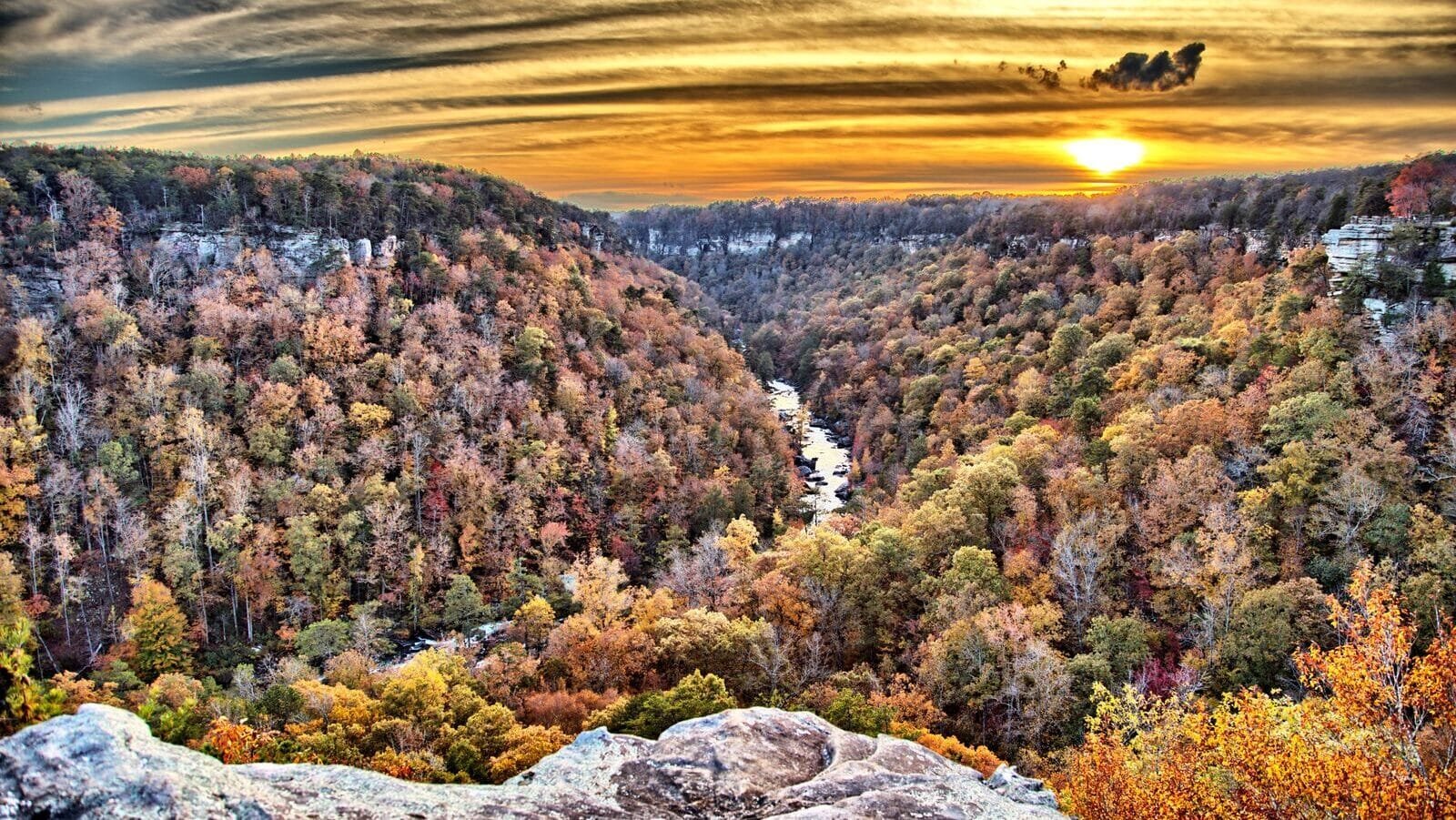
Mentone sits on the brow of Lookout Mountain at about 1,800 feet, making it one of the highest communities in Alabama and meaningfully cooler than the rest of the state during the worst of summer. When Birmingham and Montgomery are pushing into the upper 90s with crushing humidity, Mentone’s summer highs typically stay in the low to mid 80s with noticeably lower humidity thanks to the elevation. The mountain breezes that sweep across the plateau make evenings genuinely pleasant, and sleeping with the windows open is still possible here in July, a luxury that the lowland cities lost decades ago.
The town is surrounded by natural areas that amplify the cooling effect. DeSoto State Park and Little River Canyon National Preserve both offer shaded trails along water features that drop the perceived temperature even further. Little River, which runs along the top of Lookout Mountain rather than in a valley, creates a series of swimming holes and cascades where the water stays cold enough to shock you on the hottest days. DeSoto Falls, the 104-foot cascade in the state park, throws a mist that makes the surrounding observation area feel air-conditioned by nature.
The Wildflower Cafe is the town’s dining anchor, serving seasonal farm-to-table food that draws visitors from Chattanooga and beyond. The Mentone Market has provisions for cabin stays. Lodging leans heavily toward rental cabins scattered across the mountain, many of them with screened porches positioned to catch the evening breeze. The Mentone Inn and Mentone Mountain Getaways are reliable options. Mentone is proof that Alabama has a genuine mountain escape, and the temperature difference between the brow of Lookout Mountain and the valley below is real enough to change how summer feels.
Alaska: Homer
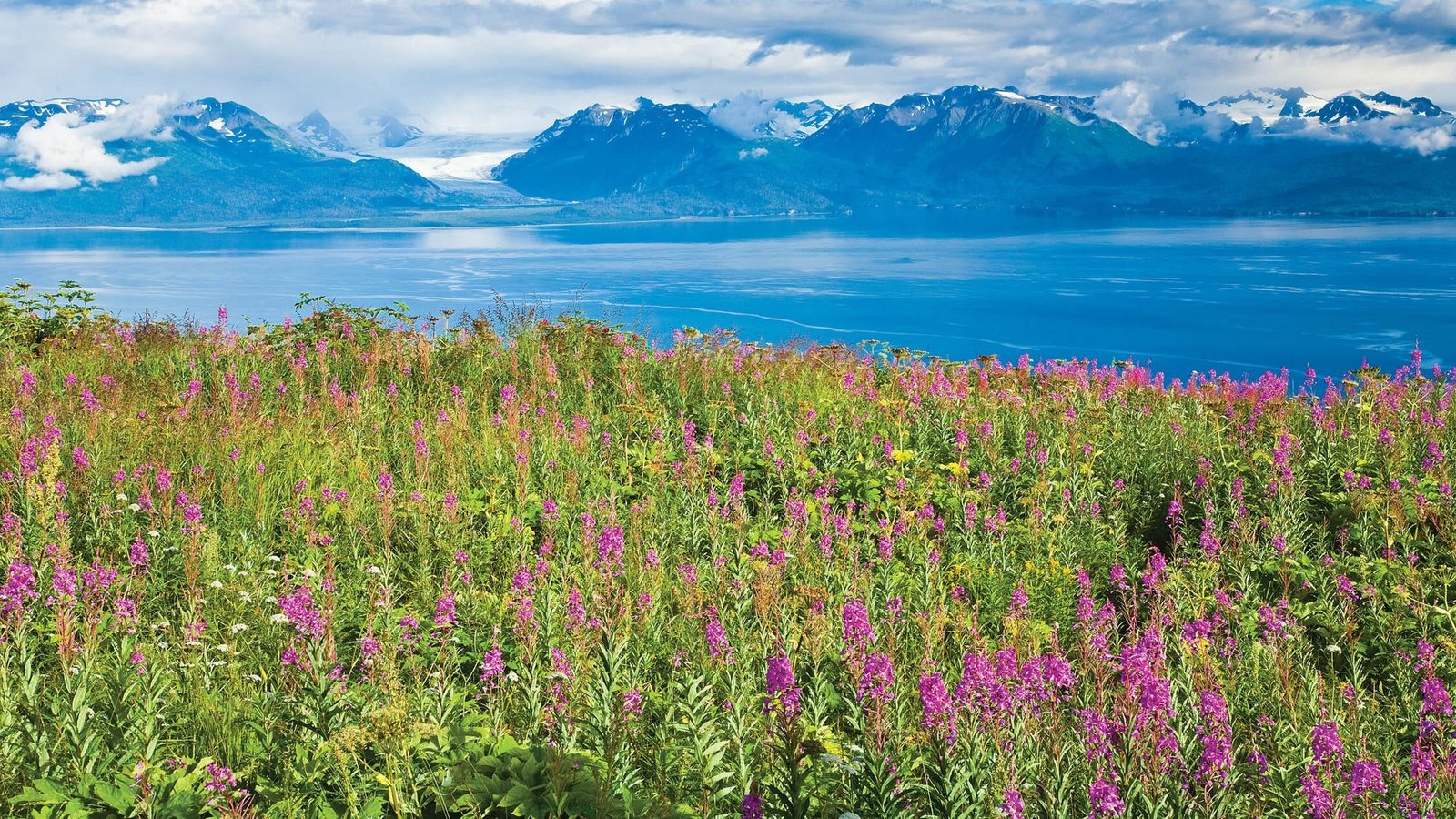
Alaska is the obvious answer to escaping summer heat, and the entire state qualifies as a cool retreat. But Homer, on the tip of the Kenai Peninsula where it juts into Kachemak Bay, offers the specific combination of cool summer temperatures and extraordinary natural beauty that makes it more than just a climate refuge. Summer highs in Homer average in the upper 50s and low 60s, and the bay breezes keep even the warmest days comfortable. The town sits on a bluff above the bay with views across the water to the Kenai Mountains, where glaciers and snow persist through the summer and the air off the ice fields keeps things cool.
The Homer Spit, a narrow gravel bar that extends four miles into the bay, is the center of summer activity. The Spit has restaurants, shops, charter fishing offices, and a small-boat harbor where halibut and salmon boats come and go all day. Kachemak Bay State Park, accessible only by water taxi from the Spit, offers hiking through coastal forest and along glacially carved fjords where the temperature feels like early spring even in July. The Center for Alaskan Coastal Studies runs guided tide-pool walks and nature programs that take advantage of the bay’s rich marine ecosystem.
The dining in Homer is exceptional for a town of about 5,800 people. La Baleine Cafe serves creative seafood and brunch. The Fresh Catch Cafe does fish and chips with halibut caught that morning. Captain Pattie’s Fish House, on the Spit, is a local institution. The Saltry, accessible by water taxi in Halibut Cove, is one of the most unique restaurant experiences in Alaska. For lodging, the Land’s End Resort at the tip of the Spit has rooms with bay and mountain views. The Homer Inn and Spa offers comfortable accommodations in town. Homer in summer is Alaska at its most accessible, a place where the cool air, the long daylight, and the bay create a summer experience that feels like a different planet from the lower 48.
Arizona: Greer
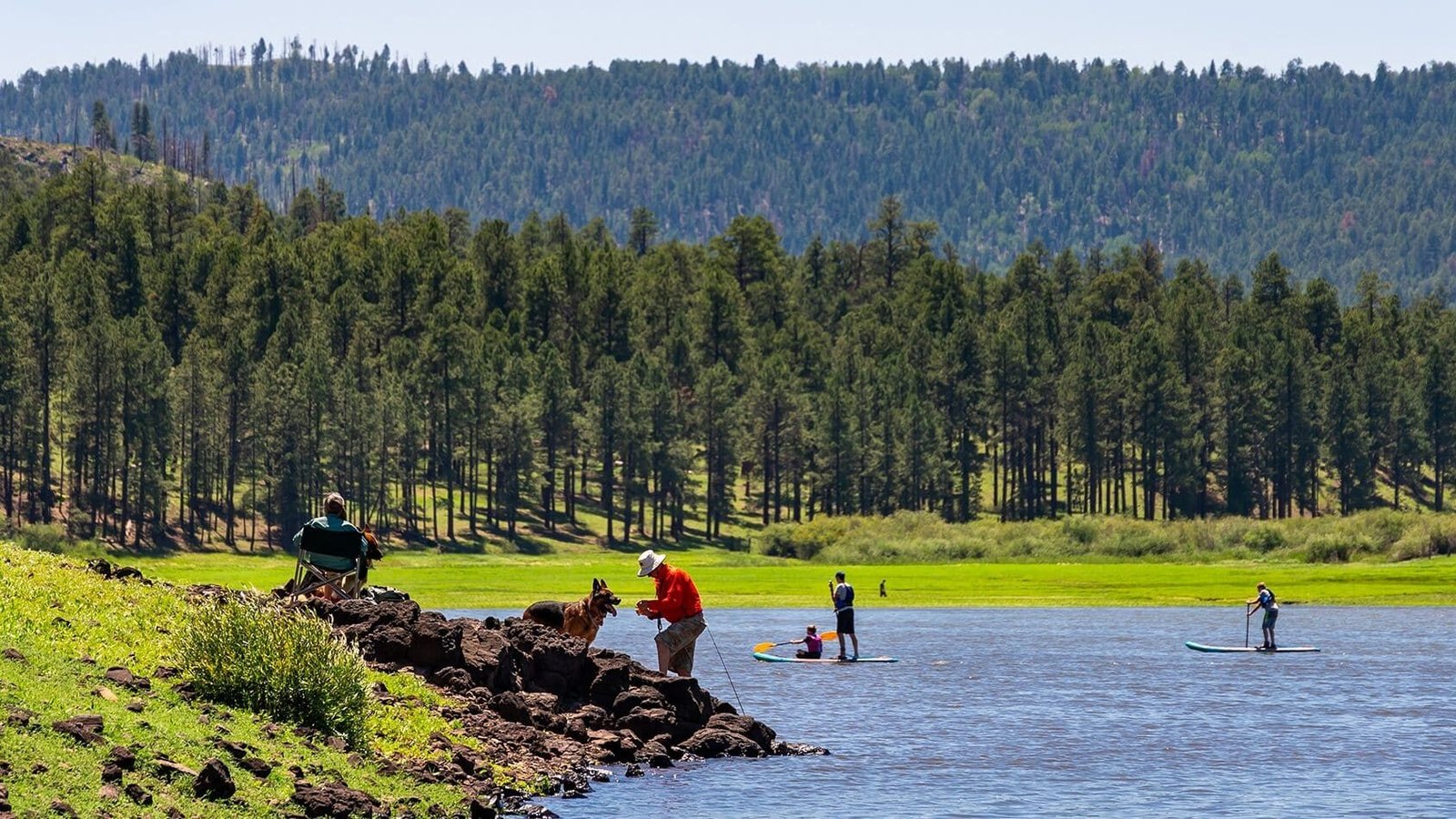
When Phoenix is baking at 115 degrees, the village of Greer in Arizona’s White Mountains sits at 8,500 feet with summer highs in the low 70s and nighttime temperatures that can drop into the 40s. The contrast is almost absurd. Greer is a tiny community of a few hundred people along the Little Colorado River in Apache County, surrounded by ponderosa pine and mixed conifer forest that stays green and fragrant through the summer. The drive from Phoenix takes about four hours and involves a climb of nearly 7,000 feet, and the temperature drops steadily with every mile of elevation gained.
The Little Colorado River, which begins as a cold mountain stream near Greer, offers trout fishing in water cold enough to numb your hands in July. Greer Lakes, a cluster of small mountain lakes near town, provide additional fishing and canoeing in a setting that feels more like the northern Rockies than the Southwest. The trails in the surrounding Apache-Sitgreaves National Forest run through meadows and forests where elk graze in the mornings and the air smells like pine and damp earth. Mount Baldy, the second-highest peak in Arizona at 11,420 feet, is accessible from a trailhead near Greer and offers above-treeline hiking where the temperature can be 50 degrees cooler than the desert below.
Greer’s dining options are limited but adequate. The Rendezvous Diner serves breakfast and comfort food. Greer Lodge Resort has a dining room open to non-guests. The general store has provisions for cabin stays. Lodging is predominantly rental cabins, many of them along the river with porches where you can sit in the evening and listen to the water. Greer Lodge and Molly Butler Lodge are the most established options. Greer is the Arizona escape that most Arizonans already know about, and during the worst summer weekends, the population of this tiny village swells with desert dwellers seeking the simple luxury of cool mountain air.
Arkansas: Eureka Springs
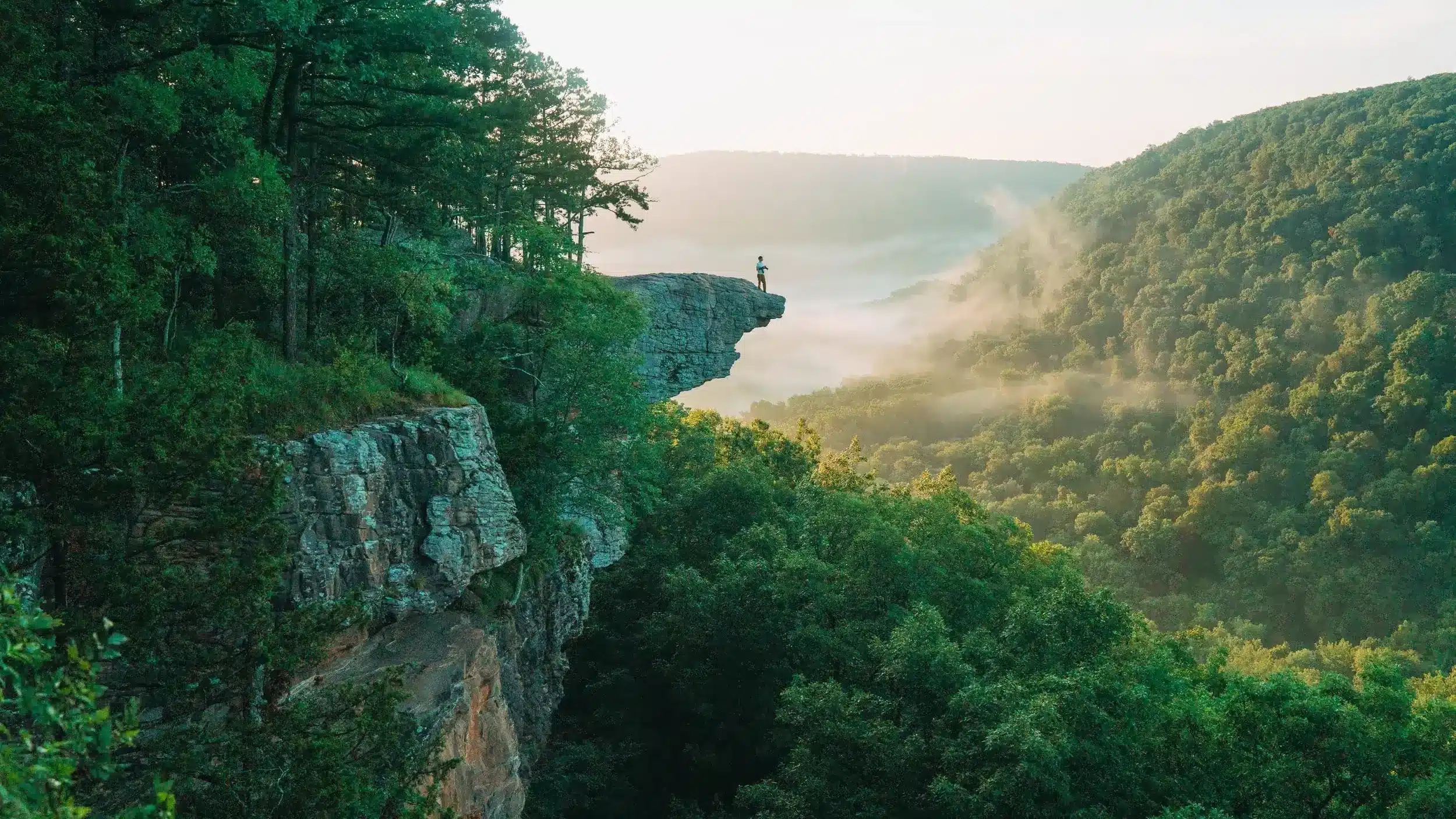
Eureka Springs sits in the Ozark Mountains at about 1,500 feet, and while that elevation alone does not produce dramatically cooler temperatures, the combination of mountain shade, spring-fed streams, and forest canopy makes the town feel meaningfully more comfortable than the Arkansas lowlands during summer. When Little Rock is pushing 100 with heavy humidity, Eureka Springs typically runs five to ten degrees cooler with better air movement through the mountain valleys. The town’s steep terrain means that breezes funnel through the streets, and the deep shade from the surrounding hardwood forest keeps the historic district comfortable for walking even in July.
The natural springs that gave the town its name still flow, and the spring-fed pools and creeks in the surrounding area offer cold-water relief that no air conditioner can match. Beaver Lake, a large Corps of Engineers reservoir west of town, has swimming beaches where the water stays cool enough to provide genuine refreshment through the summer. Blue Spring Heritage Center, south of town, has a spring that flows at a constant 58 degrees year-round, and just standing near the outflow drops the perceived temperature dramatically. The Ozark forest surrounding the town is thick enough that hiking the trails in the morning, before the heat of the day builds, feels like walking through a natural refrigerator.
The town’s restaurants and shops stay lively through the summer tourist season. Local Flavor Cafe does creative seasonal cooking. The Grotto Wood-Fired Grill serves pizza and salads in a cool, cave-like space. The 1886 Crescent Hotel, perched on the hilltop, catches breezes that the valley misses and has a pool with mountain views. The Basin Park Hotel, in the valley, stays cool in the shade of the surrounding buildings. Eureka Springs in summer is the Ozark escape that Arkansas has relied on for over a century, and the mountain air here still delivers relief when the flatlands are suffocating.
California: Eureka
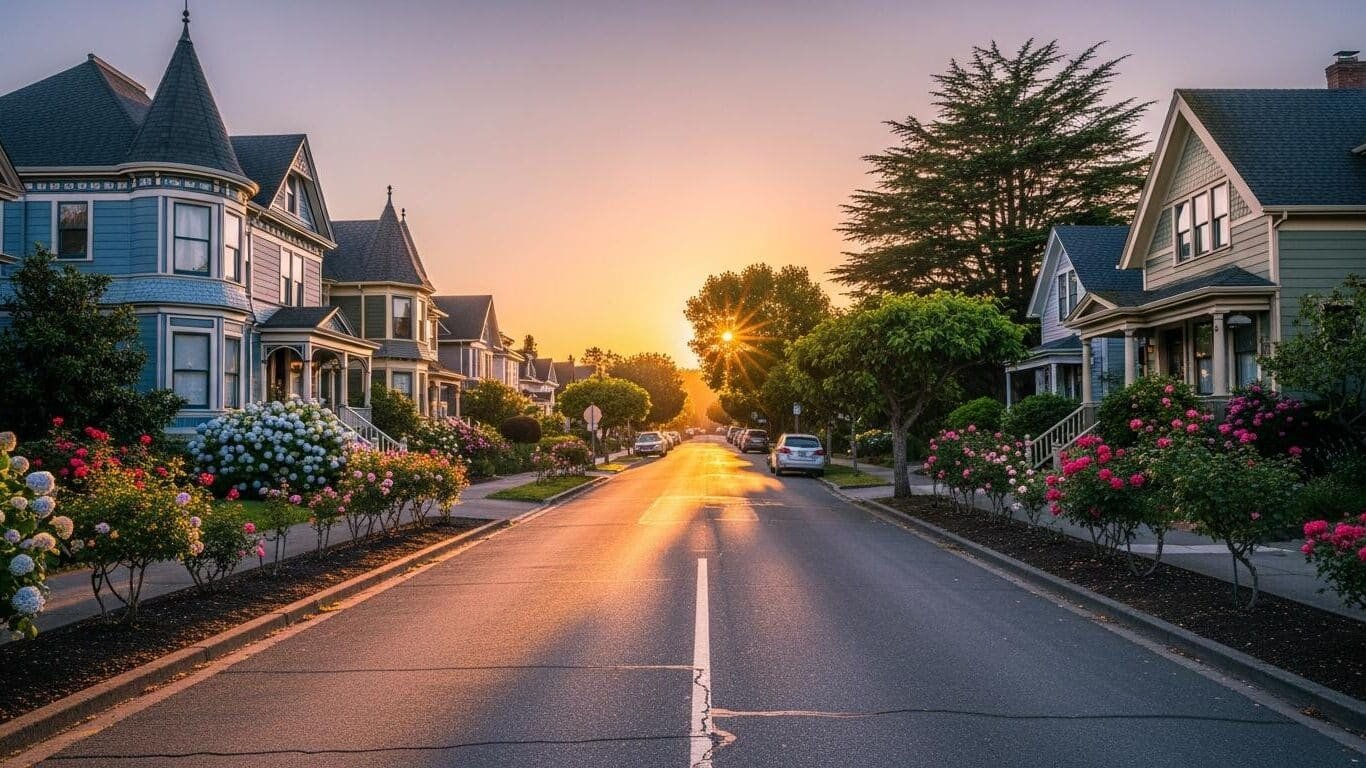
While most of California bakes through the summer, the far north coast around Eureka exists in a different climate entirely. Summer highs in Eureka average in the low 60s, and fog is more common than sunshine from June through August. The town sits on Humboldt Bay, and the cold California Current offshore keeps the marine layer persistent enough that locals joke about “Fogust” and wear layers to Fourth of July barbecues. For anyone escaping the 100-degree heat of the Central Valley or the inland desert, Eureka in summer feels like stepping into a different season.
The town itself is a Victorian seaport with an ornate downtown of preserved 19th-century buildings, including the Carson Mansion, often called the most photographed Victorian house in America. Old Town Eureka has restaurants, galleries, and shops along the waterfront that benefit from the cool marine air. Humboldt Bay, the second-largest enclosed bay in California, offers kayaking, wildlife viewing, and harbor cruises in conditions that never require sunscreen. The redwood forests inland from Eureka, including the groves in Redwood National and State Parks, maintain year-round cool temperatures under canopies so dense that the forest floor stays in perpetual twilight.
Dining in Eureka is surprisingly strong for a town of about 27,000. Restaurant 301 serves creative California cuisine. Brick and Fire Bistro does wood-fired pizza and seasonal dishes. The Samoa Cookhouse, across the bay, is the last surviving lumber-camp cookhouse in the West and serves family-style meals at long tables. For lodging, the Carter House Inns offer boutique accommodations in a collection of Victorian properties. The Inn at 2nd and C provides a more modern option downtown. Eureka in summer is the California that the rest of the state forgets about, a place where you pack a sweater for July and the fog is the amenity.
Colorado: Crested Butte
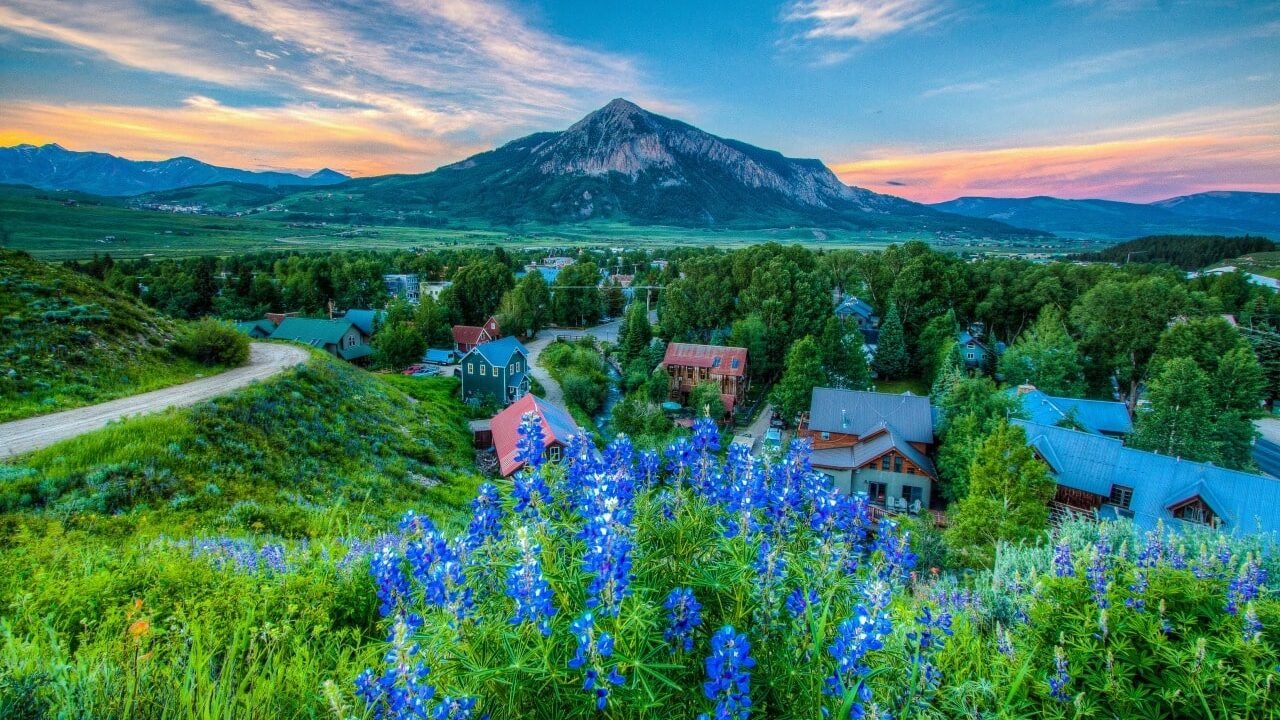
Colorado has dozens of mountain towns that qualify as summer heat escapes, but Crested Butte, at 8,885 feet in the Elk Mountains, offers the best combination of cool temperatures, outdoor access, and small-town character. Summer highs average in the mid 70s, and nighttime temperatures regularly drop into the 40s, making sleeping comfortable without air conditioning. The town sits in a high valley surrounded by peaks above 12,000 feet, and the mountain air has a clarity and freshness that makes every breath feel like a remedy for the lowland heat.
Crested Butte calls itself the Wildflower Capital of Colorado, and in July the alpine meadows surrounding the town explode with color. The wildflower festival, held annually in early to mid July, offers guided hikes, photography workshops, and botanical walks through fields of lupine, Indian paintbrush, and columbine at elevations where the temperature rarely tops 75. The mountain biking here is world-class, with trails ranging from gentle valley paths to technical singletrack on the surrounding peaks. The Slate River, running through the valley, stays cold enough for wading all summer, and the higher lakes in the surrounding wilderness are frigid enough to take your breath away.
Elk Avenue, the main street, has the colorful, unpretentious character of a mining town that has not been overly polished by resort development. Soupcon does refined French-inspired cuisine in a tiny log cabin. The Secret Stash serves creative pizza and cocktails. The Last Steep Bar and Grill is the local hangout. For lodging, the Elk Mountain Lodge offers historic rooms on Elk Avenue, and the Nordic Inn provides a budget-friendly option with mountain views. Crested Butte in summer is Colorado’s best argument that the mountains are a year-round destination, and the cool air here makes the lowland heat feel like a distant memory.
Connecticut: Norfolk
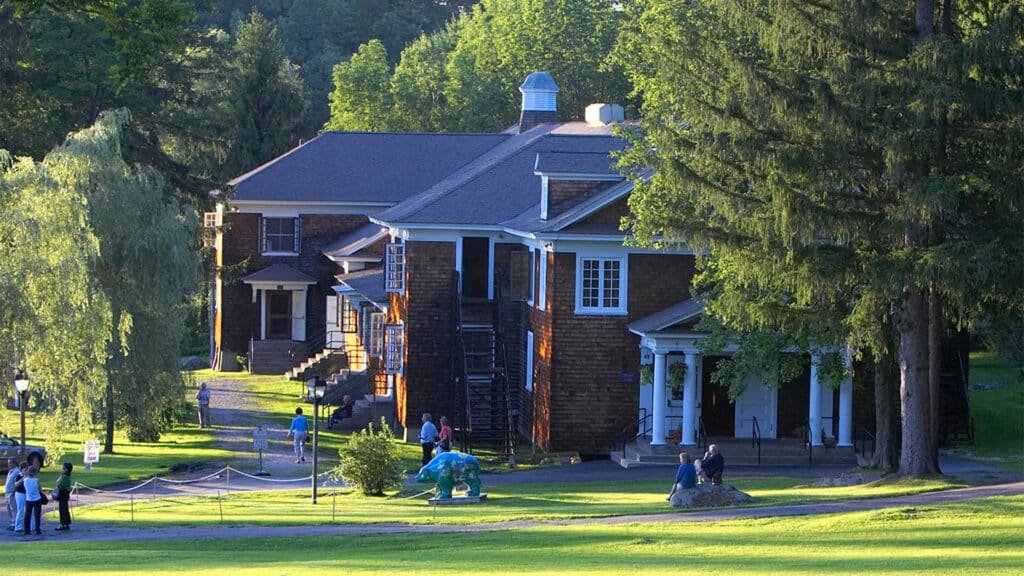
Connecticut does not have dramatic mountain elevations, but Norfolk, in the northwestern corner of the Litchfield Hills, sits at about 1,760 feet and is consistently one of the coolest communities in the state. Summer highs average in the upper 70s, and the combination of elevation and heavy forest canopy keeps the town comfortable when the Connecticut coast and the Hartford area are sweltering in the 90s with high humidity. Norfolk’s microclimate was recognized as early as the late 1800s, when wealthy families from New York built summer estates here specifically to escape the heat.
The town sits at the edge of the Berkshire plateau, surrounded by mature forest and dotted with ponds and streams that amplify the cooling effect. Haystack Mountain State Park, just north of town, has a trail to a stone tower at the summit with views across the forested hills and breezes that make the climb worthwhile on even the warmest days. Campbell Falls State Park, on the Connecticut-Massachusetts border, has a waterfall in a shaded gorge that creates its own cool zone. The Norfolk Chamber Music Festival, held at the Ellen Battell Stoeckel Estate on the Yale School of Music campus, has been a summer tradition since 1941, offering world-class performances in a setting where the evening air is cool enough for a light jacket.
Norfolk is a small town with limited commercial activity, but the Village Green is a handsome New England common surrounded by historic homes and a few businesses. The Infinity Music Hall and Bistro offers dining and live music. The Blackberry River Inn provides bed-and-breakfast lodging in a restored Colonial property. For more dining options, nearby Canaan and Salisbury have restaurants within a short drive. Norfolk in summer is the Connecticut hill town that old money discovered a century ago, and the cool air that drew those families is still the town’s greatest asset.
Delaware: Bethany Beach
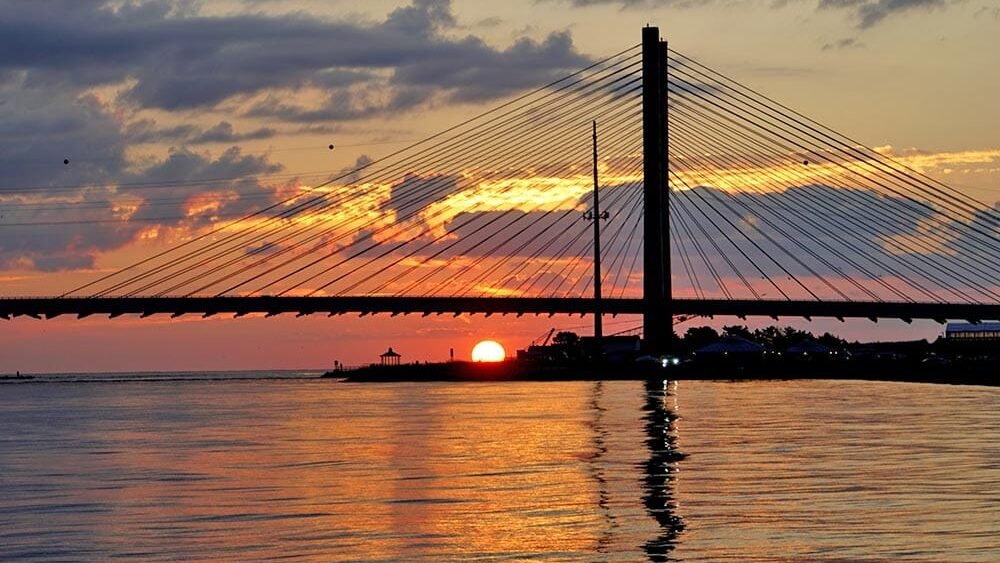
Delaware is a small, low-lying state without mountain escapes, but Bethany Beach, on the Atlantic coast south of Rehoboth, offers the best summer cooling the state has to offer. The ocean breeze here keeps temperatures five to ten degrees below the inland readings, and on the hottest summer days, the onshore wind makes the beach and the boardwalk area notably more comfortable than Wilmington or Dover. Bethany Beach markets itself as “The Quiet Resorts” along with neighboring Fenwick Island and South Bethany, and the lower-key atmosphere means less pavement, more shade, and a less frantic energy than the larger resort towns to the north.
The beach itself is the primary cooling mechanism, with Atlantic water temperatures in the upper 60s and low 70s through the summer providing genuine refreshment. The boardwalk is compact, only a few blocks long, with a bandstand that hosts free concerts on summer evenings when the ocean air makes outdoor entertainment comfortable. Delaware Seashore State Park, between Bethany Beach and Rehoboth, has bayside beaches on the Indian River Bay that are sheltered from waves and offer kayaking and paddleboarding in conditions that stay comfortable all day. The walking and biking paths through the park provide shaded alternatives to the beach.
Bethany Beach’s dining scene is family-oriented and reliable. Sedona serves Southwestern-influenced cuisine. The Cottage Cafe does breakfast and lunch with a loyal local following. Off the Hook is the place for fresh seafood. For lodging, the Addy Sea Bed and Breakfast offers oceanfront rooms in a restored 1901 building. Several rental-property agencies handle the beach houses that are the primary lodging option. Bethany Beach in summer is the Delaware shore at its most comfortable, a place where the Atlantic breeze is the best natural cooling system the state can offer.
Florida: Cedar Key
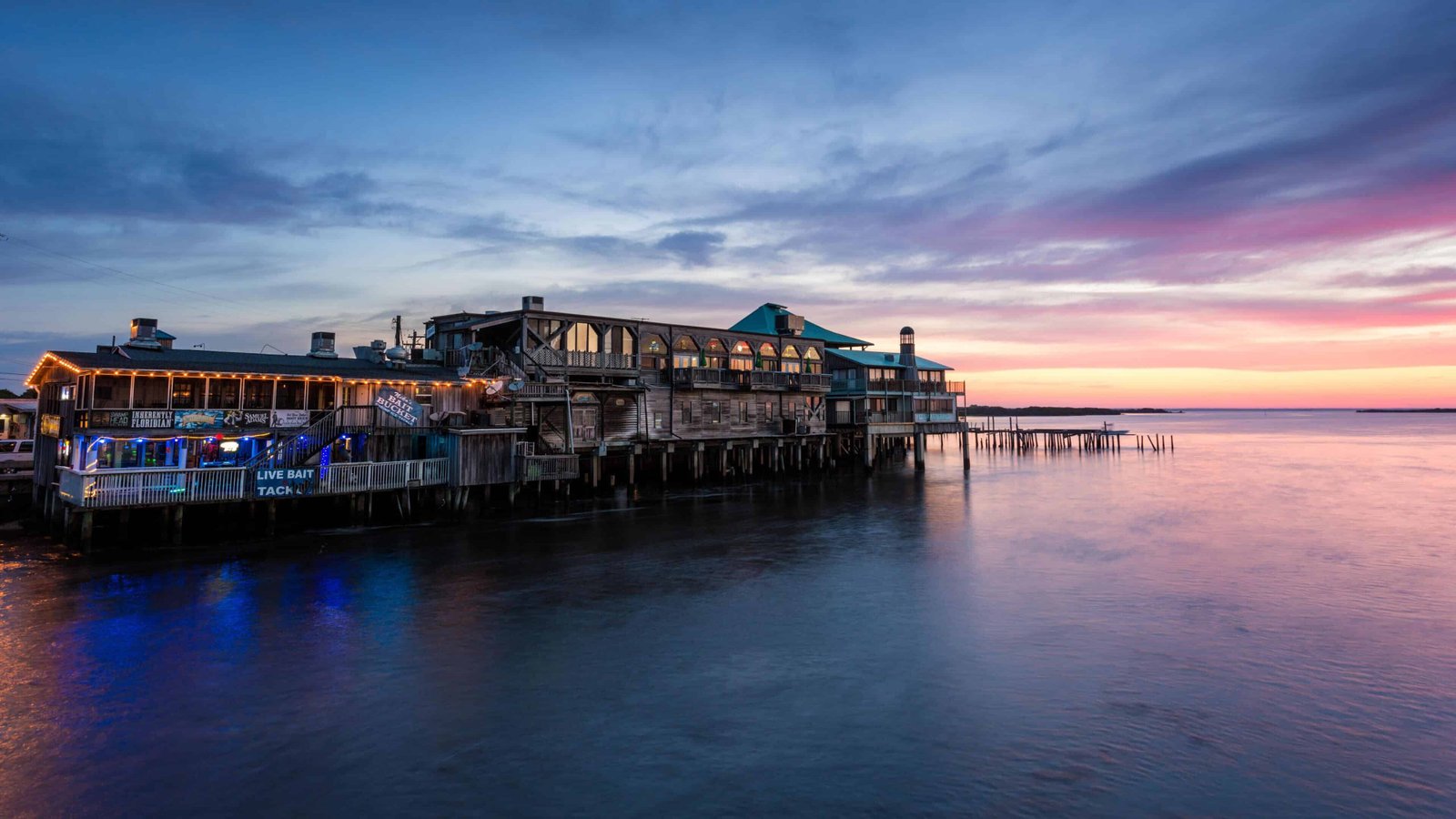
Florida in summer is a challenge. The entire state is hot, humid, and essentially sea-level, which means there is no mountain escape and no elevation relief. But Cedar Key, a small island community on the Gulf Coast about 60 miles southwest of Gainesville, offers something that mainland Florida cannot: constant water breezes from every direction. The town sits on a cluster of islands, and the Gulf winds that sweep across the open water make it noticeably more comfortable than the interior, where the stagnant air and radiating pavement create a heat that feels inescapable.
Cedar Key is a fishing village of about 700 people that has maintained a working waterfront character while developing a quiet tourist economy based on its natural setting. The town’s tiny downtown, centered on Dock Street, faces the water and catches the breeze. The surrounding salt marshes and tidal creeks create a landscape where the air is always moving, and the afternoon thunderstorms that build over the mainland often pass to the east, leaving Cedar Key in the clear. The Cedar Keys National Wildlife Refuge, spread across several offshore islands, is accessible by boat and offers kayaking through mangrove channels where the shade and the water create a cool microclimate even on the worst summer days.
The seafood in Cedar Key comes straight from the surrounding waters. The Clam Farm Restaurant serves the local specialty, farm-raised clams, along with fresh Gulf fish. The Island Hotel, built in 1859, has a dining room that serves seafood and other dishes in one of the most atmospheric settings on the Gulf Coast. Steamers Clam Bar and Grill does casual waterfront dining. For lodging, the Island Hotel offers historic rooms with character, and several vacation rentals and cottages provide waterfront accommodations. Cedar Key in summer will not feel cool by northern standards, but by Florida standards, the constant Gulf breeze makes it the most comfortable escape the state can offer.
Georgia: Blue Ridge
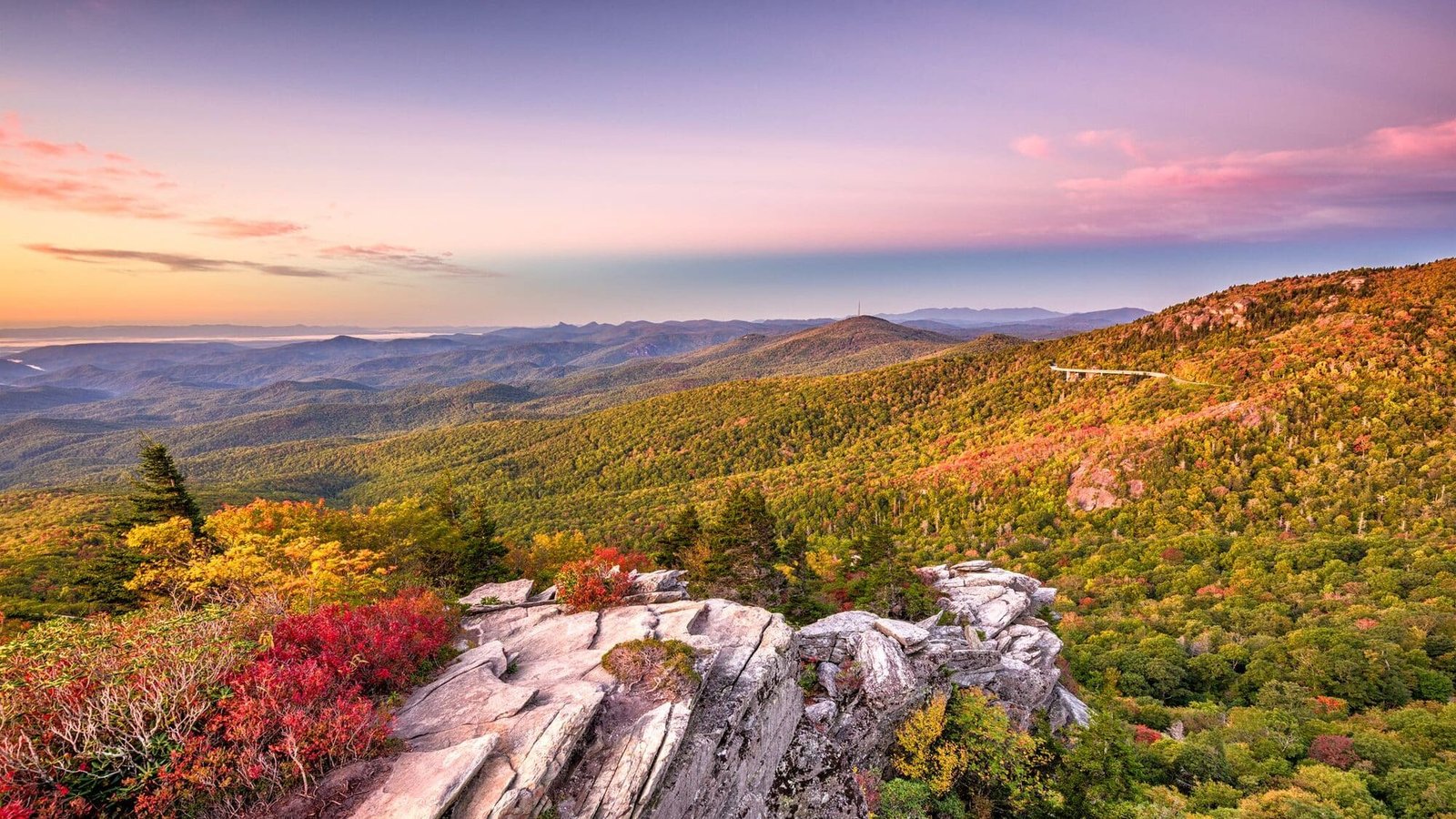
Blue Ridge sits at 1,746 feet in the mountains of far northern Georgia, and when Atlanta is suffocating in 95-degree heat with thick humidity, this small mountain town runs a steady five to ten degrees cooler with meaningfully lower moisture in the air. The combination of elevation, forest cover, and mountain breezes makes Blue Ridge one of the most popular summer escapes in the Southeast, and the town has developed a tourism infrastructure to match that demand while keeping its downtown walkable and manageable.
The Toccoa River, which flows through the area, provides cold-water recreation that is the fastest route to physical cooling. Tubing and kayaking on the river are summer staples, and the water temperature stays bracing even in August. Blue Ridge Lake, a TVA reservoir surrounded by forested mountains, offers swimming, boating, and lakeside camping where the evening temperatures drop into the 60s. The Aska Adventure Area, a network of trails south of town, runs through hardwood forest dense enough that the shaded trails stay comfortable for hiking well into the afternoon. Springer Mountain, the southern terminus of the Appalachian Trail, is accessible from trailheads near town.
Downtown Blue Ridge has evolved into a food-and-shopping destination that draws summer visitors from across Georgia and the Carolinas. The Blue Ridge Scenic Railway runs vintage trains along the Toccoa River, and the open-air cars catch the mountain breeze. Harvest on Main serves seasonal American cooking. The Black Sheep Restaurant does creative pub fare. For lodging, the Blue Ridge Inn Bed and Breakfast offers rooms in a historic downtown property, and the hundreds of rental cabins in the surrounding mountains provide options at every price point, many with screened porches positioned to catch the evening air. Blue Ridge in summer is Georgia’s mountain air conditioner, and the temperature difference from Atlanta is enough to change how you feel about the season.
Hawaii: Kula (Maui Upcountry)
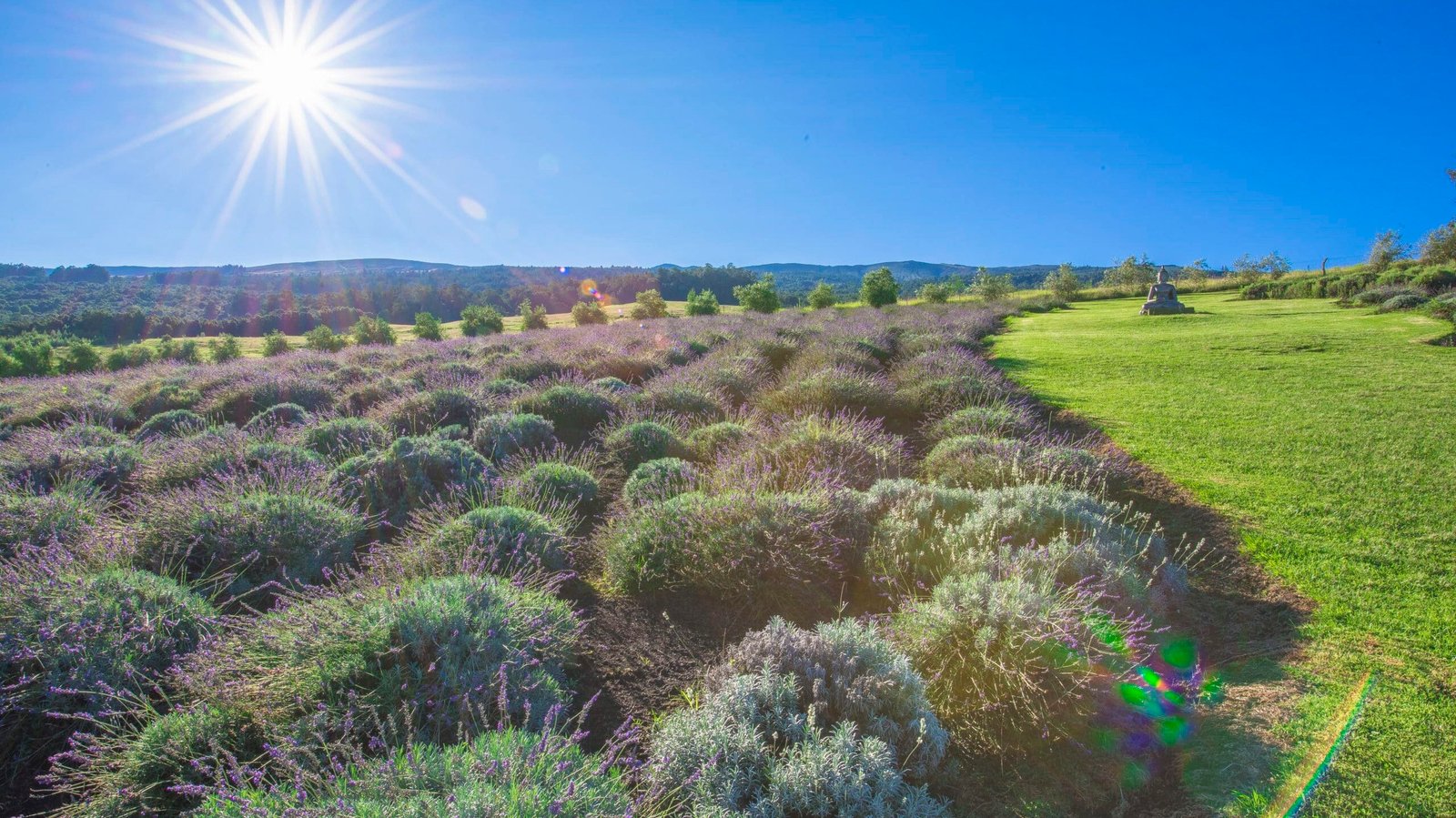
Hawaii’s coastal areas are warm year-round, but the slopes of Haleakala on Maui offer a vertical escape that most visitors never consider. The community of Kula, at about 3,000 to 4,000 feet on the western slope of the volcano, sits in a climate zone where summer highs average in the mid 70s with low humidity and a breeze that flows downslope in the afternoons. The contrast with the resort areas on the coast, where the heat and humidity can feel oppressive by midday, is immediately noticeable. Kula’s air is dry, clear, and scented with eucalyptus and protea flowers, and the evenings are cool enough for a light sweater.
The Upcountry region is agricultural, and Kula is the center of Maui’s farming community. The area produces vegetables, flowers, and the famous Kula strawberries that are unlike anything grown at sea level. Surfing Goat Dairy, O’o Farm, and several other agricultural operations offer tours that combine food culture with the cool-climate experience. Ali’i Kula Lavender Farm sits on the slope of Haleakala with panoramic views of the coast below and fields of lavender that thrive in the cool, dry conditions. For hikers, Polipoli Spring State Recreation Area, higher on the mountain, has trails through a cloud forest of introduced redwood and cedar trees that feels more like Northern California than Hawaii.
Dining in Kula proper is limited but includes Kula Bistro, which serves breakfast, lunch, and dinner with ingredients from surrounding farms. La Provence does French-inspired pastries and crepes. Grandma’s Coffee House in Keokea, a few miles south, serves Maui-grown coffee in a converted general store. For lodging, the Kula Lodge offers rooms with panoramic views of the coast, and several bed-and-breakfasts and vacation rentals provide quiet accommodations in the farming landscape. Kula in summer is the Hawaii that the beach resorts cannot offer, a place where elevation turns the tropical heat into the most pleasant climate on the island.
Idaho: McCall
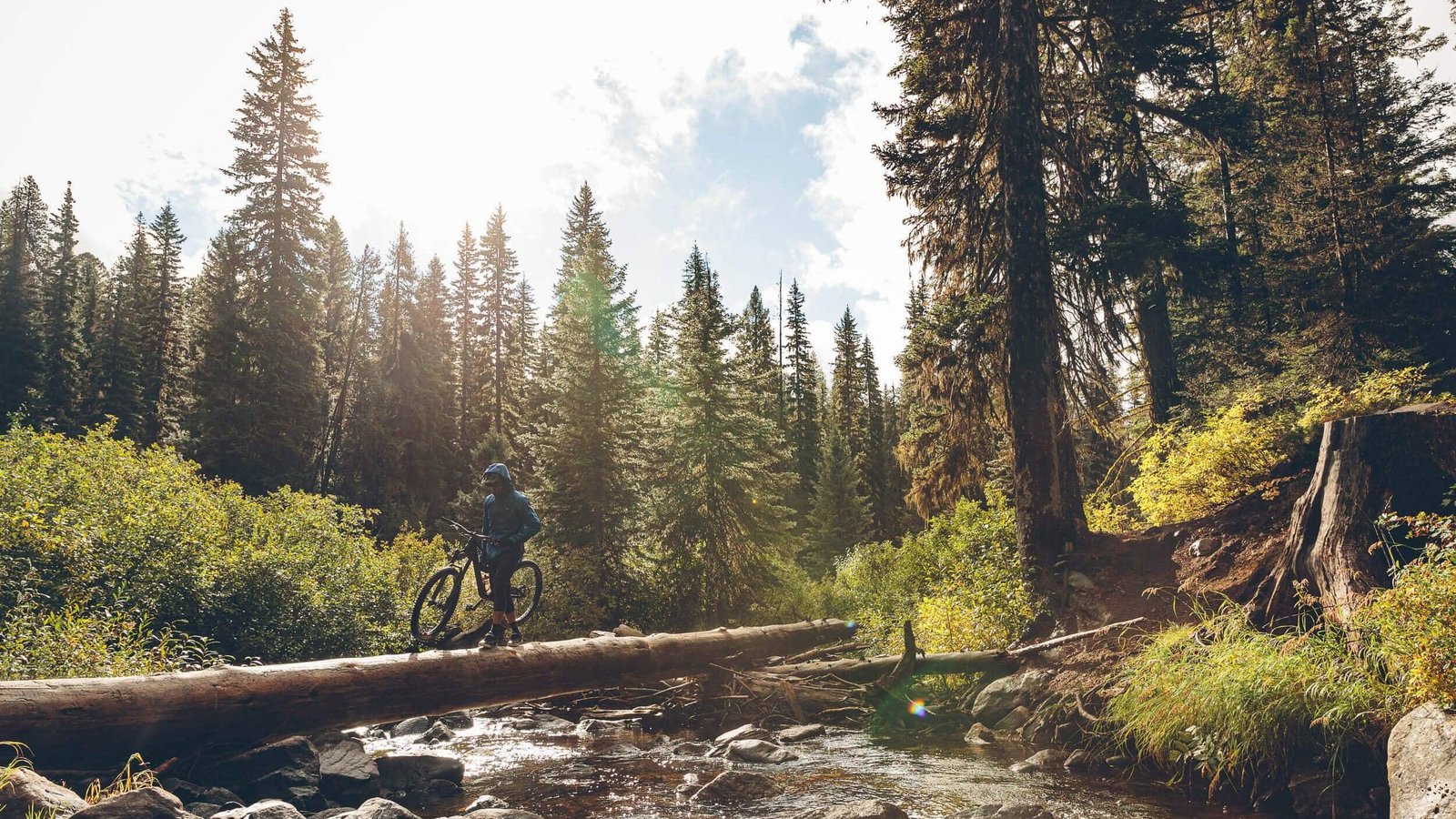
McCall sits on the shore of Payette Lake at 5,020 feet in the mountains of central Idaho, and summer here feels like a climate from a different latitude. Highs average in the low 80s, humidity is negligible, and the lake water stays cold enough to provide genuine shock therapy on the hottest days. The town is about 100 miles north of Boise, and the drive up Highway 55 through the Payette River canyon involves a temperature drop of 15 to 20 degrees that is perceptible before you even reach town. McCall has been Boise’s summer escape for generations, and the tradition is so deeply embedded that many Boise families have cabins in the area that have been passed down for decades.
Payette Lake is the centerpiece. The water, fed by mountain snowmelt, stays cold enough that wetsuits are not unusual for extended swimming. The public beach in town provides easy access, and boat rentals are available for exploring the lake’s forested shoreline. Ponderosa State Park, on a peninsula jutting into the lake, has hiking trails through old-growth forest where the shade and the lake breeze combine to create conditions that feel closer to September than July. For more ambitious cooling, the high mountain lakes in the surrounding Payette National Forest, accessible by trail, sit above 7,000 feet and have water cold enough to make your bones ache.
McCall’s downtown is a compact collection of restaurants and shops that serves the summer vacation crowd without overwhelming the town’s small-scale character. The Fogglifter Cafe does breakfast and coffee. Bistro 45 serves dinner with local ingredients. Mile High Marina, on the lake, has a restaurant with water views. For lodging, Shore Lodge is the most upscale option, with a lakefront location and resort amenities. The Hotel McCall offers more modest rooms in the center of town. McCall in summer is the Idaho escape that works exactly as advertised, a mountain lake town where the heat of the lowlands simply does not reach.
Illinois: Galena
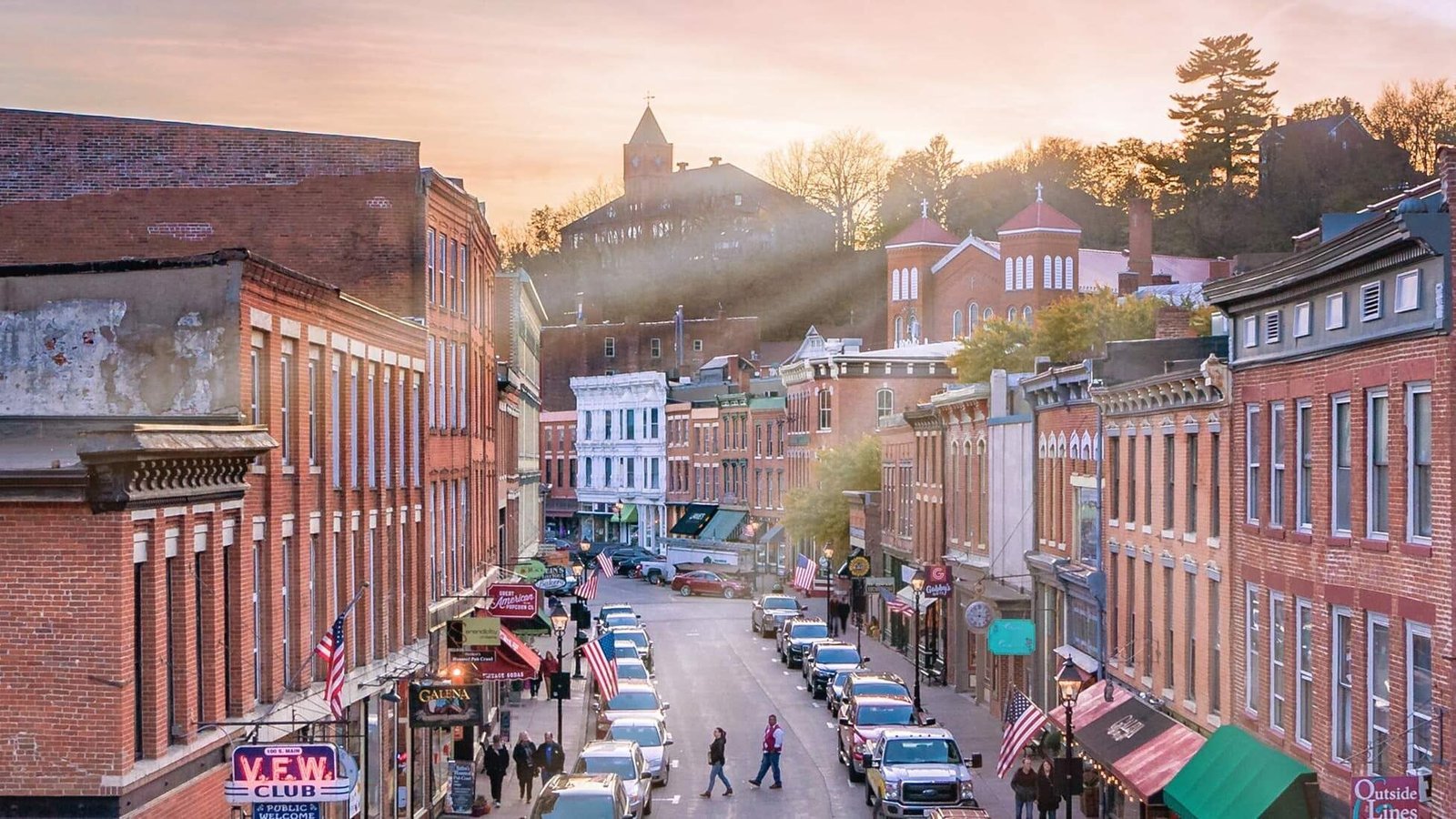
Illinois is flat and hot in summer, with limited options for elevation relief. But Galena, in the far northwestern corner of the state in the Driftless Area, sits in a river valley surrounded by steep, forested bluffs that create a microclimate meaningfully cooler than the open prairies to the south. The town itself is at about 600 feet, and the surrounding bluffs reach over 1,000 feet, channeling breezes through the Galena River valley that provide natural cooling. When Chicago and Springfield are enduring 95-degree days with stifling humidity, Galena typically runs a few degrees cooler with better air circulation, and the shaded streets of the historic district make summer walking comfortable.
The town’s appeal goes well beyond the climate. Galena is one of the best-preserved 19th-century commercial districts in the Midwest, with Main Street climbing a steep hill above the river in a corridor of brick and stone buildings that now house restaurants, galleries, and shops. The Ulysses S. Grant Home State Historic Site preserves the house given to Grant after the Civil War. For outdoor cooling, Chestnut Mountain Resort, south of town on the bluffs above the Mississippi River, has a waterpark and river views that catch the breeze. Apple River Canyon State Park, about thirty minutes east, offers shaded trails along a limestone canyon where the temperature drops noticeably under the forest canopy.
Galena’s dining scene is strong for a town of about 3,200 people. Fritz and Frites does French bistro cuisine. One Eleven Main serves contemporary American food. Fried Green Tomatoes is a local Italian favorite. For lodging, the DeSoto House Hotel, built in 1855, is the oldest operating hotel in Illinois and anchors the top of Main Street. Numerous bed-and-breakfasts in the surrounding mansions provide more intimate accommodations. Galena in summer does not offer a dramatic temperature escape, but the valley breezes, the shade, and the cultural richness make it the best option Illinois has for feeling like you have gotten away from the heat.
Indiana: Nashville (Brown County)
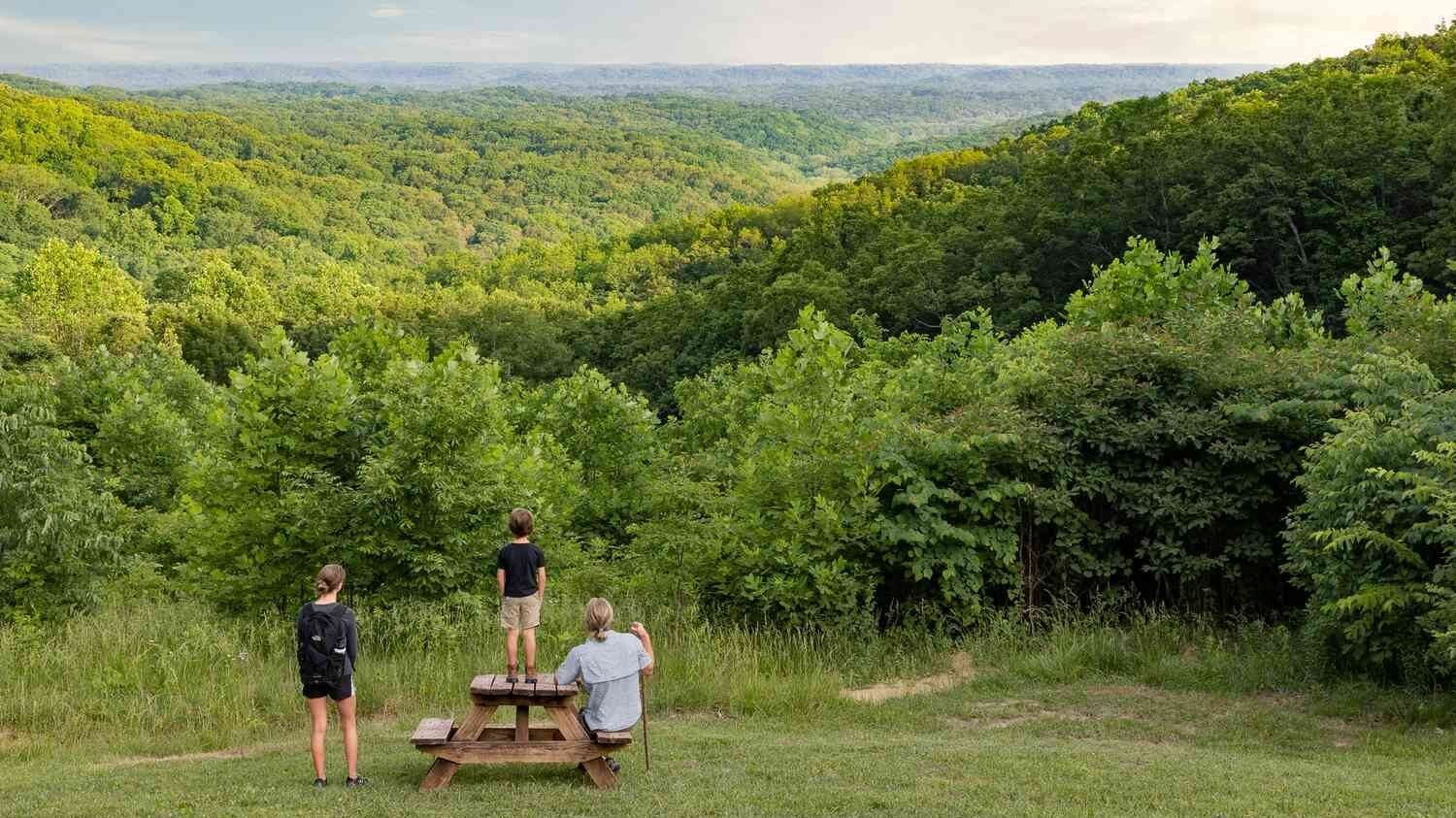
Indiana summers are hot and humid, and the state has no mountain escapes. But Nashville, in the forested hills of Brown County in south-central Indiana, sits in a landscape where the heavy tree canopy and the rolling terrain create conditions that are measurably more comfortable than the flat farmland that covers most of the state. The temperature difference from Indianapolis is modest, usually only a few degrees, but the shade, the air movement through the hills, and the cool hollows where streams run through the forest floor make the perceived difference much greater.
Brown County State Park, the largest in Indiana, is the primary outdoor attraction, and its forest roads and trails provide shaded recreation where the canopy blocks the worst of the sun. The covered bridges scattered through the county, remnants of Indiana’s 19th-century road-building era, sit in shaded hollows along creeks where the air is noticeably cooler than the open ridges above. Lake Monroe, about twenty minutes south of Nashville, is the largest lake in Indiana and offers swimming, boating, and lakeside recreation where the water provides a direct cooling effect. The morning mist that rises from the lake on summer mornings is one of the more atmospheric sights in the state.
Nashville’s artists’ colony heritage means the town has a concentration of galleries, craft shops, and studios that provide air-conditioned browsing on the hottest days. Big Woods Brewing Company serves locally brewed beer in a space designed for summer afternoon lingering. The Hobnob Corner does comfort food. The Story Inn, in the nearby hamlet of Story, offers dining and lodging in a restored 19th-century general store with a screened porch that catches the evening breeze. The Artists Colony Inn in Nashville provides comfortable downtown lodging. Nashville in summer is Indiana’s best answer to the heat, a forest-wrapped arts town where the shade does what the climate cannot.
Iowa: Decorah
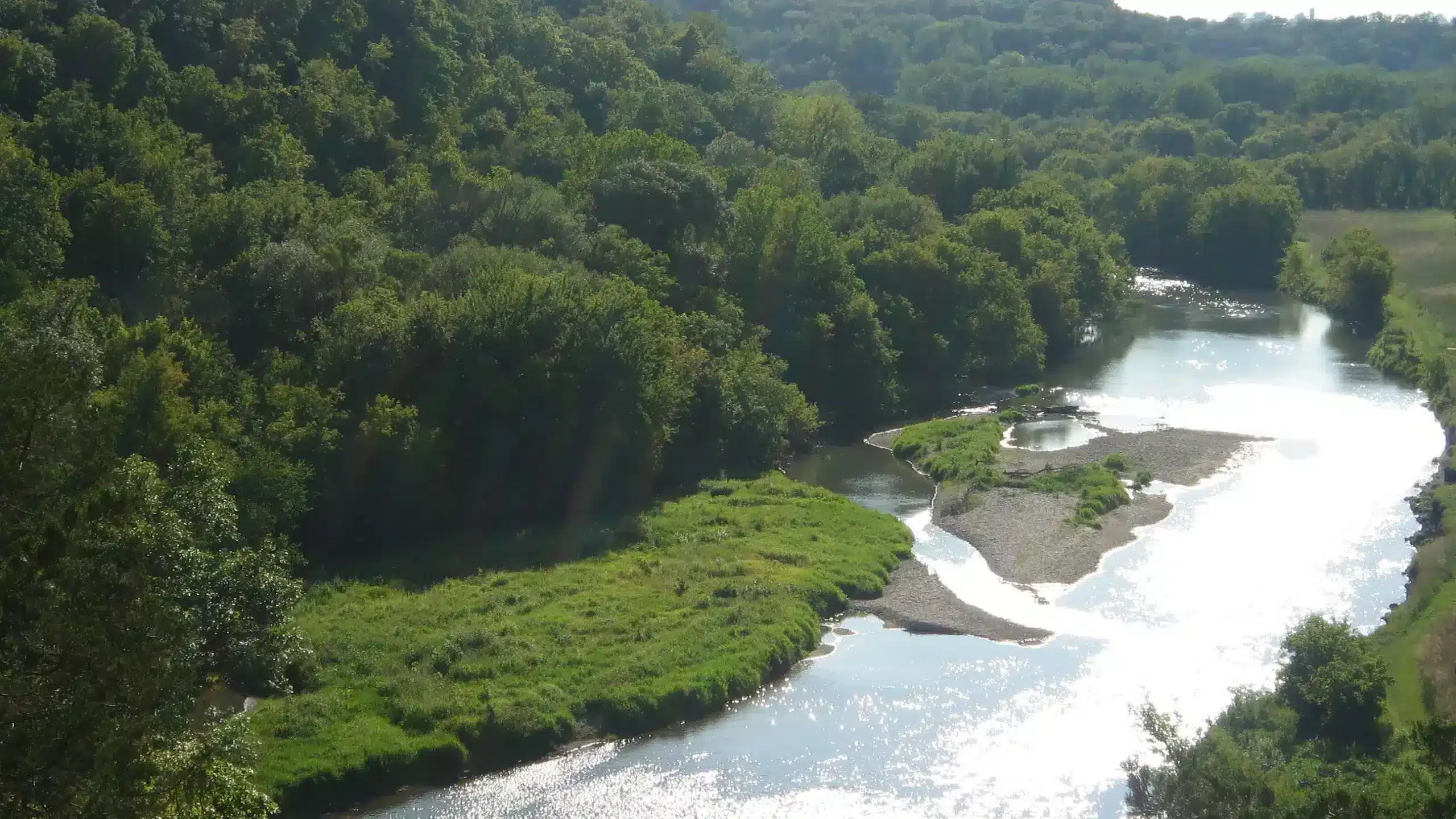
Decorah sits in the Driftless Area of northeastern Iowa, where the landscape of steep limestone bluffs, spring-fed streams, and deep forest provides a summer experience that feels nothing like the flat, exposed farmland that covers most of the state. The Upper Iowa River, which flows through town, is one of the coldest rivers in Iowa, fed by springs that maintain temperatures in the 50s year-round. The effect on the surrounding air is noticeable, and the river valley stays cooler than the ridges above, creating a natural air-conditioning corridor through the center of town.
The river is the primary summer attraction. Canoeing and kayaking the Upper Iowa River through limestone bluffs and forested banks is one of the best summer activities in the Midwest, and the cold water provides continuous relief. Dunning’s Spring, a waterfall that cascades over a limestone ledge in a city park, is a popular gathering spot where the spring water and the shade create a cool pocket that draws residents on the hottest days. The Trout Run Trail, a paved loop that follows the river and climbs the bluffs, offers early-morning exercise before the heat builds. The Seed Savers Exchange Heritage Farm, just outside of town, has gardens and orchards worth visiting in the cooler morning hours.
Decorah’s dining benefits from a locavore culture that has deep roots in this Norwegian-heritage community. Toppling Goliath Brewing Company is nationally recognized and draws visitors on its own. Rubaiyat Restaurant does Middle Eastern and Mediterranean cooking. Mabe’s Pizza serves thin-crust pies that are a local institution. For lodging, Hotel Winneshiek, a restored 1905 hotel on the town square, offers comfortable rooms with old-fashioned character. The Driftless Area Education and Visitor Center provides context for the unique geology that makes this corner of Iowa cooler and more interesting than the rest of the state in summer.
Kansas: Council Grove
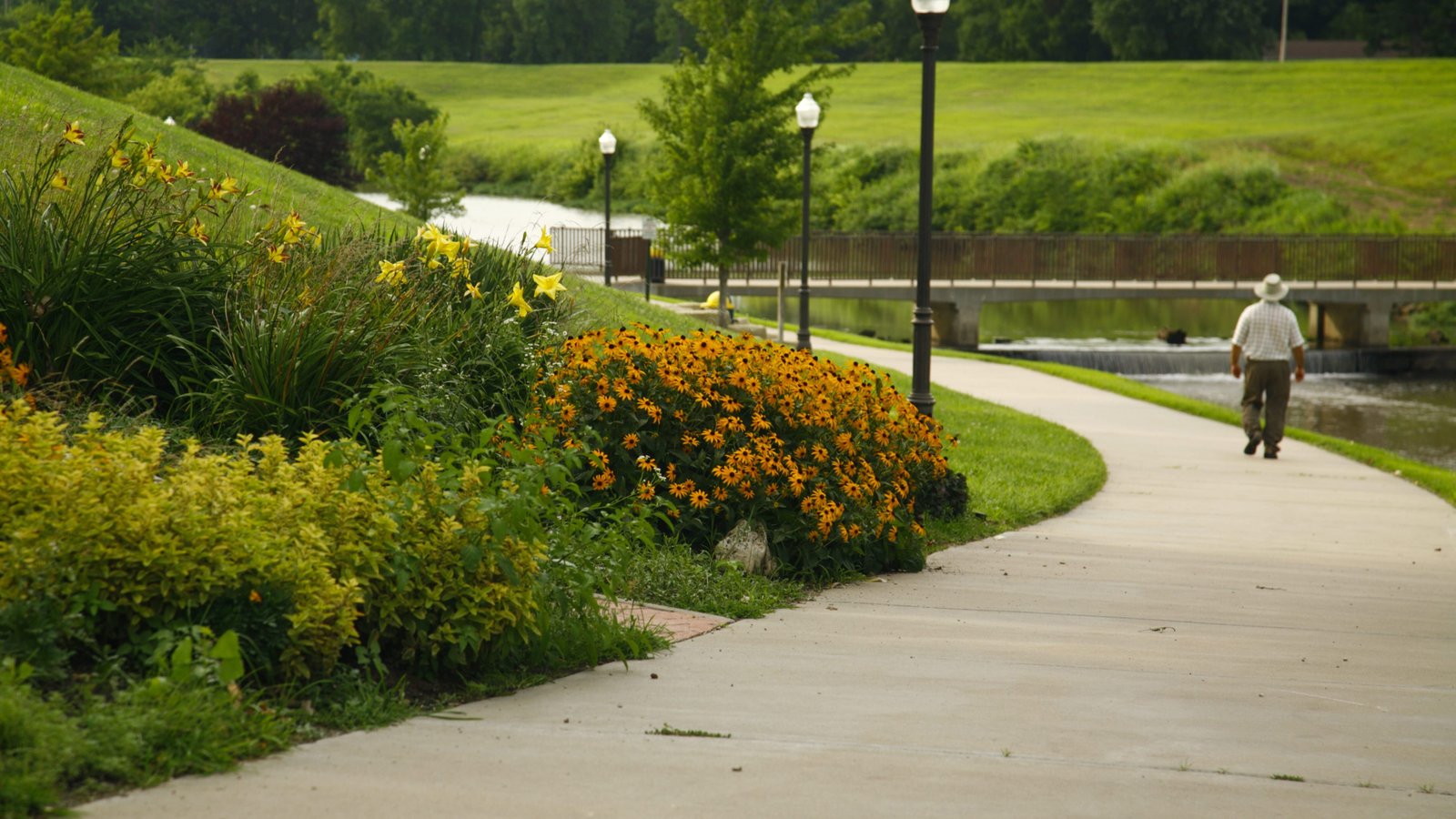
Kansas in summer is hot, flat, and exposed, and there is no mountain or coastal escape within the state’s borders. But Council Grove, in the Flint Hills, offers an experience that mitigates the heat in ways that the open prairie cannot. The town sits in a river valley along the Neosho River, and the large cottonwood and oak trees that line the riverbanks and shade the historic streets create a canopy effect that is rare in Kansas. The Flint Hills themselves, with their rolling terrain and tallgrass cover, generate thermal breezes that move air more effectively than the flat wheat fields to the west.
Council Grove Reservoir, a Corps of Engineers lake north of town, provides water-based cooling through swimming, boating, and lakeside camping. The reservoir’s bluffs offer shaded picnic areas that catch the prevailing south wind. The Neosho River Walk, a trail through town that follows the riverbank under the shade of the historic Council Oak and other large trees, is the best place for a summer evening walk. The Flint Hills themselves, while hot during the day, cool rapidly after sunset, and summer evenings in the tallgrass can be genuinely pleasant, especially when a breeze is moving through.
The Hays House Restaurant, one of the oldest continuously operating restaurants west of the Mississippi, serves traditional American fare in a stone building that stays naturally cool. The Trail Days Cafe does sandwiches and baked goods. The Cottage House Hotel, a restored Victorian property, offers rooms with period character. Kaw Mission State Historic Site provides cultural context for the town’s role on the Santa Fe Trail. Council Grove in summer is not a cool escape by the standards of mountain states, but for Kansas, the combination of shade, water, and historical atmosphere makes it the most comfortable place in the state to ride out the worst of the heat.
Kentucky: Berea
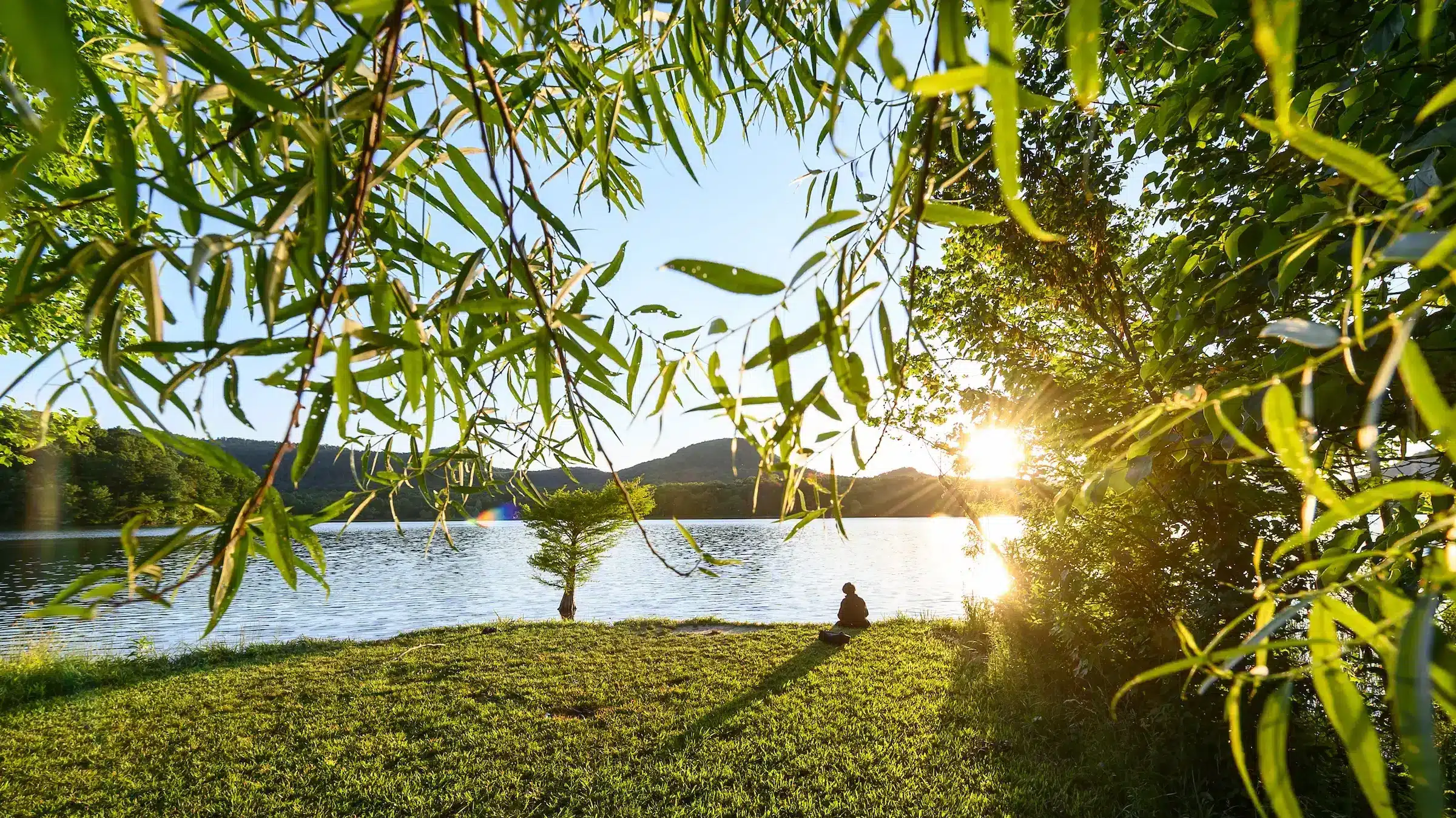
Kentucky summers are hot and humid, and the state has no high-elevation escapes. But Berea, at the edge of the foothills where the Bluegrass region meets the Appalachian Mountains, sits at about 1,000 feet and benefits from the mountain air that flows down from the higher terrain to the east. The temperature difference from Lexington or Louisville is modest, but the air quality and the proximity to the cool hollows and swimming holes of the Daniel Boone National Forest make Berea a more comfortable base for summer than the lowland cities.
The Red River Gorge, about forty-five minutes east of Berea in the Daniel Boone National Forest, is the primary cooling destination. The deep sandstone gorges and rock shelters stay remarkably cool even on the hottest days, and the forest canopy is dense enough that hiking in the gorge feels ten degrees cooler than the open terrain above. Natural Bridge State Resort Park, at the edge of the gorge area, has a pool and shaded trails that provide structured recreation in the cool forest. The town of Berea itself is a college community with a walkable downtown of craft studios and galleries that provide air-conditioned refuge.
Berea’s identity as the folk arts capital of Kentucky means the town has a cultural depth that goes beyond climate escape. The Artisan Village has studios where you can watch craftspeople work and browse their products. Boone Tavern Hotel serves Appalachian cuisine and offers comfortable rooms in the center of town. Papaleno’s serves Italian food that draws a local crowd. The college campus is shaded and pleasant for walking. Berea in summer is a gateway to the cool forests of eastern Kentucky, and the combination of mountain air, deep gorges, and craft culture makes it a heat escape with substance.
Louisiana: Grand Isle
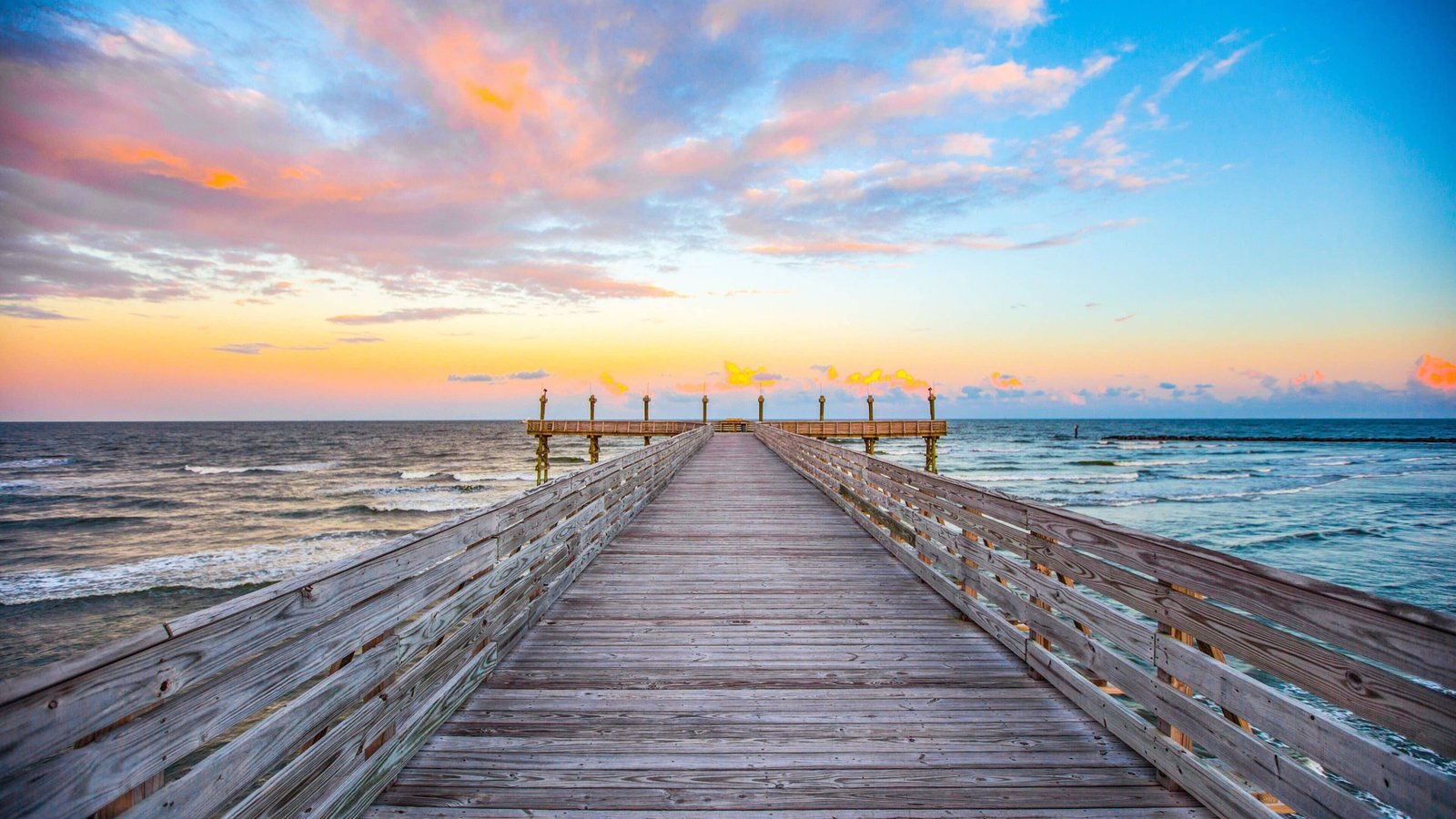
Louisiana in summer is brutally hot and humid everywhere, and there is no mountain or elevation escape within the state. But Grand Isle, the only inhabited barrier island in the state, offers something the interior cannot: constant Gulf breezes that make the heat more bearable than the stagnant air of Baton Rouge or the sheltered streets of New Orleans. The island is a narrow strip of sand about seven miles long, and the wind off the Gulf blows across it continuously, creating conditions where the air temperature may be similar to the mainland but the perceived temperature is noticeably lower.
Grand Isle State Park, at the eastern tip of the island, has a beach, fishing pier, and picnic areas that take full advantage of the Gulf breeze. The pier extends far enough into the water that the wind is unobstructed, making it one of the most comfortable outdoor spots in Louisiana on a summer afternoon. The beach, while not the sugar-sand paradise of the Florida Panhandle, provides direct ocean cooling and the kind of wide-open horizon that makes the heat feel less oppressive. Fishing, both from shore and by charter boat, is the island’s primary industry, and the offshore trips provide cooling from both the boat speed and the open water.
Grand Isle’s dining is limited but focused on what the surrounding waters provide. Starfish Restaurant serves fresh Gulf seafood. Cigar’s Cajun Cuisine does traditional Louisiana cooking with a waterfront setting. The Bridge Side Marina has a restaurant and bar that catches the afternoon breeze. For lodging, the Sun and Sand Cabins and several rental properties provide beachfront accommodations. Grand Isle in summer is not cool by any absolute measure, but for Louisiana, the Gulf breeze makes it the closest thing the state has to heat relief, and the fishing and the wide-open sky provide a mental escape that amplifies the physical one.
Maine: Bar Harbor
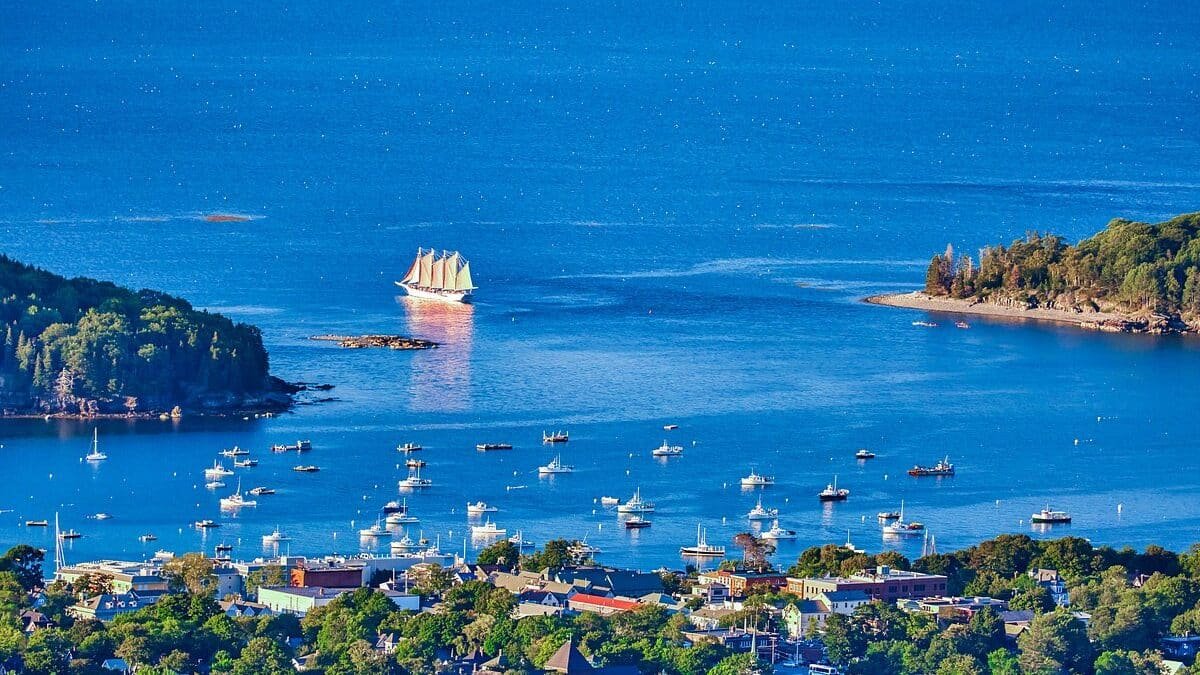
Maine’s coast is reliably cool in summer, and Bar Harbor, on Mount Desert Island at the gateway to Acadia National Park, is the town that combines marine cooling with the most spectacular coastal scenery in the Northeast. Summer highs average in the low 70s, and the fog that rolls in from the Gulf of Maine can drop temperatures into the 50s and 60s without warning. The combination of ocean temperature, fog frequency, and the forested mountains of Acadia creates a summer climate that feels like a different country from the sweltering cities to the south.
Acadia National Park is the primary attraction, and the park’s carriage roads, built by John D. Rockefeller Jr. in the early 20th century, provide miles of shaded, car-free paths through forest and along mountain ridges where the ocean breeze penetrates. Cadillac Mountain, the highest point on the Atlantic coast north of Brazil, has summit views where the wind can be chilling even in August. Sand Beach, in a granite cove, has water temperatures in the mid to upper 50s that make swimming an act of courage. Jordan Pond House, in the park, serves afternoon tea and popovers on a lawn overlooking the pond with mountain views that are worth the inevitable line.
Bar Harbor’s downtown is a walkable collection of restaurants, shops, and galleries that stays busy through the summer without losing its village character. Havana serves creative Latin-American cuisine. Side Street Cafe does casual seafood and burgers. Geddy’s, on the waterfront, has a rooftop deck with harbor views. For lodging, the Bar Harbor Inn sits on the waterfront with views of Frenchman Bay. The Bass Cottage Inn provides boutique accommodations in a restored cottage district. Bar Harbor in summer is the New England coastal escape at its finest, a place where you pack a fleece for July and the fog is a welcome guest.
Maryland: Oakland (Garrett County)
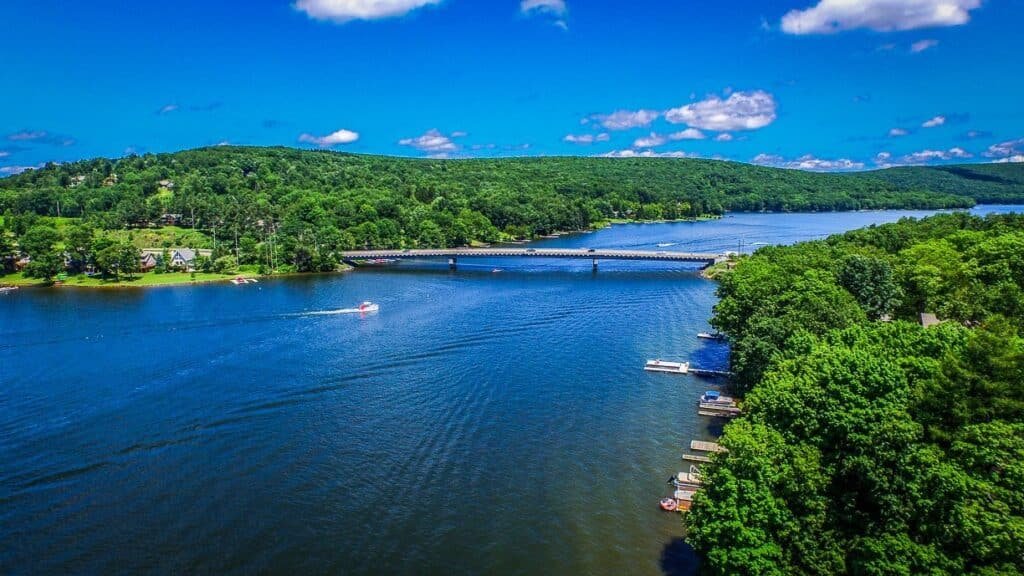
Maryland stretches from the Chesapeake Bay lowlands to the Allegheny Mountains, and the western end of the state offers a summer escape that most Marylanders have never explored. Oakland, the county seat of Garrett County, sits at about 2,400 feet in the Alleghenies and has summer highs that average in the upper 70s, a full ten to fifteen degrees cooler than Baltimore or the Washington suburbs. The air is drier, the nights are genuinely cool, and the mountain forests that cover the surrounding landscape keep the daytime heat from ever feeling oppressive.
Deep Creek Lake, the largest freshwater lake in Maryland, is the primary summer attraction. The lake offers swimming, boating, kayaking, and fishing in water that stays refreshingly cool through the summer. Swallow Falls State Park, about fifteen minutes from Oakland, has trails along the Youghiogheny River past waterfalls where the spray and the gorge shade create pockets of air that feel twenty degrees cooler than the ridges above. Herrington Manor State Park has a swimming lake and shaded trails. The Wisp Resort, on the shore of Deep Creek Lake, operates summer activities including a mountain coaster, ziplines, and a golf course where the mountain air makes outdoor recreation comfortable all day.
Oakland’s downtown has a small-town character with a few restaurants and shops. Cornish Manor serves upscale dining in a historic building. Mountain State Brewing Company does craft beer and pub food. Dutch’s at Silver Tree does waterfront dining on the lake. For lodging, the Lake Pointe Inn offers boutique rooms on the lakeshore. Hundreds of rental homes and cabins surround the lake. Oakland in summer is western Maryland’s best-kept secret, a mountain-lake community where the temperature alone justifies the three-hour drive from the coast.
Massachusetts: Provincetown
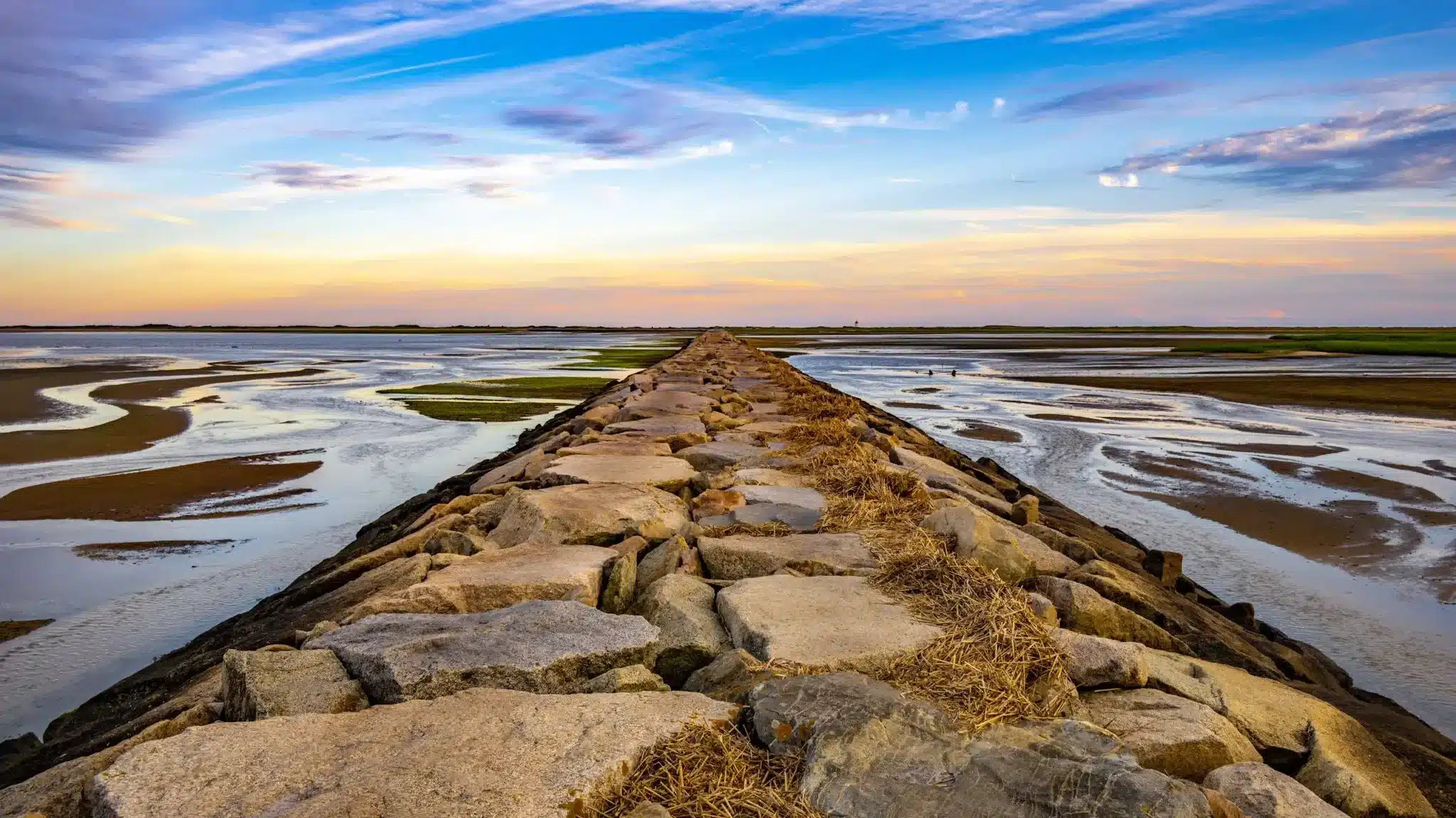
The tip of Cape Cod, where Provincetown occupies the curled fist of the peninsula, sits in a microclimate influenced by the cold waters of the Atlantic and Cape Cod Bay on all sides. Summer highs average in the mid 70s, and the sea breeze keeps the town comfortable when the mainland is sweltering. The Provincetown location is unique because it is essentially surrounded by water, with the bay to the south and the open Atlantic to the north, east, and west. The result is a marine-moderated climate where extremes are rare and the air always has a salt-tinged freshness that makes summer feel more like a European coastal holiday than a New England heat wave.
The Cape Cod National Seashore, which borders Provincetown, has beaches where the water temperature ranges from the upper 50s on the ocean side to the upper 60s on the bay side. Race Point Beach, facing the open Atlantic, has crashing surf and water cold enough to provide genuine thermal shock. Herring Cove Beach, on the bay side, is more sheltered and warmer but still refreshingly cool. The Province Lands Trail, a paved bike path through the dunes and forest of the National Seashore, offers a riding or walking experience where the ocean breeze penetrates the landscape from every direction.
Provincetown’s cultural scene is famously vibrant, and the restaurants, galleries, and performance spaces that line Commercial Street provide entertainment for every evening. The Mews Restaurant and Cafe serves creative American cuisine with water views. Napi’s does eclectic international cooking in a space filled with art. The Lobster Pot is the traditional seafood house. For lodging, the Lands End Inn, perched on a hill above the town, has views of both the bay and the ocean. The Crown and Anchor, in the center of town, offers rooms with a central location. Provincetown in summer is the cool coastal escape that Massachusetts has offered since the Pilgrims landed here before deciding the weather was too much.
Michigan: Petoskey
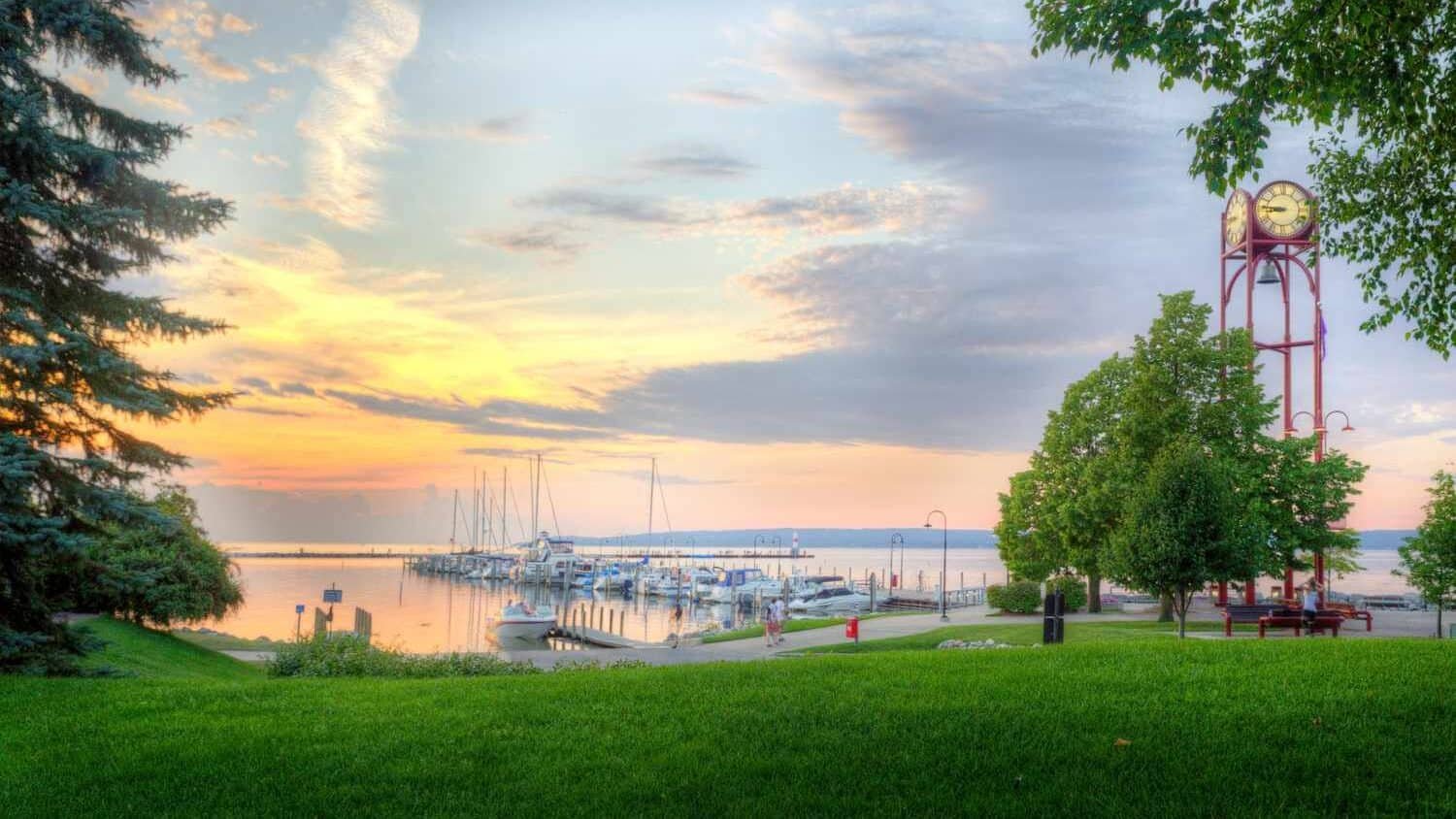
Northern Michigan, along the shore of Lake Michigan and Little Traverse Bay, has summer temperatures moderated by the lake to a degree that surprises visitors from the southern part of the state. Petoskey, a resort town of about 6,000 on the bay, has summer highs that average in the upper 70s, and the lake breeze that sweeps across the water keeps the humidity lower and the air more comfortable than the inland areas. The town has been a summer resort since the 1870s, when wealthy families from Chicago and Detroit built cottages here to escape the heat, and that tradition continues with a modern tourism economy built on the same fundamental appeal: cool air and beautiful water.
Little Traverse Bay is the centerpiece. The bay’s water, while warmer than the open lake, stays cool enough for refreshing swimming through the summer. Petoskey State Park, on the bay, has a beach with calm water and a view across to Harbor Springs. The Bear River, which runs through town on its way to the bay, provides a waterfront walking and biking trail that catches the cooling effect of the stream. For more dramatic cooling, a short drive east leads to the Inland Waterway, a chain of lakes and rivers that stretches across the northern Lower Peninsula and offers continuous water-based recreation.
The Gaslight District, Petoskey’s downtown, is a walkable collection of restaurants and shops in restored Victorian-era buildings. Chandler’s serves creative American fare. City Park Grill, once a Hemingway haunt, does reliable food and cocktails. Roast and Toast Cafe is the breakfast spot. For lodging, the Perry Hotel, a grand 1899 property overlooking the bay, offers historic accommodations with water views. Stafford’s Bay View Inn provides a more intimate Victorian experience. The Bay View Association, a National Historic Landmark neighborhood of Victorian cottages adjacent to town, is a cultural attraction in its own right. Petoskey in summer is the Lake Michigan escape that generations of Midwesterners have sworn by, and the bay breeze still delivers.
Minnesota: Grand Marais
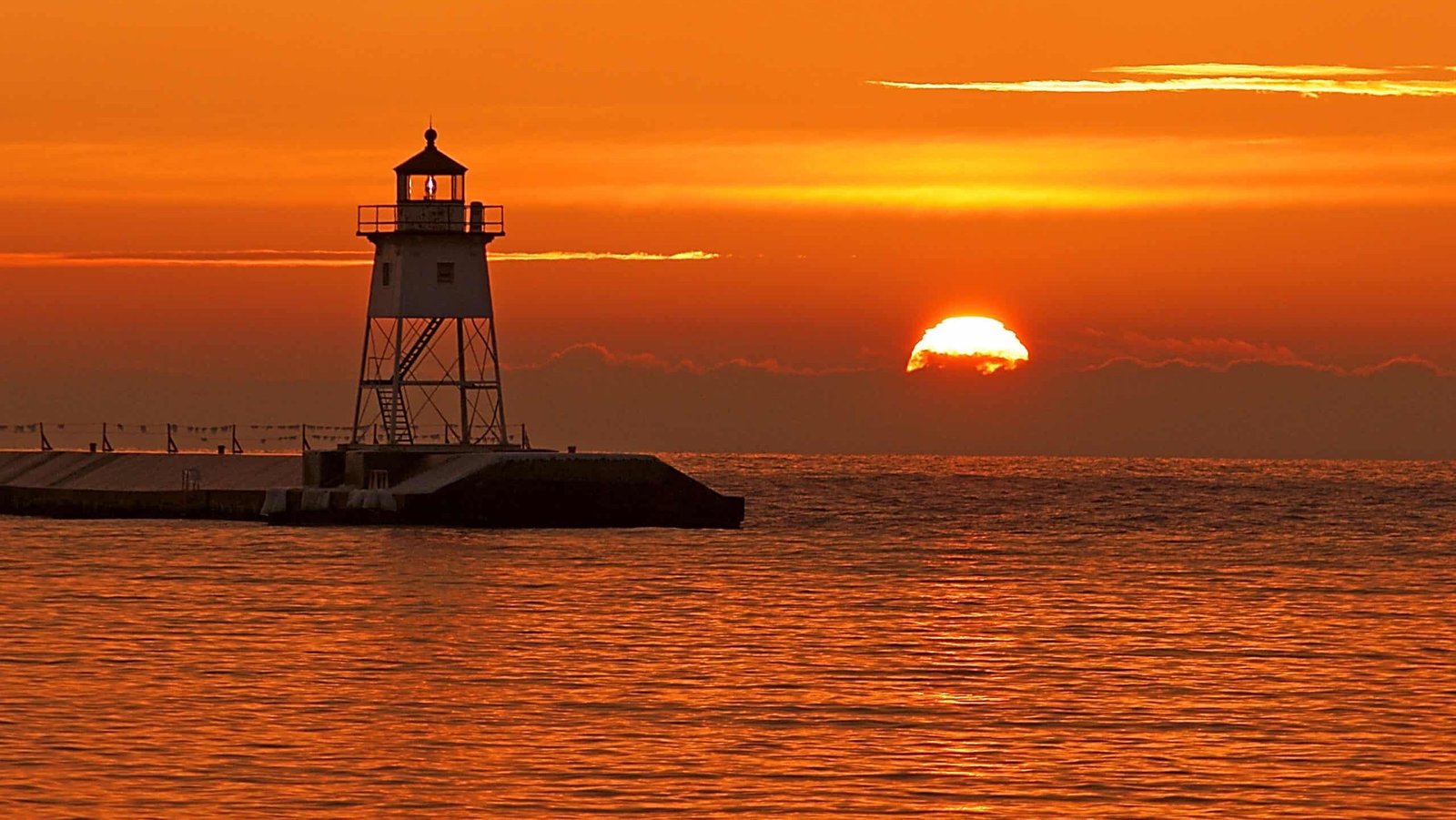
Lake Superior is the great natural air conditioner of the upper Midwest, and Grand Marais, on the North Shore about 110 miles northeast of Duluth, sits in the full path of that cooling influence. Summer highs average in the low 70s, and when a northeast wind blows across the lake, temperatures can drop into the 50s in July. The lake’s surface temperature rarely exceeds the mid 50s even in late summer, and the cold air mass that sits above the water moderates temperatures for miles inland. Grand Marais gets the maximum benefit because it occupies a harbor directly on the shore, with the open lake stretching to the horizon to the east and northeast.
The town’s location between Lake Superior and the Boundary Waters Canoe Area Wilderness means that cool-weather outdoor recreation is available in every direction. The Superior Hiking Trail runs along the ridgeline above town with lake views and forest shade. Kayaking on the big lake itself, in the company of harbor seals and with the cliff faces of the shoreline rising overhead, provides a summer experience that feels more like the coast of Norway than the American Midwest. The Gunflint Trail, heading northwest from town into the Boundary Waters, passes through boreal forest where the cool air and the scent of spruce create an atmosphere that bears no resemblance to summer anywhere else in Minnesota.
Grand Marais has a food scene that is remarkable for a town of about 1,300 people. Voyageur Brewing Company does excellent beer and food. The Angry Trout Cafe serves locally caught Lake Superior fish. World’s Best Donuts draws a morning line. Sven and Ole’s does pizza and burgers. For lodging, East Bay Suites sits on the harbor with lake views from every room. The Gunflint Lodge, thirty miles up the Gunflint Trail, offers a wilderness-lodge experience. Grand Marais in summer is the Midwest’s best natural cooling system, a place where the lake keeps the heat at bay and the light lasts until nearly ten at night.
Mississippi: Oxford
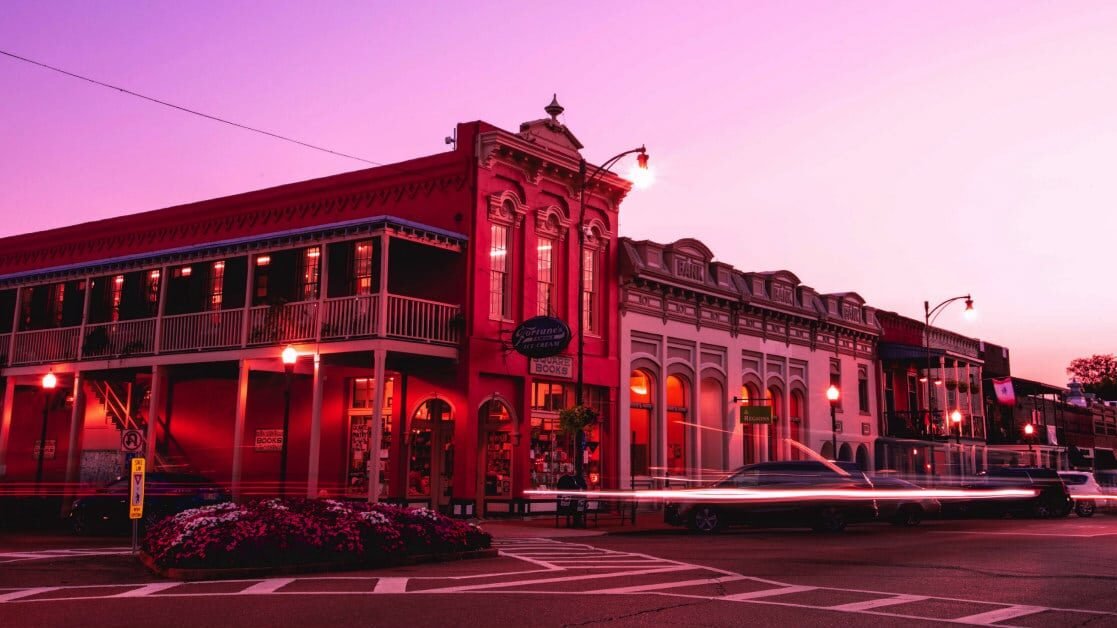
Mississippi in summer is brutally hot and humid across the entire state, with no mountain or coastal relief. Oxford, in the northern hill country at about 500 feet of elevation, offers no dramatic temperature difference from the delta or the coast, but the combination of the university’s shaded campus, the mature tree canopy throughout the town, and a cultural life that keeps people entertained indoors during the worst of the heat makes it the most bearable summer option in the state. The oaks and magnolias that line the streets provide shade dense enough that walking the residential neighborhoods is possible even in July.
The University of Mississippi campus, locally called Ole Miss, is the primary green space and the center of Oxford’s summer activity. The Grove, the famous tailgating lawn, is also a shaded gathering spot in summer, and the campus buildings provide air-conditioned refuge for cultural events and library visits. Sardis Lake, about thirty minutes west, is a Corps of Engineers reservoir with swimming beaches and lakeside recreation. Holly Springs National Forest, south of town, has trails through pine and hardwood forest that are manageable in the early morning hours before the heat peaks.
Oxford’s dining scene is the real summer attraction. Square Books, the landmark independent bookstore, is the cultural anchor and a cool refuge. Ajax Diner does Southern comfort food. Snackbar serves refined Southern cuisine. The bar scene around the square stays lively through summer when the university is in session. For lodging, The Graduate Oxford offers modern rooms near campus. The Chancellor’s House provides boutique accommodations on the square. Oxford in summer is an honest acknowledgment that some states do not have cool escapes. What Oxford offers instead is culture, food, and shade, enough to make the heat survivable and even, on a good evening when the sun drops and the square comes alive, almost forgettable.
Missouri: Hermann
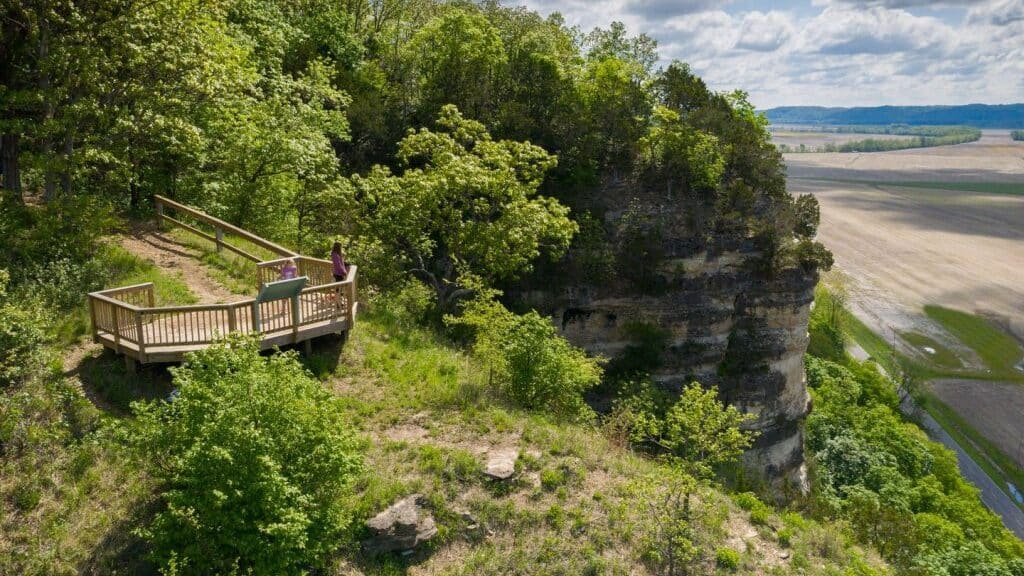
Missouri summers are hot and sticky, and the state lacks the elevation to offer true mountain relief. But Hermann, on the Missouri River in the wine country about ninety minutes west of St. Louis, provides a summer experience that mitigates the heat through river breezes, wine-cellar cool, and a pace of life that discourages rushing around in the midday sun. The town sits on the river bluffs, and the air movement along the Missouri River valley is noticeably better than the stagnant conditions in St. Louis or Kansas City. Summer evenings on the bluffs, with the river below and a glass of local wine in hand, can be genuinely pleasant.
The wineries are the primary summer attraction, and several of them have tasting rooms and patios positioned on hillsides where the elevation and the breeze provide natural cooling. Stone Hill Winery and Adam Puchta Winery both have shaded outdoor areas with views of the river valley. The underground wine cellars, which maintain constant cool temperatures, provide the most direct heat relief in town. The Katy Trail, which passes through Hermann along the river, is a rail-trail that offers shaded biking and walking in the river corridor, and the morning hours before the heat builds are ideal for a ride along the water.
Hermann’s German-heritage restaurants and bed-and-breakfasts provide the kind of food-and-lodging experience that makes a summer weekend worthwhile even without a dramatic temperature escape. The Vintage Restaurant at Stone Hill Winery pairs local wines with seasonal food. Hermann Wurst Haus serves sausages and German fare. Hermann Hill Vineyard and Inn, on the bluff above the river, has rooms with views and a pool that provides the most direct cooling in town. Missouri in summer does not offer mountain air, but Hermann makes the case that good wine, a river breeze, and a shaded porch can be their own form of heat escape.
Montana: Red Lodge
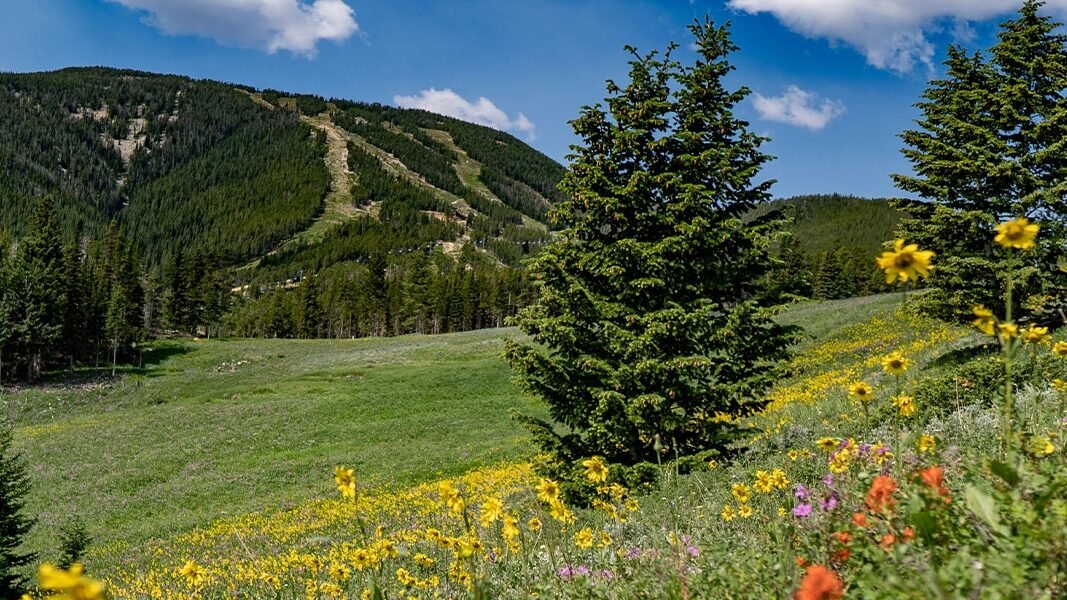
Montana has so many cool summer options that choosing one feels arbitrary, but Red Lodge, at 5,568 feet at the base of the Beartooth Mountains south of Billings, offers the best combination of mountain cool and small-town appeal. Summer highs average in the upper 70s in town, and the Beartooth Highway, which starts at the edge of town and climbs to nearly 11,000 feet on its way to Yellowstone, provides access to temperatures that can be 30 or 40 degrees cooler than the plains below. The highway crosses alpine plateaus where snow persists into July and the air has a bite that makes you reach for a jacket in midsummer.
Red Lodge itself is a former coal-mining town with a Main Street of brick buildings that now house restaurants, shops, and galleries. Rock Creek, running through town, is a cold mountain stream that stays in the 50s all summer and provides trout fishing in water that numbs your hands. The surrounding Custer Gallatin National Forest has hiking trails that climb from the creek valleys into alpine basins where the temperature drops with every hundred feet of elevation gained. Wild Bill Lake, a short drive and hike from town, is a mountain tarn surrounded by forest and talus that is too cold for extended swimming but perfect for a quick plunge that resets your entire nervous system.
The Carbon County Steakhouse does Montana beef in a straightforward setting. Red Lodge Pizza Company is the casual gathering spot. Cafe Regis does excellent breakfast and lunch. The Pollard Hotel, built in 1893, offers historic rooms on Main Street with mountain character. The Rock Creek Resort, south of town on the road to the Beartooth Highway, provides lodge accommodations in a creek-side setting. Red Lodge in summer is the Montana escape that works for anyone willing to make the drive, and the Beartooth Highway above town offers the most dramatic vertical temperature escape in the entire state.
Nebraska: Chadron
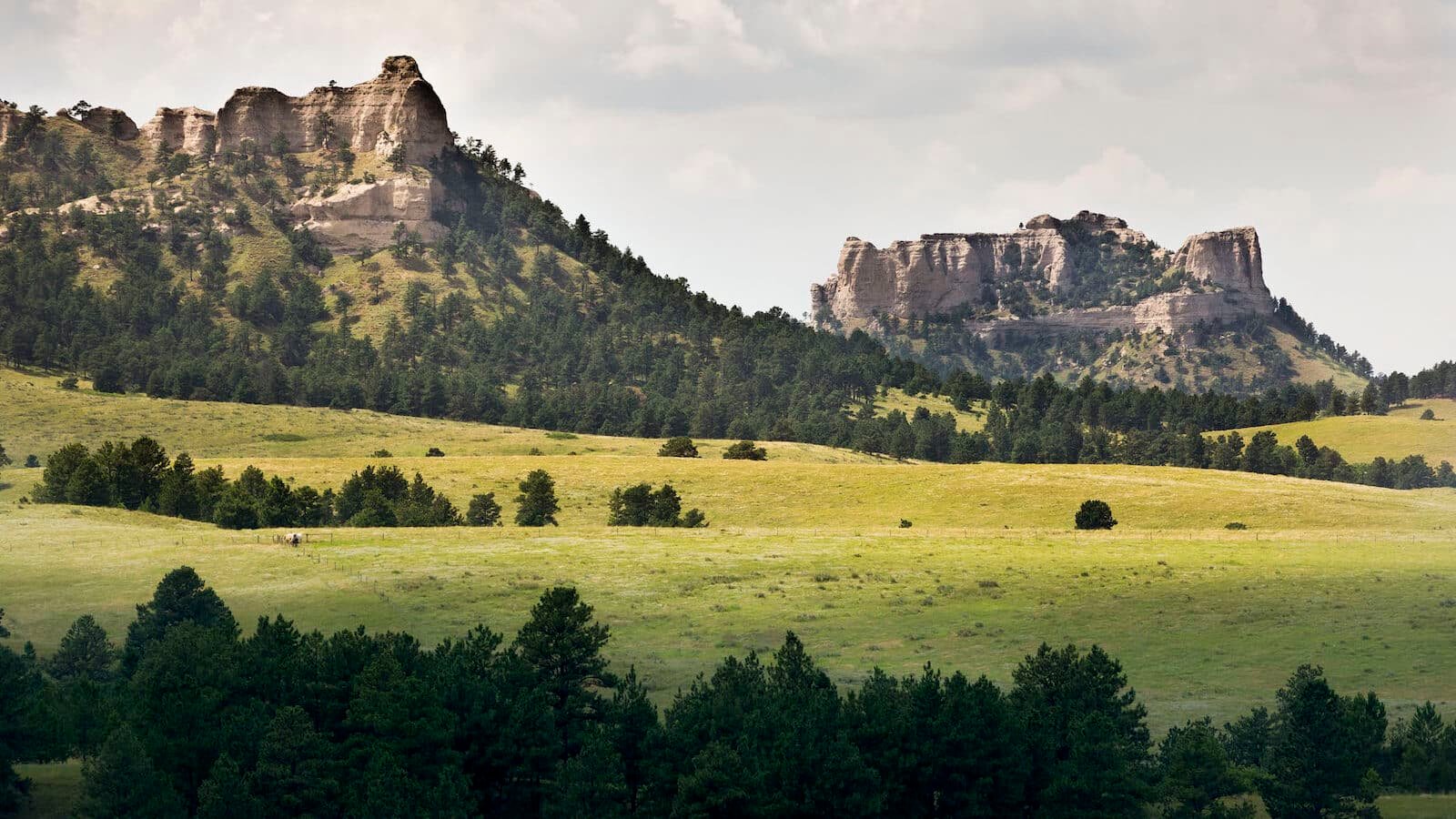
Nebraska summers are hot on the open plains, but the Pine Ridge escarpment in the far northwestern corner of the state creates a landscape and climate that feel more like the Black Hills of South Dakota than the Great Plains. Chadron, at about 3,400 feet at the base of the Pine Ridge, sits in a zone where the combination of elevation, ponderosa pine forest, and rugged terrain produces summer highs that average in the mid 80s, several degrees cooler than the central and eastern parts of the state. The pine-scented air and the forested ridgelines give the area a mountain feel that is rare in Nebraska.
Chadron State Park, the oldest state park in Nebraska, sits in a forested canyon south of town with hiking trails, a swimming pool fed by creek water, and camping under a pine canopy that stays cool through the afternoon. The Nebraska National Forest at Halsey, while farther east, is the largest hand-planted forest in the Western Hemisphere and provides additional shade-based cooling. Fort Robinson State Park, about twenty miles west of Chadron, is a former frontier military post with miles of trails through pine ridges and creek valleys, horseback riding, and a swimming pool. The park’s Soldier Creek Wilderness has buttes and canyons that channel breezes and provide shade.
Chadron’s downtown has a modest Western character with a few restaurants and shops. Olde Main Street Inn serves home-style cooking. Bean Broker Coffee House is the local gathering spot. The Ridgeview Lodge at Chadron State Park provides basic accommodations in the forest. Fort Robinson State Park has lodge rooms and cabins. Chadron in summer is Nebraska’s closest approximation to a mountain escape, and the Pine Ridge country offers a landscape and a climate that challenge every assumption about what the Great Plains can be.
Nevada: Incline Village (Lake Tahoe)
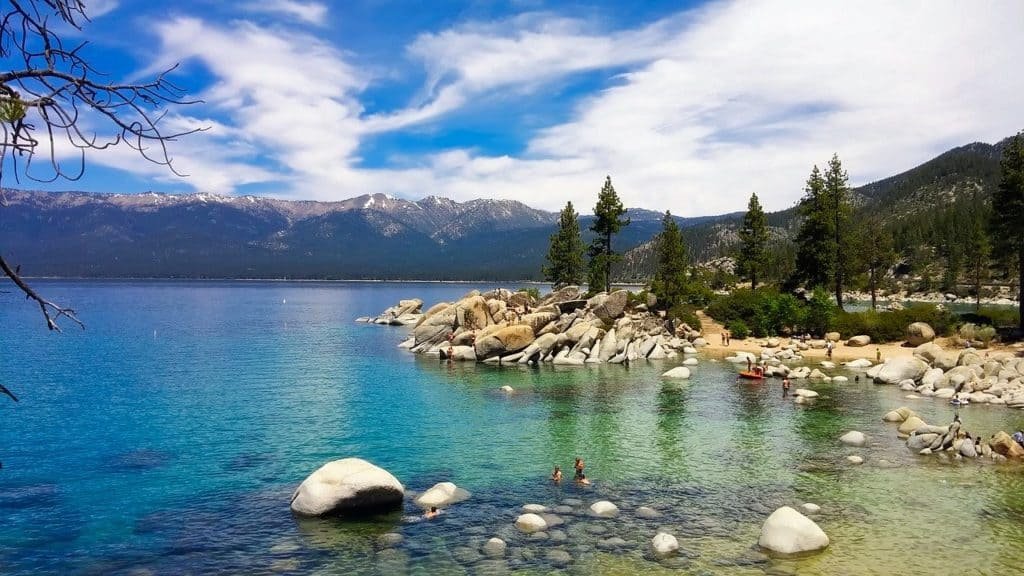
When Las Vegas is hitting 115 and Reno is baking at 100, Incline Village on the north shore of Lake Tahoe sits at 6,350 feet with summer highs in the low 80s, negligible humidity, and one of the most beautiful lakes in the world for cooling off. The lake itself, at 6,225 feet of elevation, maintains surface temperatures in the upper 60s near shore and the low 50s in deeper water, providing the kind of cold-water swimming that makes you feel reborn on a hot day. Incline Village is less developed and less crowded than the south shore, offering a quieter version of the Tahoe summer experience.
The beaches here are the main attraction. Sand Harbor, a Nevada State Park beach with granite boulders and clear turquoise water, is consistently rated among the most beautiful lake beaches in the country. Burnt Cedar Beach, for Incline Village residents and their guests, provides a more private option. The water clarity is extraordinary. Tahoe’s famously clear water allows you to see the bottom at depths that seem impossible, and floating in that cold, clear water with the Sierra peaks rising above the far shore is a sensory experience that no pool can replicate. The Flume Trail, a mountain bike and hiking path along the ridgeline above the lake, offers views across the entire basin and runs through forest where the temperature is cooler than the lakeshore below.
Incline Village has a small commercial center with restaurants that serve the summer and ski-season populations. Lone Eagle Grille, at the Hyatt Regency, does lakefront dining with views that justify the price. Bite serves creative American fare in a casual space. Austin’s serves breakfast. For lodging, the Hyatt Regency Lake Tahoe is the most upscale option, with a private beach and lake access. Numerous vacation rentals provide houses and condos with mountain and lake views. Incline Village in summer is the Nevada escape that proves this desert state has a mountain-lake paradise within its borders.
New Hampshire: Bretton Woods
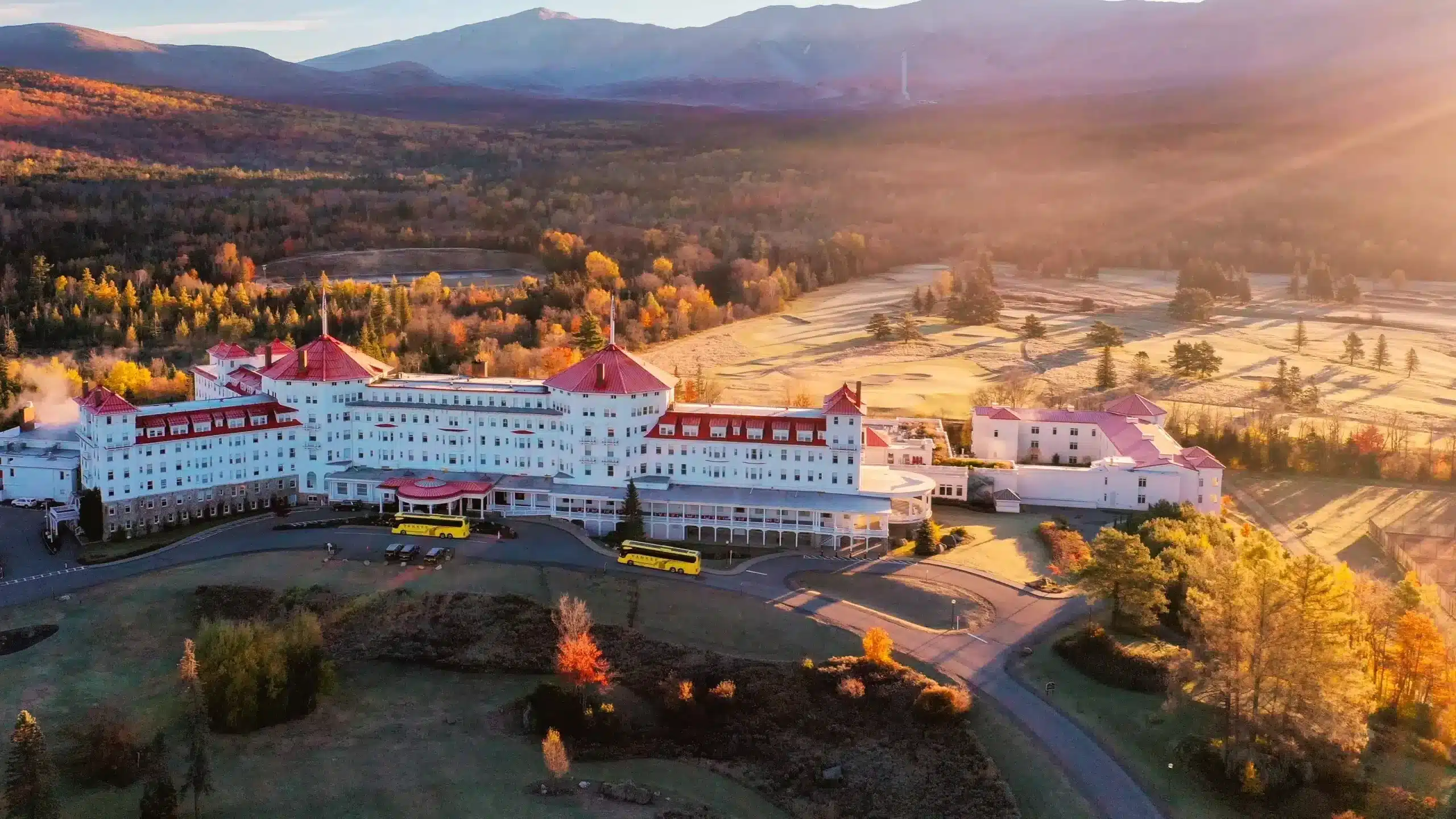
The White Mountains of New Hampshire are the great summer cooling system of northern New England, and Bretton Woods, sitting at about 1,600 feet in the shadow of Mount Washington, offers the most dramatic combination of mountain cool and resort comfort in the state. Summer highs average in the mid 70s, and the mountain air that flows down from the Presidential Range keeps the nights cool enough for sleeping under a blanket. Mount Washington itself, just to the east, is famous for having some of the worst weather on Earth, and the cold air that descends from the summit moderates temperatures across the surrounding valleys.
The Omni Mount Washington Resort, a grand hotel that has operated since 1902, is the anchor of the Bretton Woods experience. The resort sits on a broad valley floor with the Presidential Range rising behind it, and the white facade against the green mountains is one of the most iconic images in New England hospitality. The hotel’s veranda, stretching across the entire front of the building, catches the mountain breeze and provides an outdoor living space where the air temperature on a summer afternoon is consistently cooler than the lowland cities. The Cog Railway, which climbs Mount Washington from a base station near the resort, takes passengers to the summit where temperatures can be 30 degrees colder and the wind can be fierce even in July.
Beyond the resort, the surrounding White Mountain National Forest provides hiking and recreation in shaded forest and along mountain streams that stay cold all summer. The Ammonoosuc River, flowing through the valley, has swimming holes where the mountain water will cool you down faster than any air conditioner. Crawford Notch State Park, just south, has waterfalls and trails through a narrow mountain pass where the temperature drops perceptibly. For dining, the resort has multiple restaurants, and nearby Twin Mountain has casual options. Bretton Woods in summer is the New Hampshire escape where the mountain cool, the grand hotel tradition, and the wild White Mountains all converge.
New Jersey: Cape May
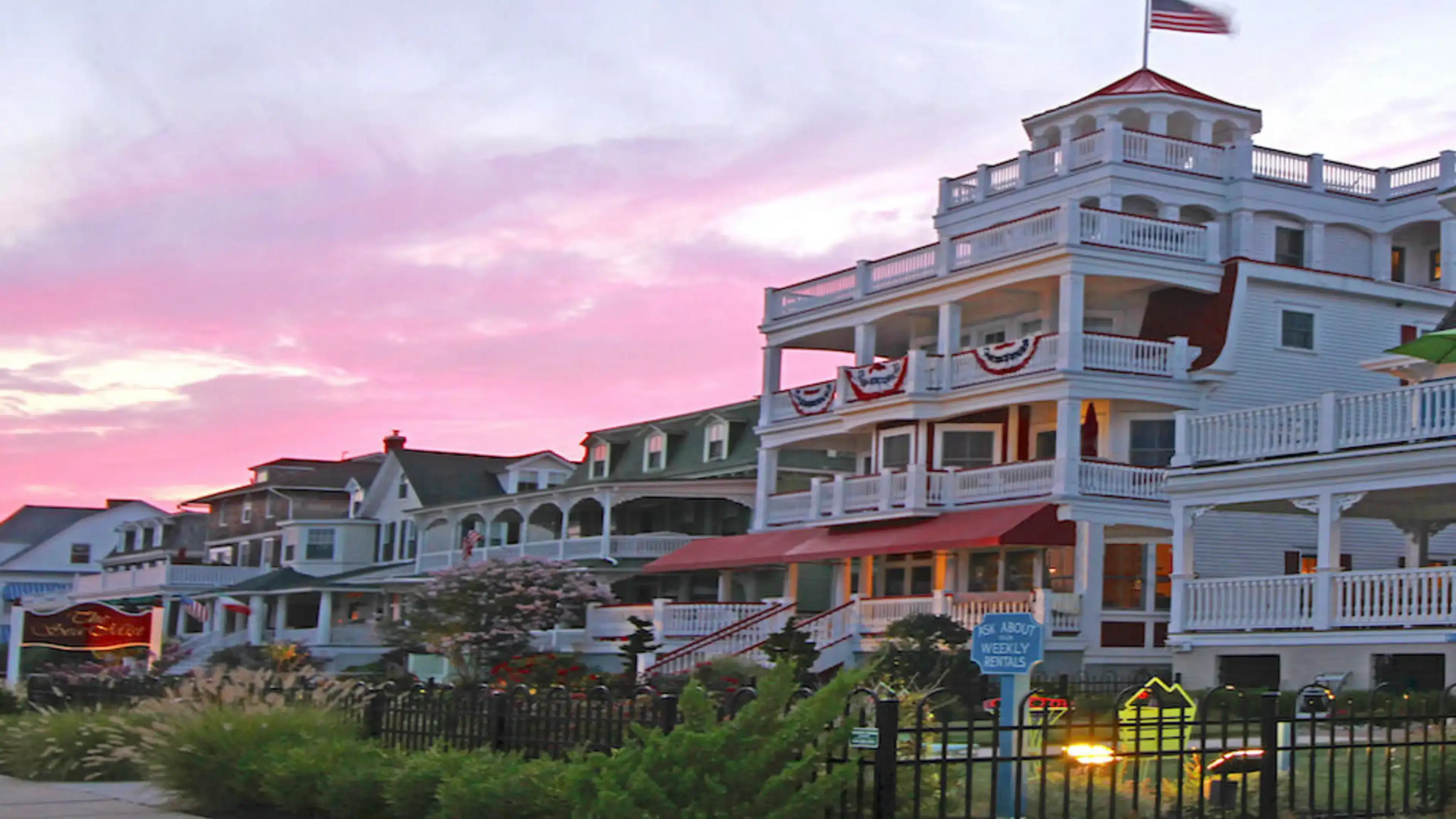
New Jersey heats up aggressively in summer, and the inland cities can be brutal. Cape May, at the very southern tip of the state where the Atlantic Ocean meets the Delaware Bay, sits in a unique position where water surrounds it on three sides and the ocean breeze provides consistent relief. Summer highs average in the low 80s, but the sea breeze keeps the perceived temperature lower, and the water is always steps away for a direct cooldown. The Victorian resort town has been a summer escape since the mid-1800s, making it one of the oldest seaside resorts in the country.
The beaches are the primary cooling mechanism, and Cape May has some of the best in New Jersey. The water temperature in July and August reaches the upper 60s and low 70s, warm enough for comfortable swimming but cool enough to provide genuine relief. Sunset Beach, on the bay side, has calmer water and the famous concrete ship Atlantus visible offshore. The Cape May Promenade runs along the beachfront, and the evening walk along the water after the day’s heat has broken is one of the great summer rituals on the Jersey Shore. Cape May Point State Park, at the very tip, has beaches, trails, and a lighthouse where the breeze from both the ocean and the bay converges.
The town’s Victorian architecture, with hundreds of preserved gingerbread-trimmed houses painted in vivid colors, provides a visual coolness that complements the physical kind. The Ebbitt Room at the Virginia Hotel serves refined American cuisine. The Lobster House, on the harbor, does seafood in a waterfront setting. The Mad Batter is a breakfast favorite. For lodging, the Virginia Hotel and Congress Hall, both historic properties, offer accommodations with period character and modern amenities. Cape May in summer is the Jersey Shore at its most civilized, a place where the ocean breeze and the Victorian shade combine to create a summer escape that has worked for over 150 years.
New Mexico: Cloudcroft
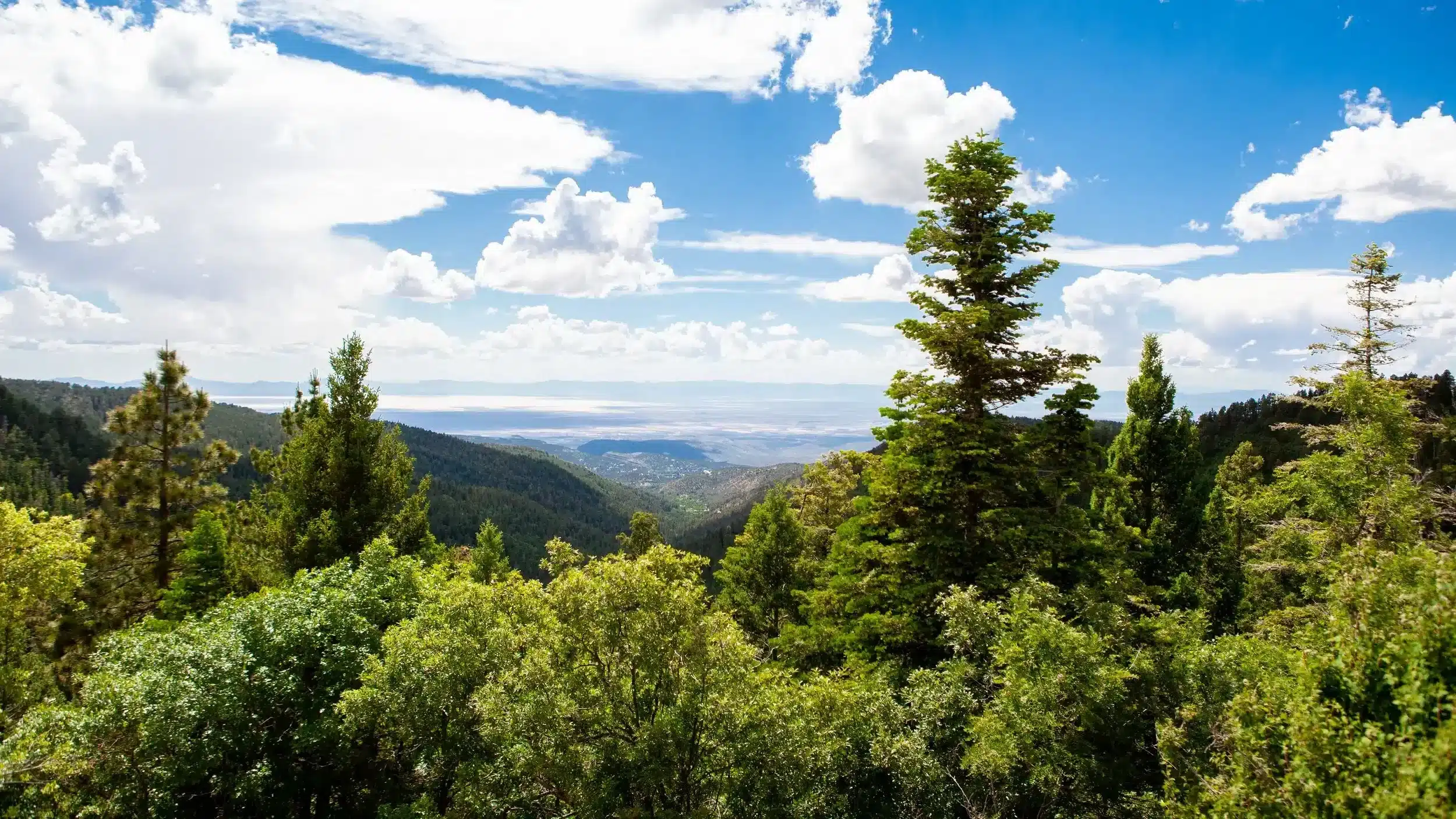
When the desert floor of southern New Mexico is hitting 105, Cloudcroft sits at 8,663 feet in the Sacramento Mountains with summer highs in the low 70s and nights that can drop into the 40s. The contrast is one of the most dramatic vertical temperature escapes in the country. Alamogordo, at the base of the mountains, is typically 25 to 30 degrees hotter than Cloudcroft on the same afternoon. The drive up Highway 82 from the Tularosa Basin to Cloudcroft climbs nearly 5,000 feet in about thirty miles, and the temperature gauge in the car drops steadily the entire way.
Cloudcroft is a tiny mountain village surrounded by Lincoln National Forest, and the ponderosa pine and Douglas fir that cover the surrounding mountains keep the air cool and fragrant. The Rim Trail, which follows the edge of the escarpment with views down to the White Sands below, provides hiking where the contrast between the blistering desert floor and the cool mountain air above it is visible in both directions. The Sacramento Mountains are laced with trails through meadows and forests that are comfortable for hiking all day in summer. The Sunspot Solar Observatory, at the end of a scenic drive south of town, sits at 9,200 feet and offers educational tours in conditions that feel more like early autumn than midsummer.
Cloudcroft’s small commercial district has a few restaurants and shops that serve the summer and winter tourist populations. Rebecca’s at the Lodge serves upscale dining in a historic setting. Dave’s Cafe does casual breakfast and lunch. Western Bar and Grill is the local hangout. The Lodge Resort, a grand hotel that has operated since 1899, is the premier lodging option and sits amid the forest with views of the surrounding mountains. Several cabin rentals provide more private accommodations. Cloudcroft in summer is the New Mexico escape that desert dwellers treat like a lifeline, and the mountain air here is cold enough to make you forget that one of the hottest deserts in America is directly below you.
New York: Lake Placid
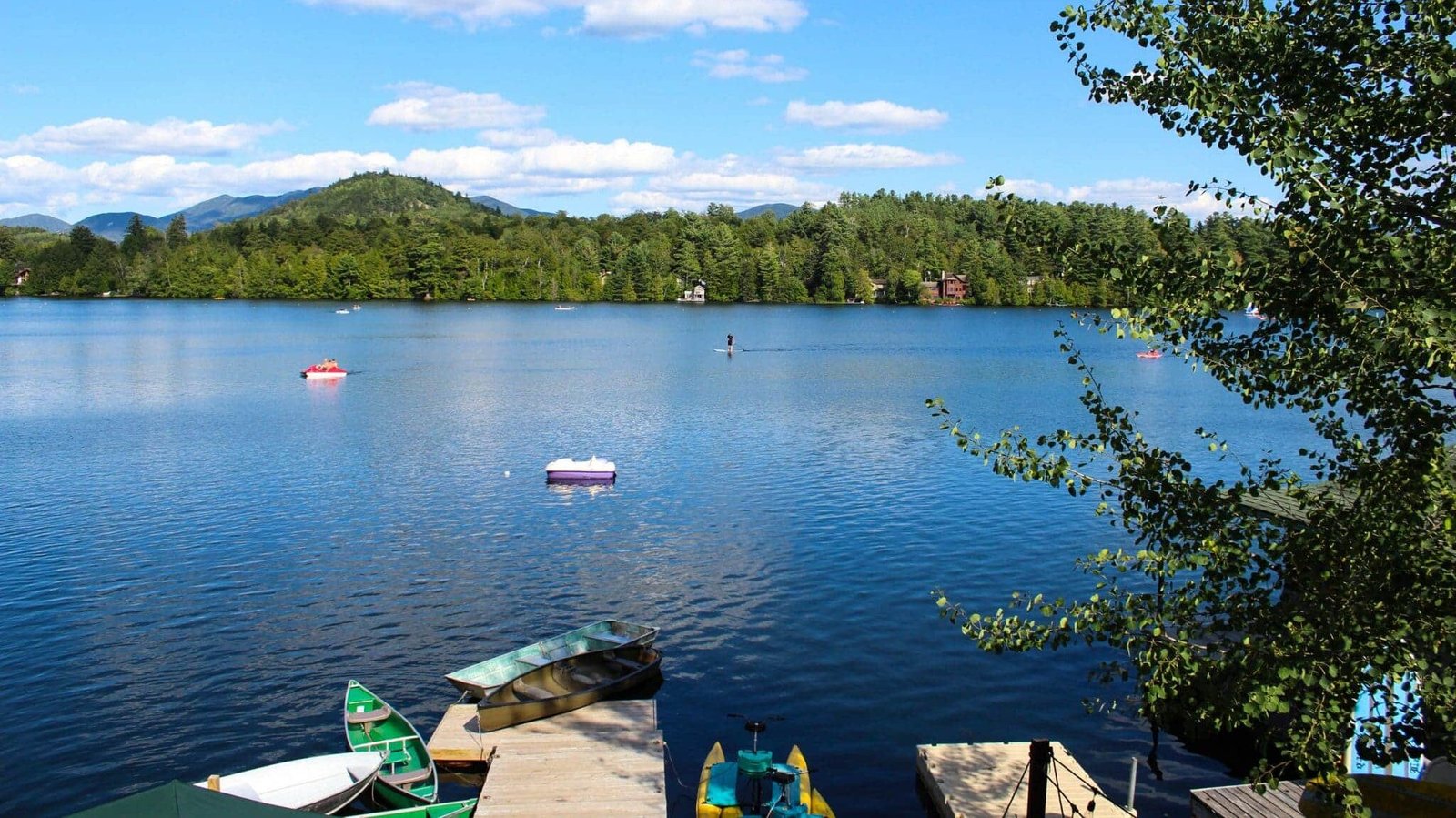
The Adirondack Mountains cover a vast area of northern New York, and the entire region offers summer cooling, but Lake Placid, at 1,860 feet on the shore of Mirror Lake and adjacent to Lake Placid itself, provides the best combination of mountain temperatures and town amenities. Summer highs average in the upper 70s, and the combination of lake breezes, mountain elevation, and northern latitude keeps the humidity manageable and the nights cool enough for comfortable sleeping. The town’s Olympic heritage, from the 1932 and 1980 Winter Games, gives it a sporting character that encourages outdoor activity even in the warmest weather.
Mirror Lake, which sits right in the center of town, provides the most accessible cooling. The public beach has cold, clear water within walking distance of Main Street. Lake Placid itself, the larger lake to the west, offers boating and swimming in a mountain setting surrounded by the High Peaks. For the most dramatic cooling, the Adirondack High Peaks offer hiking to summits above 4,000 feet where the temperature can be 15 to 20 degrees below the valley and the wind adds a chill that makes a July summit feel like September. Cascade Mountain, one of the most accessible High Peaks, has a trailhead just outside town.
Main Street has a resort-town energy with restaurants, shops, and outfitters that serve year-round visitors. The Cottage serves creative American cuisine. Big Slide Brewery and Public House does craft beer and pub food. Lisa G’s is the breakfast spot. For lodging, the Mirror Lake Inn, directly on the lake, is the most established option. The Whiteface Lodge provides luxury accommodations on a larger scale. The Lake Placid Lodge offers rustic elegance on the big lake. Lake Placid in summer is the Adirondack escape that works for both active adventurers and those who just want to sit on a porch overlooking a mountain lake and feel the cool air settle in at dusk.
North Carolina: Highlands
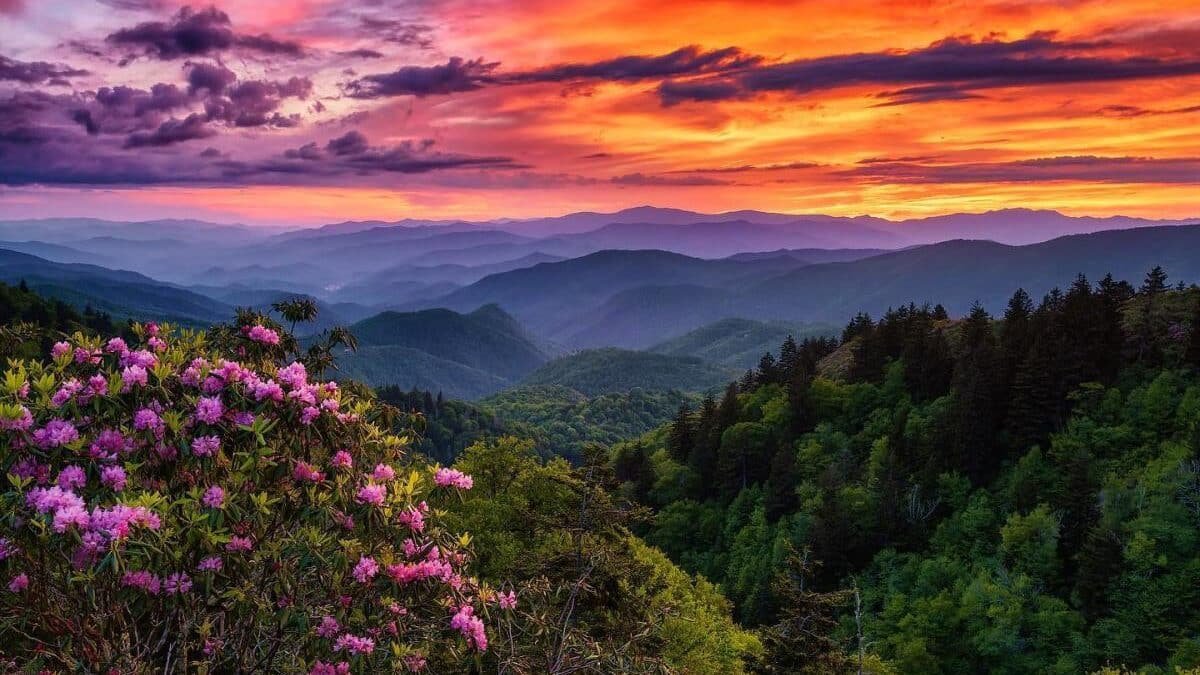
Highlands sits on a plateau at 4,118 feet in the Blue Ridge Mountains of far western North Carolina, making it one of the highest towns in the eastern United States. Summer highs average in the upper 70s, and the combination of elevation and frequent afternoon mist keeps the humidity from reaching the oppressive levels that define summer in the Carolina lowlands. When Charlotte and Raleigh are enduring weeks of 95-degree heat with dew points in the 70s, Highlands feels like a different climate zone entirely, and the cool mountain air has attracted summer residents from the Southeast for over a century.
The town sits in one of the wettest regions east of the Pacific Northwest, and the frequent rain keeps the surrounding forest lush and the waterfalls flowing all summer. The Highlands Plateau is ringed with waterfalls, and several of the best are accessible from short trails near town. Dry Falls, where you can walk behind the 65-foot cascade, and Bridal Veil Falls, where you can drive behind the curtain of water, both throw mist that provides instant cooling. The Bartram Trail, which passes through the area, offers ridge-top hiking with views across the Blue Ridge where the mountain air is in constant motion. Whiteside Mountain, a massive granite cliff face near town, has a moderate trail to views that stretch across the mountain landscape.
Highlands’ dining reflects its status as a summer enclave for well-heeled residents from Atlanta, Charlotte, and the Southeast. Wolfgang’s Restaurant and Wine Bistro does European-inspired cuisine. The Ugly Dog Pub is the casual gathering spot. Madison’s Restaurant at the Old Edwards Inn serves refined Southern cooking. The Old Edwards Inn itself is the premier lodging option, with spa amenities and a mountain-village setting. The Highlander Mountain House offers boutique rooms. Highlands in summer is the elevation escape that the southeastern establishment has relied on for generations, and the cool, misty air on the plateau is as much of an amenity as any resort could offer.
North Dakota: Medora
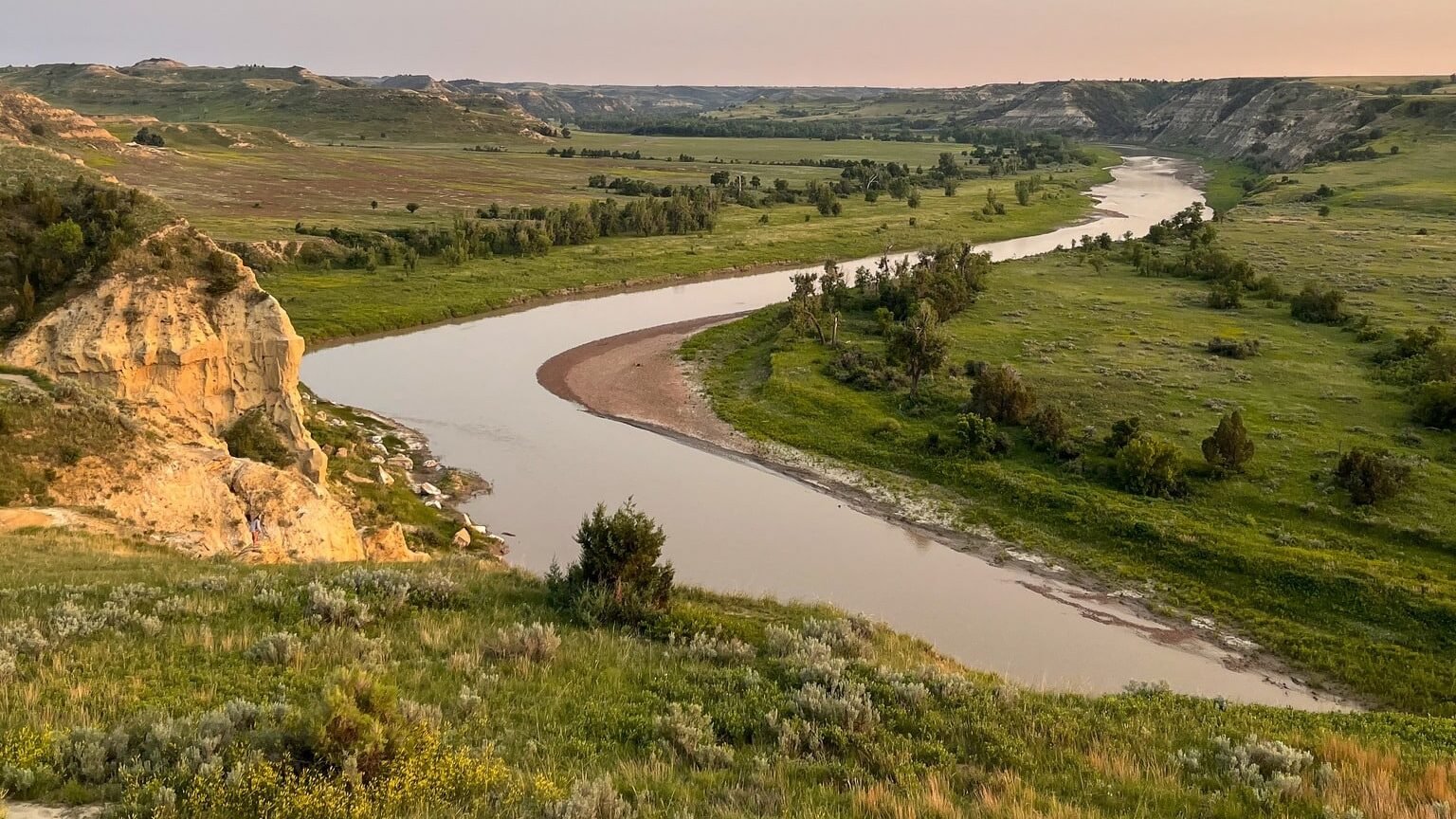
North Dakota summers are hot on the open plains, where the sun beats down on flat terrain with little shade. Medora, at the entrance to Theodore Roosevelt National Park in the badlands of the western part of the state, does not offer dramatically cooler temperatures, but the broken terrain, the deep coulees, and the cottonwood-lined river bottoms create microclimates that are more comfortable than the exposed prairie. The badlands topography channels breezes through the canyons and provides shade from the low bluffs throughout the day, and the mornings and evenings in the badlands can be genuinely pleasant even when the afternoon is hot.
The Little Missouri River, which flows through the park and past Medora, provides water-based cooling through wading and swimming in the deeper pools. The river valley is lined with cottonwood trees whose canopy creates a shaded corridor that is the coolest natural environment in the area. The park’s Scenic Loop Drive, best done in the early morning or late afternoon, passes through landscape where the eroded buttes cast long shadows and the air temperature in the sheltered valleys is noticeably lower than on the exposed ridges. The wildlife is most active in the cool hours, and bison, wild horses, and pronghorn are regularly visible from the road.
Medora is a tiny historic town with limited but characterful dining. The Badlands Pizza Parlor and Cowboy Cafe serve basic fare. The Rough Riders Hotel has a dining room with more substantial options. The Medora Musical, an outdoor variety show, runs through the summer and is best enjoyed on evenings when the badlands cool down and the sunset paints the buttes. The Rough Riders Hotel provides historic accommodations. Medora in summer is not a cool escape by mountain standards, but the badlands offer a landscape so different from the surrounding plains that the change of scenery provides a psychological cooling that the thermometer cannot fully explain.
Ohio: Geneva-on-the-Lake
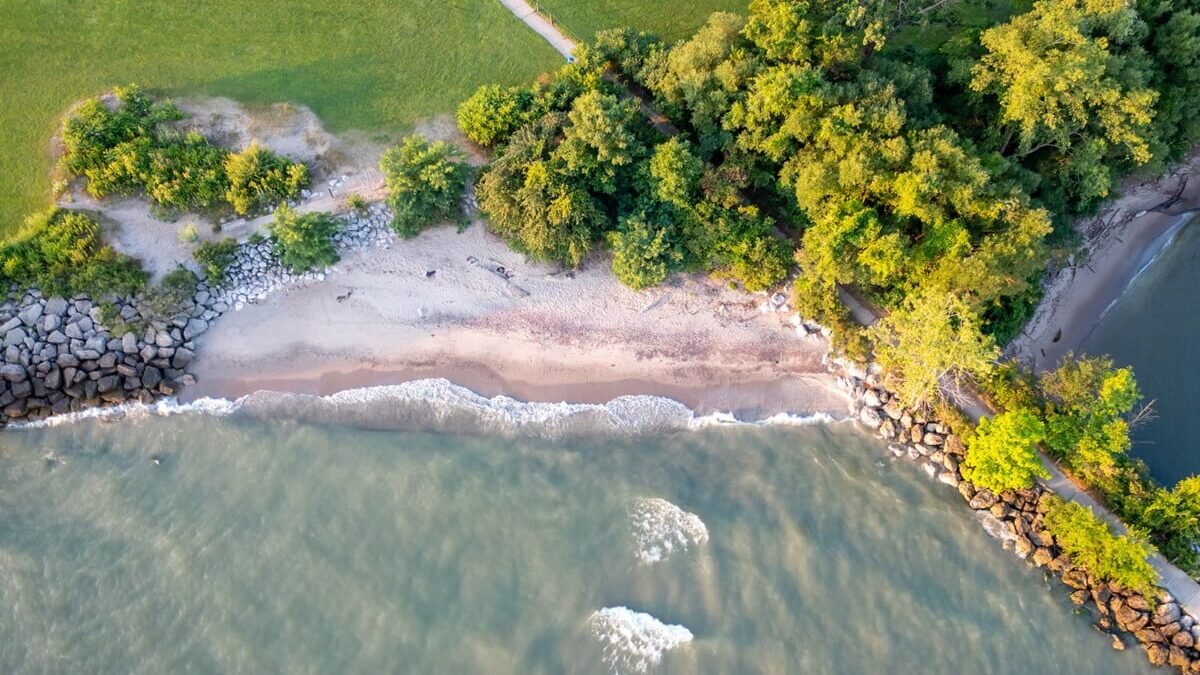
Ohio summers are hot and humid, and the state has no mountain relief. But the Lake Erie shore, in the far northeastern corner of the state, benefits from the moderating influence of the lake in much the same way that the Lake Michigan shore cools parts of Wisconsin and Michigan. Geneva-on-the-Lake, a small resort community in Ashtabula County, sits on a bluff above the lake and catches the northeast breezes that come off the water. Summer highs run a few degrees below the inland cities, and the lake breeze on the worst days can provide genuine relief.
The town is Ohio’s oldest summer resort, established in the 1860s, and it maintains a relaxed, old-fashioned character that the larger lakefront cities have lost. The strip, a collection of arcades, restaurants, and shops along the bluff, has the atmosphere of a mid-century American resort town. Geneva State Park, adjacent to the village, has a beach, marina, and camping that take direct advantage of the lake cooling. The covered bridge scenic tour through Ashtabula County, which has more covered bridges than any county in Ohio, provides shaded driving through forested valleys where the creek corridors are noticeably cooler than the open farmland.
The wine trail in the area adds a dimension beyond cooling. The Grand River Valley has a concentration of vineyards and tasting rooms where the lake effect that moderates summer temperatures also extends the growing season. Ferrante Winery and Debonne Vineyards are among the most established. For dining, the strip has casual options, and the nearby town of Geneva has restaurants including the Lakehouse Inn, which serves food and offers lodging with lake views. Geneva-on-the-Lake in summer is Ohio’s best approximation of a coastal escape, a place where the lake does the work that mountains do elsewhere.
Oklahoma: Beavers Bend (Broken Bow)
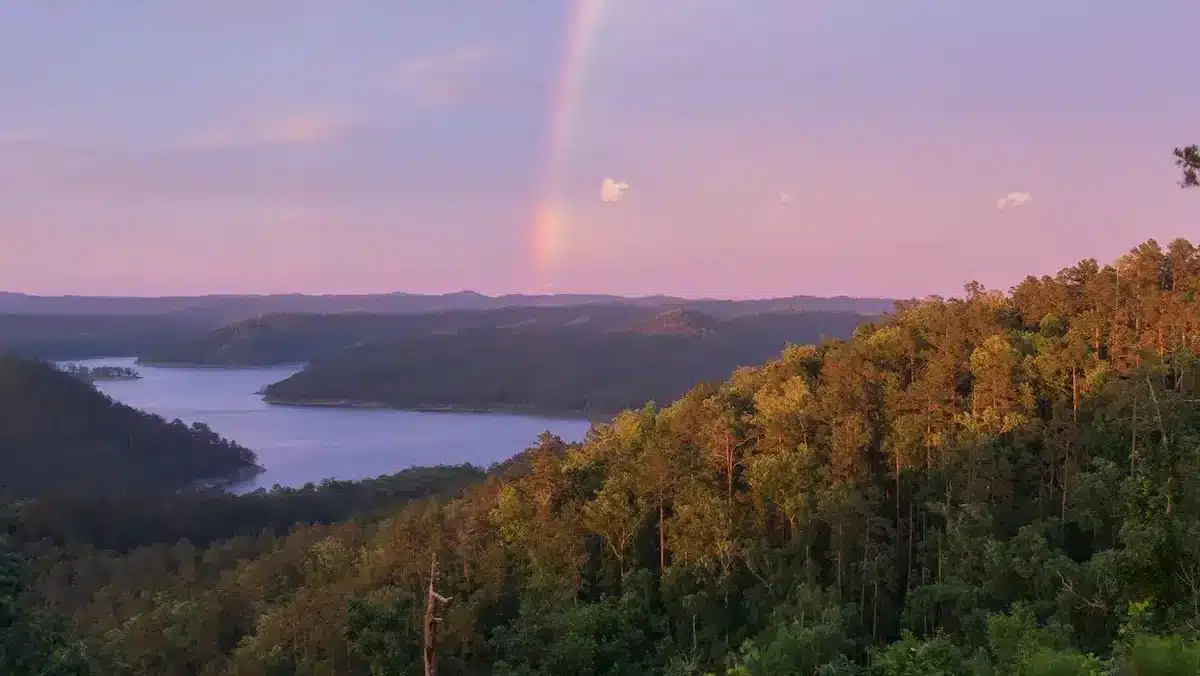
Oklahoma summers are relentlessly hot, and most of the state is flat, exposed, and without natural cooling options. The far southeastern corner, where the Ouachita Mountains rise above the plains, is the exception. Beavers Bend State Park and the surrounding area near Broken Bow sit in a forested mountain landscape where the tree canopy, the clear rivers, and the elevation create conditions that are meaningfully more comfortable than the rest of the state. The Mountain Fork River, a cold tailwater fishery below Broken Bow Dam, maintains temperatures in the 50s and 60s year-round, and simply standing in the river on a July afternoon drops the perceived temperature by twenty degrees.
The river is the primary cooling attraction. Wading, swimming, and tubing in the Mountain Fork River are summer staples, and the cold water is a physical shock that feels almost medicinal on the worst Oklahoma days. Broken Bow Lake, the large reservoir above the dam, offers boating and swimming in water that is warmer than the river but still refreshing. The surrounding Ouachita National Forest provides shaded hiking trails where the forest canopy blocks the worst of the sun and the mountain terrain generates air movement that the plains lack.
The Broken Bow area has developed a substantial cabin-rental economy, and hundreds of properties ranging from rustic to luxury are scattered through the forest. Grateful Head Pizza Oven and Tap House serves wood-fired pizza. Steven’s Gap Restaurant does Southern comfort food. Beavers Bend State Park has a lodge and restaurant. For the most direct cooling, the Lower Mountain Fork River below the park is the place to be, where the cold tailwater and the forested gorge combine to create the coolest microclimate in Oklahoma.
Oregon: Cannon Beach
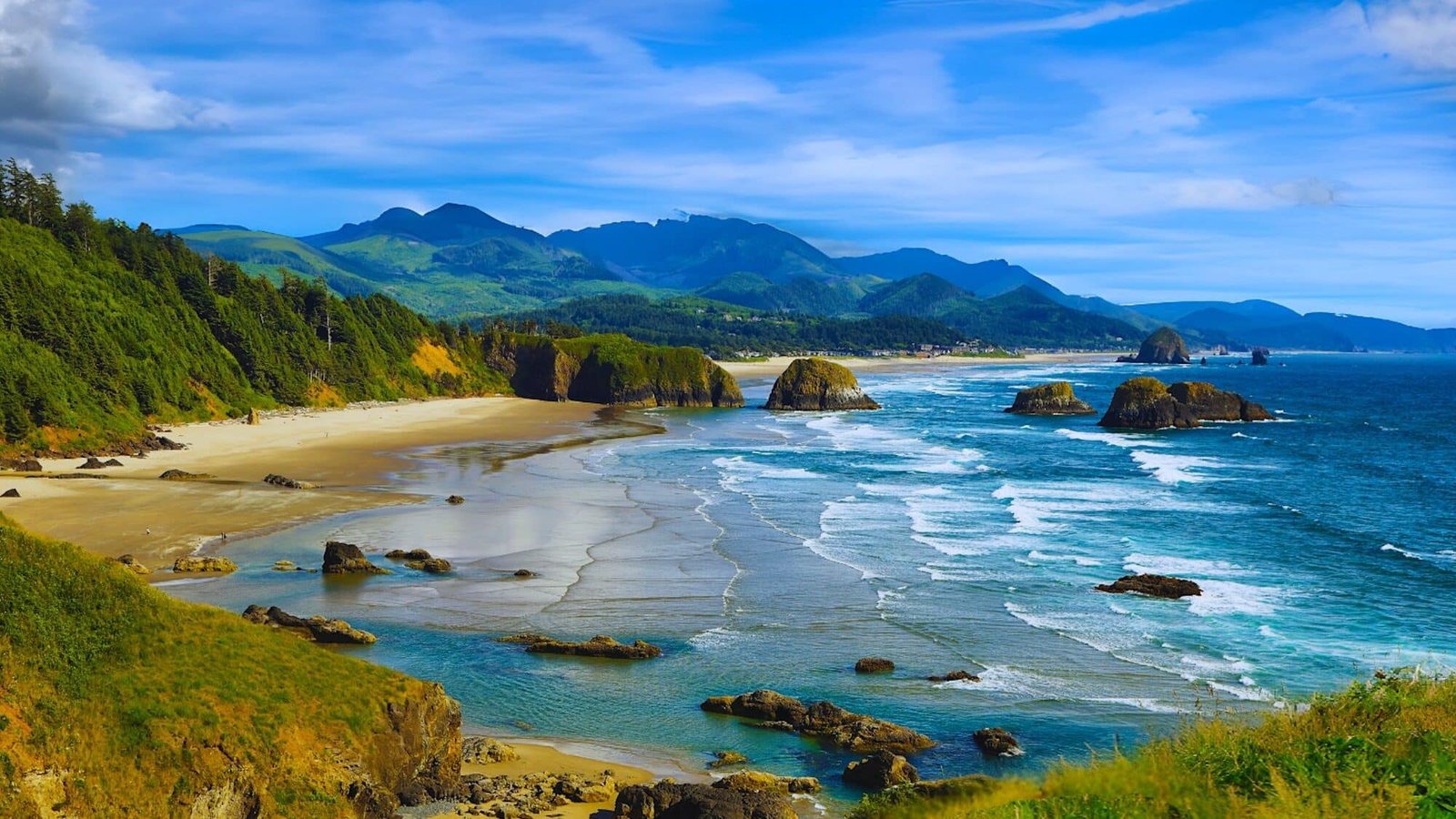
Oregon’s coast is one of the most reliably cool summer environments in the lower 48, and Cannon Beach, about 80 miles west of Portland, offers the best combination of coastal cooling and small-town character. Summer highs average in the low to mid 60s, and fog is a regular visitor through July and August. When Portland and the Willamette Valley are experiencing their increasingly frequent heat waves, with temperatures occasionally exceeding 100 degrees, Cannon Beach sits in a marine layer that keeps everything cool, damp, and refreshingly different. The temperature swing between the coast and the valley can exceed 40 degrees on the worst days.
Haystack Rock, the 235-foot sea stack that rises from the beach in front of town, is the iconic landmark, and the tide pools around its base provide a cool-weather beach activity that does not require swimwear. The beach itself stretches for miles, and the combination of the cool sand, the ocean mist, and the steady wind makes walking the shore a cooling experience that no inland recreation can match. Ecola State Park, north of town, has trails through coastal forest and along cliff tops with views of the rock-studded coastline that are among the most dramatic in Oregon. Indian Beach, within the park, offers a more sheltered cove for those who want to test the cold Pacific water.
Cannon Beach’s downtown is a collection of galleries, restaurants, and shops that reflect the town’s identity as an arts community. Newman’s at 988 serves French-Italian cuisine. The Wayfarer Restaurant does seafood with ocean views. Sleepy Monk Coffee is the morning gathering spot. For lodging, the Stephanie Inn provides boutique oceanfront accommodations. The Surfsand Resort sits directly on the beach with Haystack Rock views. The Inn at Cannon Beach offers rooms in a garden setting. Cannon Beach in summer is the Oregon coast at its most accessible, a place where you pack layers for July and the cool fog is the whole point.
Pennsylvania: Eagles Mere
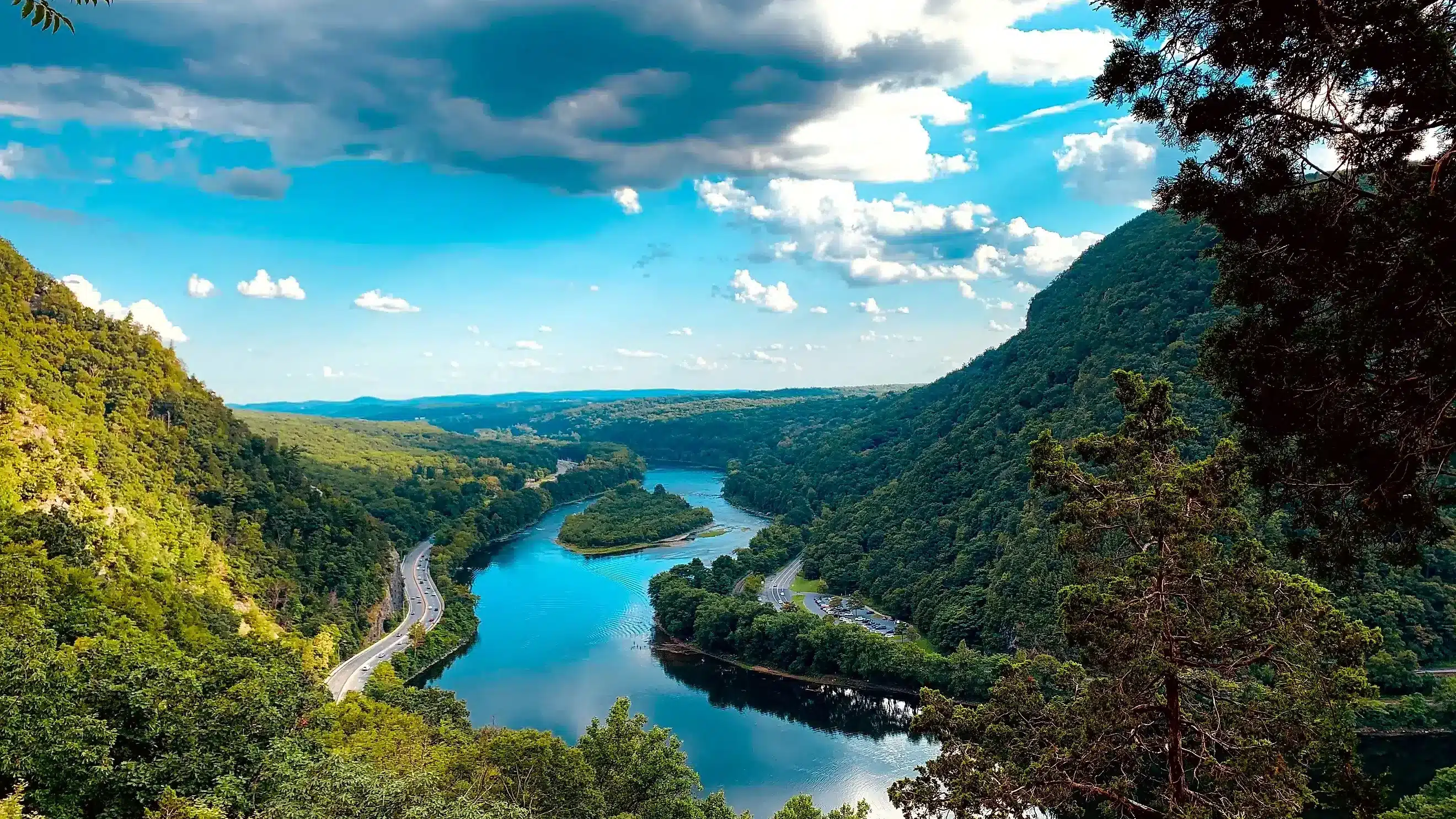
Eagles Mere is a tiny borough of about 100 year-round residents perched at 2,126 feet on a mountaintop in Sullivan County, in the Endless Mountains region of northeastern Pennsylvania. The town was established as a Victorian summer resort in the 1880s, when wealthy families from Philadelphia and New York built cottages on the ridge to escape the heat, and the fundamental appeal has not changed. Summer highs average in the upper 70s, and the mountain air that flows across the surrounding plateau keeps the humidity lower and the nights cooler than the valley cities below. The nickname “Town in the Sky” refers to the feeling of elevation that the ridge-top location creates.
Eagles Mere Lake, a glacial lake in the center of town, is the primary summer attraction. The lake, surrounded by forest and ringed by a walking path, provides swimming in water that stays refreshingly cool. The Eagles Mere toboggan slide, a famous local attraction, draws visitors in winter, but in summer, the lake beach and the surrounding trails are the draw. Worlds End State Park, about seven miles from town, has hiking trails through a dramatic gorge along Loyalsock Creek where the shaded canyon and cold water create temperatures that feel alpine. The Loyalsock Trail, one of the premier hiking trails in Pennsylvania, passes through the park with segments that are cool and comfortable all summer.
Eagles Mere’s commercial district is small but includes the Eagles Mere Inn, which serves dinner and offers lodging in a historic property with mountain views. The Eagles Mere Country Store has provisions. The Crestmont Inn provides additional rooms. For a wider selection of dining, the nearby town of Laporte has a few options, and Williamsport, about forty-five minutes south, offers a full range of restaurants and services. Eagles Mere in summer is the Pennsylvania hill-station escape that has operated quietly for over a century, a place where the mountaintop air and the glacial lake provide the same relief that the Victorians first came here to find.
Rhode Island: Block Island
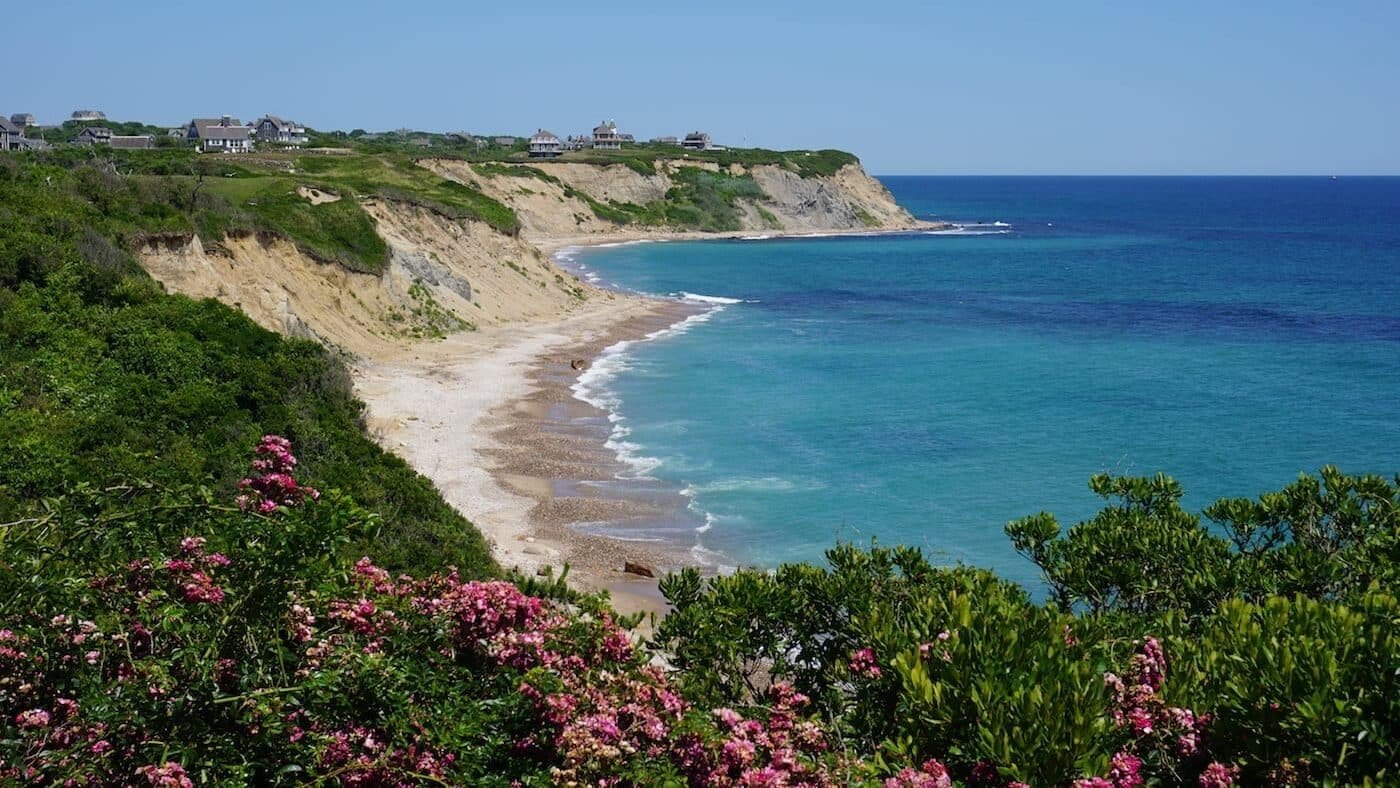
Block Island sits twelve miles off the Rhode Island coast in the open Atlantic, and the water that surrounds it on all sides moderates summer temperatures to a degree that the mainland cannot match. Summer highs average in the upper 70s, but the sea breeze keeps the perceived temperature lower, and the ocean is always within a short walk for direct cooling. The island is small, about ten square miles, which means that no point on the island is far from the moderating influence of the water. The ferry ride from Point Judith, which takes about an hour, serves as a psychological transition from the mainland heat to the island cool.
The beaches are the primary cooling mechanism, and Block Island has several excellent ones. Crescent Beach, a long sweep of sand on the eastern shore, has gentle waves and water in the upper 60s. Mohegan Bluffs Beach, on the southern end, sits below dramatic 200-foot clay cliffs and has a wilder, more exposed character. The island’s network of trails, maintained by the Block Island Conservancy, crosses rolling grassland and scrubby forest where the sea breeze penetrates from every direction. Southeast Light, a Victorian-era lighthouse on the bluffs, provides views across the open ocean where the wind is unobstructed and the cooling effect is at its maximum.
The town of New Shoreham, the island’s only village, has restaurants and shops that serve the summer population. The Manisses serves creative American cuisine with local ingredients. Dead Eye Dick’s does casual waterfront dining. The Oar serves seafood on the harbor. For lodging, the Spring House Hotel, built in 1852, sits on a hilltop with ocean views and catches the breeze from every direction. The 1661 Inn provides rooms with water views. Block Island in summer is the New England island escape at its purest, a place where the ocean air is the amenity and the ferry ride is the transition into a different, cooler world.
South Carolina: Caesars Head (Cleveland area)
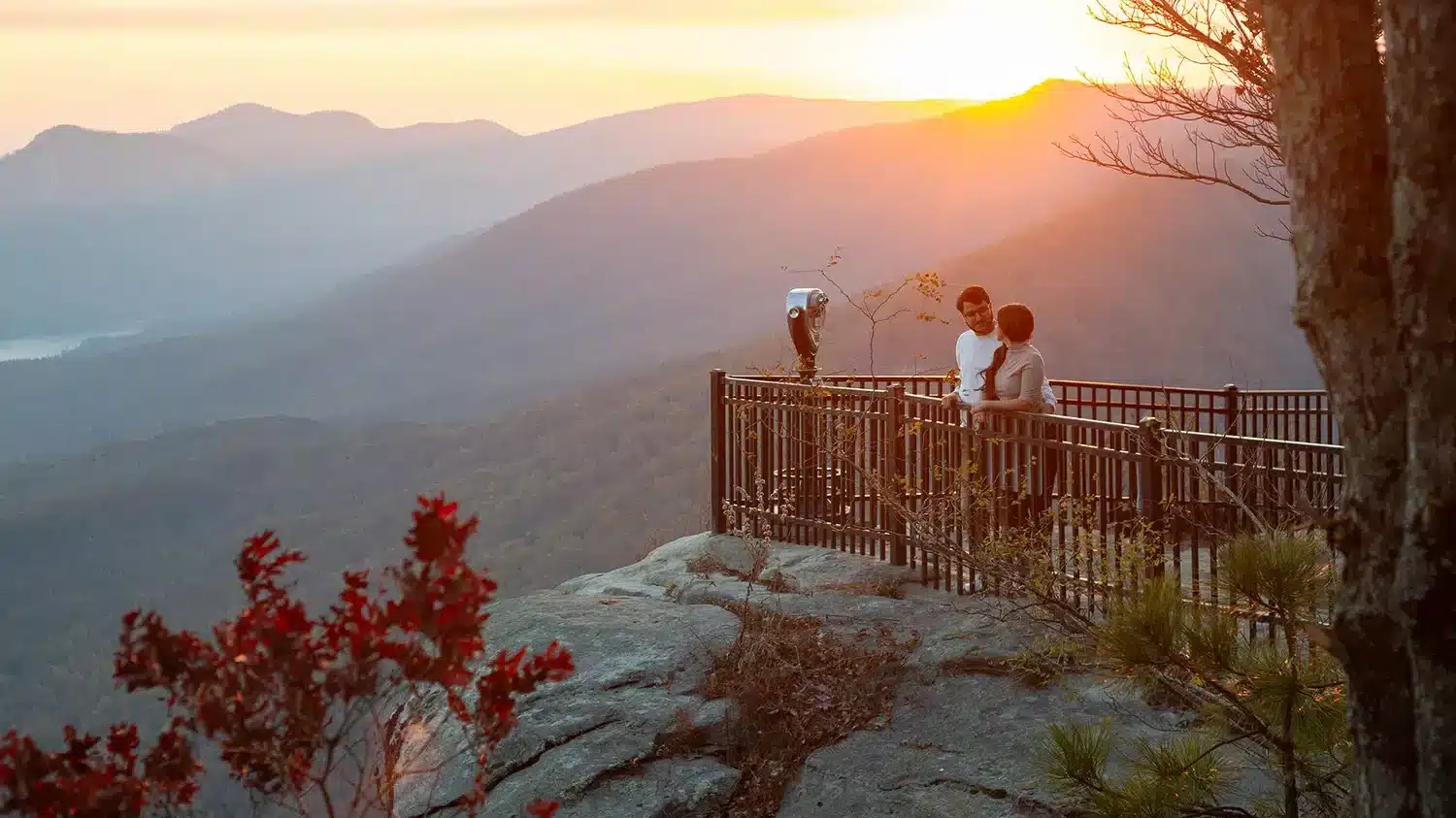
South Carolina summers are among the hottest and most humid in the country, and the lowland cities can feel almost unbearable from June through September. The Blue Ridge Escarpment in the far northwestern corner of the state provides the only genuine elevation relief. Caesars Head State Park, at 3,208 feet near the community of Cleveland, sits at the top of the escarpment where the mountains drop nearly 2,000 feet into the Piedmont, and the summer highs here average in the low 80s with significantly lower humidity than the lowlands. The difference from Columbia or Charleston is dramatic enough to feel like a different climate.
The escarpment creates its own weather patterns, and the afternoon updrafts from the heated Piedmont below generate breezes that keep the mountaintop comfortable. The Raven Cliff Falls Trail offers hiking through forest where the canopy and the gorge depth keep temperatures well below the open ridges. Jones Gap State Park, connected to Caesars Head by trail, has the Middle Saluda River running through it, and the mountain stream water stays cold enough for refreshing wading all summer. Table Rock State Park, nearby, has a lake with swimming and shaded picnic areas that take advantage of the mountain elevation.
The Cleveland area has limited services, but Greenville, about thirty minutes down the mountain, has a thriving downtown with restaurants and hotels. On the mountain, the Table Rock Lodge and several rental cabins provide accommodations with mountain views. The drive up Highway 276 from Greenville to Caesars Head is itself a cooling experience, with the temperature dropping noticeably as the road climbs through the forest. Caesars Head in summer is South Carolina’s only real mountain escape, and the view from the overlook, looking down through the haze at the sweltering Piedmont below while standing in mountain air, is the most satisfying temperature contrast in the state.
South Dakota: Custer
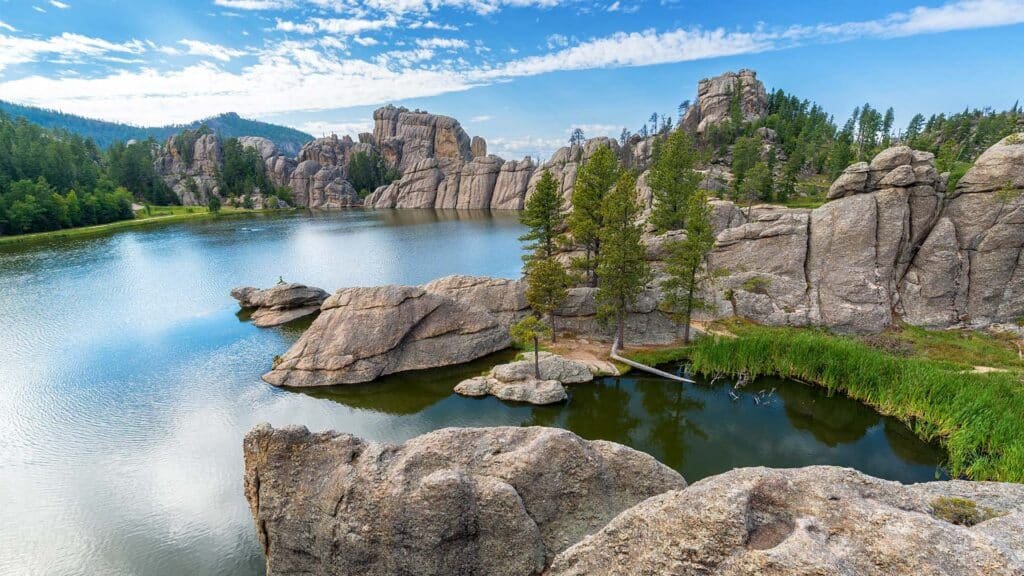
The Black Hills of western South Dakota rise from the surrounding plains like a forested island, and the elevation and tree cover create summer temperatures that are consistently cooler than the rest of the state. Custer, at about 5,300 feet in the southern Black Hills, has summer highs that average in the upper 70s and low 80s, with dry air that makes even the warmest days comfortable. When Sioux Falls and the eastern prairie are pushing into the 90s with Midwestern humidity, Custer sits in a ponderosa pine forest where the air is dry, the shade is deep, and the nights cool down enough for sleeping with the windows open.
Custer State Park, one of the largest state parks in the country, wraps around the town and provides endless summer recreation in the cool mountain environment. The Wildlife Loop Road passes through rolling grassland where bison, pronghorn, and wild burros roam freely. Sylvan Lake, a natural lake among the granite spires of the Needles, has swimming in water cold enough to provide genuine shock on a hot afternoon. The Needles Highway, a narrow road through spectacular granite formations, offers driving and hiking where the rock spires provide shade and the elevation keeps the air fresh. Iron Mountain Road, connecting Custer to Mount Rushmore, has pigtail bridges and single-lane tunnels that frame views of the Presidents in a driving experience unlike any other.
Custer’s downtown has a modest Western character. The Buglin’ Bull Restaurant and Sports Bar does steaks and burgers. Skogen Kitchen serves farm-to-table cooking. The State Game Lodge in the state park, where Presidents Coolidge and Eisenhower stayed, has a dining room and comfortable rooms. The Sylvan Lake Lodge, perched above the lake, provides the most scenic accommodations. Custer in summer is the Black Hills at its most comfortable, a pine-forest escape where the mountain air does what the open plains cannot.
Tennessee: Roan Mountain
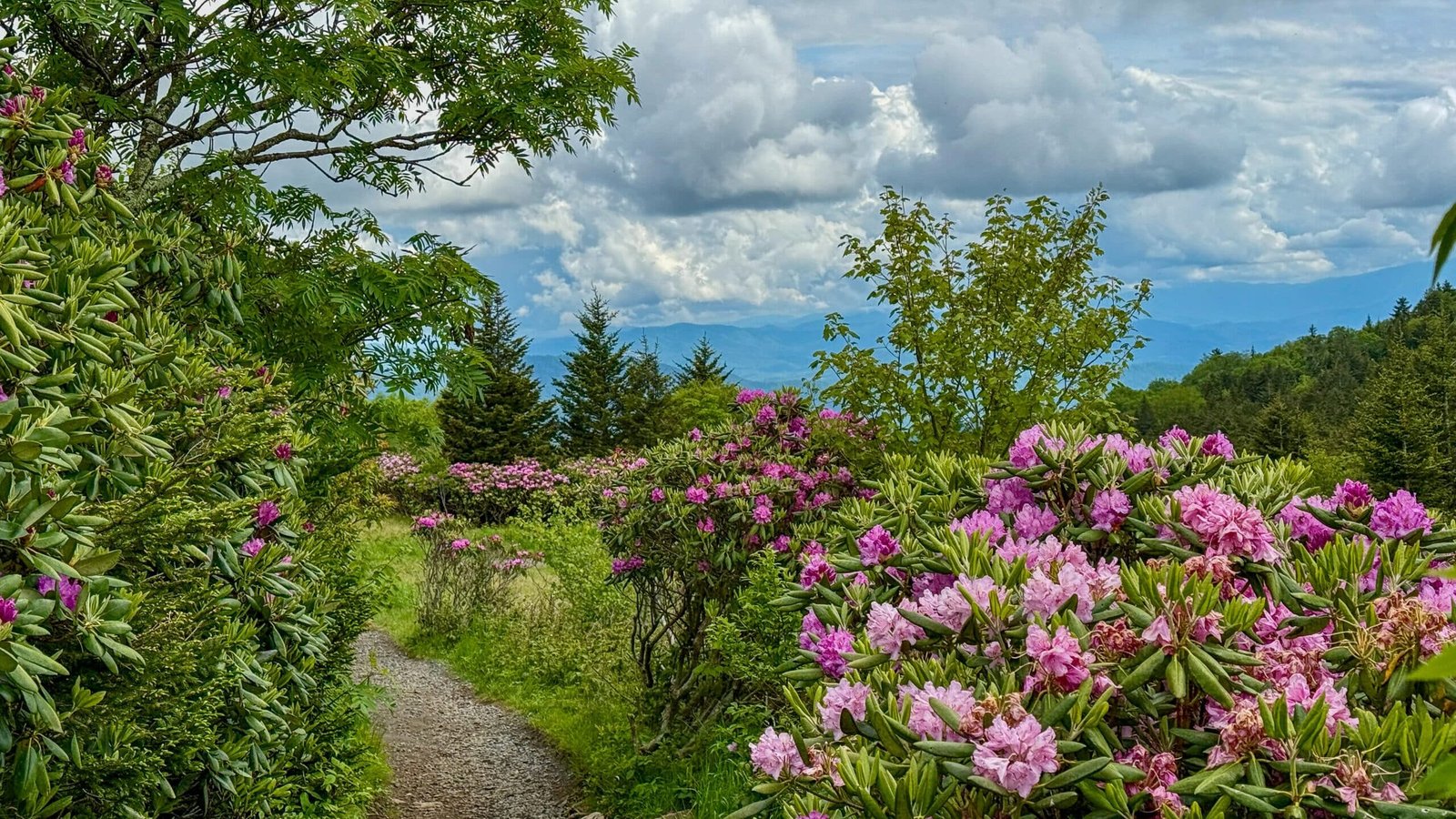
Tennessee summers are hot and humid across most of the state, but the high mountains along the North Carolina border offer genuine elevation relief. The community of Roan Mountain, at about 2,700 feet in the far northeastern corner of the state, sits at the base of the Roan Highlands, where the peaks reach above 6,000 feet and the temperatures at the top can be 20 degrees cooler than the valley below. Summer highs in the community average in the low 80s, and the higher elevations are comfortable enough for all-day hiking in conditions that feel like early autumn.
Roan Mountain State Park, at the base of the highlands, has a pool, shaded trails, and camping along the Doe River, a cold mountain stream that provides direct cooling. The real attraction, though, is the drive and hike to the top of Roan High Bluff and Roan High Knob, where the Appalachian Trail crosses above 6,000 feet through the largest natural rhododendron garden in the world. In June, the rhododendrons bloom in vast fields of pink and purple at the summit, and the cool mountain air makes standing among them feel like being in a different season. The balds, open grassy meadows at the summit, offer 360-degree views and winds that can chill you even in July.
The town of Roan Mountain is small, with limited commercial activity. Bob’s Dairyland serves burgers and ice cream. The nearby town of Elizabethton has more dining options. Roan Mountain State Park has cabins and camping. The Appalachian Trail Conservancy maintains shelters along the ridgeline for hikers. Roan Mountain in summer is the Tennessee escape for anyone willing to trade amenities for elevation, and the air at the top of the highlands is cold enough to remind you that genuine mountain cool still exists in the southern Appalachians.
Texas: Marfa
Texas summers are notoriously hot, and most of the state offers no relief. But the Trans-Pecos region of far west Texas sits at elevations that produce summer temperatures dramatically cooler than the rest of the state. Marfa, at 4,688 feet on a high desert plateau between the Davis Mountains and the Chinati Mountains, has summer highs that average in the low 90s but with humidity so low that the heat feels nothing like the suffocating conditions in Houston, Dallas, or San Antonio. The desert air cools rapidly after sunset, and summer nights in Marfa can drop into the 50s and 60s, making sleeping comfortable without air conditioning.
Marfa’s identity as an art-world destination adds a cultural dimension to the climate escape. The Chinati Foundation, Donald Judd’s large-scale art installation in former military buildings, is one of the most significant contemporary art sites in the country. The Marfa lights, a mysterious atmospheric phenomenon visible from a viewing platform on Highway 67, draw evening visitors who linger under a sky so dark and full of stars that the Milky Way is visible to the naked eye. Big Bend National Park, about ninety minutes south, is worth a day trip for the desert landscape, though it runs hotter than Marfa at lower elevations. The Davis Mountains, about thirty minutes north, offer additional elevation with McDonald Observatory providing stargazing programs in the cool mountain air.
Marfa’s dining punches well above its weight for a town of about 1,700 people. Cochineal serves creative American cooking. The Food Shark serves Mediterranean-inspired food from a converted trailer. Marfa Burrito does Tex-Mex that draws a daily crowd. For lodging, the Hotel Saint George offers boutique rooms downtown. El Cosmico provides alternative accommodations in yurts, trailers, and tepees. The Hotel Paisano, where the cast of “Giant” stayed during filming, offers historic rooms. Marfa in summer is the Texas escape that art, altitude, and dry air combine to make bearable, and the cool desert nights are the payoff for the daytime heat.
Utah: Brighton (Big Cottonwood Canyon)
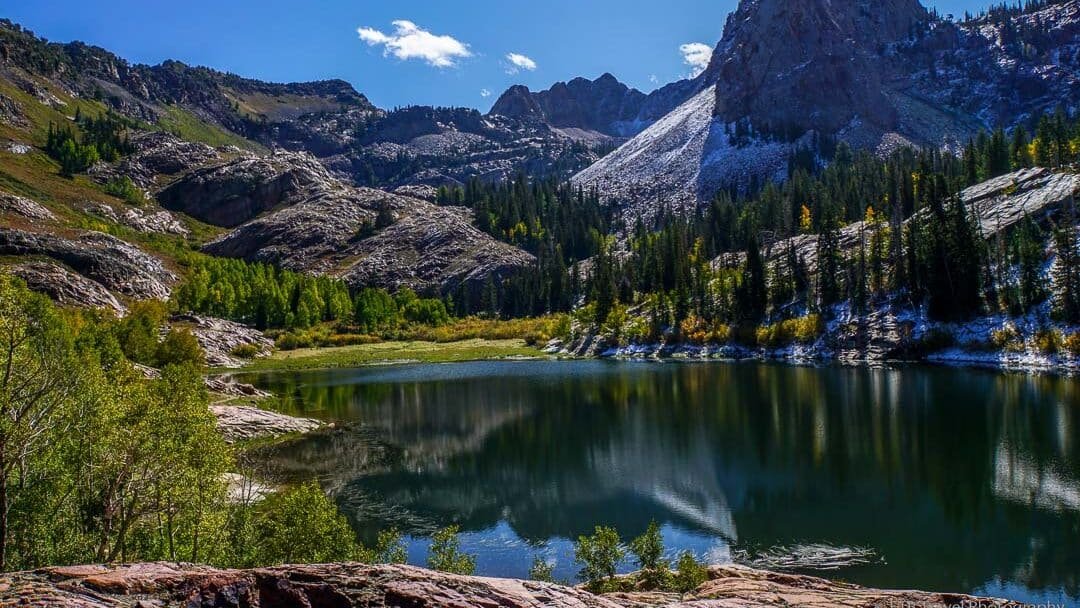
When Salt Lake City is baking at 100 degrees in the valley, Brighton, at 8,755 feet in Big Cottonwood Canyon, sits a mere thirty minutes up the road with summer highs in the low 70s. The temperature differential is one of the most dramatic and accessible in the country. The drive up Big Cottonwood Canyon from the valley floor involves a climb of nearly 5,000 feet, and the air-conditioned relief starts within the first few miles as the canyon narrows and the stream alongside the road sends cool air downslope. Brighton is technically a ski resort, but the summer operations and the surrounding hiking make it a legitimate warm-weather destination.
The hiking from Brighton is exceptional. Lake Mary, Lake Martha, and Lake Catherine are all accessible via trails that start at the resort base area and climb through wildflower meadows and alpine forest to lakes sitting above 9,000 feet where the water is cold enough to make you gasp. The Brighton Lakes Trail is one of the most popular summer hikes along the Wasatch Front, and the views from the ridgeline above the lakes stretch across the range to the Heber Valley on the other side. The resort runs a scenic chairlift in summer that provides effortless access to the ridgeline for those who prefer to hike downhill.
Brighton’s commercial services are minimal, consisting of the resort lodge and a small store. The Silver Fork Lodge, about two miles down the canyon, serves breakfast and dinner in a cozy mountain-lodge setting and is the most established restaurant in the canyon. For more dining options, the mouth of the canyon and the Salt Lake Valley are a short drive. The Brighton Lodge offers basic rooms at the resort. Numerous Airbnb and vacation rentals are available in the canyon and the surrounding mountain communities. Brighton in summer is the Salt Lake escape that locals use as a daily commute, driving up the canyon after work to hike, cool off, and remind themselves that the valley heat is a choice, not a sentence.
Vermont: Stowe
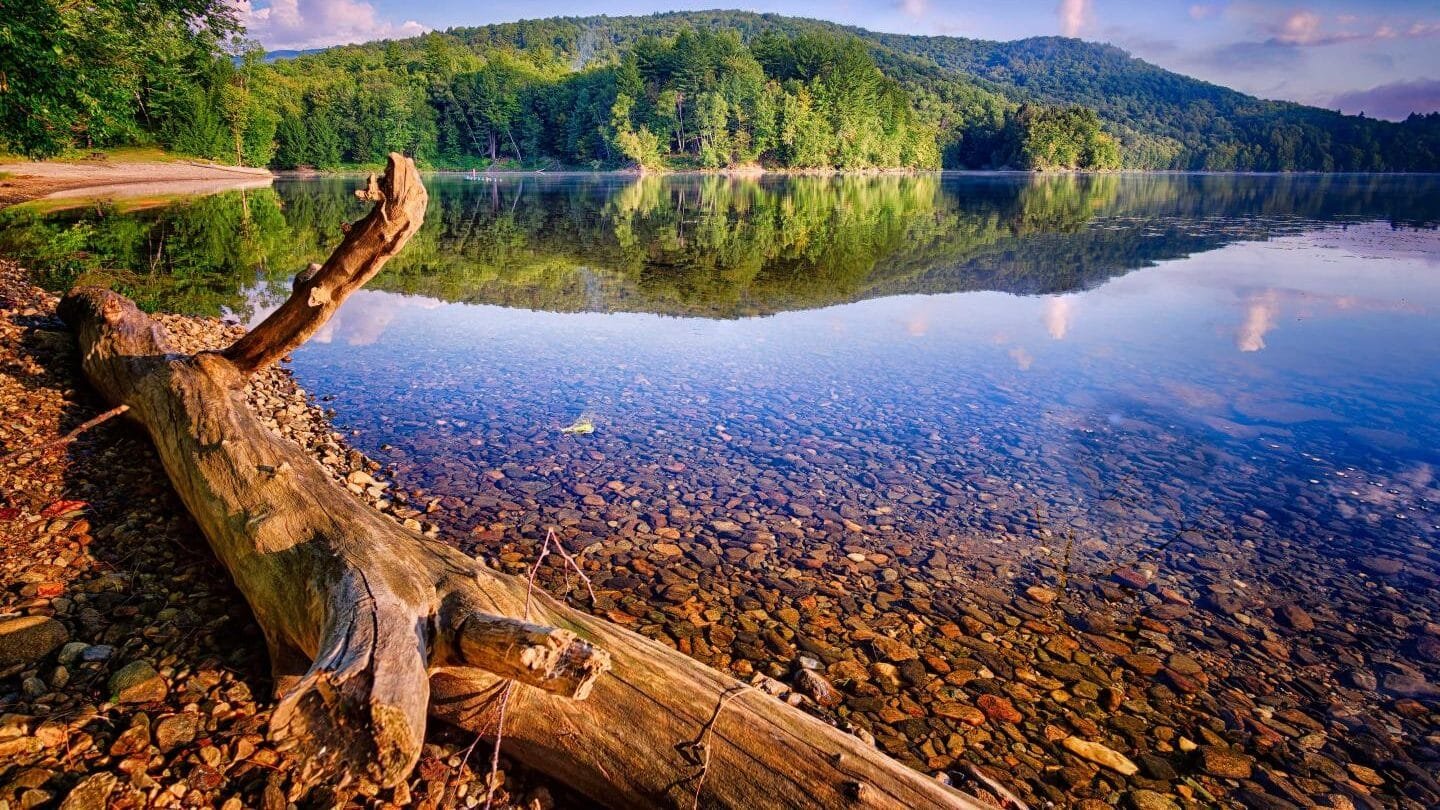
Vermont in summer is cool enough that the entire state qualifies as a heat escape, but Stowe, in the northern Green Mountains, offers the combination of mountain temperatures, resort amenities, and scenic beauty that makes it the most complete summer destination in the state. Summer highs average in the upper 70s in the valley, and the surrounding mountains are cooler still. Mount Mansfield, the highest point in Vermont, has summit temperatures that can be 15 to 20 degrees below the valley, and the mountain air that flows downslope keeps the evenings in Stowe cool enough for a jacket.
The Stowe Recreation Path, a 5.3-mile paved trail along the West Branch of the Little River, is the center of summer recreation. The path passes through meadows, forest, and along the river, and the shade and water create a cool corridor through the valley. The river itself has swimming holes where the mountain water is cold enough to take your breath away. Smugglers Notch, the dramatic mountain pass beyond the ski resort, has trails along cliffs and through boulder fields where the cool air and the shade of the narrow pass create a microclimate that feels like a natural refrigerator. For ambitious hikers, the Long Trail to the summit of Mount Mansfield offers a strenuous climb to above-treeline alpine terrain.
Stowe’s dining and lodging infrastructure is robust. Hen of the Wood does farm-to-table cuisine that is widely considered among the best in the state. Harrison’s Restaurant serves creative American fare on Main Street. The Trapp Family Lodge, on 2,500 acres of mountain terrain, provides a European-style resort experience with hiking trails, a brewery, and mountain views. The Stoweflake Mountain Resort offers spa amenities and a pool. The Green Mountain Inn, on Main Street, provides historic lodging in the center of the village. Stowe in summer is the Vermont that vacation brochures promise, a mountain village where the air is fresh, the water is cold, and the heat of the lowlands feels like a distant rumor.
Virginia: Abingdon
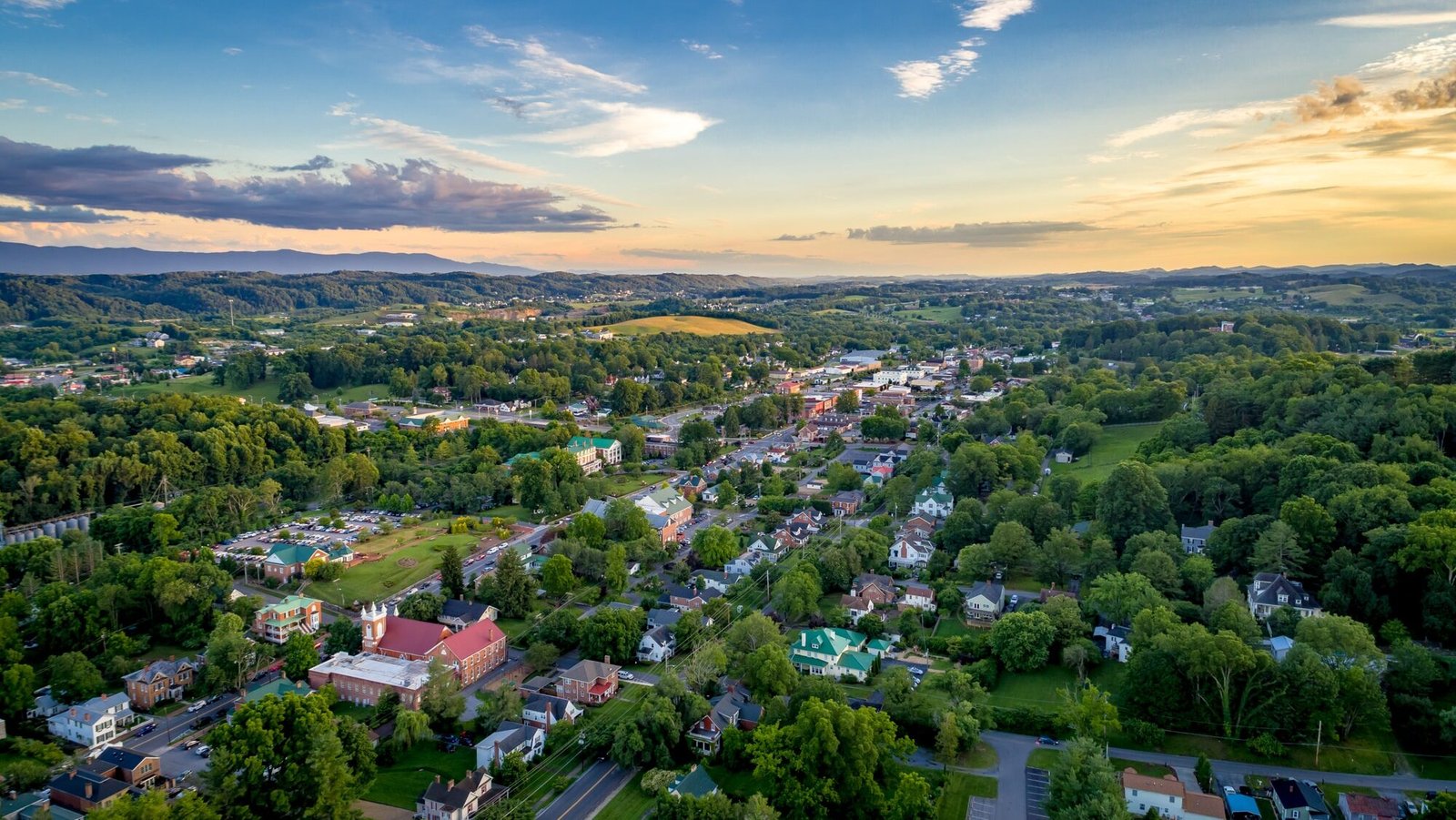
Virginia’s summer heat can be oppressive in the lowlands, but the far southwestern corner of the state, where the Appalachian Mountains reach their greatest width, offers genuine cooling. Abingdon, at about 2,100 feet on the western slope of the mountains, has summer highs that average in the mid 80s, several degrees below the Tidewater and Piedmont regions. The mountain air is drier and moves more freely than the stagnant valley air to the east, and the surrounding forest provides shade that keeps the town comfortable for walking and outdoor dining through the summer.
The Virginia Creeper Trail is the primary summer attraction for cooling. The shuttle to Whitetop Station, near the highest point on the trail at over 3,500 feet, puts riders at an elevation where the air temperature is ten to fifteen degrees below Abingdon, and the gentle downhill ride through shaded forest and across trestle bridges provides a cooling breeze for the entire seventeen-mile descent to Damascus. The trail follows creek beds and passes through forest dense enough that the temperature under the canopy is noticeably lower than the open areas. South Holston Lake, about twenty minutes from town, offers swimming and boating where the mountain-fed water provides direct cooling.
Abingdon’s historic downtown has a cultural life that makes the summer worthwhile beyond the climate. The Barter Theatre, the longest-running professional theater in the country, runs a full summer season. The Tavern, in a 1779 building, serves New American cuisine. Rain Restaurant does creative farm-to-table cooking. The Martha Washington Inn offers historic lodging with modern amenities on Main Street. Abingdon in summer is the Virginia mountain escape that combines cool air with culture, and the Creeper Trail ride from the high country down through the forest is one of the most pleasant physical cooling experiences in the eastern United States.
Washington: San Juan Island (Friday Harbor)
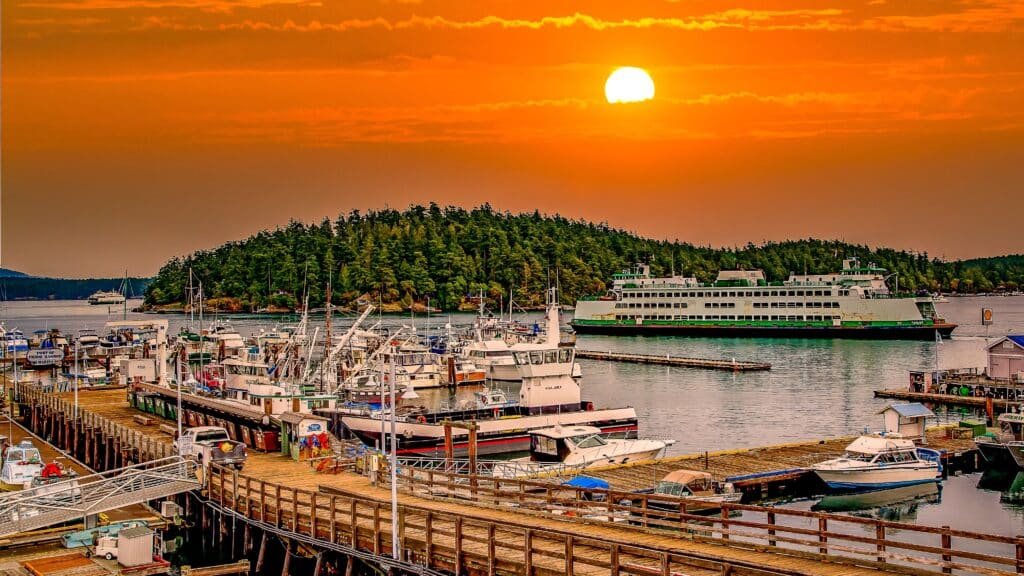
The San Juan Islands sit in the rain shadow of the Olympic Mountains, north of Puget Sound, and the marine climate here produces some of the mildest, most comfortable summer weather in the Pacific Northwest. Friday Harbor, the main town on San Juan Island, has summer highs that average in the low 70s with minimal humidity and a sea breeze that keeps even the warmest days pleasant. The islands get significantly less rain than Seattle in summer, creating a microclimate that is both cooler and sunnier than the mainland cities to the south.
The water surrounding the islands is the primary cooling mechanism, both directly and through the moderating effect on air temperature. Whale watching from Friday Harbor is a summer staple, as resident and transient orca pods, along with humpback and gray whales, frequent the waters around the islands. The boat ride itself, in open air on the cool strait, provides temperature relief that landlocked destinations cannot match. Lime Kiln Point State Park, on the western shore, is the only whale-watching park in the country where orcas can be observed from shore, and the rocky headland catches the prevailing wind off the Haro Strait. Roche Harbor, on the northern end of the island, has a resort and marina in a sheltered harbor that stays cool and comfortable all summer.
Friday Harbor’s small downtown has restaurants and shops that serve the ferry-accessible tourist population. Duck Soup Inn does creative Pacific Northwest cuisine using local ingredients. The Bluff on San Juan serves seafood with water views. San Juan Island Brewing Company does craft beer. For lodging, Roche Harbor Resort provides waterfront accommodations in a historic lime-company village. The Friday Harbor House offers boutique rooms overlooking the harbor. San Juan Island in summer is the Washington escape that combines marine cooling with island pace, and the ferry ride from Anacortes, through the islands with the mountains in every direction, is the transition into a cooler, slower world.
West Virginia: Snowshoe area (Pocahontas County)
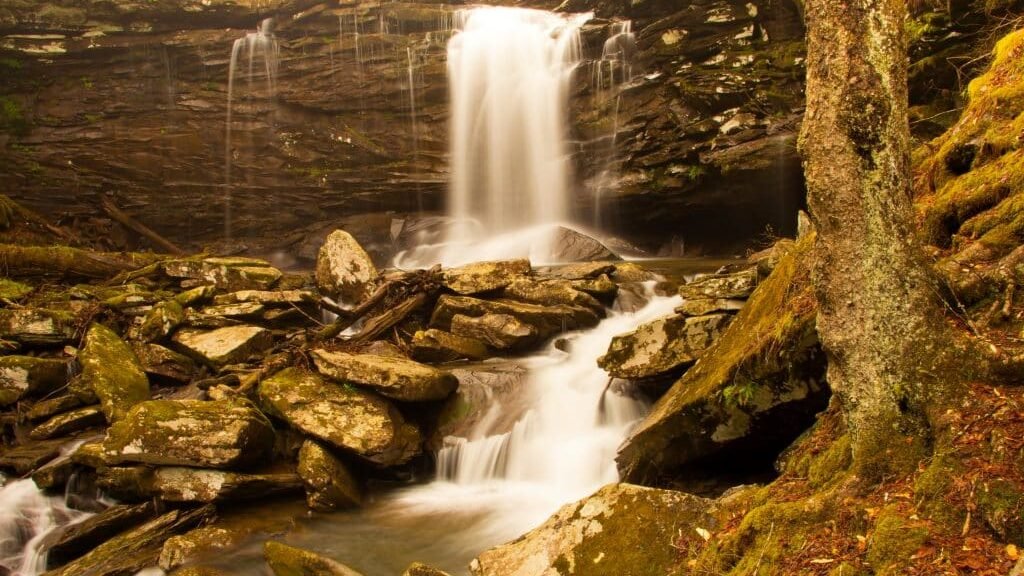
West Virginia’s name suggests wild mountain terrain, and the Allegheny Highlands in the eastern part of the state deliver on that promise. The Snowshoe area, at about 4,848 feet on Cheat Mountain in Pocahontas County, sits in one of the coolest summer environments in the eastern United States south of New England. Summer highs average in the low to mid 70s, and the nights can drop into the 50s, cool enough that the resort provides blankets on the restaurant patios. The elevation, combined with the dense spruce-northern hardwood forest that covers the surrounding mountains, creates a climate that feels like Maine transplanted to the mid-Atlantic.
Snowshoe Mountain Resort operates summer activities including mountain biking, ziplines, scenic chairlift rides, and a swimming pool that is welcome on the warmest days. The surrounding Monongahela National Forest has hiking trails through a landscape that is unusual for this latitude, including bogs, spruce forests, and highland meadows more commonly associated with northern New England or southern Canada. Cranberry Glades Botanical Area, about thirty minutes south, is a series of sub-arctic bogs where rare plants grow in conditions created by the cold-air drainage from the surrounding mountains. The Highland Scenic Highway follows the ridgeline with pullouts that offer views across miles of forested mountains.
Dining at Snowshoe is centered on the resort village. The Junction serves American fare with mountain views. The Foxfire Grille does steaks and seafood. Elk River Touring Center, in the nearby town of Slatyfork, offers lodging and dining in a simpler mountain setting. The Marlinton area, in the Greenbrier Valley below, has additional options. The Snowshoe area in summer is the eastern mountain escape that most people outside West Virginia have never heard of, and the cool spruce-forest air at nearly 5,000 feet is a revelation for anyone accustomed to summer in the lowland cities.
Wisconsin: Bayfield
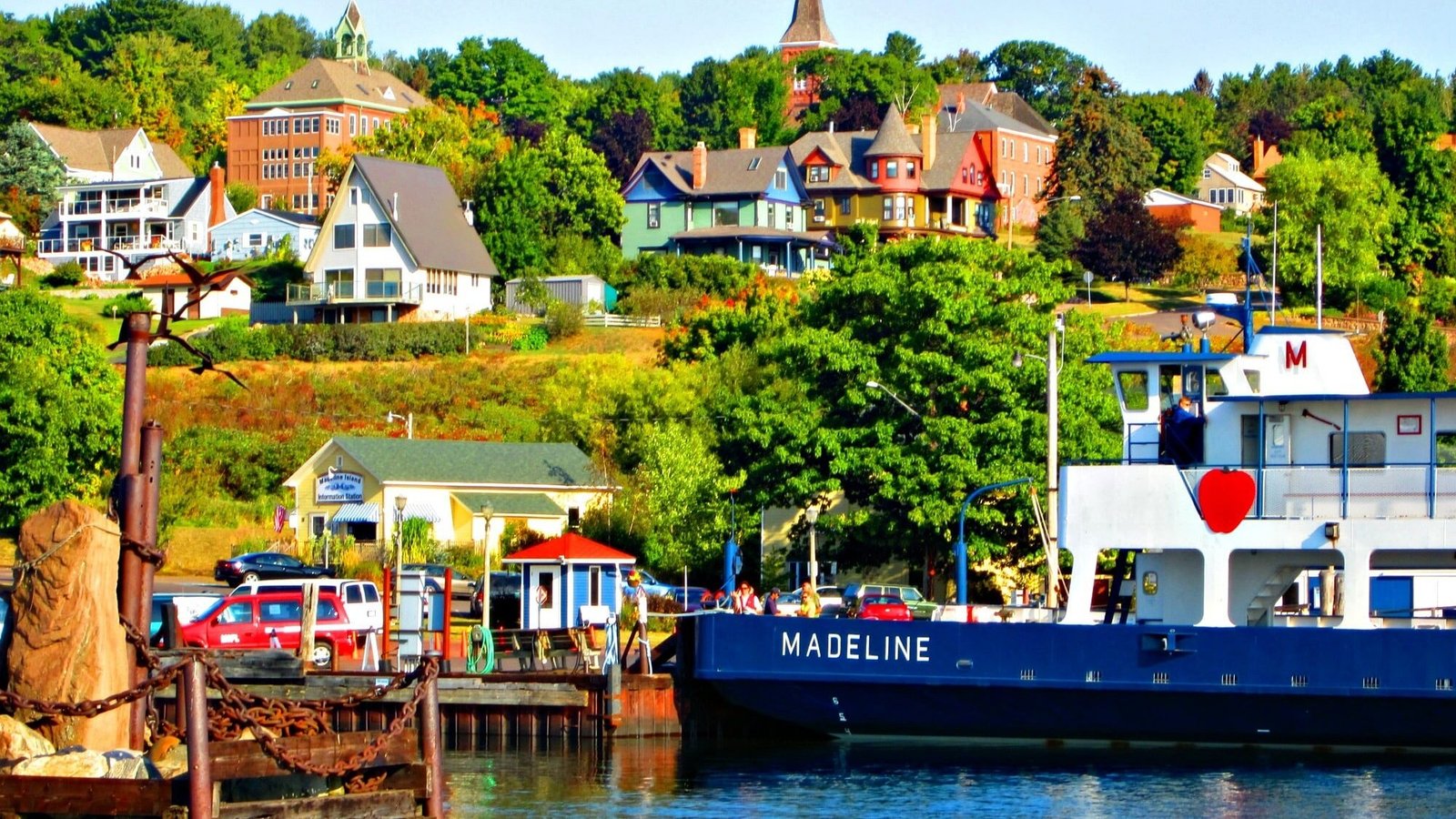
Lake Superior’s cooling influence extends well inland along its southern shore, and Bayfield, on the tip of the Bayfield Peninsula in far northern Wisconsin, gets the full benefit. Summer highs average in the upper 70s, and when a northeast wind blows off the lake, temperatures can drop into the 60s in July. The lake’s surface temperature rarely exceeds the mid 50s, and the cold air mass that sits over the water moderates conditions for the entire peninsula. Bayfield has been a summer destination since the late 1800s, and the combination of lake cooling, island scenery, and small-town character keeps drawing visitors from the hotter cities to the south.
The Apostle Islands National Lakeshore provides the summer recreation. Boat tours to the sea caves on the mainland and island shores are the most popular activity, and the open water keeps the air temperature on the boats refreshingly cool. Madeline Island, accessible by a twenty-minute ferry from Bayfield, has beaches where the water is cold enough to provide real cooling but swimmable for those willing to acclimate. Big Bay State Park on Madeline Island has camping and trails along sandstone bluffs above the lake. Kayaking through the sea caves, where the water temperature and the cave shade combine to create a natural cold room, is one of the best cooling experiences in the Great Lakes.
Bayfield’s downtown waterfront street has restaurants and shops that peak during the summer season. Old Rittenhouse Inn serves creative regional cuisine. Maggie’s does casual fare. Fat Cat Coffee is the morning gathering spot. The Old Rittenhouse Inn also offers lodging in several restored Victorian properties. Bayfield in summer is the Lake Superior escape that Wisconsin has relied on for generations, a place where the cold lake keeps the heat at bay and the island scenery provides a beauty that makes the cooling feel like a bonus rather than the point.
Wyoming: Pinedale
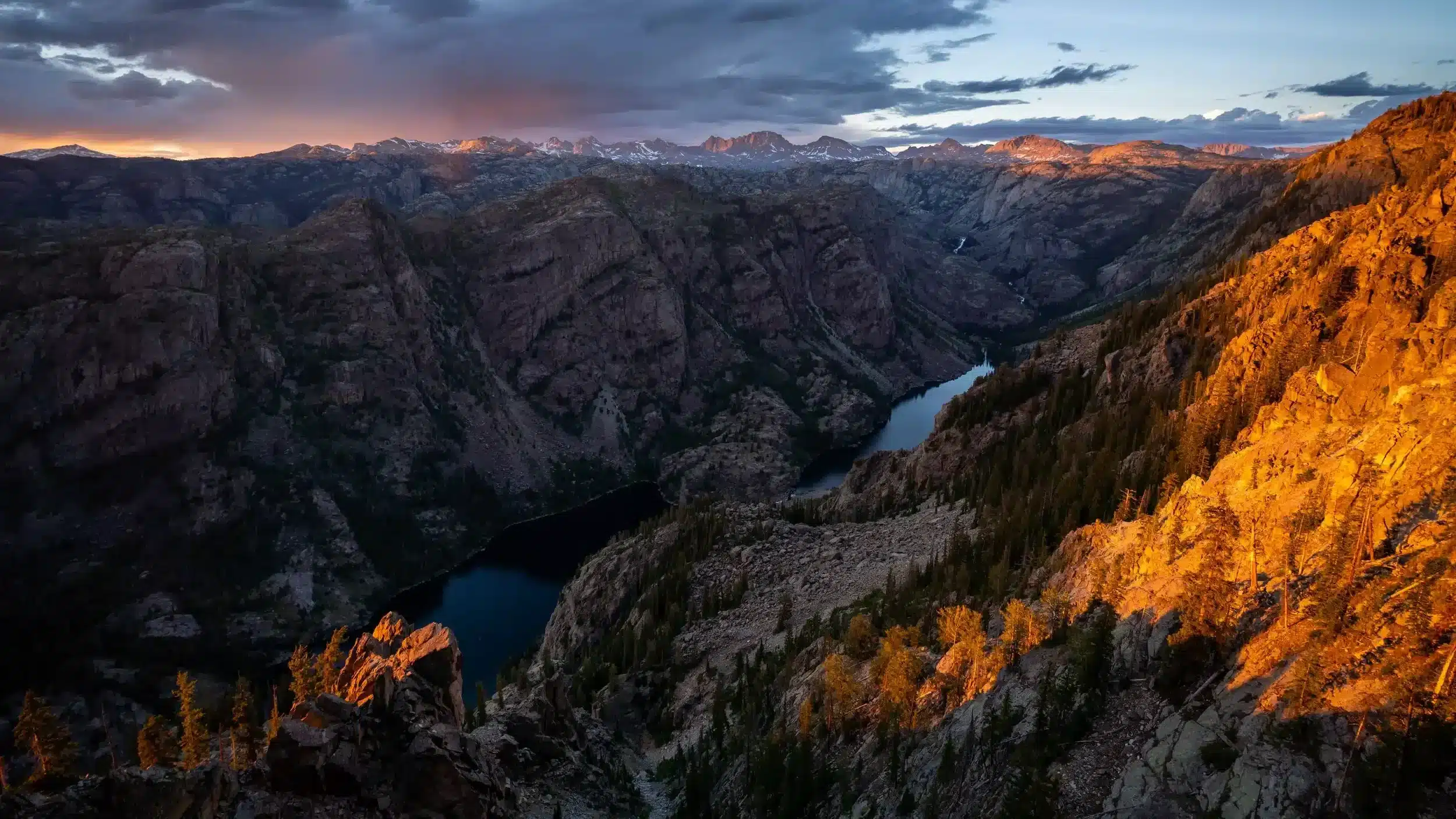
Wyoming has vast stretches of cool mountain country, but Pinedale, at 7,175 feet on the western slope of the Wind River Range, offers one of the most dramatic summer cooling experiences in the state. Summer highs average in the upper 70s, and the dry mountain air means that even the warmest days feel comfortable. Nighttime temperatures regularly drop into the 30s and 40s, which means sleeping in Pinedale in July feels like autumn in the lowlands. The town sits at the edge of the Bridger-Teton National Forest, with the Wind River Range rising to over 13,000 feet to the east, and the cold air that flows down from those peaks keeps the entire valley cool.
The Wind River Range is the crown jewel. The Cirque of the Towers, one of the most dramatic alpine basins in the American West, is accessible from trailheads near Pinedale and offers backpacking in a landscape of granite spires, glacial lakes, and snowfields that persist well into August. For day hikers, Fremont Lake, about three miles from town, is one of the deepest natural lakes in Wyoming and has water cold enough to provide real thermal shock. Half Moon Lake, also nearby, offers similar cold-water swimming in a mountain setting. The Green River Lakes, about an hour from town, sit at the base of Square Top Mountain in a valley so beautiful and so cold that July feels like September.
Pinedale’s small downtown serves the ranching and outdoor-recreation communities that define the town’s character. The Wind River Brewing Company does craft beer and pub food. The Stockman’s Restaurant serves steaks and Western fare. The Bayfield Inn and the Lodge at Pinedale provide basic accommodations. For a more remote experience, numerous guest ranches in the surrounding area offer lodging with mountain views and access to horseback riding and fishing. Pinedale in summer is the Wyoming escape where the mountain air is cold enough to need a campfire in July, and the Wind River Range provides a wilderness backdrop that makes the cooling feel like an adventure rather than just a retreat.