Every autumn, the same thing happens. The maps go up, the forecasters start predicting peak color, and the tourists pile into the same famous spots. Vermont Route 100 gets a traffic jam. The Blue Ridge Parkway fills with RVs. And meanwhile, locals in every state are heading to their own favorite spots, places that rarely show up on the national lists but deliver fall color that is every bit as spectacular.
The truth about fall foliage is that every state has it. The sugar maples of New England get the glory, but the aspens of the Rockies, the sweetgums of the Deep South, the cottonwoods along desert rivers, and the vine maples of the Pacific Northwest all put on shows worth seeing. The difference is that in some states, you have to know where to look. You have to know which canyon catches the afternoon light, which mountain road peaks a week before the valleys, which small town has the festival that makes the whole trip worthwhile.
This list covers all 50 states, and the emphasis is on towns rather than parks or scenic drives. These are places where you can park the car, walk a main street, eat a good meal, and watch the leaves do what they do. Some of these picks will be familiar. Most will not. All of them are places where the locals go when they want to see fall at its best.
Alabama: Mentone
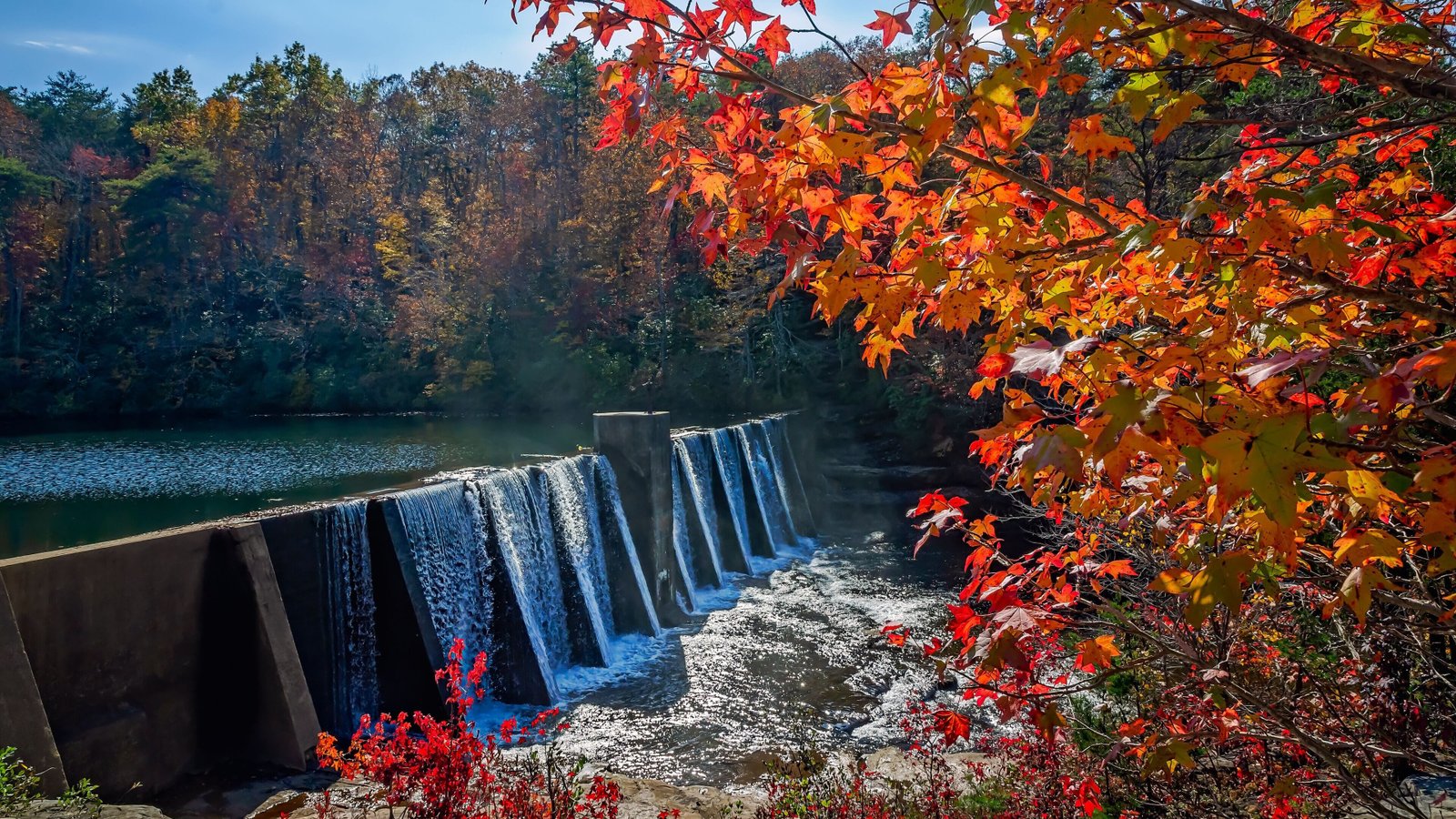
Mentone sits on the brow of Lookout Mountain in DeKalb County, at the northeastern tip of Alabama where the state meets Georgia and the southern Appalachian foothills begin. At about 1,800 feet of elevation, the town is high enough to get genuine fall color that starts in late October and runs through mid-November, a timeline that is weeks later than the Northeast and catches many travelers off guard. The surrounding forest is a mix of hardwood species including red maple, tulip poplar, hickory, and sourwood, and the combination produces a palette that leans toward deep reds and burnt oranges rather than the bright yellows of more northern latitudes.
The town itself is tiny, with a permanent population of about 400, but the main street has a handful of galleries, a general store, and a camp meeting ground that dates to the late 1800s. DeSoto Falls, a few miles south in DeSoto State Park, is one of the most photographed waterfalls in the state, and in autumn the 104-foot cascade is framed by a canyon of color that is genuinely breathtaking. Little River Canyon National Preserve, also nearby, offers dramatic overlooks where the Little River cuts through a gorge lined with blazing hardwoods. The canyon is sometimes called the Little Grand Canyon of the East, and in fall the name feels almost justified.
For dining, the Wildflower Cafe in Mentone serves farm-to-table cooking in a cozy space that fills up on autumn weekends. The Log Cabin Deli is a more casual option with sandwiches and local character. Lodging options lean toward rental cabins and bed-and-breakfasts, with Mentone Mountain Getaways and the Mentone Inn among the most popular. Mentone is proof that fall color does not stop at the Mason-Dixon Line, and that the southern Appalachians have a foliage season all their own.
Alaska: Hatcher Pass
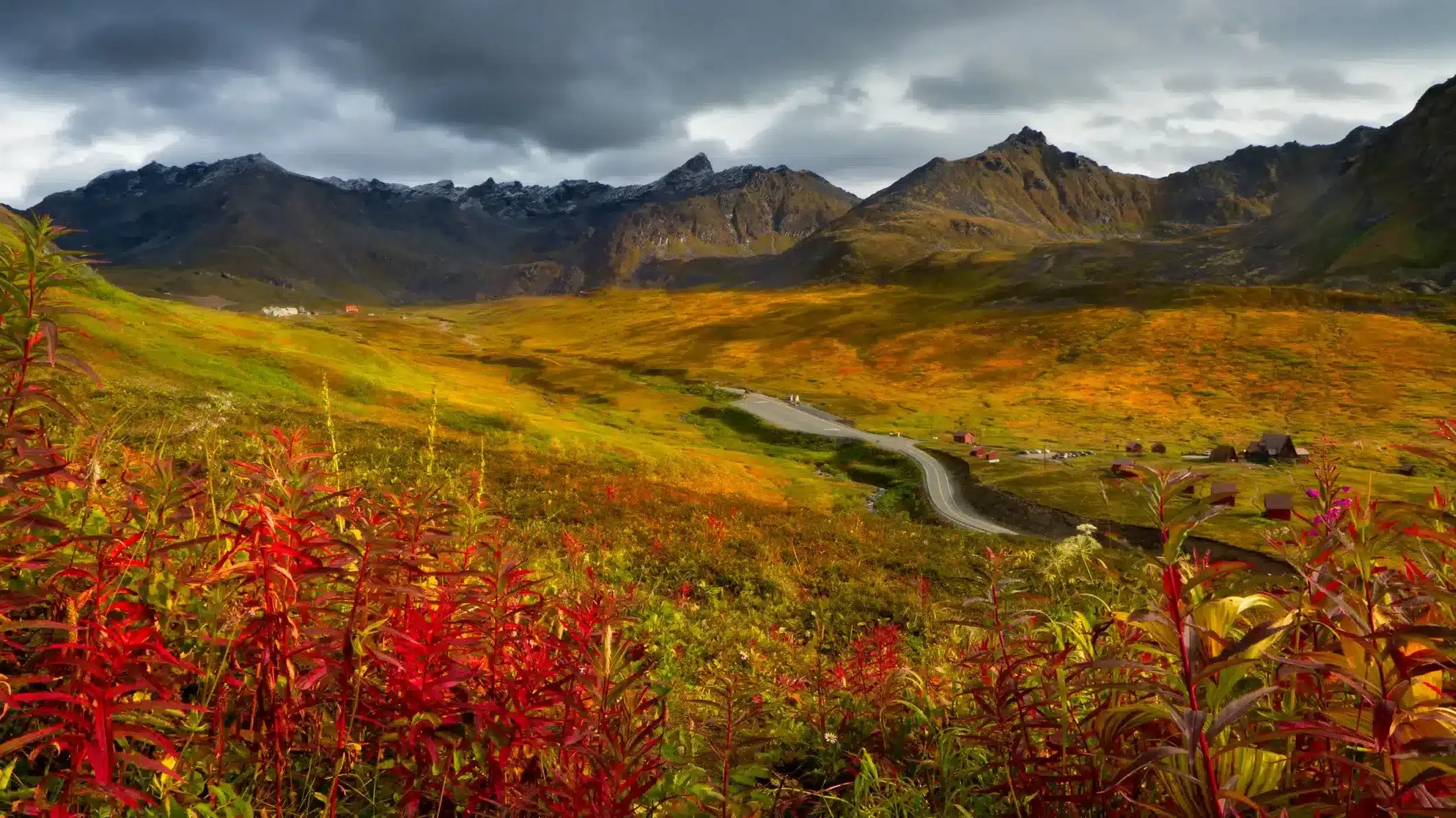
Alaska’s fall comes fast and early. By late August, the tundra above treeline begins to turn, and by mid-September, entire mountainsides are blanketed in shades of red, orange, and gold that would rival any New England hillside if anyone outside Alaska were paying attention. The best place to see it is the area around Hatcher Pass, a mountain road that climbs to 3,886 feet in the Talkeetna Mountains about an hour north of Anchorage. The town of Palmer, at the base of the pass, is the jumping-off point and a destination in its own right.
Palmer is a farming community of about 7,000 people in the Matanuska Valley, founded during the Depression as a New Deal agricultural colony. The Alaska State Fair takes place here in late August and early September, and by fair time, the birch trees in the surrounding valleys are already turning. The drive up to Hatcher Pass from Palmer passes through a landscape that transitions from birch and aspen forest to alpine tundra, and in September, the birches go bright yellow while the tundra below them turns a deep, wine-dark red. The abandoned buildings of the Independence Mine State Historical Park, a gold mine that operated from the 1930s through the 1950s, sit at the top of the pass surrounded by alpine meadows that glow with autumn color against the grey granite peaks.
For food, Turkey Red in Palmer does creative farm-to-table cooking using ingredients from the Matanuska Valley’s short but prolific growing season. The Palmer Alehouse serves solid pub fare and local beers. Lodging options include the Pioneer Motel in Palmer and several vacation rentals in the valley. The key to Alaska fall foliage is timing. The window is narrow, often just two to three weeks in September, and it varies by elevation. But if you hit it right, the scale and intensity of fall color in the Talkeetna Mountains will redefine your idea of what autumn looks like.
Arizona: Flagstaff
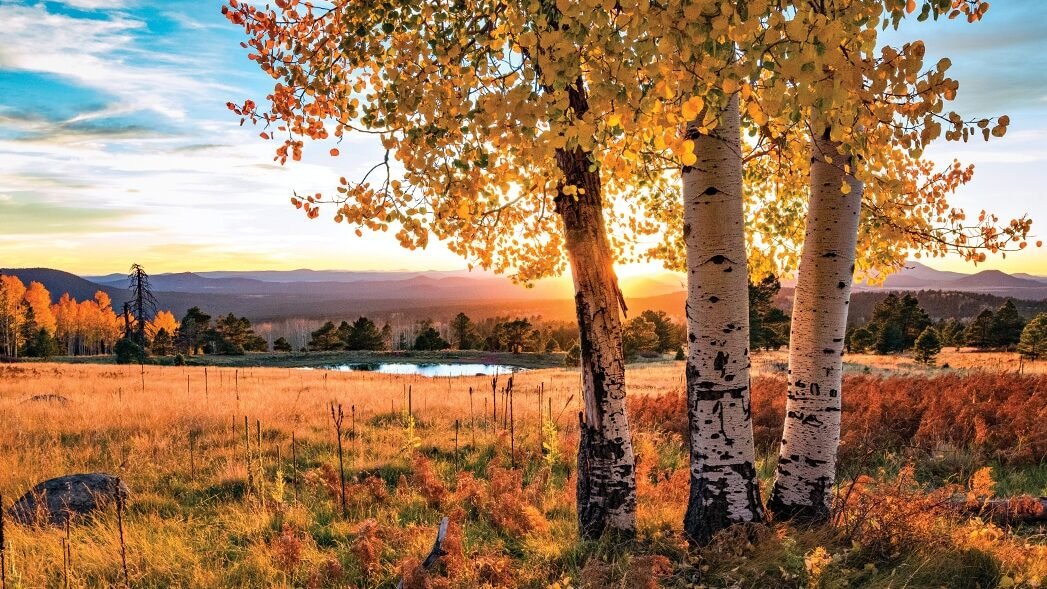
Arizona and fall foliage do not seem like natural partners, but Flagstaff, sitting at nearly 7,000 feet in the shadow of the San Francisco Peaks, is a genuine autumn destination that most out-of-state visitors never consider. The surrounding Coconino National Forest is home to one of the largest contiguous ponderosa pine forests in the world, and scattered among the pines are stands of quaking aspen that turn a luminous gold in late September and early October. The contrast between golden aspen, dark green pine, and the volcanic rock of the San Francisco Peaks creates a fall palette that is unlike anything in the eastern forests.
The best foliage viewing is in the Inner Basin of the Peaks, accessible via a moderate hiking trail that winds through an aspen forest so dense that on a sunny fall afternoon, the entire world seems to glow. Snowbowl Road, which climbs from the edge of town to the ski area at 9,500 feet, offers a driving route that passes through some of the heaviest aspen concentration. Hart Prairie, a meadow at the base of the Peaks, is another popular spot where the aspens frame views of the distant Painted Desert. Flagstaff’s own LEAF-ometer, an online tool maintained by the city, tracks color conditions across the surrounding area and takes the guesswork out of timing a visit.
Downtown Flagstaff has the walkable, independent character of a true mountain town. Brix Restaurant does refined American cooking in a historic building on San Francisco Street. Beaver Street Brewery has been a local gathering spot for decades. The Weatherford Hotel, built in 1897, offers historic accommodations in the heart of downtown, and the Little America Hotel, on the edge of town, sits on 500 acres of ponderosa forest that provides its own private foliage show. Flagstaff proves that fall color exists in the American West, and that a desert state can produce an autumn experience that stands alongside anything on the East Coast.
Arkansas: Eureka Springs
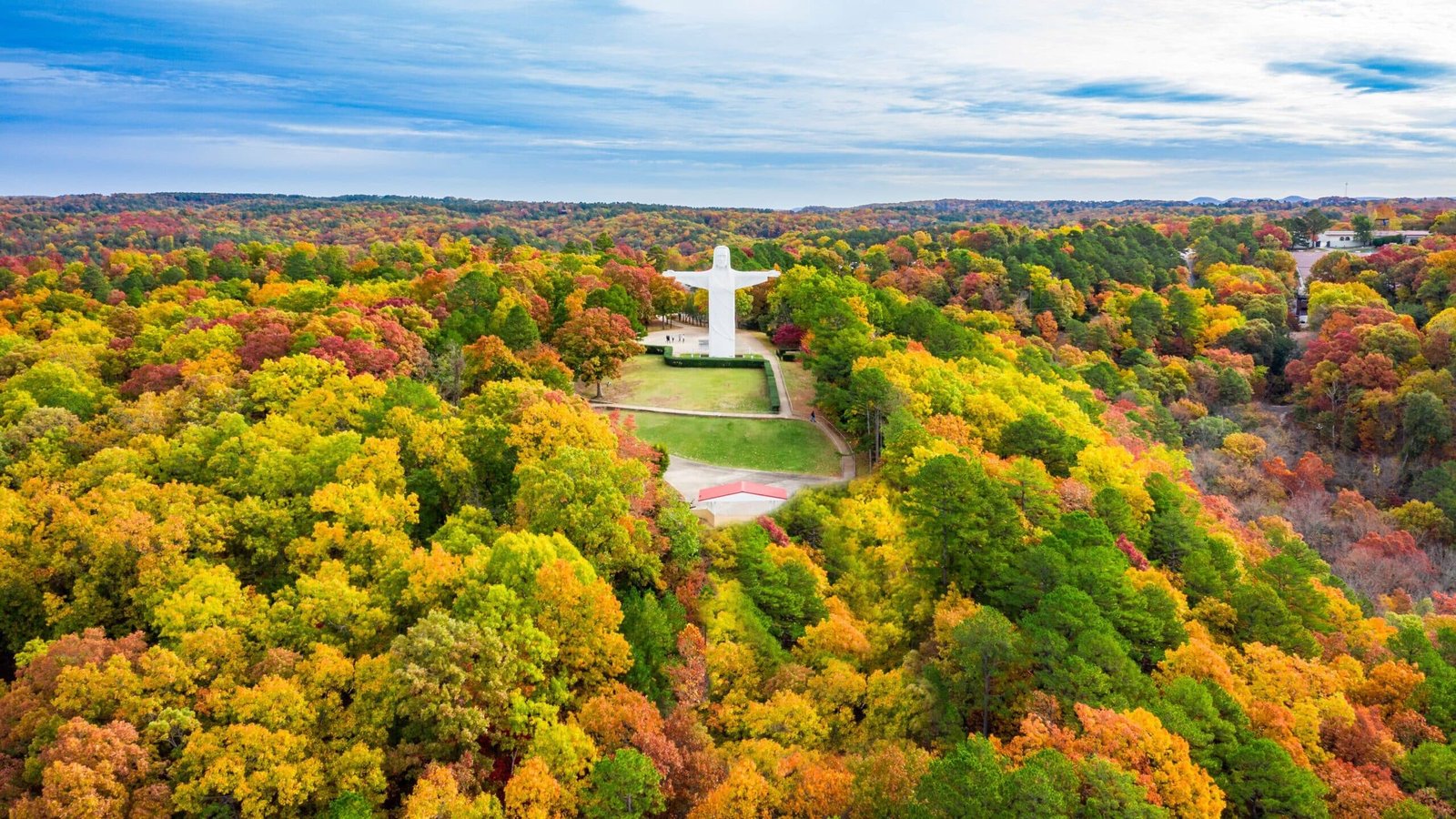
Eureka Springs appears on the winter list in this series for good reason, but the town earns a spot on the fall foliage list just as honestly. The Ozark Mountains that surround this Victorian hillside town are thick with hardwood forest, and from late October through mid-November, the canopy of oaks, hickories, maples, and sweetgums turns into one of the most colorful landscapes in the midsouth. What makes Eureka Springs special is the combination of the color and the town itself. The streets wind up and down the mountainside, giving you constantly changing views of the surrounding ridges, and the Victorian architecture against a backdrop of blazing autumn forest is as photogenic as anything in New England.
The best foliage viewing in the area is along the Pig Trail Scenic Byway, a winding mountain road that cuts through the Ozark National Forest south of town. The road is famous among motorcyclists for its tight curves, but in October, it becomes a foliage drive that belongs on any leaf-peeper’s bucket list. Beaver Lake, a large reservoir west of town, offers fall color reflected in still water that doubles the visual impact. The White River valley below the Beaver Dam is another scenic corridor where the changing trees line the riverbanks for miles.
The town’s shops and galleries stay busy through the fall season, and the combination of art browsing and leaf viewing makes for an ideal weekend. The 1886 Crescent Hotel, perched on the hilltop, offers some of the best views of the surrounding forest from its veranda. Local Flavor Cafe and the Grotto Wood-Fired Grill are reliable dining options. Eureka Springs in autumn has a warmth that comes from both the season and the community, and the Ozark color is the kind of underappreciated spectacle that rewards anyone willing to look beyond the usual Northeast suspects.
California: June Lake Loop
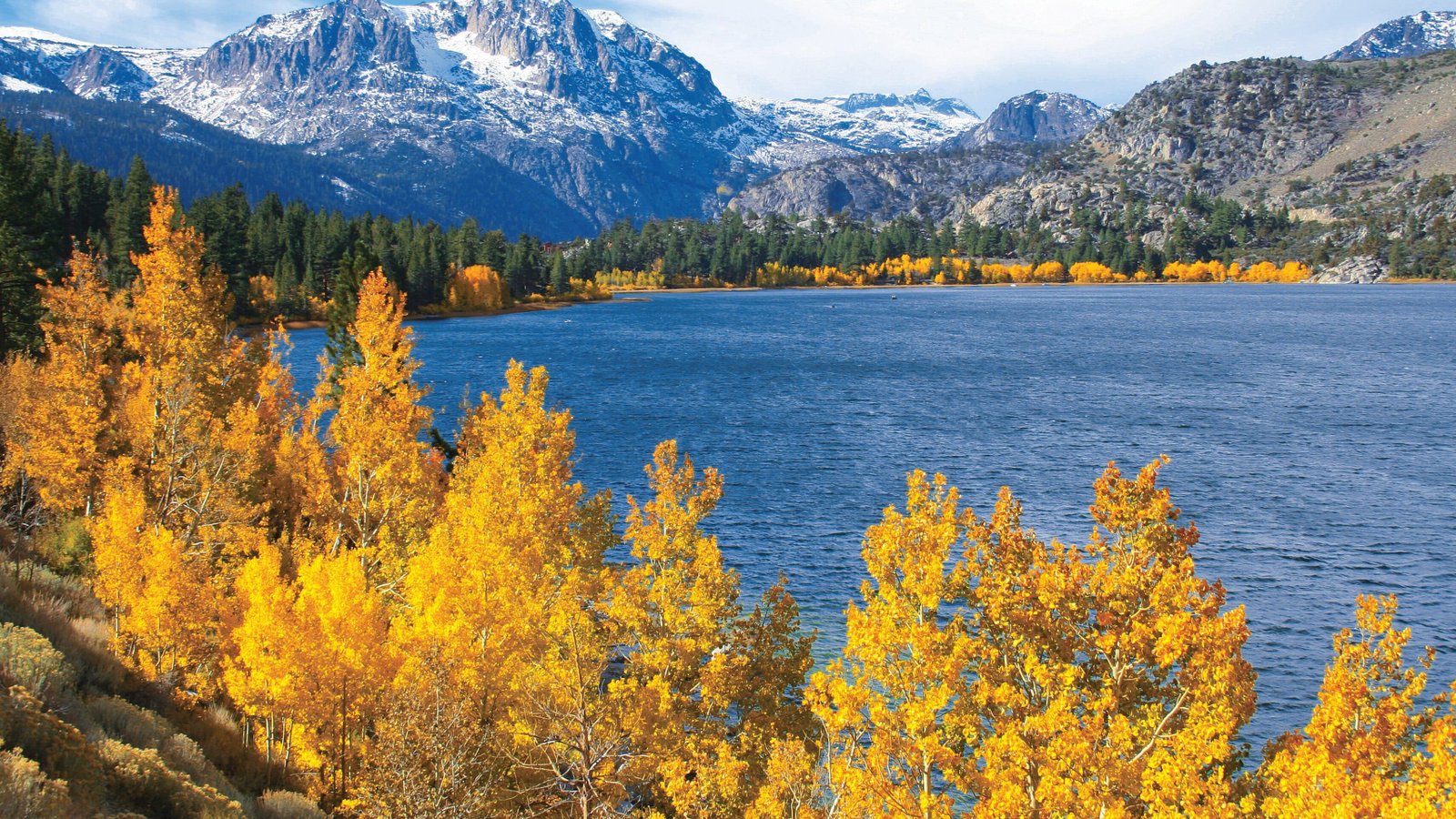
California’s fall foliage gets overlooked because the state’s identity is so wrapped up in summer, coastline, and sunshine. But the eastern Sierra Nevada, where the mountains drop sharply into the high desert of the Great Basin, produces some of the most vivid autumn color in the western United States. The epicenter is the June Lake Loop, a 16-mile scenic road that leaves Highway 395 about twenty miles north of Mammoth Lakes and winds past four alpine lakes surrounded by aspen groves that turn electric yellow and orange in late September and early October.
The loop road passes through a landscape of extraordinary contrast. The aspens blaze against a backdrop of grey granite and dark volcanic rock, and the lakes, which are varying shades of turquoise and deep blue depending on the light, reflect the color back into the sky. The small community of June Lake, which has a handful of year-round residents and a collection of lodges and cabins that date back to the fishing-camp era of the mid-twentieth century, is the kind of place where you park the car and walk along the lakeshore and feel like you have discovered a secret. The Carson Peak Inn serves breakfast and lunch with views of the lake, and the Tiger Bar is the local gathering spot where fishermen, hikers, and leaf-peepers mingle on October evenings.
Beyond the loop, the entire stretch of Highway 395 through the eastern Sierra is spectacular in fall. Bishop Creek Canyon, south of the town of Bishop, has aspen color that rivals the June Lake area. North Lake and South Lake, at the end of the canyon road, sit at the base of the Sierra crest and offer fall color at elevations above 9,000 feet. The eastern Sierra is one of the great secret foliage destinations in America, and the June Lake Loop is its crown jewel.
Colorado: Crested Butte
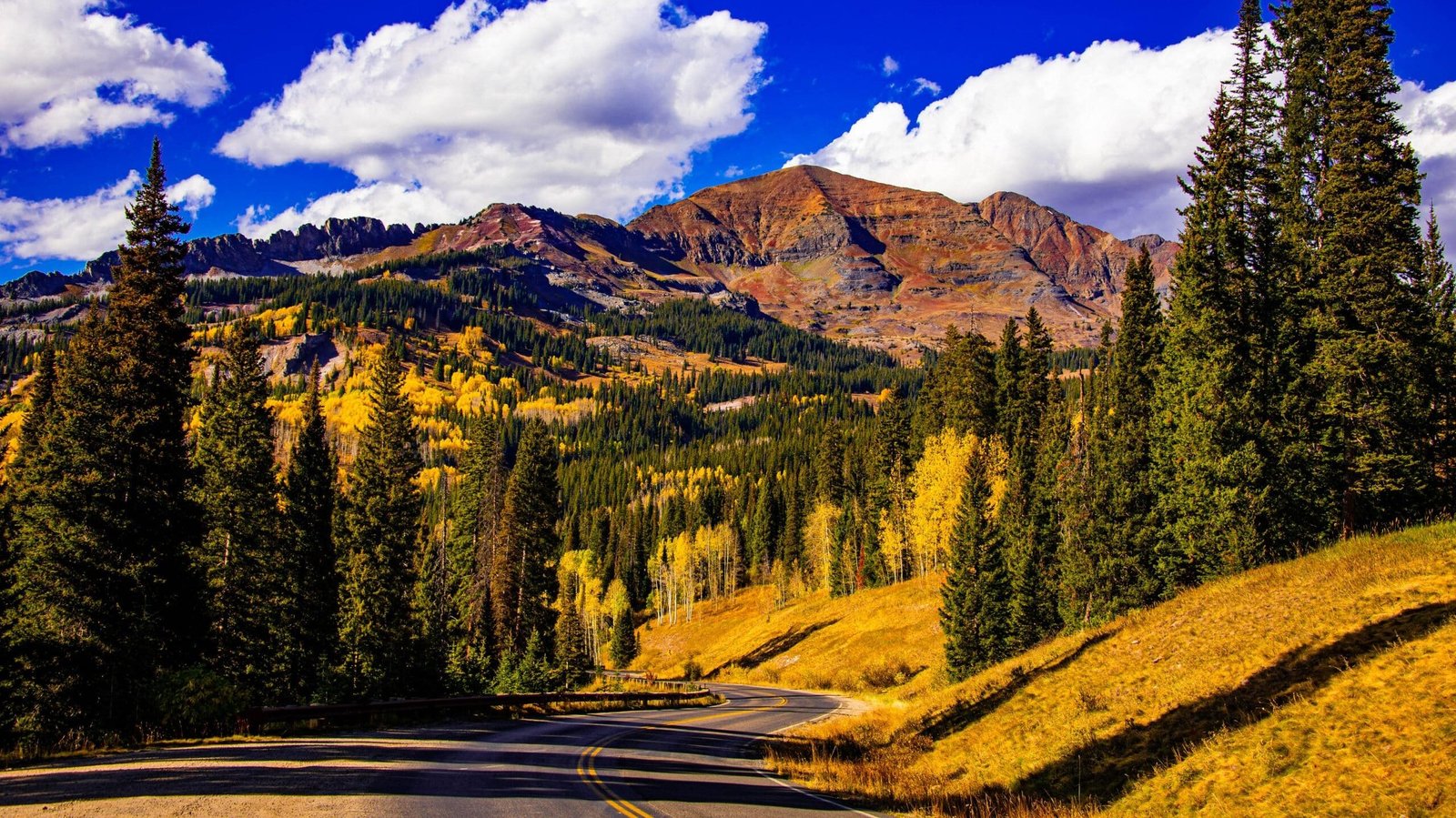
Colorado’s aspen forests are among the most extensive in North America, and when they turn in late September, entire mountainsides go golden in a display that makes the state’s ski-season fame seem like the second act. Many Colorado towns make strong foliage claims, from Aspen (named for the obvious reason) to Telluride to Steamboat Springs, but Crested Butte has an argument for the best of them all. The town sits at 8,885 feet in a valley surrounded by peaks that rise above 12,000 feet, and the aspen forests that cover the intermediate elevations create a golden band around the entire valley that is visible from everywhere in town.
The drives in every direction from Crested Butte are stunning in fall. Kebler Pass Road, heading west toward Paonia, passes through one of the largest aspen groves in the world and is widely considered one of the top foliage drives in the American West. Ohio Pass, south of Kebler, is a rougher road that rewards adventurous drivers with views of aspen color set against the Castles, a dramatic formation of volcanic spires. Gothic Road, heading north from town, leads to the site of the Rocky Mountain Biological Laboratory and passes through aspen forest that glows like stained glass when the afternoon sun backlights the leaves.
The town itself is a former mining community that has maintained a relaxed, unpretentious character despite its growing popularity. Elk Avenue, the main street, is lined with colorful buildings housing restaurants, shops, and outfitters. Soupcon, in a tiny log cabin, does refined French-inspired cuisine. The Secret Stash serves creative pizza and cocktails. For lodging, the Elk Mountain Lodge offers historic rooms on Elk Avenue, and the many vacation rentals in the surrounding area provide mountain-view accommodations at every price point. Crested Butte’s fall color window is narrow, usually about two weeks centered around the last week of September, so timing matters. But when you hit it right, the golden aspens against the blue Colorado sky are as beautiful as anything in the country.
Connecticut: Litchfield
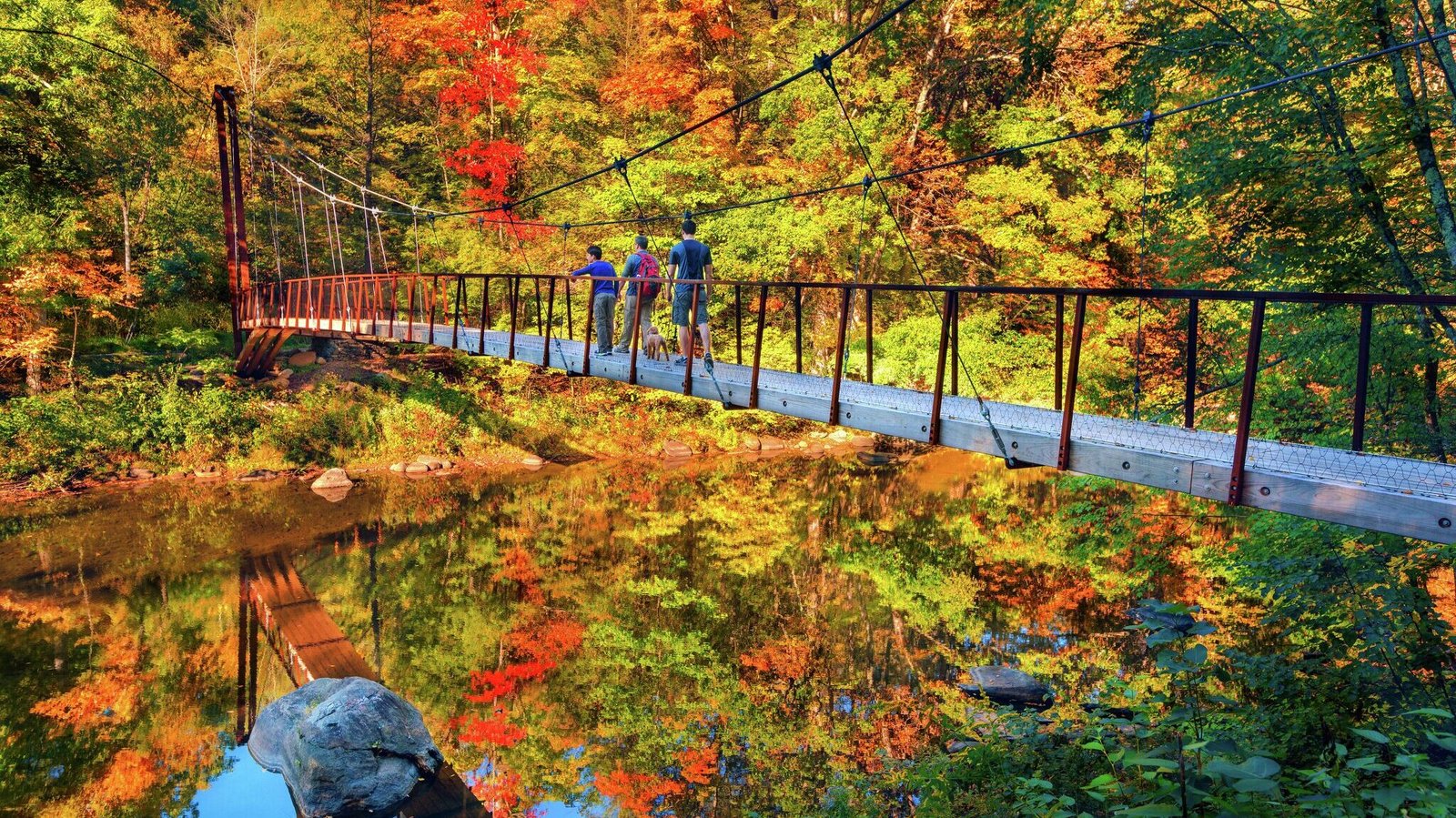
Connecticut is small enough that fall color is visible from almost anywhere in the state, but the Litchfield Hills, in the northwestern corner, deliver the most concentrated and dramatic display. The town of Litchfield, a classic New England village with a wide green, white churches, and Colonial-era homes set along elm-shaded streets, is the center of a region that quietly rivals Vermont for autumn beauty while drawing a fraction of the crowds. The surrounding hills are thick with sugar maples, red oaks, and birches that peak in mid to late October, and the combination of foliage and architecture is the kind of visual harmony that New England does better than anywhere else.
The drives through the Litchfield Hills are the main attraction. Route 7 follows the Housatonic River valley northward, passing through the villages of Kent, Cornwall, and Canaan, each one more picture-perfect than the last. The covered bridge in West Cornwall, spanning the Housatonic against a backdrop of blazing maples, is one of the most photographed scenes in Connecticut. Route 63 south from Litchfield leads through rolling farmland where stone walls, red barns, and golden trees create a landscape that looks like a Currier and Ives print come to life. White Memorial Conservation Center, on the edge of Litchfield, offers miles of trails through forest and along the Bantam River that are ideal for on-foot leaf viewing.
The town’s dining scene reflects its position as a weekend destination for New Yorkers. The Village Restaurant has been a Litchfield institution for decades, and West Street Grill does contemporary American cooking in a handsome storefront on the green. The Litchfield Inn offers comfortable lodging with views of the surrounding hills. Litchfield in autumn is Connecticut at its most refined, a place where the foliage is framed by two centuries of careful stewardship and the beauty feels both wild and deeply civilized.
Delaware: Winterthur
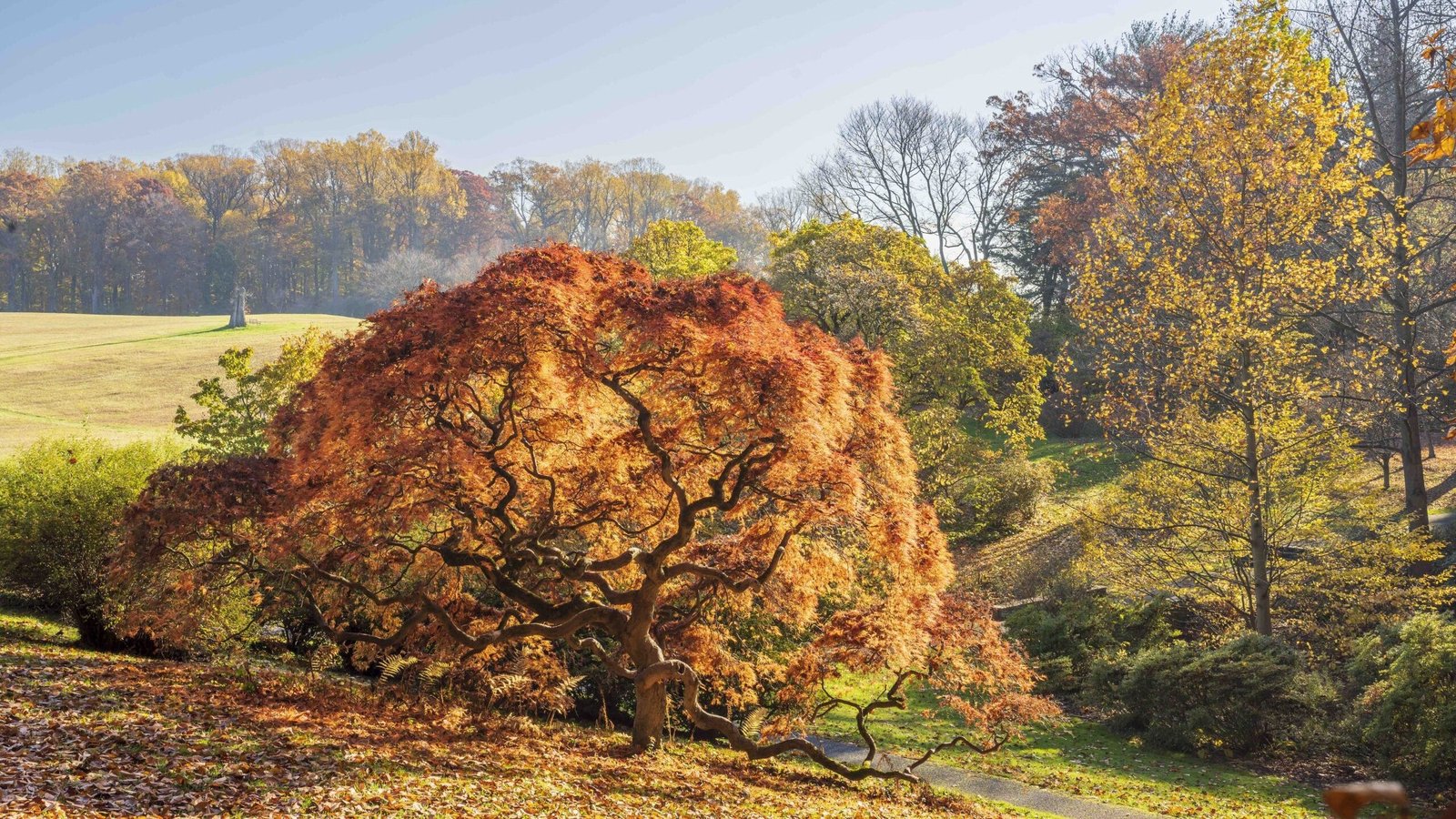
Delaware is a small state without dramatic mountains or vast forests, but it has a fall foliage secret that locals know well: the Brandywine Valley, which straddles the Delaware-Pennsylvania border and produces autumn color that is set against some of the most beautiful estates and gardens in the Mid-Atlantic. The town of Winterthur, named for the du Pont family estate that dominates the area, is the focal point. The Winterthur Museum, Garden, and Library sits on nearly 1,000 acres of rolling countryside that was landscaped by the du Ponts specifically to showcase seasonal beauty, and in autumn, the collection of specimen trees, many of them planted over a century ago, produces a foliage display that is among the finest on any private estate in America.
The garden includes native hardwoods alongside exotic species that the du Ponts collected from around the world, and the result is a palette broader than what you find in a natural forest. Japanese maples in crimson, sweetgums in purple, beeches in copper, and sugar maples in orange all contribute to a layered display that peaks in late October and early November. The Enchanted Woods, a children’s garden within the larger estate, is particularly atmospheric in autumn, with fallen leaves carpeting the paths and the fairy-tale structures taking on a storybook quality. Beyond the estate, the surrounding Brandywine Creek State Park and the roads that wind through the valley offer additional foliage viewing in a landscape of rolling hills, stone farmhouses, and horse country.
The dining options in the Winterthur area lean toward the upscale, befitting the Brandywine Valley’s reputation as old-money Philadelphia country. The restaurant at Winterthur serves seasonal American cuisine, and nearby Centreville has several options. Lodging includes the Montchanin Village, a collection of restored du Pont-era worker cottages converted into a boutique hotel. Delaware’s fall foliage may not be famous, but in the Brandywine Valley, the combination of color and cultivated beauty is hard to match.
Florida: Torreya State Park
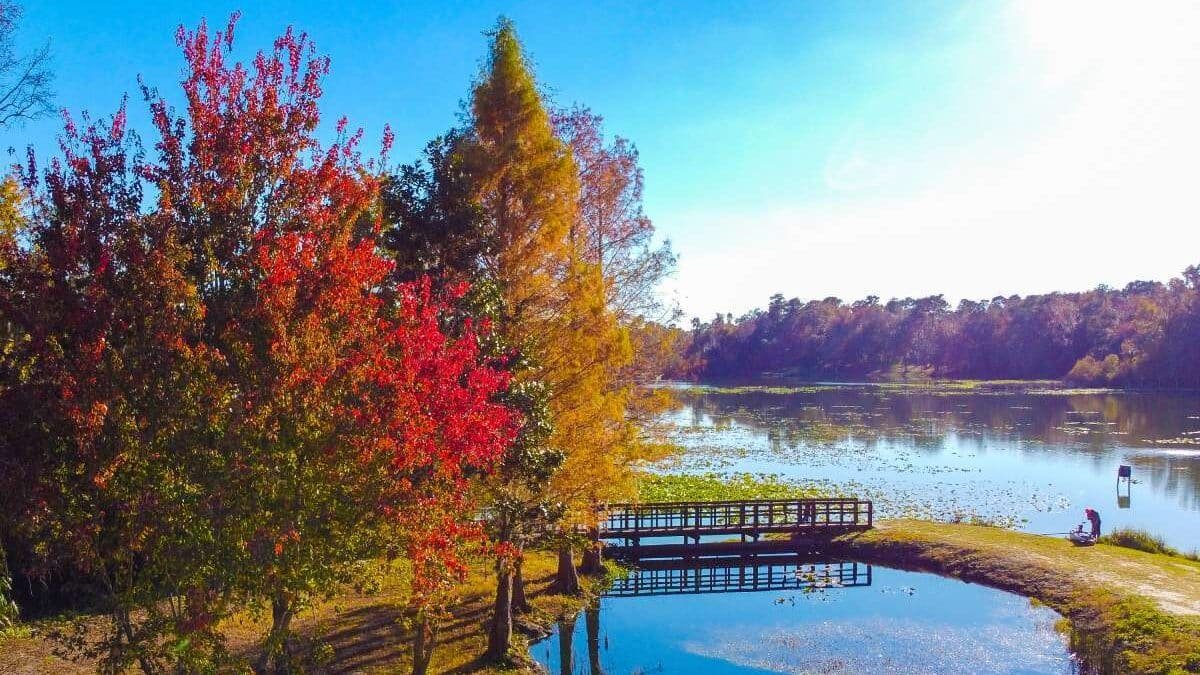
Florida and fall foliage are not a combination that most people take seriously, and for good reason. The state is flat, subtropical, and famously green year-round. But in the Panhandle, along the bluffs above the Apalachicola River, a landscape exists that looks more like Alabama or Georgia than the rest of Florida. Torreya State Park, named for the rare Torreya tree found only in this area, sits on high bluffs overlooking the river in Liberty County, and in late October and November, the hardwood forest here produces genuine fall color that surprises everyone who sees it for the first time.
The park’s signature feature is the series of steep ravines that drop from the bluff tops to the river, creating microclimates cool enough to support species like beech, magnolia, and Florida maple that are uncommon in the rest of the state. The Weeping Ridge Trail and the bluff-top loop trail offer the best leaf-viewing, with canopy views that look down into ravines filled with changing trees. The Gregory House, a restored 1849 plantation home that was moved to the park in the 1930s, sits on the bluff edge with views across the Apalachicola River valley that are legitimately beautiful in autumn.
The nearest town of any size is Bristol, the Liberty County seat, which has limited dining and lodging but offers a genuine small-town Florida Panhandle experience. Blountstown, across the river, has a few more options. For more substantial accommodations, Tallahassee is about an hour east. The park itself has camping and a few cabins. Torreya State Park is a foliage destination in the same way that Flagstaff is a foliage destination: it challenges your assumptions about what a state can offer and rewards you with a fall experience that feels like a secret. Florida has real autumn color. You just have to know where to find it.
Georgia: Dahlonega
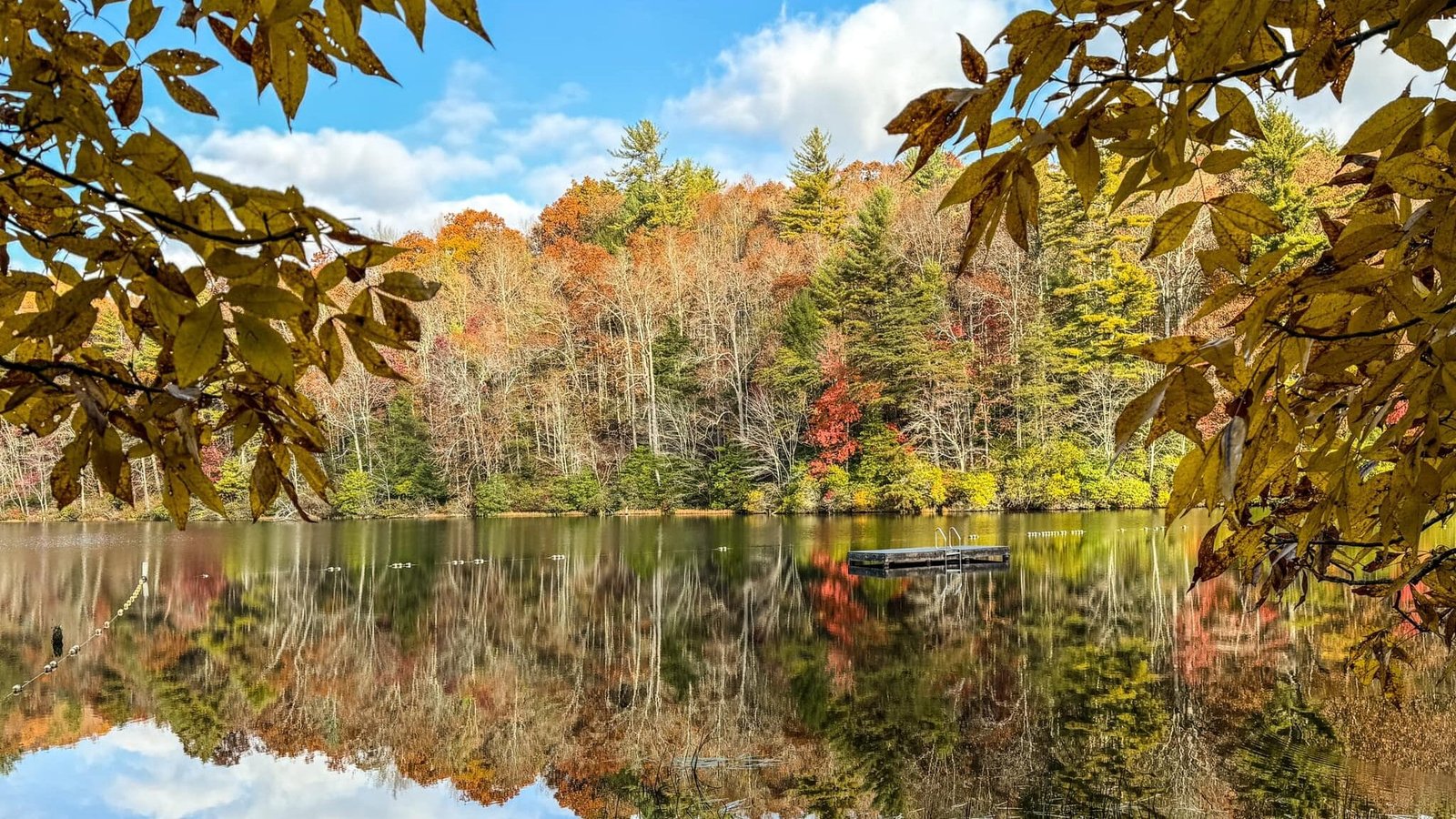
Dahlonega sits in the foothills of the Blue Ridge Mountains about seventy miles north of Atlanta, and in autumn, this former gold-rush town transforms into one of the premier leaf-viewing destinations in the Southeast. The town was the site of the first major gold rush in the United States, predating the California rush by twenty years, and the historic town square, anchored by the gold-domed Lumpkin County Courthouse, is the kind of gathering place that small Southern towns do better than almost anyone. In October and November, the mountains surrounding Dahlonega burst into color, and the square becomes the center of a fall celebration that draws visitors from across Georgia and the Carolinas.
The best foliage viewing is along the mountain roads north of town. Woody Gap and Blood Mountain on the Appalachian Trail corridor offer high-elevation views where the color starts earliest. The Richard Russell Scenic Highway, connecting Dahlonega to Helen, is one of the most scenic fall drives in Georgia, climbing to over 3,400 feet through a forest of oaks, hickories, and maples that turn brilliant shades of red, orange, and gold. Amicalola Falls State Park, home to the tallest cascading waterfall east of the Mississippi, is about thirty minutes from town and is especially stunning when the surrounding forest is at peak color. The 729-foot waterfall framed by autumn trees is one of the great natural sights in the Southeast.
Back in town, the dining scene reflects Dahlonega’s evolution from mining community to wine-country destination. The region has become a hub for Georgia viticulture, and several tasting rooms operate on and around the square. Spirits Tavern does creative Southern cooking, and the historic Smith House has been serving family-style meals since 1922. The Dahlonega Resort and Vineyard offers lodging with mountain views, and several bed-and-breakfasts in the historic district provide a more intimate experience. Dahlonega in autumn is the kind of place that makes you want to buy a bag of boiled peanuts from a roadside stand, pull over at every overlook, and take the long way home.
Hawaii: Kokee State Park (Kauai)
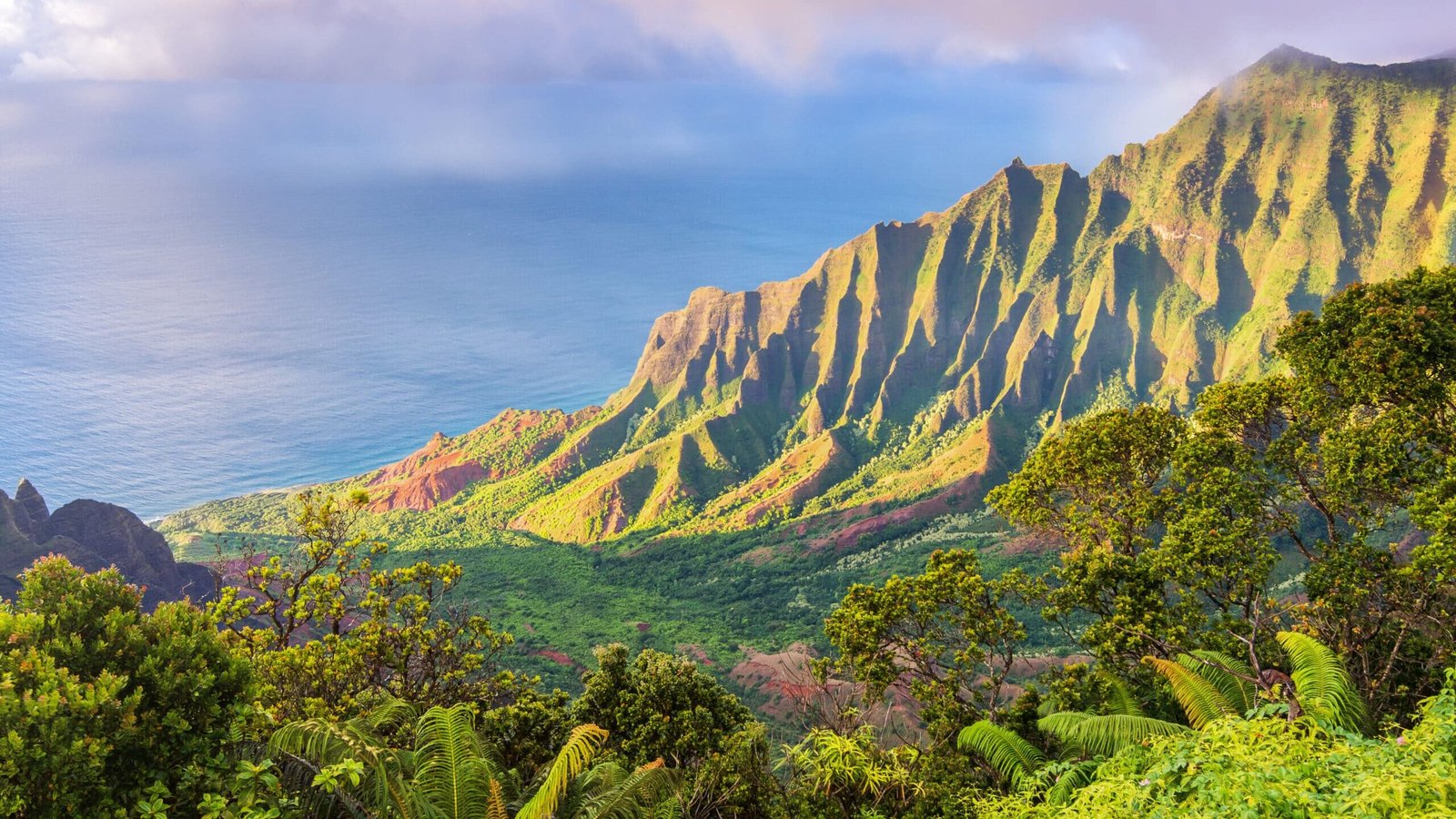
Hawaii does not have a traditional fall foliage season in the continental sense. The islands are tropical, and most of the native vegetation is evergreen. But Kauai’s Kokee State Park, which sits at 3,500 to 4,000 feet of elevation above Waimea Canyon, offers something unexpected: a seasonal color change driven by the plum trees that were planted throughout the park decades ago. These trees, along with introduced species like the Japanese sugi pine and various deciduous ornamentals, produce patches of autumn color in November and December that stand out against the green backdrop of the native ohia and koa forest.
The real visual spectacle at Kokee in fall, though, is not about individual trees turning color. The park overlooks Waimea Canyon, often called the Grand Canyon of the Pacific, and in the fall months, the changing light, the occasional dusting of rain, and the interplay of sun and cloud create shifting displays of color across the canyon walls that are different every hour of the day. The reds and oranges of the volcanic rock, the deep greens of the native vegetation, and the golden tones of the drying grasslands on the upper ridges combine into something that is, in its own way, as much of a fall color experience as any New England hillside.
The park has rustic cabins available for overnight stays, and the Kokee Lodge serves simple meals with views of the surrounding forest. The drive up from Waimea town, which follows the canyon rim with multiple pullouts and overlooks, is one of the great scenic drives in Hawaii. For a more comfortable base, the town of Poipu on Kauai’s south shore is about an hour away. Hawaii’s fall colors are not conventional, but on Kauai, the combination of canyon light, mountain elevation, and the unexpected sight of deciduous trees among the tropics creates an autumn experience that is wholly unique.
Idaho: McCall
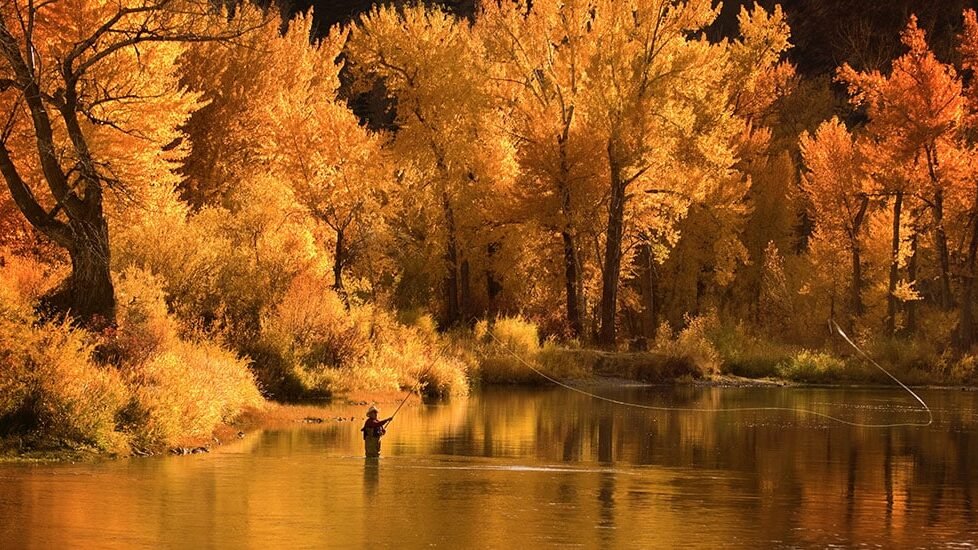
McCall sits on the shore of Payette Lake in the mountains of central Idaho, about 100 miles north of Boise, and in autumn, the surrounding forests of aspen, cottonwood, and tamarack (western larch) produce a fall display that rivals anything in the northern Rockies. The tamarack is particularly special. As one of the few deciduous conifers in North America, it turns a brilliant gold in October before dropping its needles, and the sight of entire mountainsides of golden larch set against the dark green of Douglas fir and the blue water of the lake is one of the most distinctive fall landscapes in the West.
The drive to McCall from Boise follows Highway 55 through the Payette River canyon, and the route itself is a top-tier foliage drive. The aspen and cottonwood along the river start turning in late September, and by early October, the canyon is a corridor of gold. Ponderosa State Park, on a peninsula jutting into Payette Lake just outside of town, offers hiking trails through mixed forest with lake views that are especially dramatic in fall. The park’s Huckleberry Bay trail provides one of the most accessible and rewarding fall hikes in the state.
McCall’s downtown is a small but appealing collection of restaurants and shops that cater to both summer vacationers and year-round residents. The Fogglifter Cafe does breakfast and coffee in a cozy space. The Bistro 45 serves dinner with seasonal ingredients. For lodging, Shore Lodge, on the lakefront, is the most upscale option, with views across Payette Lake to the forested mountains beyond. The Hotel McCall offers more modest accommodations in the heart of town. McCall in fall is an Idaho secret that more people need to know about, a mountain lake town where the color comes from every direction and the pace of life invites you to stay longer than planned.
Illinois: Starved Rock State Park area (Utica)
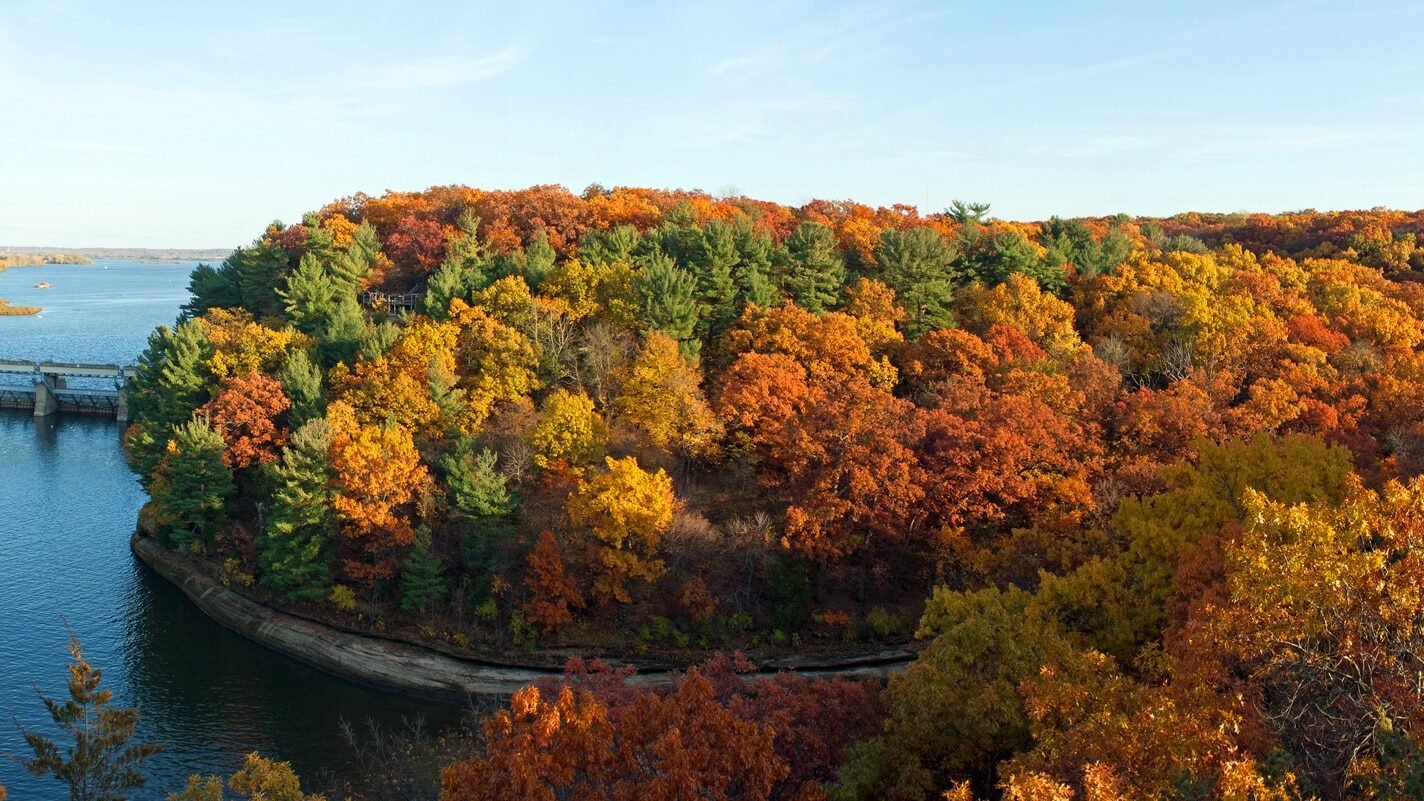
Illinois is not a state that most people associate with dramatic scenery, but the Illinois River valley at Starved Rock State Park, near the small town of Utica, produces fall color that would be famous if it were located anywhere in New England. The park sits on a series of sandstone bluffs and canyons carved by glacial meltwater thousands of years ago, and the narrow canyons, some of them only twenty feet wide and walled with moss-covered stone, are filled with hardwood trees that turn brilliant shades of red, orange, and gold in October. Walking through one of these canyons in peak fall color, with the leaves forming a canopy overhead and the sandstone walls glowing in the filtered light, is one of the most beautiful hiking experiences in the Midwest.
The park has 18 named canyons, and the trails that connect them follow the bluff tops above the Illinois River, providing views across the wide river valley where the color extends to the horizon. The most popular canyons for fall color are French Canyon, St. Louis Canyon (which has a seasonal waterfall), and Wildcat Canyon. The town of Utica, just outside the park, is a small community that has reinvented itself as a destination for park visitors, with a handful of shops and restaurants along its historic main street. Starved Rock Lodge, built by the Civilian Conservation Corps in the 1930s, sits inside the park and has a massive stone fireplace in the Great Room that is the natural gathering point on cool October evenings.
For dining, Skoog’s Pub and Grill in Utica serves solid comfort food, and the lodge restaurant offers a seasonal menu. The area’s other attraction in fall is the Illinois River itself, where bald eagles begin arriving in October and can be spotted from the bluff-top trails. Starved Rock proves that dramatic fall foliage is not the exclusive province of mountains and coastlines, and that a prairie state can hide a canyon landscape worthy of any autumn road trip.
Indiana: Nashville (Brown County)
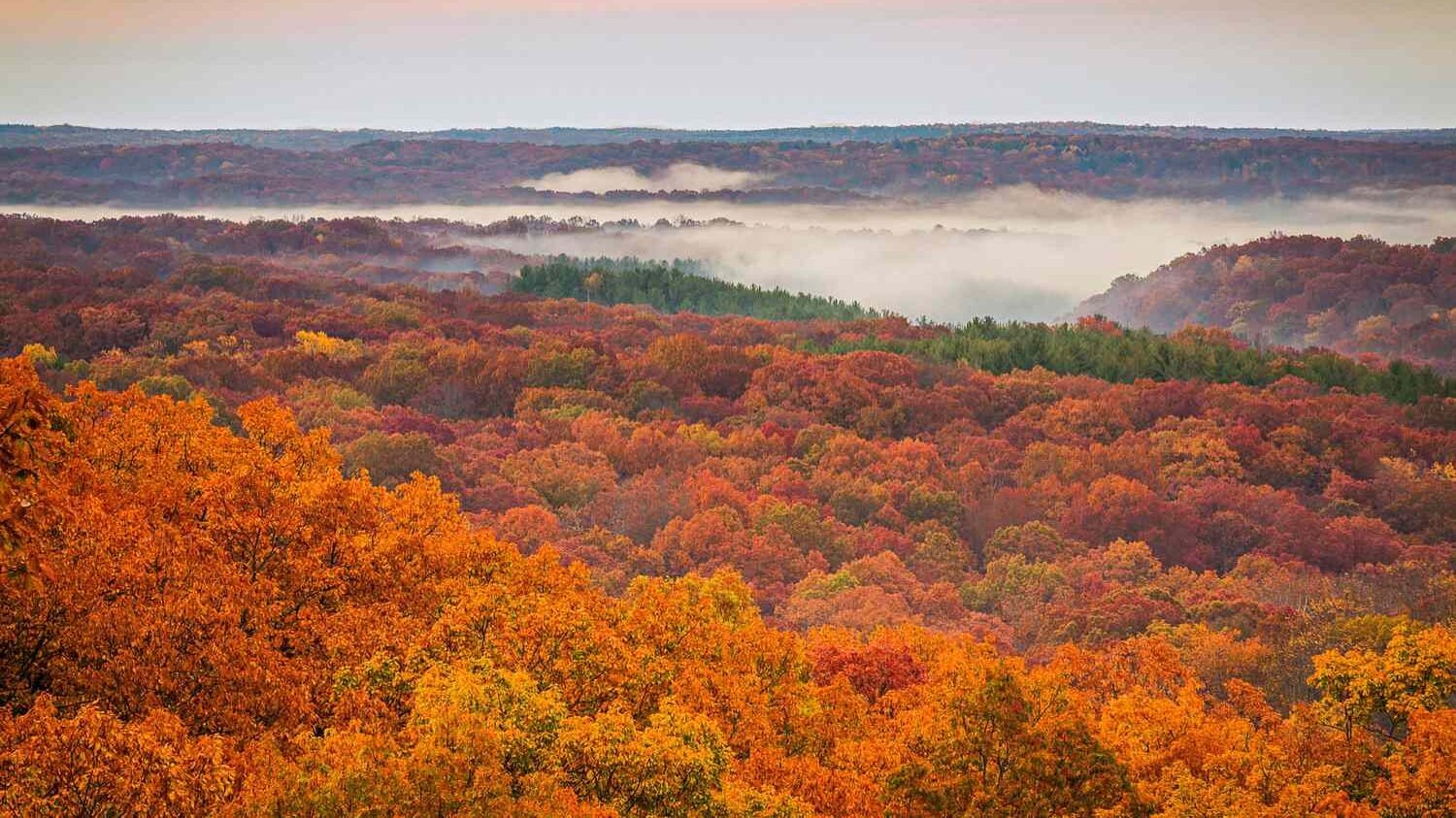
Brown County in south-central Indiana has been called the Little Smokies, and when the hardwood forests that blanket these rolling hills turn color in mid-October, the comparison does not feel like a stretch. The town of Nashville, the county seat, is an arts community of about 800 people that has been drawing visitors since the early twentieth century, when a colony of Impressionist painters discovered that the light filtering through the Indiana hardwoods produced something worth capturing on canvas. The Brown County Art Colony became one of the most significant regional art movements in the Midwest, and the tradition continues today with dozens of galleries and studios in town.
Brown County State Park, the largest in Indiana, wraps around the town and provides the primary foliage viewing. The park’s roads wind through forested ridges and valleys, and in October, the views from the fire tower at Weed Patch Hill stretch across an unbroken canopy of orange, red, and gold that extends to the horizon in every direction. The overlooks along the park drives are spaced frequently enough that you can spend an entire afternoon stopping at each one and never get tired of the view. The Abe Martin Lodge, inside the park, has a stone fireplace and a dining room that overlooks the forest, and staying here during peak color feels like sleeping inside a painting.
Downtown Nashville’s shops and galleries are at their busiest during the fall season, and the combination of art, craft, and color makes for an ideal weekend. The Big Woods Brewing Company serves locally brewed beers in a barn-like space. The Hobnob Corner has been dishing comfort food since 1945. For lodging beyond the state park, the Artists Colony Inn and the Story Inn (in the nearby hamlet of Story) offer distinctive accommodations. Nashville in autumn is the Indiana that surprises people who have never been, and the fall color here, set among gentle hills rather than dramatic peaks, has a warmth and accessibility that the mountain destinations often lack.
Iowa: Effigy Mounds area (Marquette/McGregor)
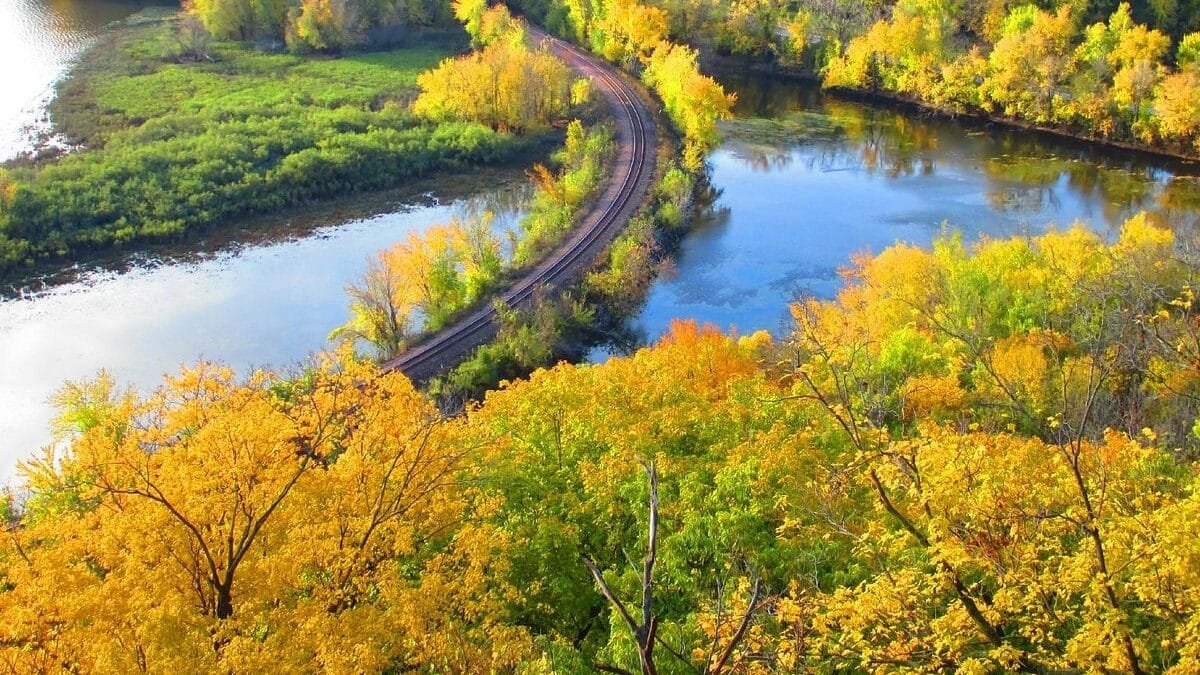
The twin towns of Marquette and McGregor sit on the Mississippi River in the far northeastern corner of Iowa, in the heart of the Driftless Area, a region of steep bluffs and deep valleys that the glaciers somehow missed. The result is a landscape that looks more like the Appalachian foothills than the flat farmland most people picture when they think of Iowa, and in October, the hardwood forests that cover these ancient bluffs produce fall color that is among the best in the Midwest. Effigy Mounds National Monument, perched on the bluffs above the river, is the centerpiece of the fall experience, offering trails that wind through forest and along bluff edges with views of the Mississippi River valley that are genuinely spectacular in autumn.
The monument preserves over 200 prehistoric mounds built by Indigenous peoples over 1,000 years ago, and walking among these earthworks in a forest of blazing maple, oak, and hickory adds a layer of historical depth to the fall foliage experience that few other destinations can match. Fire Point, a bluff-top overlook accessible via a three-mile trail, offers a panoramic view of the river, the bluffs on the Wisconsin side, and the forested islands in between. In October, every surface in this view is a different shade of gold, red, or orange.
The town of McGregor, below the bluffs, has a small downtown of 19th-century brick buildings that include the McGregor Historical Museum and a handful of shops and restaurants. The Paper Moon, in a renovated storefront, serves creative American cooking with a local focus. Old Man River, a brewery and restaurant on the main street, does solid pub fare with views of the river. For lodging, the American House Inn and several riverside bed-and-breakfasts provide comfortable bases for exploring the area. This corner of Iowa proves that the Midwest’s fall foliage deserves far more attention than it gets.
Kansas: Flint Hills (Council Grove)
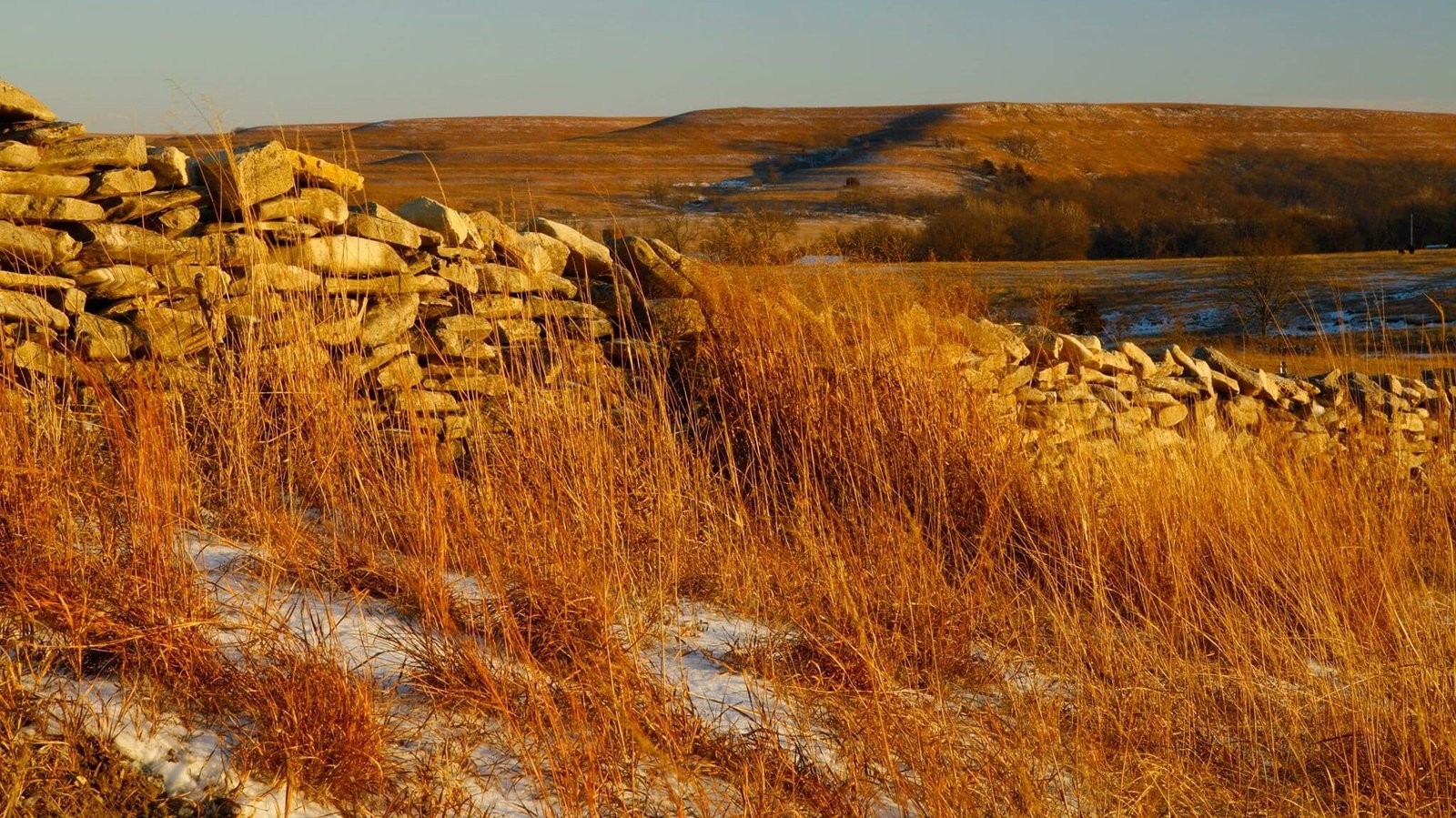
Kansas is a tallgrass prairie state, and its fall foliage does not involve the forest canopies that define the season elsewhere. Instead, the Flint Hills region, the last remaining expanse of tallgrass prairie in North America, produces a fall color show that is entirely its own: the big bluestem, Indian grass, and switchgrass that cover these rolling hills turn from summer green to shades of bronze, copper, rust, and gold in October, and the effect across the wide-open landscape is like watching the entire earth change color. Council Grove, a town of about 2,100 people on the old Santa Fe Trail, is the best base for experiencing it.
The town has genuine history. Council Grove was the last outfitting point on the Santa Fe Trail before the long crossing into the territories, and several historic sites in town preserve that era, including the Last Chance Store and the Council Oak tree where a treaty was signed with the Osage Nation in 1825. The Flint Hills National Scenic Byway runs through the area, and driving it in October, with the tallgrass glowing in late-afternoon light and the hills rolling to the horizon in every direction, is one of the most purely American landscape experiences available.
The Tallgrass Prairie National Preserve, about an hour north near Strong City, is the place to see the prairie at its most pristine. The preserve protects nearly 11,000 acres of unplowed tallgrass, and in autumn, the grasses are at their tallest and most colorful. The ranch headquarters, a collection of historic limestone buildings, provides an anchor for hikes into the prairie itself. Back in Council Grove, the Hays House Restaurant has been serving meals since 1857, making it one of the oldest continuously operating restaurants west of the Mississippi. Kansas fall foliage is not what the postcards show, but for those willing to expand their definition of autumn beauty, the Flint Hills deliver something that no forest can replicate.
Kentucky: Berea to Natural Bridge corridor
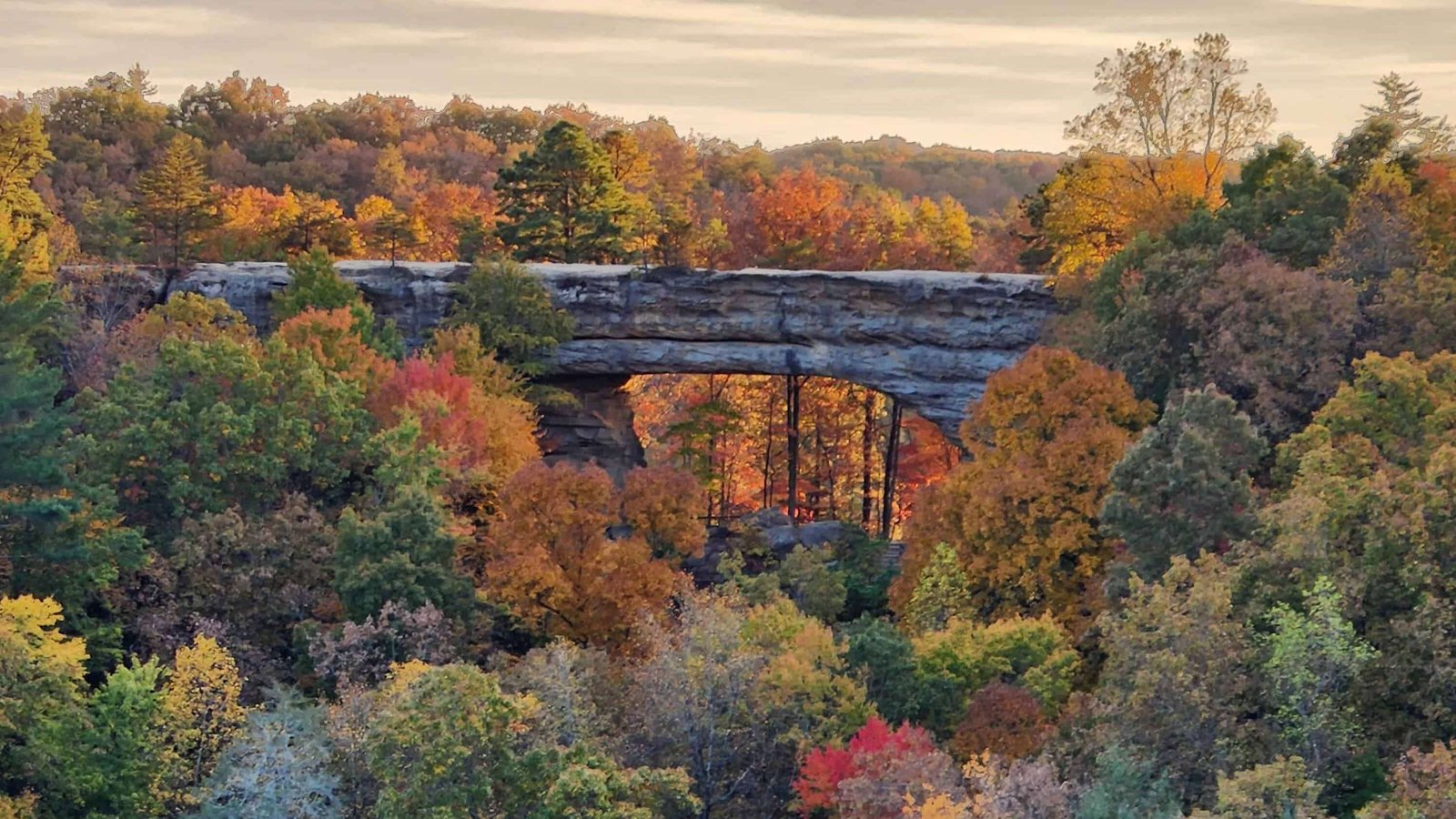
The drive from Berea south along Route 21 and then east through the Red River Gorge to Natural Bridge State Resort Park covers about forty miles of some of the finest fall foliage in the eastern United States. The corridor passes through the Daniel Boone National Forest, where the mixed mesophytic forest, one of the most diverse temperate forests on Earth, produces a range of fall colors that is broader than almost anywhere else in the country. Sugar maples, red oaks, tulip poplars, hickories, sourwoods, and dogwoods all change at different times and different rates, which means the color evolves over several weeks rather than peaking all at once.
Natural Bridge State Resort Park is the anchor destination. The natural sandstone arch for which the park is named spans 78 feet and stands 65 feet high, and in October, the view from the top of the bridge looks out over a canopy of color that fills the gorge below. The Red River Gorge Geological Area, adjacent to the park, has hundreds of natural arches and rock formations scattered through a forested canyon system that is stunning in fall. The trails here range from easy walks to challenging scrambles, and the combination of rock formations and fall color makes this one of the most visually rewarding hiking destinations in the Southeast.
Berea, at the western end of the corridor, provides the dining, lodging, and cultural amenities. The Boone Tavern Hotel serves Appalachian cuisine, and the town’s craft studios and galleries are at their busiest in fall. The Artisan Village at Berea is worth a visit for handmade goods from local craftspeople. For lodging closer to the gorge, the Hemlock Lodge at Natural Bridge State Resort Park sits on a ridge with commanding views, and numerous rental cabins are scattered through the Red River Gorge area. This corridor captures Appalachian fall at its most diverse and dramatic.
Louisiana: Kisatchie National Forest (Natchitoches area)
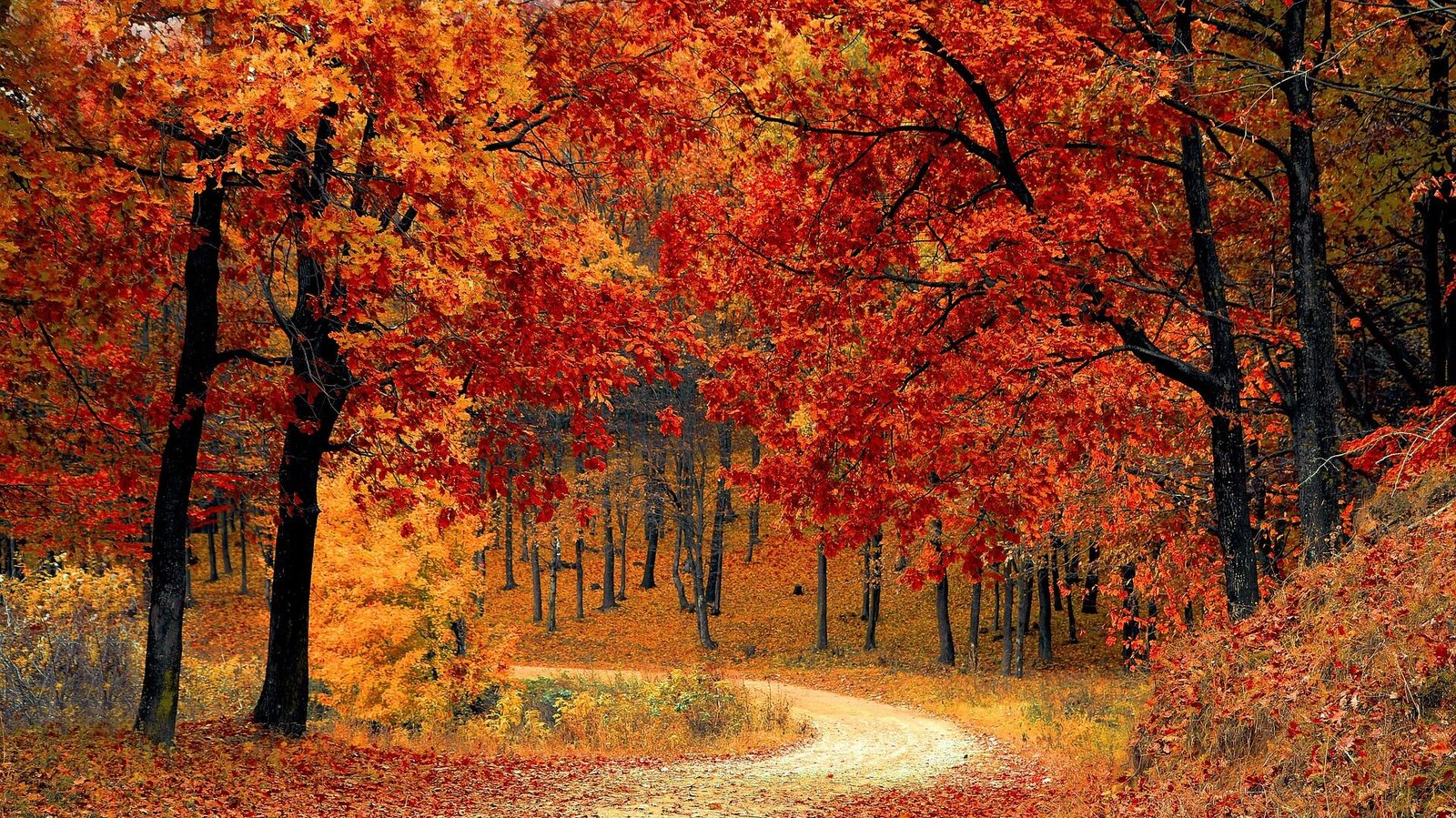
Louisiana’s fall foliage is easy to miss because it arrives so late and in forms unfamiliar to anyone accustomed to New England maples. But the Kisatchie National Forest, which sprawls across central Louisiana in several units, produces genuine autumn color from late October well into November, driven by species like sweetgum, hickory, Southern red oak, and sassafras. The forest is at its most colorful in the Kisatchie Hills Wilderness, near the town of Natchitoches, where sandstone mesas and longleaf pine savannas create a landscape that looks nothing like the bayou country most people associate with the state.
The Longleaf Trail Scenic Byway, which winds through the forest between Natchitoches and Alexandria, is the best driving route for fall color. The road passes through rolling hills of mixed pine and hardwood, and in late October, the hardwoods along the creek bottoms and hillsides turn shades of gold, rust, and red that contrast beautifully with the deep green of the longleaf pines. Kisatchie Bayou, accessible via several trailheads along the byway, offers hiking through forest and along sandstone outcroppings that are particularly atmospheric in autumn.
Natchitoches, which anchors the experience, is the oldest permanent settlement in the Louisiana Purchase territory and is covered in detail elsewhere in this series. The French-Creole historic district along the Cane River is beautiful in any season, and the meat pies at Lasyone’s are reason enough to make the drive. The fall foliage at Kisatchie is not the blaze of color you see in Vermont or Colorado, but it is real, it is beautiful, and it comes with a side of Louisiana culture and cuisine that makes the whole experience richer. Sometimes the best autumn trips are the ones that combine modest color with extraordinary character.
Maine: Rangeley
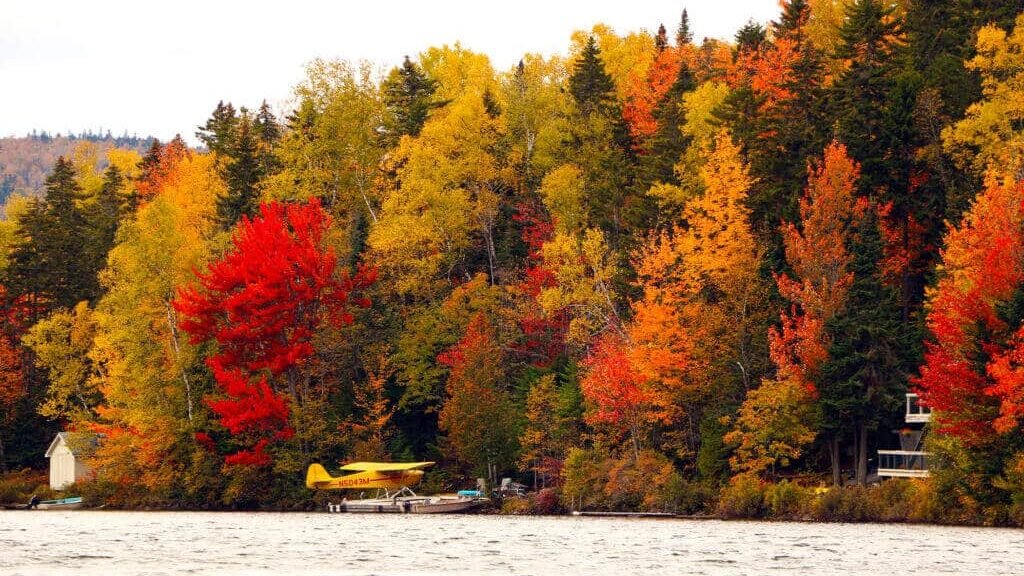
Maine’s fall foliage is overshadowed by Vermont’s marketing machine, but locals know that the western mountains around the Rangeley Lakes produce color that is every bit as vivid and far less crowded. Rangeley is a town of about 1,200 people on the shore of Rangeley Lake, surrounded by mountains that top 4,000 feet and covered in a forest of sugar maples, birches, and beeches that explode with color from late September through mid-October. The town has been a sporting destination since the 1800s, when wealthy city dwellers arrived by train to fish for the legendary Rangeley Lake trout, and that heritage of outdoor recreation and lodge-based hospitality continues today.
The Height of Land overlook on Route 17, about ten miles south of Rangeley, is one of the most famous viewpoints in Maine. From this pullout on the Appalachian Trail corridor, you look down on Mooselookmeguntic Lake and the surrounding mountains, and in peak fall color, the view is a panorama of red, orange, and gold stretching as far as you can see. The Rangeley Lakes Scenic Byway, which loops around the lake region, passes through continuous forest with water views at every turn. For hikers, Saddleback Mountain and Bald Mountain both offer trails that lead to above-treeline summits with 360-degree views of the colored forest below.
The town’s dining scene is small but genuine. Parkside & Main serves creative pub food with views of the lake. The Rangeley Inn, a grand Victorian property in the center of town, has a dining room and tavern that serve as the social hub. Wilhelm Reich Museum, on a hilltop outside of town, offers an unusual cultural dimension and spectacular autumn views from its grounds. Rangeley in fall is Maine’s leaf-peeping alternative to the more famous destinations along the coast, and for anyone willing to venture into the western mountains, the color and the solitude are exceptional.
Maryland: Deep Creek Lake (Oakland)
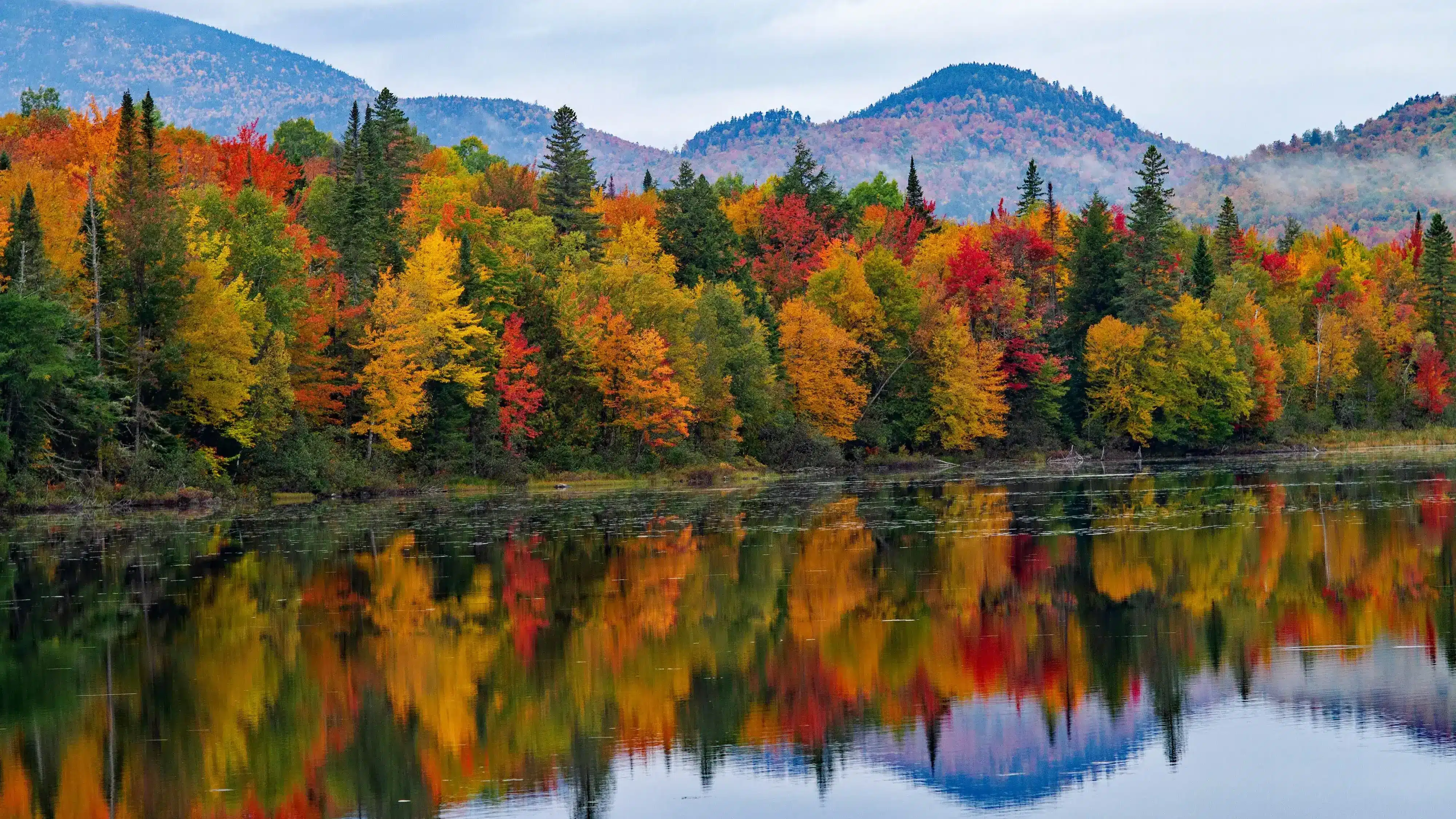
Garrett County, in the far western panhandle of Maryland, is a different world from the rest of the state. The landscape here is Appalachian mountain country, with elevations above 3,000 feet, dense hardwood forests, and a climate more similar to West Virginia than to the Chesapeake Bay lowlands an hour east. Deep Creek Lake, the largest freshwater lake in Maryland, sits at the center of the county, and the town of Oakland, the county seat, provides a base for exploring fall foliage that peaks in mid to late October and is among the most underrated in the Mid-Atlantic.
The forests around Deep Creek Lake are a classic Appalachian mix of sugar maple, red maple, red oak, white oak, hickory, and tulip poplar, and the color here is as intense as anything in the Shenandoah Valley, with far fewer visitors. Swallow Falls State Park, about fifteen minutes from Oakland, has trails past waterfalls that are framed by blazing forest and a grove of old-growth hemlocks that provide a dark green contrast to the surrounding color. Muddy Creek Falls, a 53-foot cascade in the park, is the highest waterfall in Maryland and is particularly photogenic in autumn. Herrington Manor State Park, adjacent to Swallow Falls, offers additional hiking and a lake that reflects the surrounding color on still mornings.
The town of Oakland has a modest downtown with a few restaurants and shops. Cornish Manor does upscale dining in a historic building. The Mountain State Brewing Company serves craft beer and pub food. For lodging, the Lake Pointe Inn, on the lakeshore, is the most upscale option, and numerous rental cabins and vacation homes surround the lake. Deep Creek Lake in autumn is Maryland’s best-kept foliage secret, a mountain destination that most of the state’s own residents have never bothered to explore.
Massachusetts: Williamstown
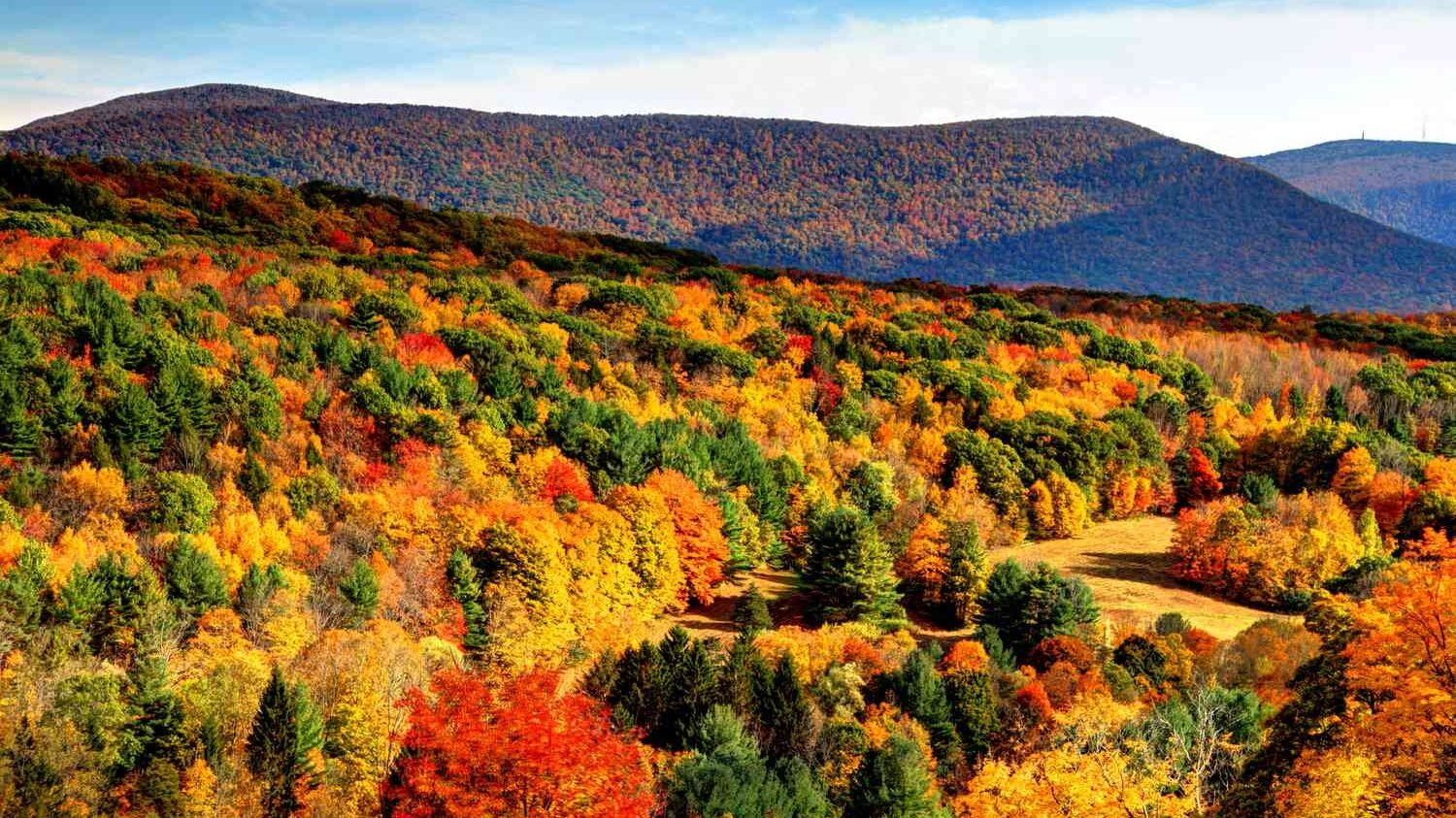
The Berkshire Hills of western Massachusetts are prime fall foliage territory, and while Stockbridge gets more attention for its Rockwell connection, Williamstown, at the northern end of the Berkshires where the Green Mountains of Vermont meet the Taconic Range, offers what many locals consider the finest autumn display in the state. The town is home to Williams College, one of the most prestigious liberal arts colleges in the country, and the campus, spread across a valley surrounded by mountains on three sides, is landscaped with mature trees that turn the academic grounds into a foliage showpiece every October.
The Clark Art Institute, one of the great small art museums in America, sits on 140 acres of rolling meadow and woodland that are stunning in fall. The combination of Renoir paintings inside and golden maples outside creates an experience where art and nature enhance each other in equal measure. Mount Greylock, the highest point in Massachusetts at 3,491 feet, is accessible by car via a road that climbs through color from base to summit, and the view from the top on a clear October day extends across five states. The Taconic Trail, Route 2 heading west over the mountains into New York, is another spectacular foliage drive that passes through dense forest with overlooks at the summit.
Williamstown’s dining benefits from the college community. Mezze, in a converted house on Route 7, does creative American cooking with local ingredients. The ‘6 House Pub at the Williams Inn serves reliable comfort food. For lodging, the Williams Inn has been recently renovated and offers comfortable rooms in the center of town, while the Guest House at Field Farm, a mid-century modern property on 300 acres of meadow and woodland, provides a more private experience with extraordinary views. Williamstown in fall is a place where the natural beauty and the intellectual culture of a great college town combine to create something greater than either could offer alone.
Michigan: Traverse City area (Leelanau Peninsula)
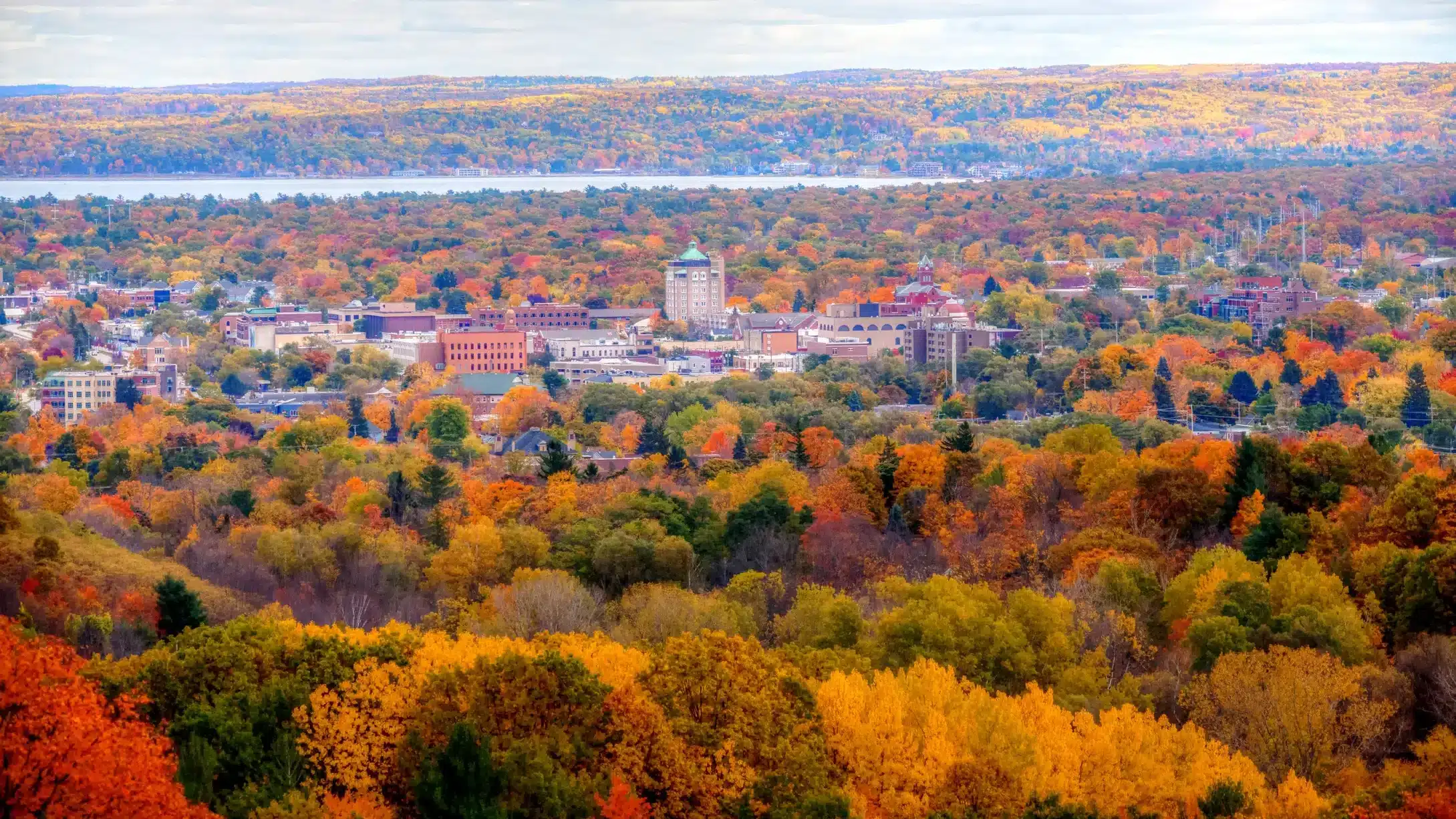
Michigan’s fall foliage is spectacular across the entire northern part of the state, but the Leelanau Peninsula, which juts into Lake Michigan northwest of Traverse City, offers what locals consider the finest leaf-viewing experience in the Great Lakes. The peninsula is a landscape of rolling cherry orchards, vineyards, small farms, and dense forests of maple, beech, and birch that turn vivid shades of red, orange, and gold from late September through mid-October. The added dimension is water. The peninsula is bordered by Lake Michigan on both sides and by Grand Traverse Bay on the east, and the fall color reflected in the blue water doubles the visual impact at every turn.
The drive up the peninsula on Route 22 is one of the great fall road trips in the Midwest. The road winds through the villages of Suttons Bay, Northport, and Leland, each one a compact collection of shops and restaurants worth a stop. Sleeping Bear Dunes National Lakeshore, on the western coast of the peninsula and the mainland shore to the south, offers dramatic views where forested bluffs plunge to the Lake Michigan shoreline and the Manitou Islands sit on the horizon. The Pierce Stocking Scenic Drive within the national lakeshore is a nine-mile loop that includes some of the most dramatic fall foliage overlooks in Michigan.
Traverse City itself is a food-and-wine hub with a downtown that has evolved rapidly in recent years. Trattoria Stella does Italian food in a converted asylum building that is far more charming than that description suggests. The Cooks’ House serves creative seasonal cuisine. The region’s wineries, many of them on the peninsula, offer tastings surrounded by vineyards at peak color. For lodging, the Park Place Hotel in downtown Traverse City is a grand historic option, and numerous inns and bed-and-breakfasts line the peninsula. Michigan’s fall deserves the same reverence as New England’s, and the Leelanau Peninsula is where that case is made most convincingly.
Minnesota: Grand Marais (North Shore)
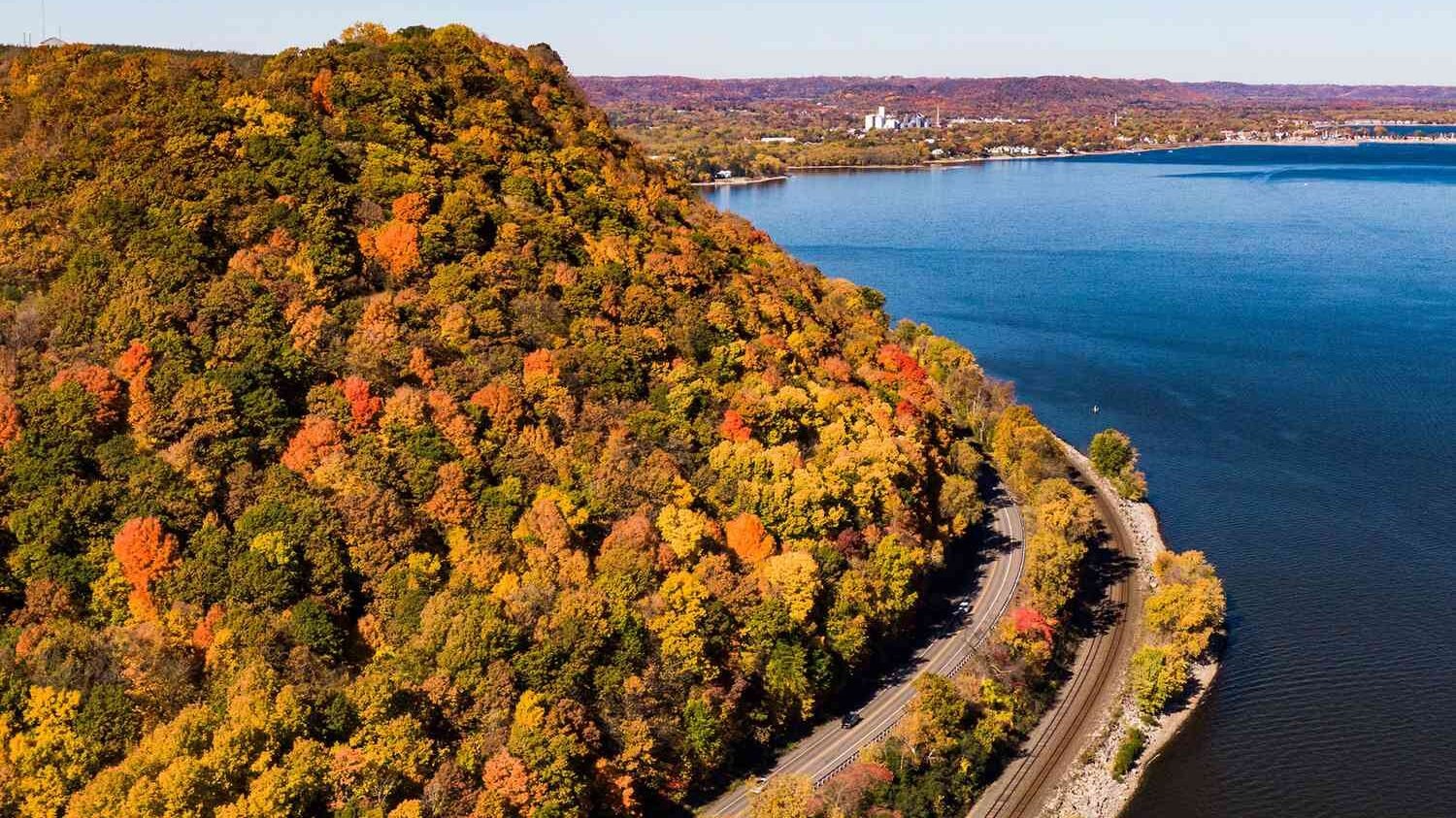
The North Shore of Lake Superior, stretching northeast from Duluth to the Canadian border, is Minnesota’s premier fall foliage destination, and Grand Marais, the small harbor town at the far end, is the best base for experiencing it. The drive up Highway 61 from Duluth to Grand Marais covers about 110 miles, and in late September and early October, the route passes through a continuous forest of birch, aspen, and maple that turns the hillsides above the lake into bands of gold, orange, and red set against the deep blue of Superior. The contrast between warm autumn color and cold northern water is the signature of North Shore fall, and no other foliage destination in the Midwest can match it.
Grand Marais itself is a town of about 1,300 people with a harbor, an art colony, and a food scene that punches far above its weight. The town sits between Lake Superior and the Boundary Waters Canoe Area Wilderness, and in fall, the surrounding Sawtooth Mountains produce dramatic foliage views that are accessible by trail from multiple points. The Superior Hiking Trail, which runs the length of the North Shore, has numerous segments near Grand Marais that offer ridge-top views over miles of colored forest. Oberg Mountain, about twenty miles southwest of town, has a loop trail that provides what many consider the single best foliage viewpoint on the North Shore.
For dining, Voyageur Brewing Company does excellent beer and food in a taproom with harbor views. The Angry Trout Cafe, on the waterfront, serves locally caught Lake Superior fish. World’s Best Donuts, despite the name, lives up to the claim and draws a line every morning. For lodging, the Gunflint Lodge, thirty miles inland on the Gunflint Trail, offers a wilderness experience with fall color on every side. East Bay Suites, on the harbor, provides a comfortable in-town option. Grand Marais in fall is one of the great American small-town experiences, where the color, the water, and the sense of being at the edge of something wild all come together.
Mississippi: Oxford
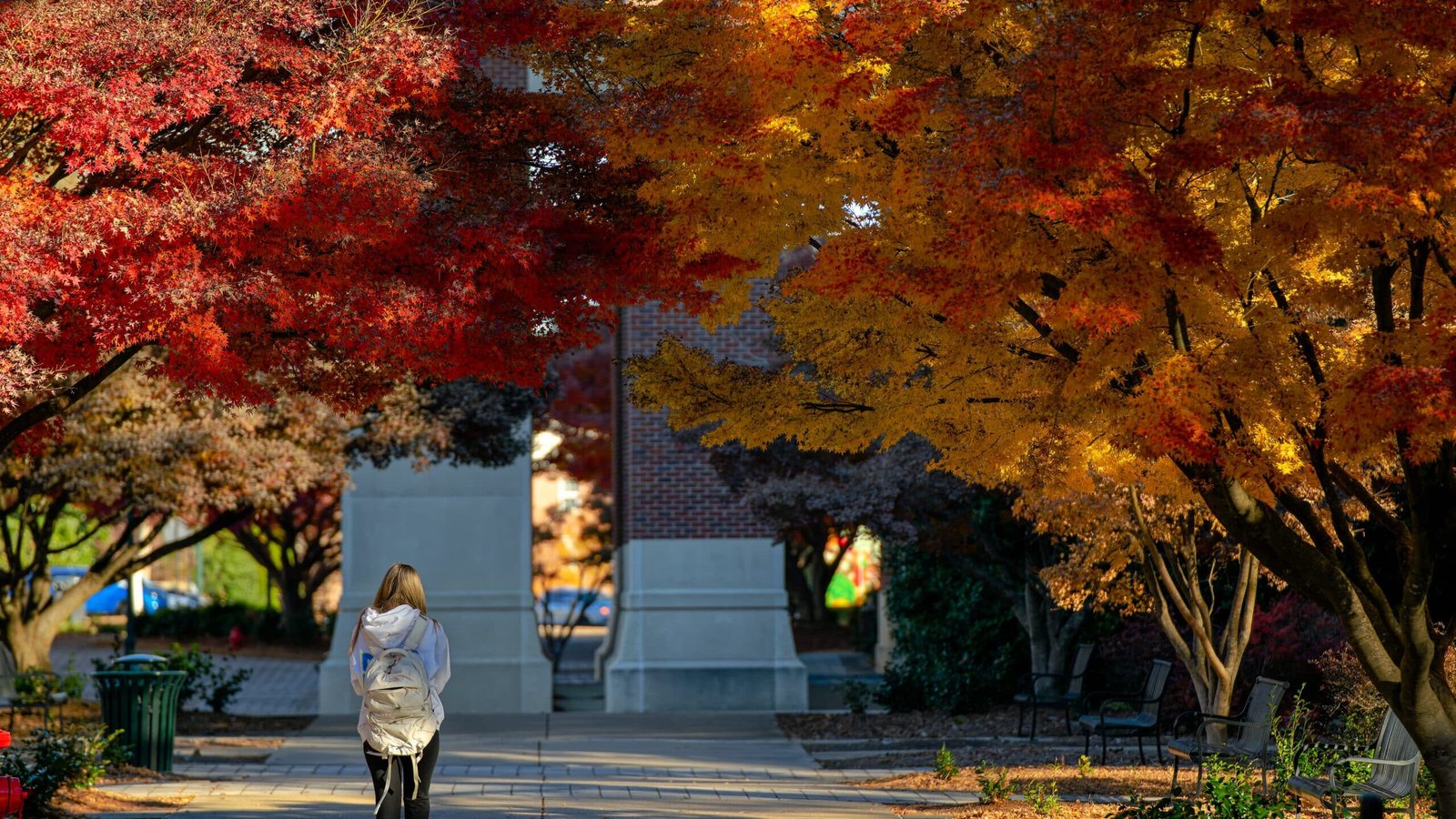
Mississippi does not spring to mind as a fall foliage state, and the color here will never compete with the sugar maples of Vermont. But Oxford, the literary college town that appears elsewhere in this series, has a fall that is distinctly Southern and genuinely lovely. The oaks and sweetgums that line the streets and fill the groves on the University of Mississippi campus turn in late October and November, and the warm golden light of a Mississippi autumn gives the fall color a honeyed quality that is different from the sharp, bright displays of northern latitudes.
Rowan Oak, William Faulkner’s home on the edge of campus, is surrounded by a grove of cedar and hardwood trees that is atmospheric in every season but reaches its peak in late October, when the oaks turn bronze and the light filters through the bare branches in long, warm shafts. The Bailey’s Woods trail, a walking path that connects the campus to Rowan Oak, passes through one of the last remaining old-growth forests in Mississippi and is a peaceful fall walk. The campus itself, with its columned buildings and oak-lined walkways, takes on a golden cast in autumn that makes it one of the most beautiful college campuses in the South.
The town square, with its restaurants, bookshops, and bars, is at its liveliest in fall when the university is in session and the football weekends bring energy to every corner. Square Books, the legendary independent bookstore, is the cultural anchor. Ajax Diner and Snackbar provide the food. The Grove, the campus’s famous tailgating lawn, is a spectacle of its own on football Saturdays, when thousands of people set up chandeliers and silverware under the oaks. Oxford’s fall is not about dramatic mountain color. It is about the warm, golden, literary atmosphere of a Southern college town in its favorite season.
Missouri: Hermann
Hermann appears on the winter list in this series, but the Missouri River town earns its fall foliage spot just as handily. The bluffs along the Missouri River in this part of the state are covered in hardwood forest that turns brilliant in October, and the combination of river views, wine country, and German heritage makes Hermann one of the most complete fall destinations in the Midwest. The town’s Oktoberfest celebration, which runs on multiple weekends in October, coincides perfectly with peak foliage and adds a festive dimension that pure leaf-viewing destinations lack.
The drive along Route 100, which follows the Missouri River on its winding course through the bluffs, is one of the best fall foliage drives in the state. The road passes through a landscape of steep, forested hillsides, rock outcroppings, and river views that are at their most dramatic when the trees are at peak color. The town’s wineries, many of them perched on hillside vineyards above the river, offer tasting experiences with panoramic fall views that are hard to beat. Stone Hill Winery and Adam Puchta Winery, the oldest family-owned winery in the country, are both worth visits.
Downtown Hermann’s main street is lined with brick and stone buildings that house restaurants, shops, and bed-and-breakfasts, and the German architecture against the autumn backdrop gives the town a distinctly European feel. The Vintage Restaurant at Stone Hill Winery pairs local wines with seasonal cuisine, and the Hermann Wurst Haus is the place for traditional sausages and hearty fall fare. Hermann Hill Vineyard and Inn offers bluff-top lodging with river views that are spectacular in foliage season. Hermann in fall combines the pleasures of wine, food, history, and color in a package that is distinctly Midwestern and utterly satisfying.
Montana: Bigfork
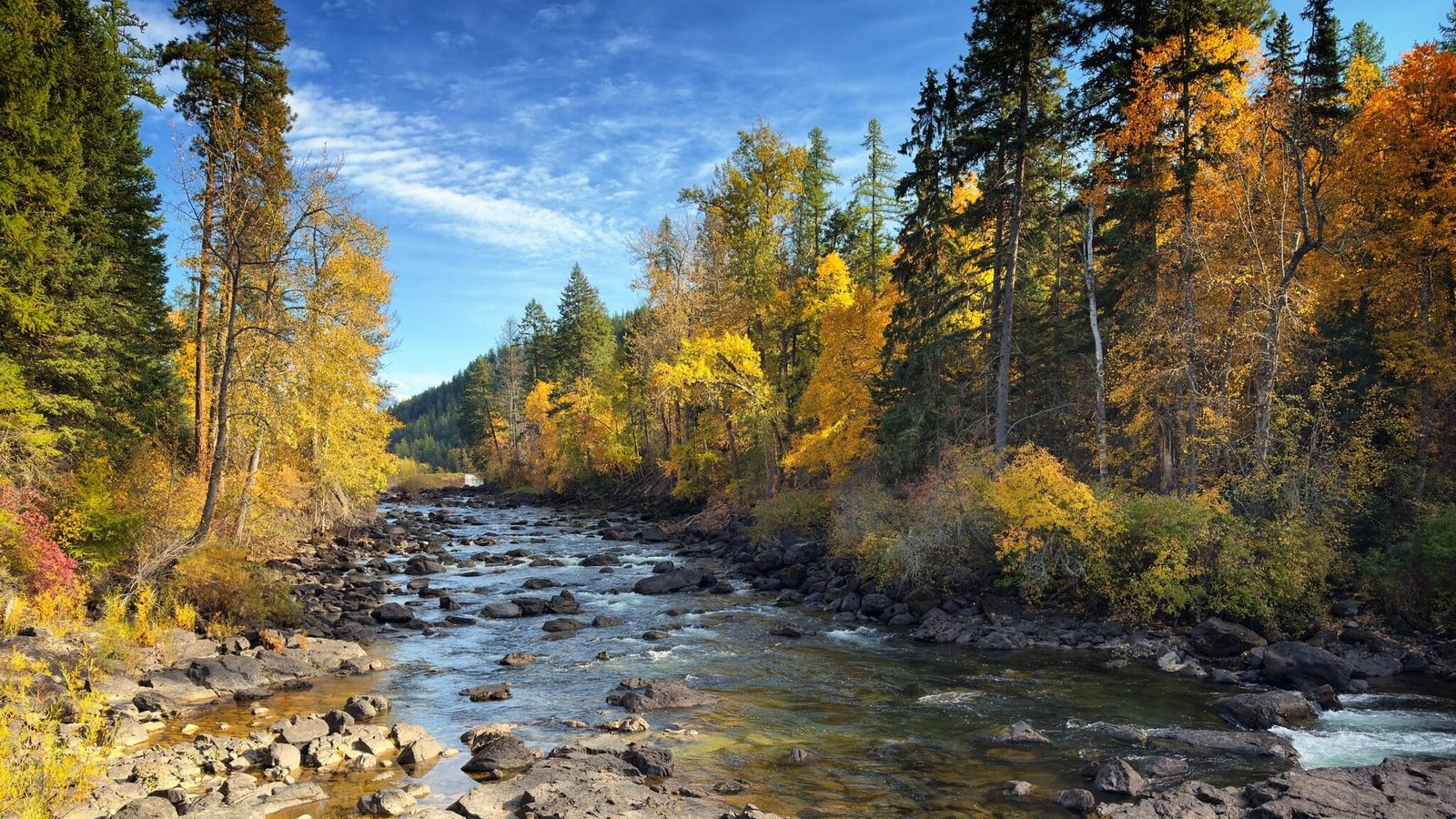
Bigfork sits at the northeast corner of Flathead Lake, the largest natural freshwater lake west of the Mississippi, and in autumn the combination of lake views and mountain color makes it one of the finest fall destinations in the northern Rockies. The town is a compact arts community of about 5,000 people with a walkable main street of galleries, restaurants, and shops that stays lively through the fall shoulder season after the summer tourists leave. The surrounding Swan Range and Mission Mountains provide a dramatic backdrop, and in late September and early October, the western larch forests on those slopes turn a deep gold that glows in the low-angle autumn light.
The western larch, like its cousin the tamarack, is a deciduous conifer that drops its needles every fall after turning brilliant gold. Montana has some of the largest larch forests in North America, and the mountains east and south of Bigfork are prime viewing territory. The drive along Highway 83 through the Swan Valley, heading south from Bigfork toward Seeley Lake, passes through a corridor of larch, aspen, and cottonwood that is one of the best fall drives in the state. Jewel Basin Hiking Area, accessible from a trailhead above town, offers alpine trails with views across Flathead Lake and the colored forest below.
For dining, ShowThyme serves creative American cuisine in a cozy downtown space and has been a Bigfork favorite for years. The Bigfork Inn does steaks and seafood in a historic building. Flathead Lake Brewing Company offers craft beer with mountain views. For lodging, the Bigfork Mountain Lake Lodge and several vacation rentals provide comfortable bases. The real draw of Bigfork in fall is the combination of scale and intimacy. The mountains and the lake are enormous, but the town is small enough that you feel like you belong by the second morning.
Nebraska: Indian Cave State Park (Shubert)
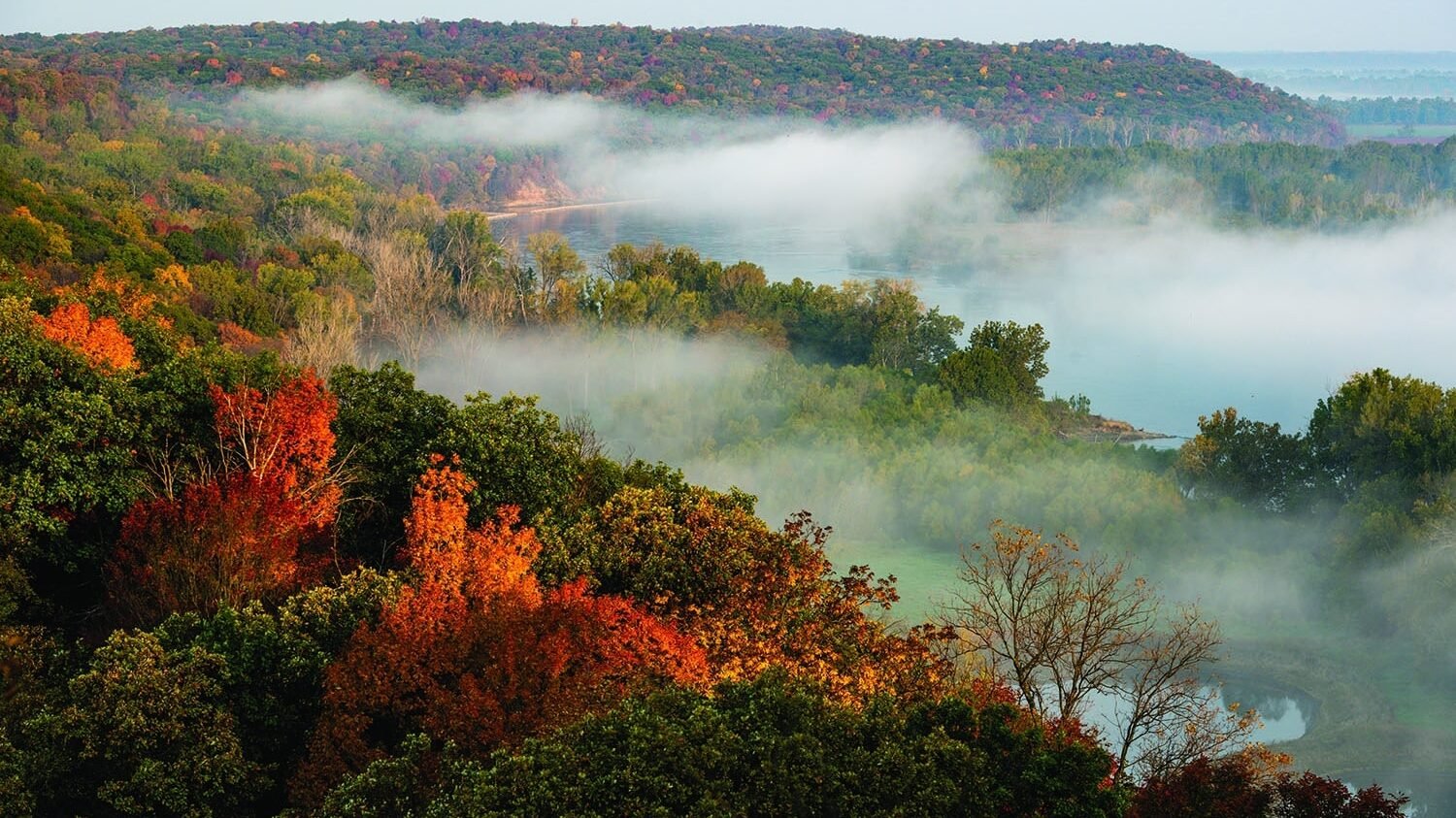
Nebraska is not a state most people associate with fall color, and across most of its territory, the rolling plains and farmland do offer limited foliage. But the Missouri River bluffs in the far southeastern corner of the state tell a different story. Indian Cave State Park, near the tiny town of Shubert in Richardson County, sits on rugged, heavily forested bluffs above the Missouri River and produces fall color in October that genuinely surprises visitors who expect the Great Plains to be flat and treeless.
The park covers more than 3,000 acres of hardwood forest dominated by oak, hickory, walnut, and elm, and the steep terrain along the river creates a landscape that feels more like the Ozarks than the prairies fifty miles west. The park’s trail system winds along bluff tops and down into ravines, and the combination of river views and forest color from the overlooks is legitimately beautiful. The park’s namesake, a sandstone cave with prehistoric petroglyphs, adds a cultural dimension to the visit. The Adirondack shelters and campsites along the bluffs offer some of the best fall camping in the state.
Shubert and the nearby towns of Falls City and Auburn are small communities with limited dining, but the area has a genuine, unhurried character. Falls City has a few restaurants along its historic main street. For a more substantial base, Nebraska City, about an hour north, is home to Arbor Day Farm and the Lied Lodge, which sits on 260 acres of woodland that is itself a foliage destination. Indian Cave State Park proves that Nebraska has pockets of real autumn beauty hidden along its eastern edge, and anyone willing to explore the Missouri River bluffs will find fall color that defies the state’s flat reputation.
Nevada: Lamoille Canyon (Elko area)
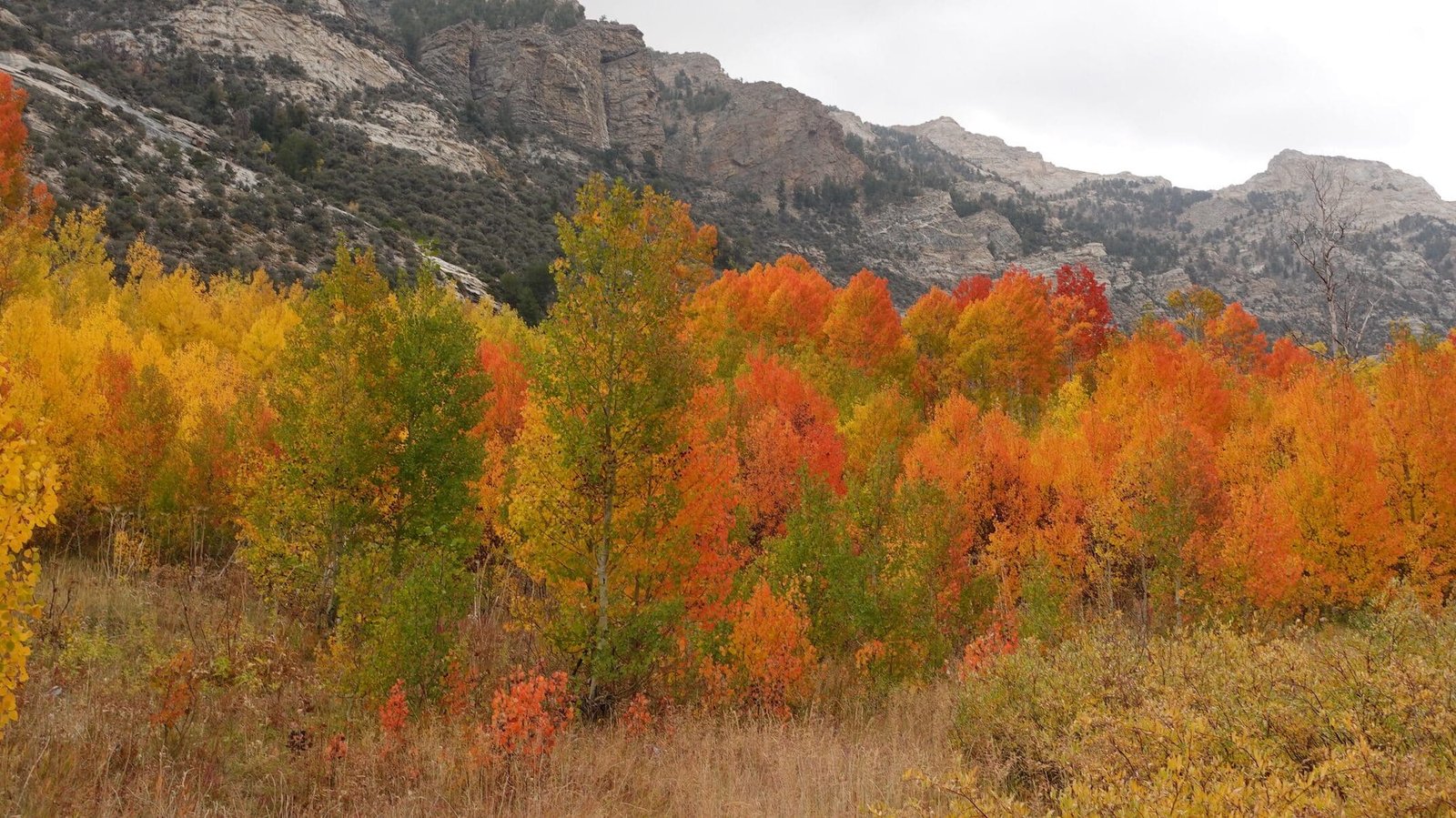
Nevada’s reputation as a desert state obscures the mountain ranges that rise from the basin floor across the northern half of the state, and several of these ranges produce genuine fall foliage that almost nobody outside Nevada knows about. The best of it is in Lamoille Canyon, a glacially carved valley in the Ruby Mountains about twenty miles southeast of Elko. The canyon road, which climbs twelve miles from the valley floor to a trailhead at nearly 9,000 feet, passes through aspen groves that turn vivid gold in late September, set against the grey limestone walls of the canyon and the dark green of mountain mahogany and limber pine.
The Ruby Mountains are sometimes called the Alps of Nevada, and the comparison is not unreasonable. The peaks top 11,000 feet, the canyon has a U-shaped profile carved by ancient glaciers, and the combination of alpine scenery and fall color rivals anything in the better-known ranges of Colorado or Utah. The Lamoille Canyon Scenic Byway follows the canyon floor past cascading streams, beaver ponds, and meadows where the aspen color is reflected in still water. At the end of the road, the Ruby Crest Trail leads into a high-mountain wilderness of lakes and cirques that few people ever see.
Elko, the nearest town of any size, is a ranching and mining community with a strong Basque cultural heritage. The Star Hotel, a traditional Basque boardinghouse, serves family-style meals that are a Nevada institution. Several other Basque restaurants in town offer similar experiences. For lodging, Elko has standard chain hotels, and the Red Lion Inn is the most established option. Lamoille Canyon in fall is one of the great hidden gems of the American West, a place where the color, the geology, and the solitude combine to create an autumn experience that feels like a discovery.
New Hampshire: North Conway
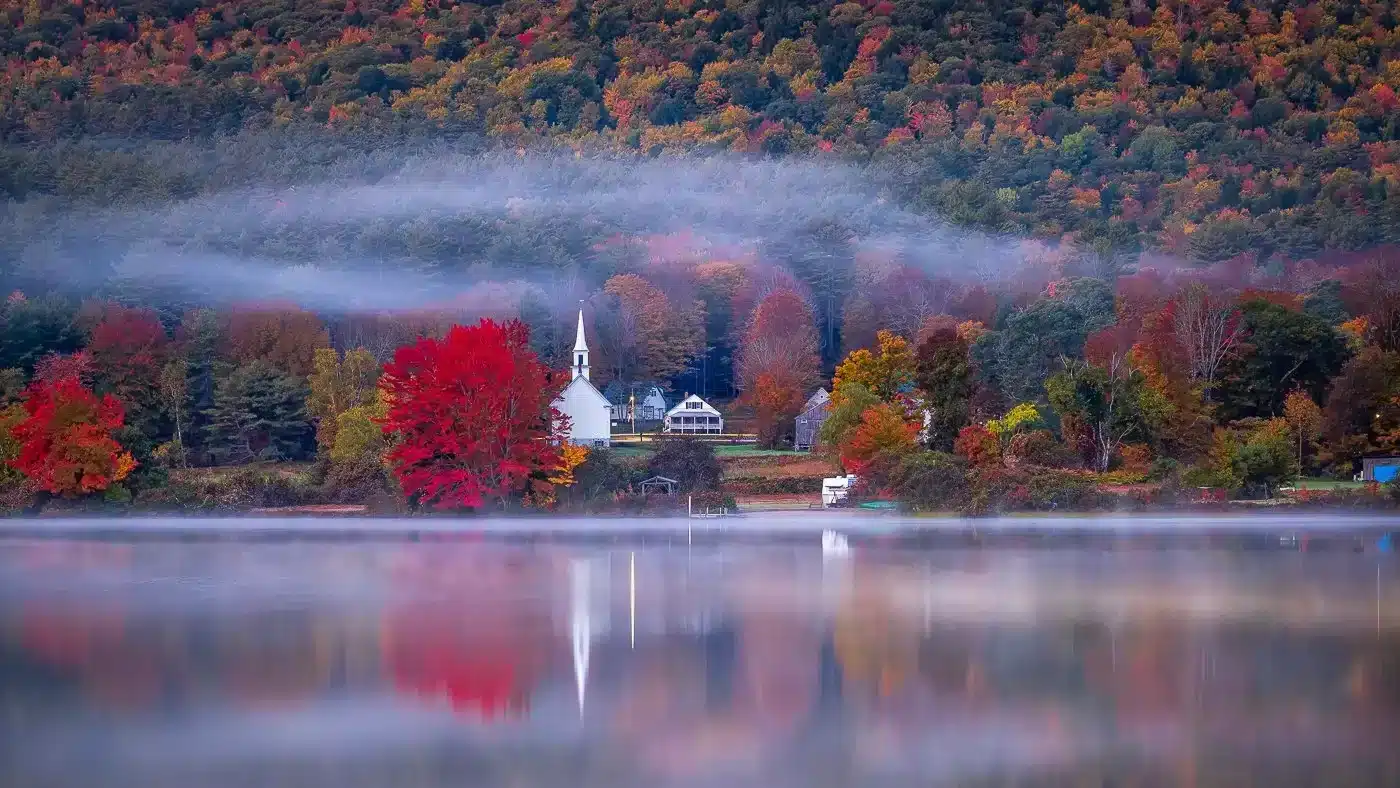
New Hampshire’s White Mountains are the heavyweight of New England fall foliage, and North Conway, sitting in the Mount Washington Valley at the eastern edge of the range, is the town that puts you closest to the most dramatic displays. The Kancamagus Highway, which starts just west of town in Conway and climbs over a 2,855-foot pass through the heart of the White Mountain National Forest, is consistently rated among the top five fall foliage drives in America. In late September and early October, the road passes through a continuous corridor of sugar maple, yellow birch, and beech forest that produces color so vivid it looks artificial.
The views from the Kancamagus are legendary, but the town of North Conway offers plenty of foliage without ever getting on the highway. Cathedral Ledge, a 700-foot granite cliff on the edge of town, provides a panoramic view of the valley and surrounding mountains that is extraordinary in fall. Echo Lake State Park, at the base of the ledge, has a beach where the colored mountains reflect in the water on still mornings. The Conway Scenic Railroad runs vintage trains through the valley and over Crawford Notch, offering a foliage experience from the observation car that is one of the most popular autumn attractions in the state.
North Conway’s village center has a New England charm that survives despite the outlet shopping that sprawls along Route 16. Delaney’s Hole in the Wall serves reliable pub fare in a cozy atmosphere. May Kelly’s Cottage does Irish-American cooking with mountain views. The White Mountain Hotel and Resort, at the base of Whitehorse Ledge, offers lodging with views that are worth the room rate alone during peak color. For a more intimate option, the 1785 Inn lives up to its name with period character and panoramic mountain views. North Conway in fall is New Hampshire at its most iconic, the place where the White Mountains meet a valley town that knows exactly how to welcome the leaf-peeping season.
New Jersey: Delaware Water Gap (Worthington State Forest area)
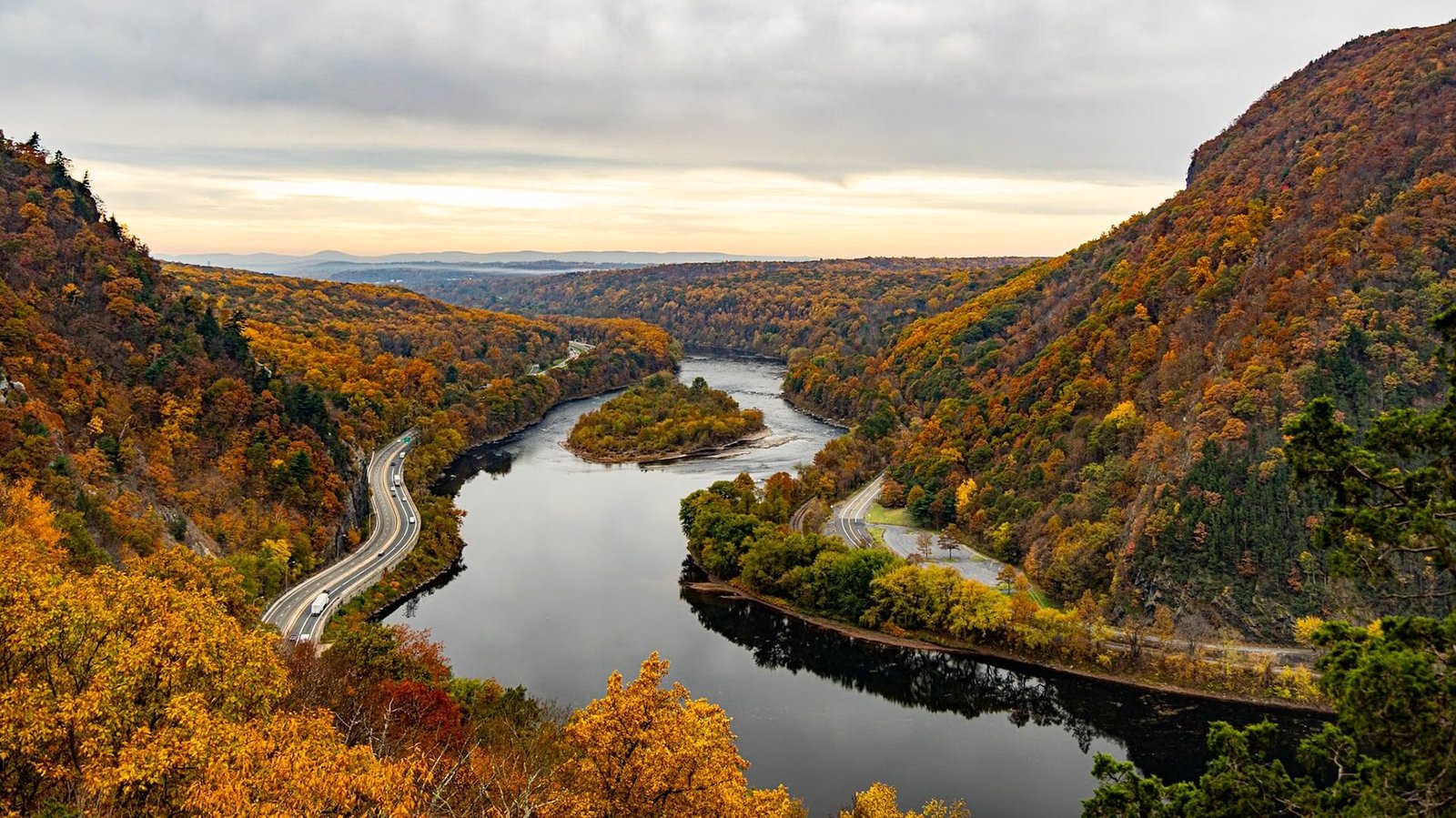
New Jersey is the most densely populated state in the country, but its northwestern corner, where the Kittatinny Ridge rises above the Delaware River, produces fall foliage that can compete with any destination in the Mid-Atlantic. The Delaware Water Gap National Recreation Area straddles the New Jersey-Pennsylvania border, and the New Jersey side, anchored by Worthington State Forest, offers dramatic views of the river cutting through the gap between the ridges, with the surrounding hardwood forest blazing in mid to late October.
Sunfish Pond, a glacial lake perched on the Kittatinny Ridge at about 1,400 feet, is accessible via the Appalachian Trail and provides one of the most rewarding fall hikes in the state. The trail climbs through oak and maple forest to the pond, which is ringed by color and reflects the sky on calm days. The Old Mine Road, which runs along the river through the recreation area, is one of the oldest commercial roads in America and a scenic drive that passes through forest, farmland, and small communities with views of the river at every turn. Mount Tammany, on the New Jersey side of the gap, has a challenging trail to the summit that rewards hikers with a panoramic view of the gap, the river, and the colored ridges stretching north.
The town of Columbia and the surrounding area have limited dining, but Millbrook Village, a recreated 19th-century community within the recreation area, is worth a stop for its historic character. The Deer Head Inn in nearby Delaware Water Gap, Pennsylvania, is a legendary jazz venue that combines music and mountain atmosphere. For lodging, the Mohican Outdoor Center, run by the Appalachian Mountain Club, offers rustic accommodations in the forest, and several bed-and-breakfasts operate in the surrounding communities. New Jersey’s fall foliage is a well-kept secret from the state’s own residents, and the Delaware Water Gap is where that secret is best revealed.
New Mexico: Santa Fe
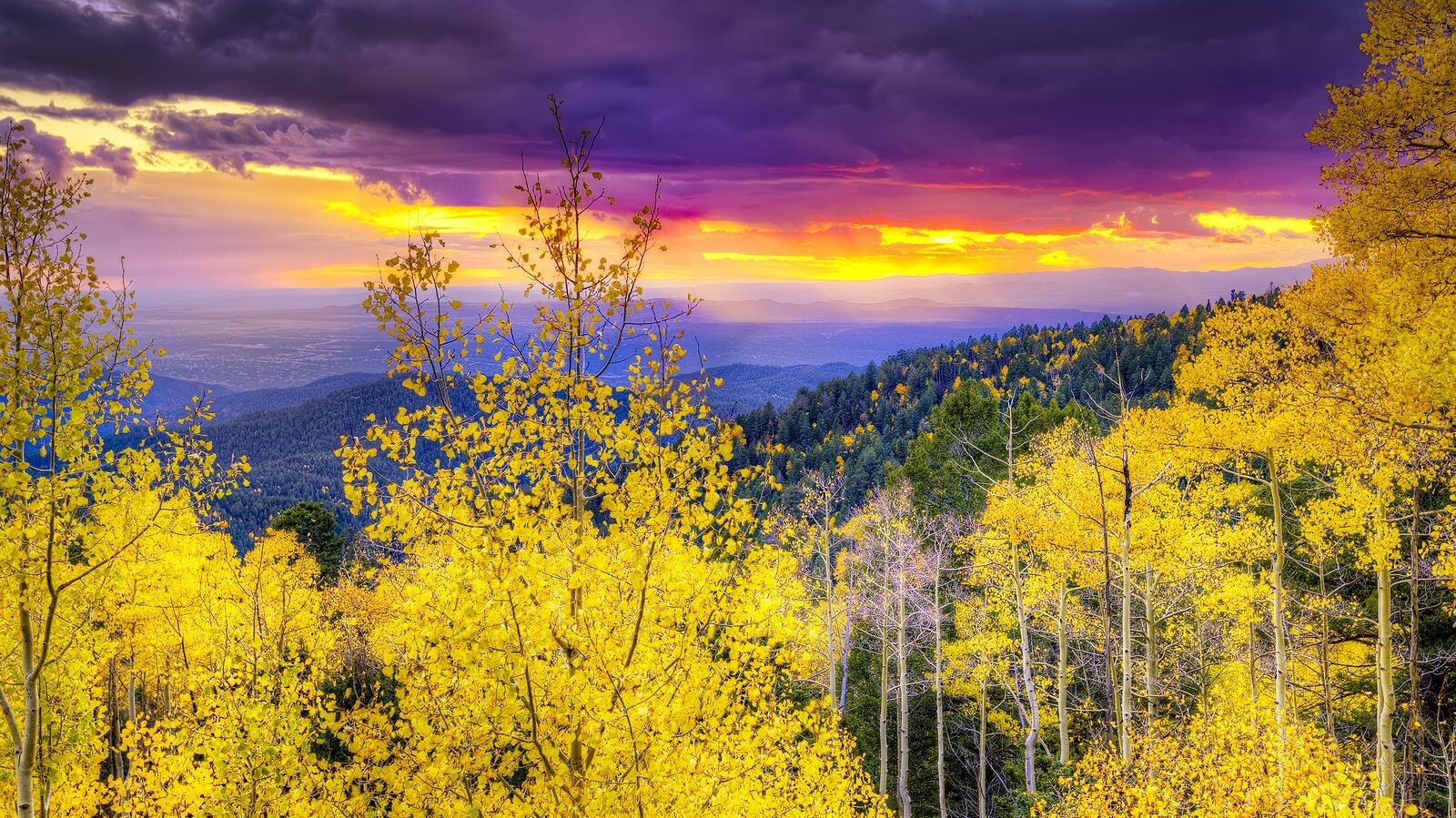
New Mexico’s fall foliage is driven by aspen, and the Sangre de Cristo Mountains above Santa Fe produce one of the finest aspen displays in the Southwest. The city itself sits at 7,000 feet, and the mountains east of town climb to over 12,000 feet, with aspen forests covering the middle elevations in dense groves that turn brilliant gold in late September and early October. The combination of golden aspens, blue sky, red earth, and the adobe architecture of Santa Fe creates a fall color palette that exists nowhere else in America.
The Ski Santa Fe road (Hyde Park Road / Route 475) is the primary foliage drive, climbing from town through piñon-juniper woodland into mixed conifer and aspen forest. The Aspen Vista Trail, which starts about fourteen miles up the road, is a gentle walk through one of the densest aspen groves in the area and is the most popular fall hike near Santa Fe. On a clear October day, the trail is a tunnel of gold with views through the trees to the Jemez Mountains across the Rio Grande Valley. The Santa Fe National Forest, which surrounds the city on three sides, offers additional trails and drives through aspen country.
Santa Fe’s dining scene needs no introduction, but fall is an especially good time to experience it, when the green chile harvest overlaps with the aspen season. The Shed and Cafe Pasqual’s are Santa Fe institutions. Geronimo does upscale Southwestern cuisine in a Canyon Road adobe. The Inn of the Five Graces and La Fonda on the Plaza offer distinctive lodging in the heart of the historic district. Santa Fe in fall is a convergence of culture, cuisine, and color that few American cities can match, and the aspen gold against the adobe brown is a visual combination that stays with you long after you leave.
New York: Cold Spring
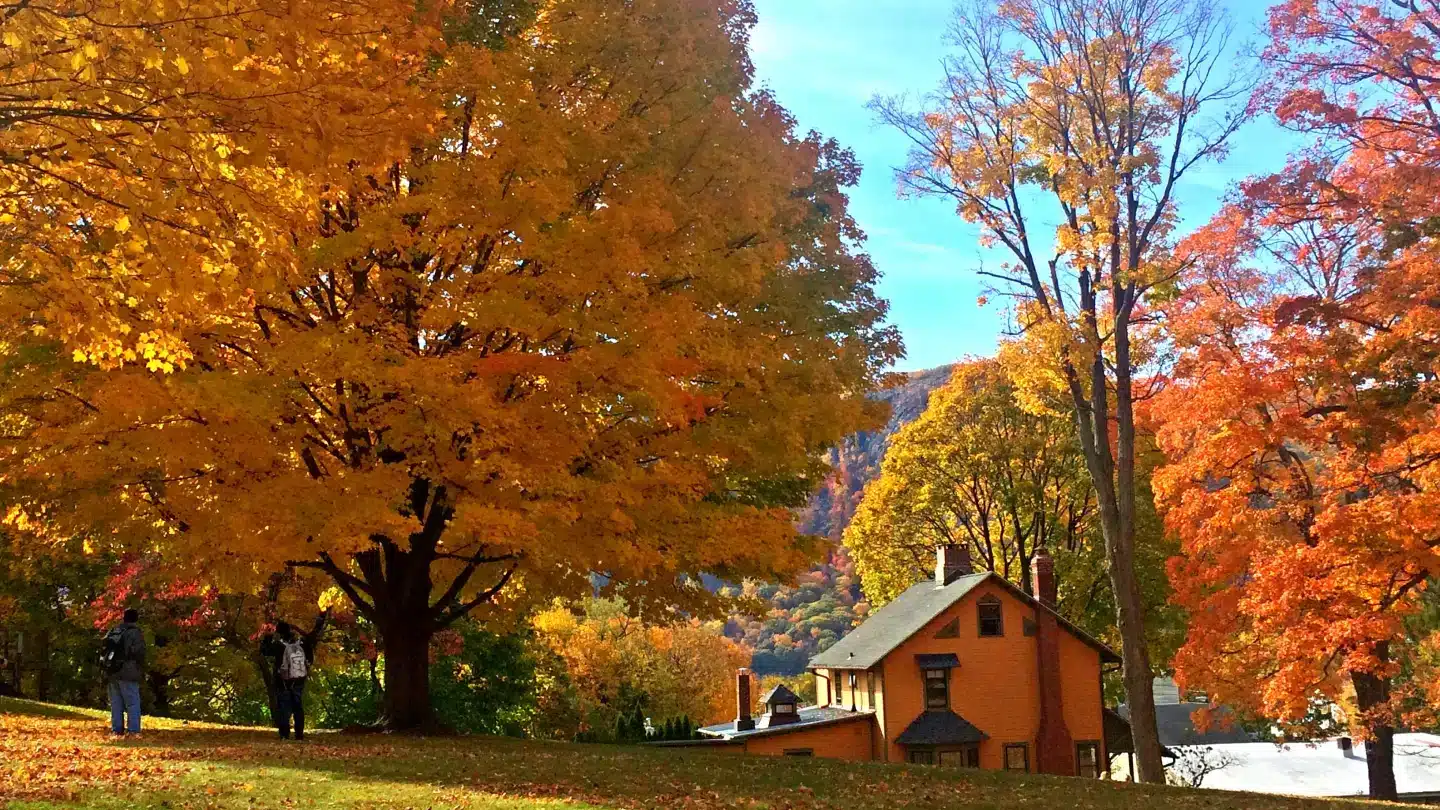
The Hudson Valley is New York’s fall foliage heartland, and while many towns along the river make strong claims, Cold Spring, a compact village on the east bank about sixty miles north of Manhattan, offers what may be the most dramatic single view of autumn color in the state. The village sits directly across the river from Storm King Mountain and the northern gate of the Hudson Highlands, and in October, the view from the waterfront gazebo, looking across the river to mountainsides ablaze with color, is one of the great landscape views on the East Coast.
Cold Spring has the density and walkability of a village that was built before the automobile. Main Street runs one block from the Metro-North train station to the river, and along that block are independent shops, restaurants, and galleries that draw weekenders from the city year-round but reach their peak energy during foliage season. The hiking is exceptional. Breakneck Ridge, just north of town, is one of the most popular and challenging hikes in the Hudson Valley, with scrambles over rock faces that lead to views across the river and the highlands that are breathtaking in fall. Bull Hill (Mount Taurus), accessible from a trailhead in town, offers a gentler climb with equally impressive views.
For dining, Hudson Hil’s does farm-to-table breakfast and lunch in a sunny storefront. Riverview Restaurant serves Italian-American cooking with, as the name promises, river views. The Foundry Cafe is the local coffee spot. For lodging, The Hudson House Inn, directly on the waterfront, has been hosting guests since 1832 and offers rooms with river views that are especially valuable during peak color. The Pig Hill Inn, a bed-and-breakfast on Main Street, provides a more intimate experience. Cold Spring in fall is the Hudson Valley distilled to its essence: mountains, river, color, and a village that feels timeless.
North Carolina: Blowing Rock
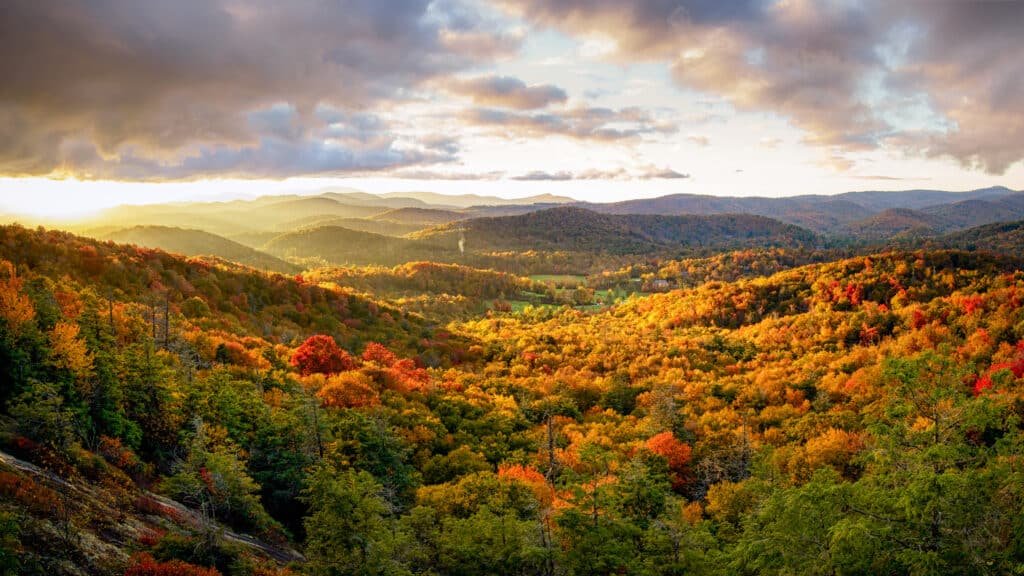
The Blue Ridge Mountains of western North Carolina produce some of the most spectacular fall foliage in the eastern United States, and Blowing Rock, a small resort town at 3,500 feet on the Blue Ridge Parkway, is the ideal base for experiencing it. The town sits at the intersection of the Parkway and Highway 321, with easy access to some of the most famous foliage viewpoints on the entire 469-mile route. Linn Cove Viaduct, the engineering marvel that carries the Parkway around the face of Grandfather Mountain, is just minutes south and offers fall color views that have graced countless magazine covers.
The color in the Blue Ridge peaks at different times depending on elevation, which means the season extends from late September at the highest points to late October in the valleys below. This rolling peak gives Blowing Rock a longer effective foliage season than most destinations. The Moses H. Cone Memorial Park, adjacent to town, has carriage trails that wind through meadows and hardwood forests on the estate of a former textile baron. The trails are gentle, well-maintained, and spectacular in October. Grandfather Mountain, accessible via a scenic toll road, offers views from the Mile High Swinging Bridge that look down on an ocean of colored forest stretching to the horizon.
Blowing Rock’s main street is lined with shops and restaurants that cater to the mountain-resort crowd without losing their small-town character. The Best Cellar serves creative American cooking in a cozy basement space that has been a local favorite for decades. Bistro Roca does upscale comfort food with a wine list. The Green Park Inn, built in 1891, offers historic accommodations and wraparound porches with mountain views. Chetola Resort provides a more modern option with lake and mountain views. Blowing Rock in fall is the Blue Ridge at its most accessible, a place where the color is within walking distance and the town provides everything you need to make a weekend of it.
North Dakota: Theodore Roosevelt National Park (Medora)
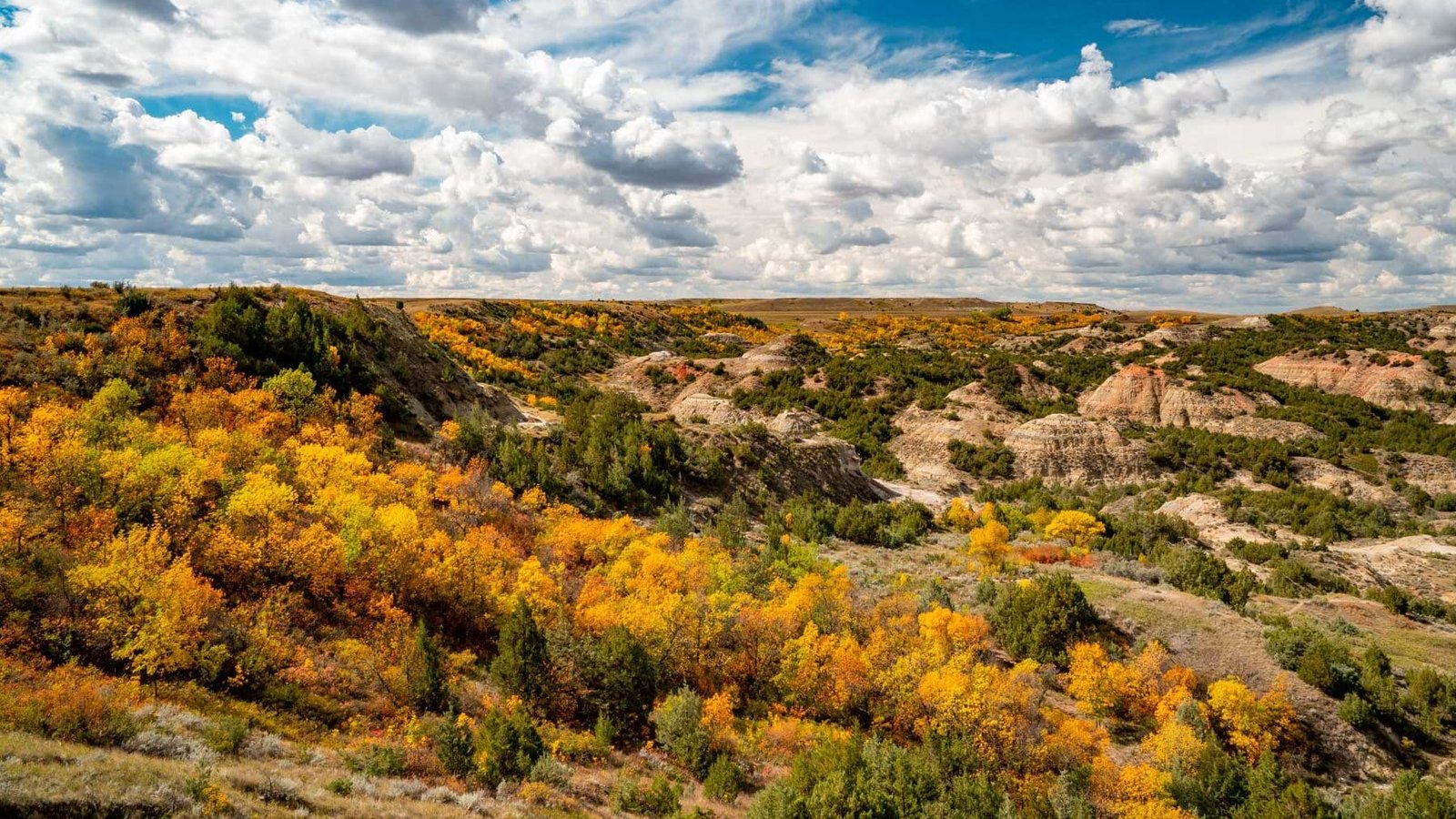
North Dakota’s badlands are not a conventional fall foliage destination, but the autumn color here is unlike anything else in the country. The town of Medora, at the entrance to the South Unit of Theodore Roosevelt National Park, provides the base for an experience where cottonwood trees along the Little Missouri River turn bright gold against the painted backdrop of the badlands, where red, grey, and brown striations in the eroded buttes create a palette that needs no help from foliage to be extraordinary. The cottonwood gold against those badlands colors in early October is one of the most photogenic fall scenes in the northern Great Plains.
The park’s Scenic Loop Drive passes through the heart of the badlands landscape, with pullouts that offer views across eroded valleys where the river bottom cottonwoods stand in golden contrast to the barren buttes above. Bison, wild horses, and pronghorn are active in fall, and the combination of wildlife and autumn color adds a dimension that eastern foliage destinations cannot match. The Petrified Forest Loop Trail, in the north end of the park, passes through juniper breaks and coulees where the autumn light paints the landscape in warm tones that change by the hour.
Medora is a tiny town that was founded as a frontier cattle operation in the 1880s and has been preserved as a Western heritage destination. The dining options are limited but characterful. The Badlands Pizza Parlor and the Cowboy Cafe serve basic fare. The Rough Riders Hotel, named for Theodore Roosevelt’s famous cavalry regiment, offers historic accommodations on the main street. The Medora Musical, an outdoor variety show, runs through September. North Dakota’s fall foliage is about the landscape rather than the trees, and the badlands in autumn, with their ancient colors amplified by the golden cottonwoods and the low October sun, offer something no other state can replicate.
Ohio: Hocking Hills (Logan)
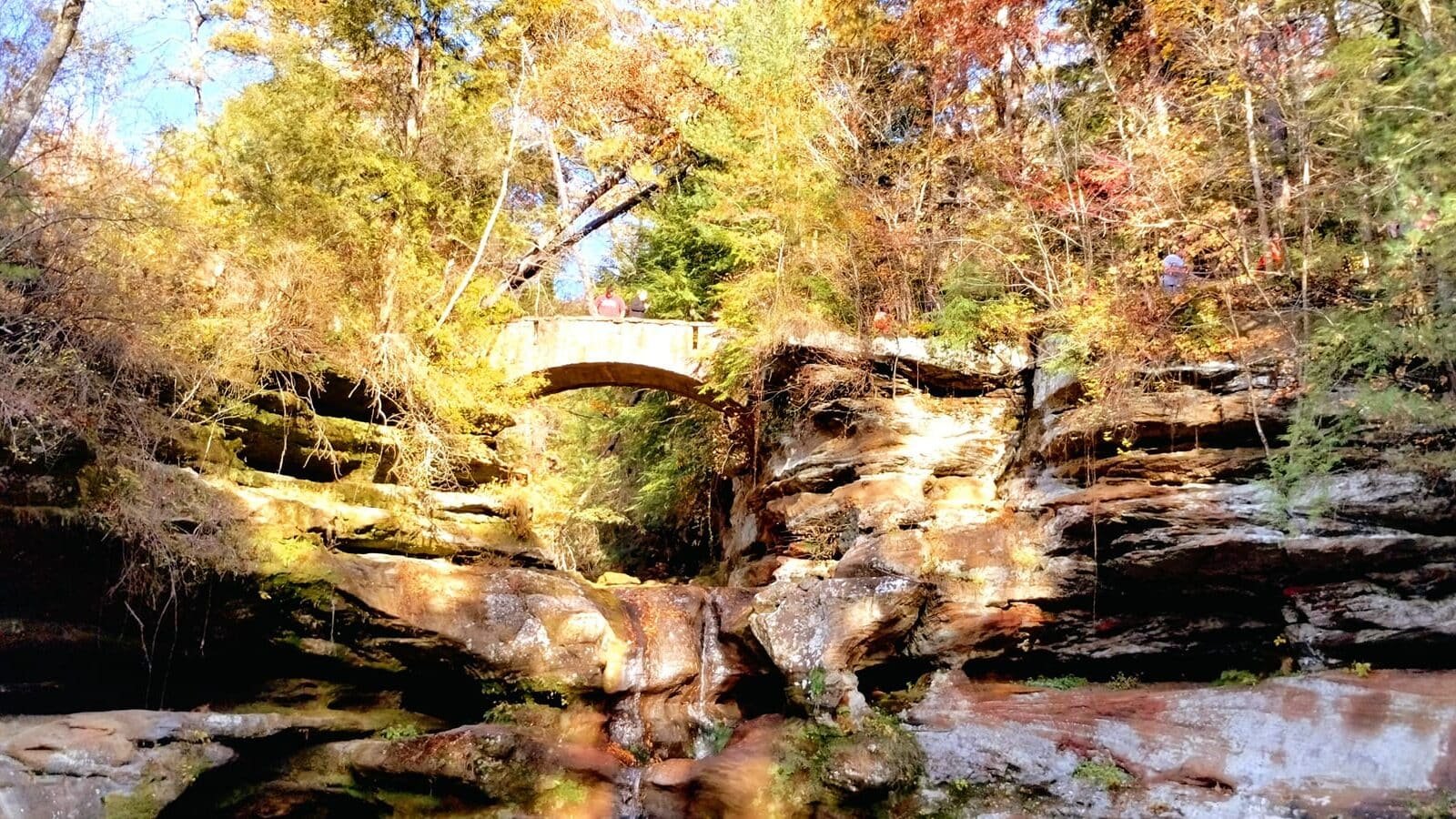
Hocking Hills State Park, about an hour southeast of Columbus near the town of Logan, is the most visited state park in Ohio and for good reason. The park’s sandstone gorges, waterfalls, and rock shelters are dramatic in any season, but in mid to late October, when the surrounding hardwood forest of maple, oak, hickory, and beech reaches peak color, the combination of geology and foliage creates a hiking experience that ranks among the best in the Midwest. Old Man’s Cave, the park’s most famous feature, is a deep gorge where a waterfall drops into a plunge pool surrounded by moss-covered rock walls and a canopy of blazing autumn trees.
The park’s trail system connects several named features, each with its own character. Ash Cave, one of the largest recess caves in Ohio, has a 90-foot horseshoe rim where water cascades over the edge into a grotto that is carpeted with fallen leaves in October. Cedar Falls, despite the name, is surrounded by hemlocks rather than cedars, and the dark evergreen against the surrounding color creates a striking contrast. Conkle’s Hollow, a deep slot canyon with 200-foot sandstone walls, is the most dramatic formation in the park and is especially atmospheric in fall when the narrow canyon frames a strip of colored canopy overhead.
The town of Logan and the surrounding Hocking Hills region have developed a tourism infrastructure to match the park’s popularity. The Inn and Spa at Cedar Falls does upscale lodging and dining in a forested setting near the park. Hundreds of rental cabins, many with hot tubs and forest views, are scattered through the surrounding hills. Millstone BBQ in Logan serves smoked meats that draw their own following. Hocking Hills in autumn is proof that Ohio’s landscape, often dismissed as flat and unremarkable, has pockets of genuine beauty that reward anyone willing to explore beyond the interstates.
Oklahoma: Beavers Bend State Park (Broken Bow)
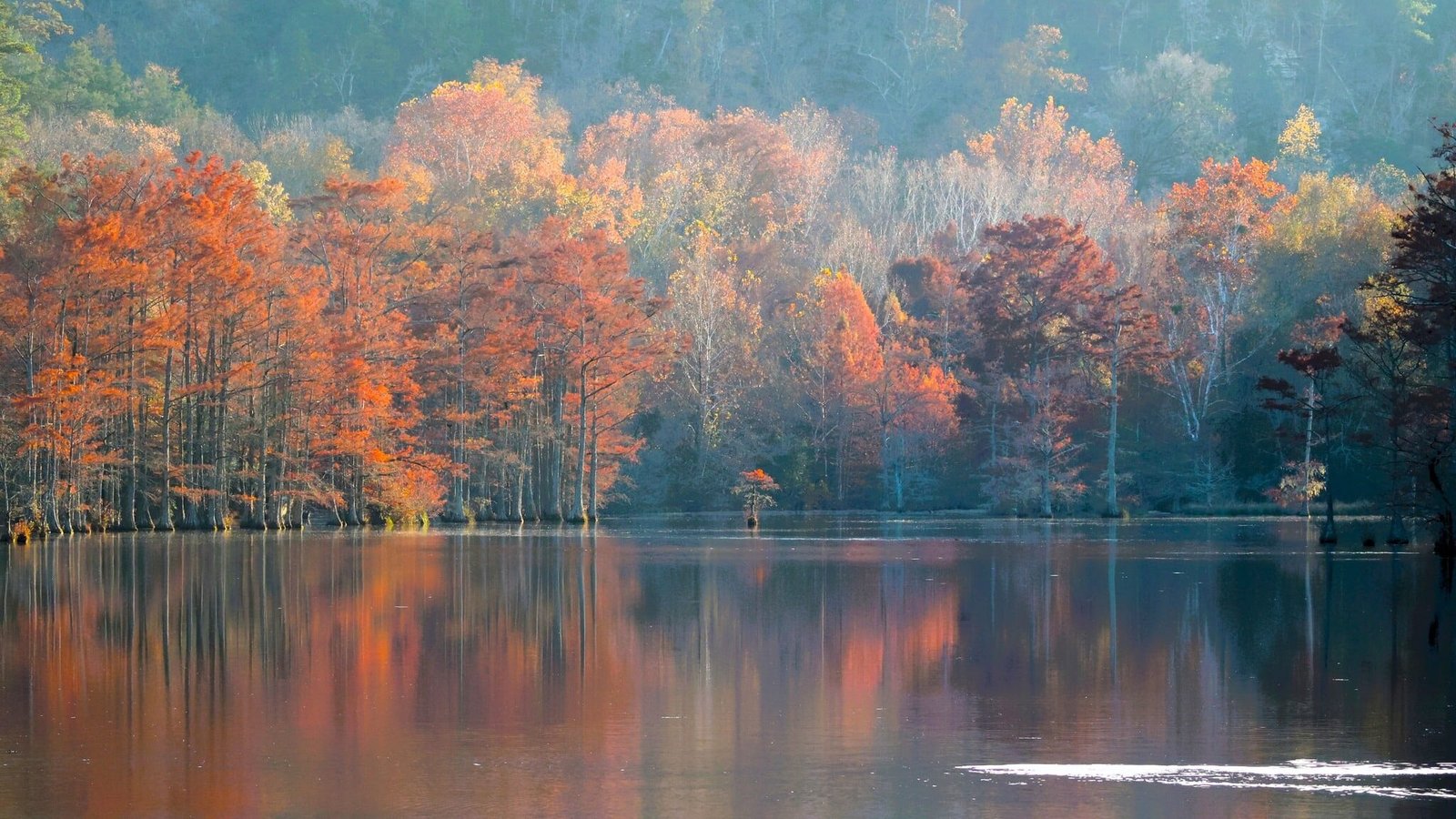
Oklahoma has more ecological diversity than its plains-and-prairie reputation suggests, and the Ouachita Mountains in the far southeastern corner of the state produce fall foliage that belongs in any national conversation. Beavers Bend State Park, just north of Broken Bow on the Mountain Fork River, sits in a landscape of pine-covered mountains, clear streams, and hardwood bottomlands that feel more like the Ozarks or the Appalachian foothills than the Great Plains. In late October and early November, the oaks, sweetgums, hickories, and maples along the river and ridges turn shades of red, gold, and burnt orange that are genuinely vivid.
The park’s Forest Heritage Center is a museum dedicated to the region’s timber history and serves as a natural starting point for understanding the ecology that produces the color. The David Boren Hiking Trail follows the mountain ridges above Broken Bow Lake with views across the water and the forested hills that are spectacular in fall. The Mountain Fork River, a clear tailwater fishery below Broken Bow Dam, is lined with color in October and draws fly fishermen who time their visits to coincide with the foliage.
Broken Bow has evolved from a small timber town into a cabin-rental destination, and the area surrounding the lake and state park has hundreds of rental properties ranging from rustic to luxurious. Grateful Head Pizza Oven and Tap House serves wood-fired pizza in a relaxed setting. Steven’s Gap Restaurant does Southern comfort food. For a quieter experience, the Hochatown area north of the park has additional dining and lodging. Beavers Bend in autumn is Oklahoma’s best-kept natural secret, a place where the foliage, the water, and the mountains combine in a way that surprises everyone who visits for the first time.
Oregon: Hood River
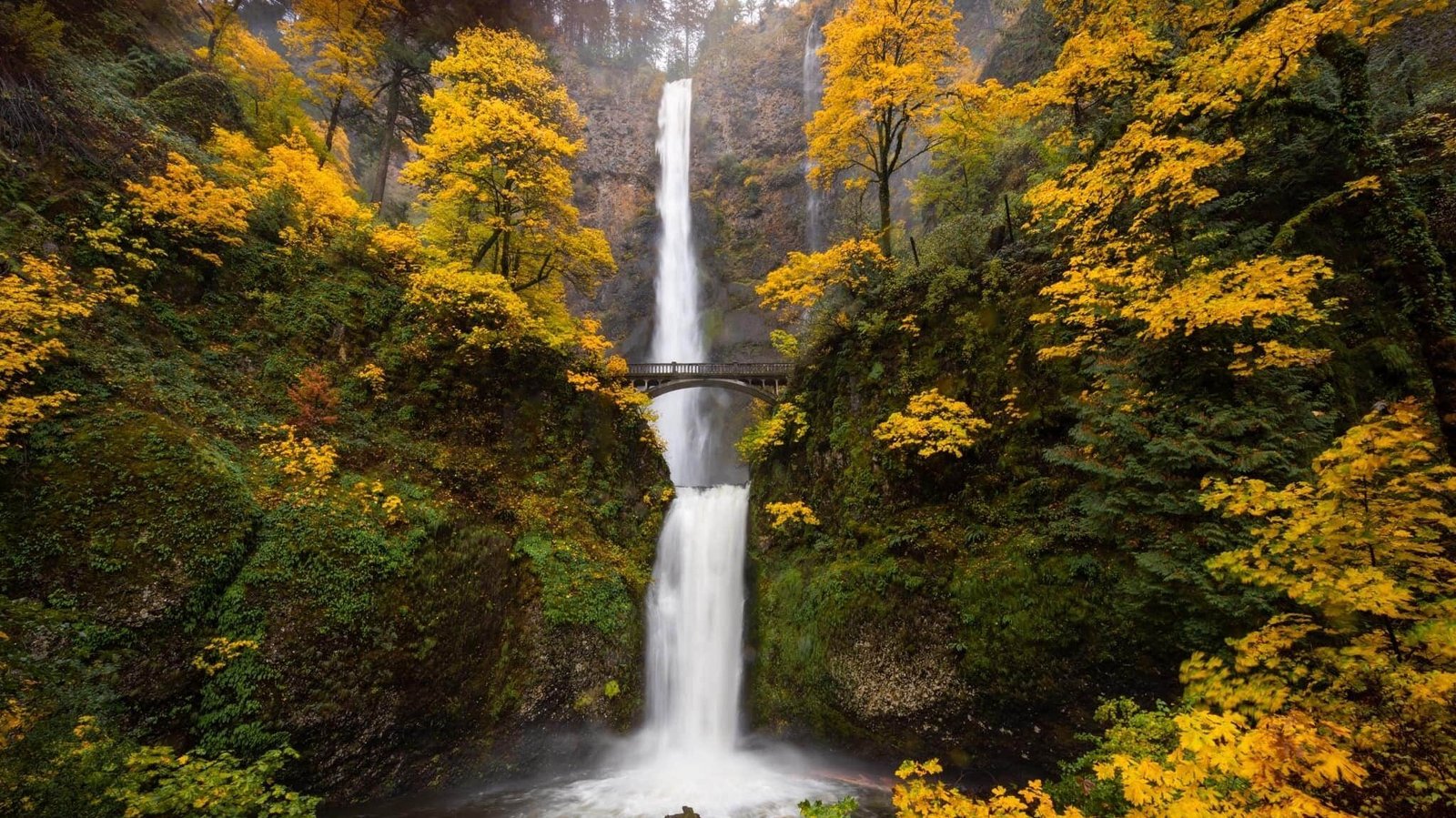
The Columbia River Gorge is one of the most dramatic landscapes in the Pacific Northwest, and in autumn, when the vine maples, big-leaf maples, and Oregon white oaks turn against the dark backdrop of Douglas fir and Western red cedar, the gorge becomes one of the best fall foliage destinations in the western United States. Hood River, a small city of about 8,000 on the Oregon side of the gorge, is the natural base. The town sits where the Hood River meets the Columbia, with Mount Hood rising to the south and the gorge stretching east and west, and in October, every direction offers a different expression of fall color.
The Historic Columbia River Highway, the original scenic road through the gorge, passes waterfalls that are framed by colored forest in autumn. Multnomah Falls, Wahkeena Falls, and Latourell Falls are the most visited, but the smaller cascades along the route are equally beautiful and far less crowded in fall. The Fruit Loop, a scenic driving route through the Hood River Valley’s orchards and farms, offers a different kind of fall color, where the pear and apple orchards turn golden against the mountain backdrop. The valley’s farm stands and cider houses are at their peak in October, and the combination of orchard color, harvest activity, and mountain views makes the Fruit Loop one of the most pleasant fall drives in Oregon.
Hood River’s downtown is a walkable collection of restaurants, breweries, and shops that reflects the town’s identity as an outdoor-recreation hub. Celilo Restaurant serves Pacific Northwest cuisine with seasonal ingredients. Double Mountain Brewery does excellent beer and pizza. Full Sail Brewery, perched above the river, has a tasting room with views of the gorge. For lodging, the Hood River Hotel offers historic rooms downtown, and the Columbia Gorge Hotel, a 1920s landmark on a cliff above the river, provides a more dramatic setting. Hood River in fall is the Pacific Northwest at its most colorful, a place where the mountains, the river, and the harvest all converge.
Pennsylvania: Jim Thorpe
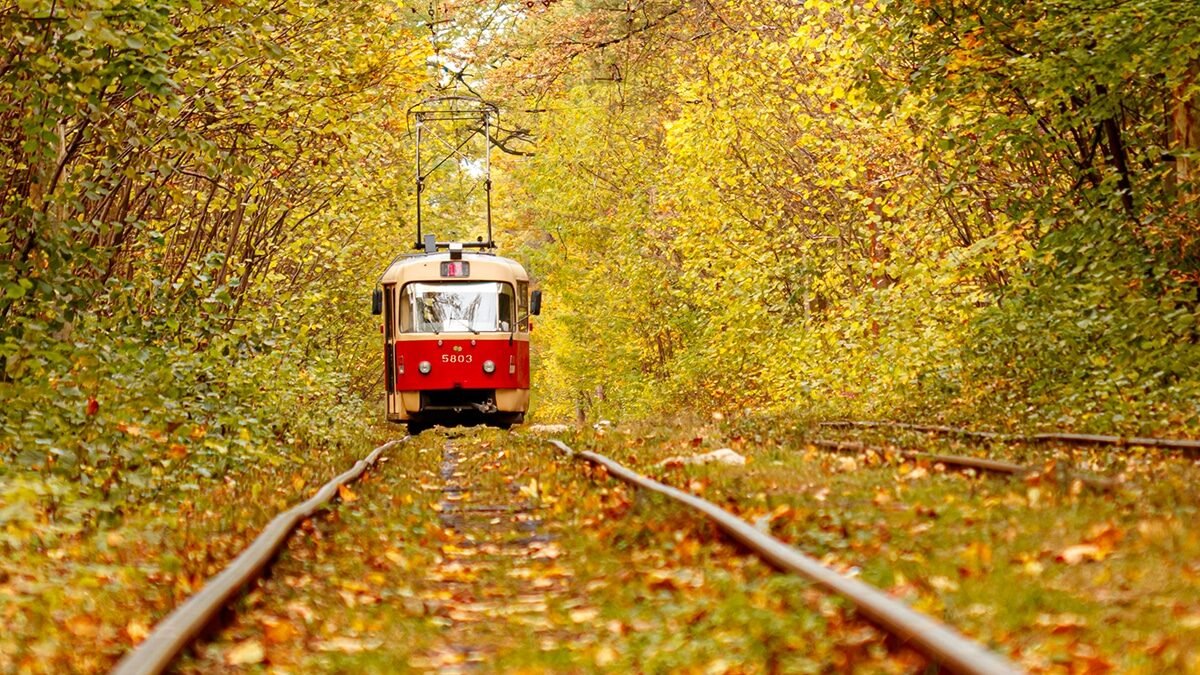
Jim Thorpe, a former coal-mining town in the Lehigh River gorge in Carbon County, has reinvented itself as one of Pennsylvania’s premier autumn destinations. The town is sometimes called the Switzerland of America, a comparison that makes more sense when you see the Victorian mansions climbing the steep hillsides above the river, surrounded by a hardwood forest that turns spectacular in mid-October. The Lehigh Gorge, cut deep through the Pocono Plateau, channels the fall color into a concentrated display that makes the narrow valley feel like a cathedral of red, orange, and gold.
The Lehigh Gorge State Park offers the best foliage viewing in the area. The rail-trail that follows the river through the gorge is a flat, easy path that passes through continuous forest with river views and the remnants of the region’s industrial past, including old railroad bridges and canal locks. Bike rentals are available in town for those who want to cover more of the trail. The Lehigh Gorge Scenic Railway runs vintage trains from Jim Thorpe into the gorge, and the fall foliage excursions are among the most popular tourist trains in the Northeast. Glen Onoko Falls, a series of cascading waterfalls in a steep side canyon, is a challenging hike that rewards effort with views of water and color.
The town’s Broadway, the main commercial street, is a mix of galleries, antique shops, restaurants, and bars housed in beautifully maintained Victorian buildings. Moya serves Latin American cuisine in a colorful space. The Broadway Grille does solid American fare. The Inn at Jim Thorpe, a restored 1849 hotel on Broadway, offers historic lodging in the center of town. The Harry Packer Mansion, a Second Empire showpiece, operates as a bed-and-breakfast with views over the town and gorge. Jim Thorpe in fall is the rare American town where the architecture, the landscape, and the season all peak at the same time.
Rhode Island: Tiverton
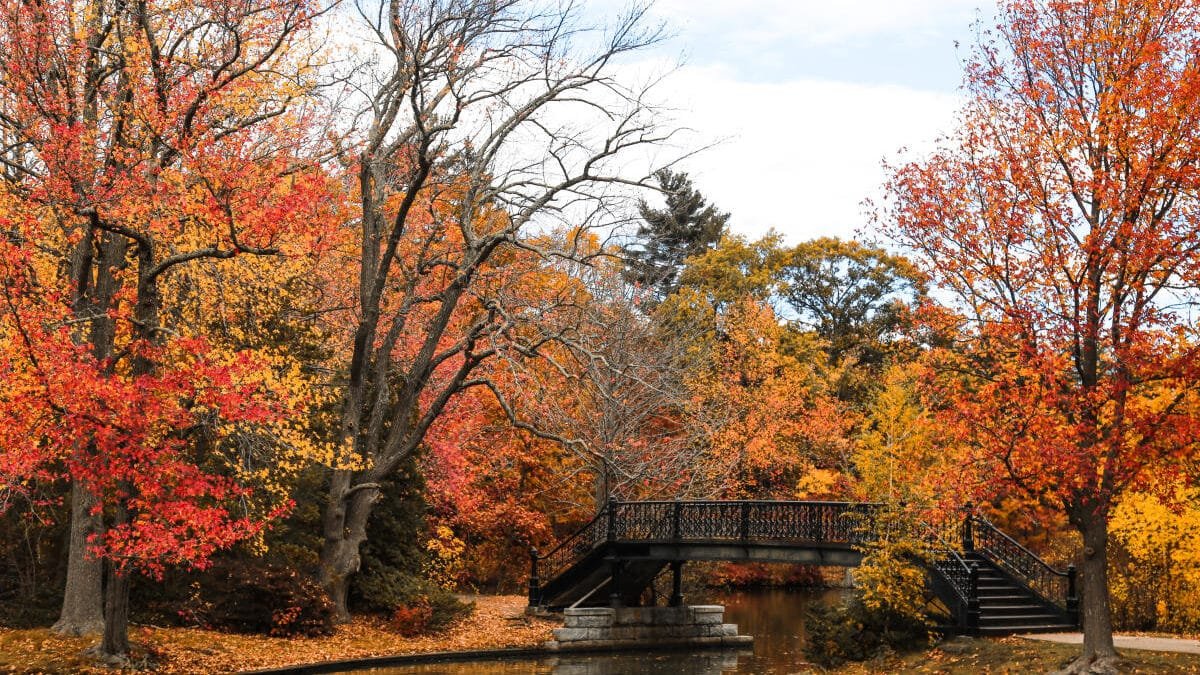
Rhode Island is the smallest state, but its fall foliage is not proportionally diminished. The eastern shore of Narragansett Bay, where rolling farmland and stone-walled country lanes meet the tidal waters, produces an autumn landscape that combines coastal beauty with New England color. Tiverton, a quiet town on the Sakonnet River across from Aquidneck Island, is the kind of place that even many Rhode Islanders overlook in favor of Newport, and that obscurity is part of its autumn charm. The town’s mix of working farms, small vineyards, and wooded hollows produces a patchwork of fall color that is intimate rather than dramatic.
Tiverton Four Corners, the historic crossroads at the center of town, has a small collection of shops and studios that includes Gray’s Ice Cream, a local institution operating since 1923. The surrounding country roads wind through a landscape of stone walls, farm fields, and hardwood woodlots that peak in mid to late October. Weetamoo Woods, a preserve managed by the Tiverton Land Trust, has trails through oak and beech forest that are beautiful in fall. The Sakonnet Vineyards, one of New England’s most established wineries, offers tastings in a setting where the autumn vineyard color complements the surrounding woods.
For dining, Boat House Waterfront Dining serves seafood with views of the Sakonnet River. Provenance, at Tiverton Four Corners, does creative seasonal cooking in a farmhouse setting. Lodging options are limited in Tiverton itself, but nearby Little Compton has bed-and-breakfasts, and Newport is a short drive across the Sakonnet River Bridge. Tiverton in fall is Rhode Island at its most understated, a place where the color is woven into a working landscape of farms and coastline and the beauty is the kind you have to slow down to see.
South Carolina: Caesars Head State Park (Cleveland area)
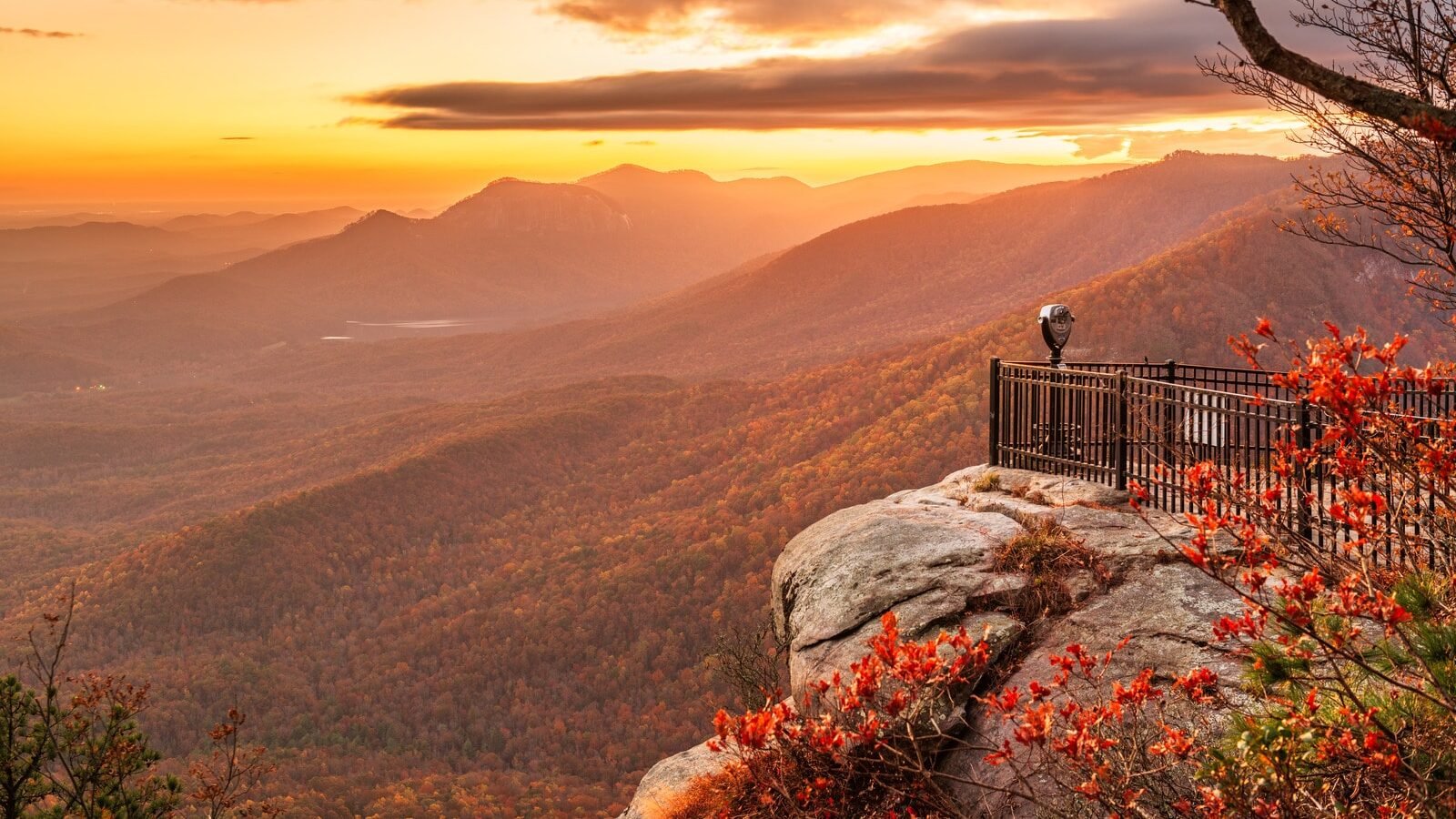
South Carolina’s fall foliage is concentrated in the Blue Ridge Escarpment, the dramatic edge where the Appalachian Mountains drop nearly 2,000 feet into the Piedmont below. Caesars Head State Park, at the top of the escarpment about 30 miles north of Greenville near the community of Cleveland, offers what may be the most dramatic fall viewpoint in the Southeast. The park’s namesake overlook, a granite outcrop at 3,208 feet, provides a view straight down the escarpment into the valley below, and in October, the forest covering the mountainside is a rolling carpet of red, orange, and gold that stretches to the horizon.
The Raven Cliff Falls Trail, which starts at Caesars Head, leads to a 420-foot waterfall cascading through a forest-filled gorge that is stunning in fall. The trail follows the escarpment edge with several overlooks that offer different perspectives on the color as it progresses down the mountain. Jones Gap State Park, connected to Caesars Head by the Naturaland Trust Trail, adds additional hiking options through rich cove forests that produce some of the most diverse fall color in the state. The drive up Highway 276 from Greenville to Caesars Head is itself a foliage experience, climbing through changing forest zones where the color intensifies with elevation.
The Cleveland area has limited services, but the nearby town of Brevard, just across the North Carolina border, offers dining and lodging. For a more local experience, the Table Rock area on the South Carolina side has restaurants and rental cabins. Greenville, a half-hour south, has a thriving downtown with excellent restaurants and hotels. Caesars Head in fall is one of those places where the view alone justifies the trip, and the escarpment overlook on a clear October morning, with the colored forest falling away below you and the Piedmont stretching to the east, is a sight that redefines what you think South Carolina can offer.
South Dakota: Spearfish Canyon
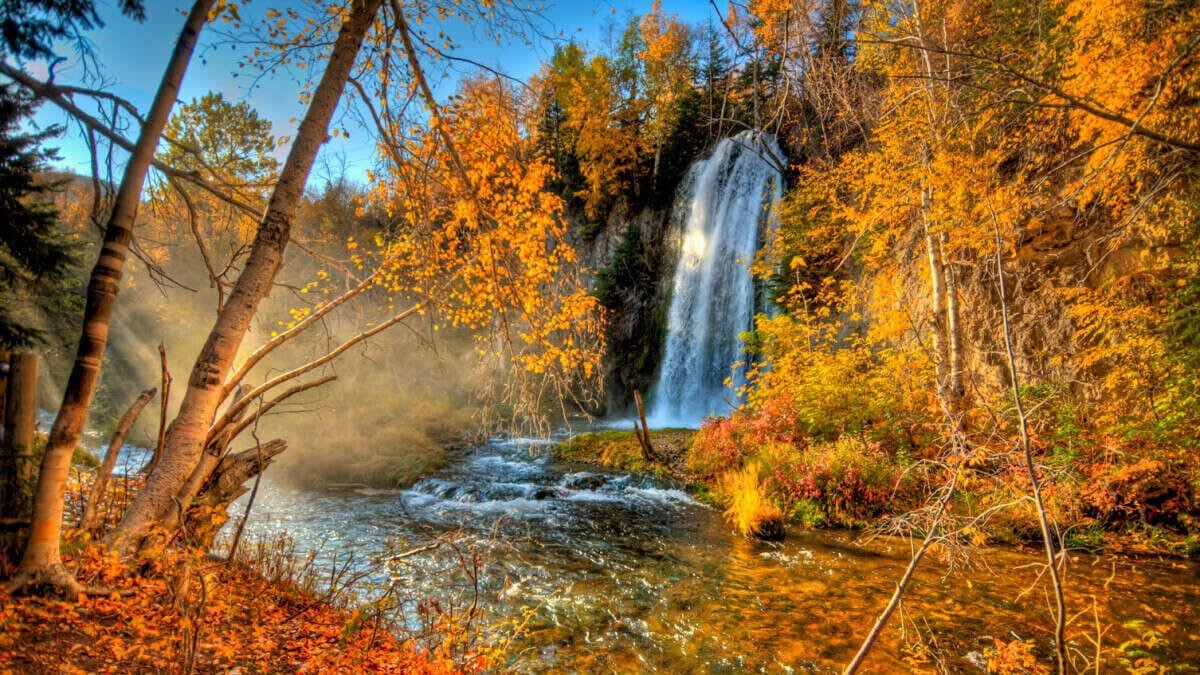
Spearfish Canyon, in the northern Black Hills, is one of the most dramatic fall foliage destinations in the Great Plains and northern Rockies. The canyon cuts through 1,000-foot limestone walls for about twenty miles, and the creek that flows through the bottom is lined with birch, aspen, oak, and spruce that produce a concentrated display of color in late September and early October. The drive through the canyon on Highway 14A, from the town of Spearfish to Cheyenne Crossing, is consistently rated one of the most scenic drives in South Dakota and is at its absolute best during foliage season.
Two waterfalls anchor the canyon experience. Bridal Veil Falls, a delicate cascade visible from the road, drops over a mossy limestone ledge framed by colored trees. Roughlock Falls, accessible via a short trail from a parking area off the main road, is a wider cascade that flows through a forest of birch and spruce that turns the surrounding area into a grotto of color in October. The Spearfish Canyon Lodge, positioned between the two waterfalls, provides the most convenient lodging for canyon visitors and has a restaurant with views into the forest. The 76 Trail, an old mining road that parallels the canyon at a higher elevation, offers views down into the gorge from above.
The city of Spearfish, at the mouth of the canyon, has a modest downtown with several good restaurants. Bay Leaf Cafe does casual American cooking with fresh ingredients. Crow Peak Brewing Company serves craft beer in a downtown taproom. For lodging beyond the canyon, Spearfish has hotels and motels that serve as practical bases. Deadwood, the famous gold-rush town at the southern end of the canyon road, adds a historical dimension to any fall trip. Spearfish Canyon in autumn is a place where the color is compressed into a narrow space and amplified by the canyon walls, creating a foliage intensity that wide-open landscapes cannot match.
Tennessee: Gatlinburg
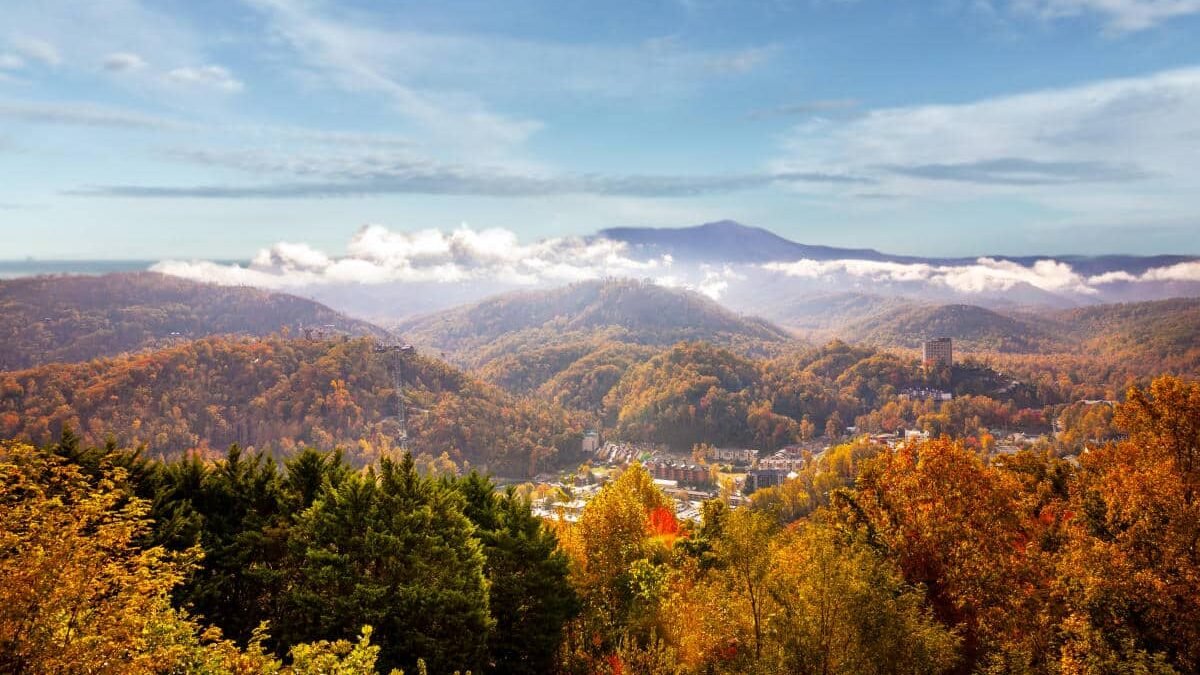
The Great Smoky Mountains produce some of the most famous fall foliage in America, and Gatlinburg, the gateway town at the northern end of the park, puts you closer to the color than any other community in the region. The park’s extraordinary biodiversity, with more tree species than all of northern Europe, creates a fall palette that is broader and more layered than almost any other location in the country. Sugar maples, yellow birches, and mountain ashes turn earliest at the highest elevations in late September, and the color works its way down the mountainsides through October and into early November, giving Gatlinburg one of the longest effective foliage seasons of any town in the East.
The drive over Newfound Gap, which climbs to 5,046 feet on the Tennessee-North Carolina border, is the signature foliage drive. The views from the gap and from the road to Clingmans Dome look out over a sea of colored mountains that stretches in every direction. The Roaring Fork Motor Nature Trail, a one-way loop road just outside Gatlinburg, offers a more intimate foliage experience through old-growth forest along a mountain stream. The Elkmont area, accessible from the Sugarlands Visitor Center, has easy trails through former resort communities where the abandoned buildings and the colored forest create an atmospheric combination.
Gatlinburg’s commercial strip is famous for its tourist attractions, but the town also has legitimate dining options. The Peddler Steakhouse, overlooking the Little Pigeon River, serves steaks in a rustic setting. Calhoun’s does barbecue and Southern fare. The Park Vista Hotel, perched on a ridge above town, offers rooms with mountain views that are worth booking months ahead for peak foliage weekends. The Bearskin Lodge, on River Road, provides a quieter alternative closer to the park entrance. Gatlinburg in fall is crowded for a reason. The Smoky Mountains deliver fall color on a scale and with a diversity that few places in the world can equal.
Texas: Lost Maples State Natural Area (Vanderpool)
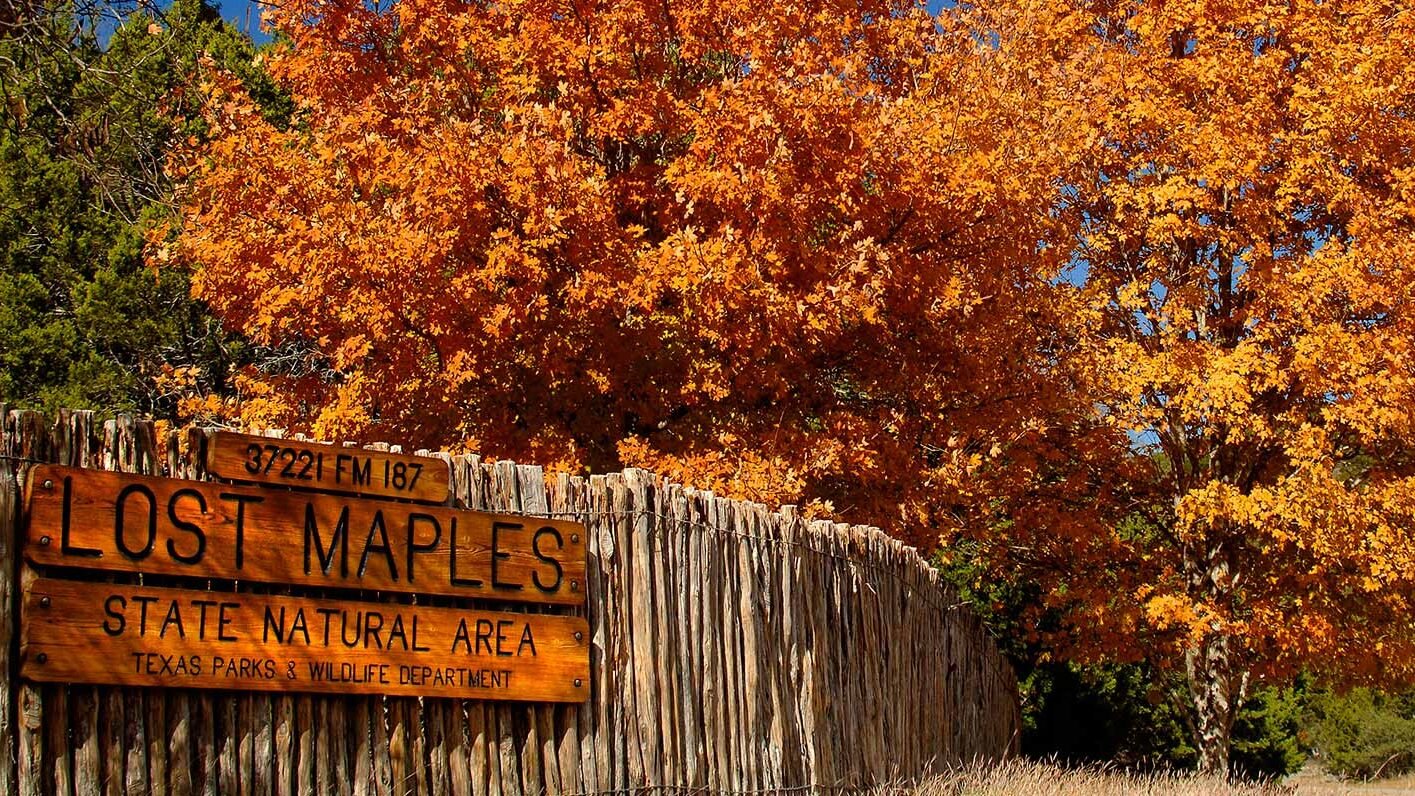
Texas is not a fall foliage state in the way most people think about it, but the Hill Country west of San Antonio holds a genuine autumn surprise. Lost Maples State Natural Area, near the tiny community of Vanderpool in Bandera County, protects a stand of bigtooth maples that are a relic population left over from the last ice age. These maples, growing along the Sabinal River in a limestone canyon, turn brilliant shades of red, orange, and gold in late October and November, producing fall color that is totally unexpected in the Texas Hill Country.
The park’s trail system follows the Sabinal River and climbs the surrounding limestone plateaus, offering views down into the canyon where the maples are concentrated. The East Trail climbs to overlooks above the river valley, and on a clear November morning, the view of red maples against white limestone and blue sky is unlike anything else in Texas. The West Trail stays closer to the river and passes through the thickest maple groves. The park is popular during peak season, and the Texas Parks and Wildlife Department posts regular foliage updates. Arriving early on a weekday is the best strategy, as the parking lot fills on November weekends.
Vanderpool is tiny, with essentially no commercial services, but the surrounding Hill Country has options. The Lone Star Motorcycle Museum, just outside town, is a curiosity worth a stop. Utopia, a small community about twenty minutes east, has a general store and a few dining options. For a more substantial base, Bandera, the self-proclaimed Cowboy Capital of the World, has restaurants and lodging about an hour east. The Foxfire Cabins, near Vanderpool, are the closest lodging to the park. Lost Maples in fall is a pilgrimage for Texans who know about it, a place where a remnant forest from a cooler era puts on a show that proves autumn color can happen anywhere conditions allow.
Utah: Park City
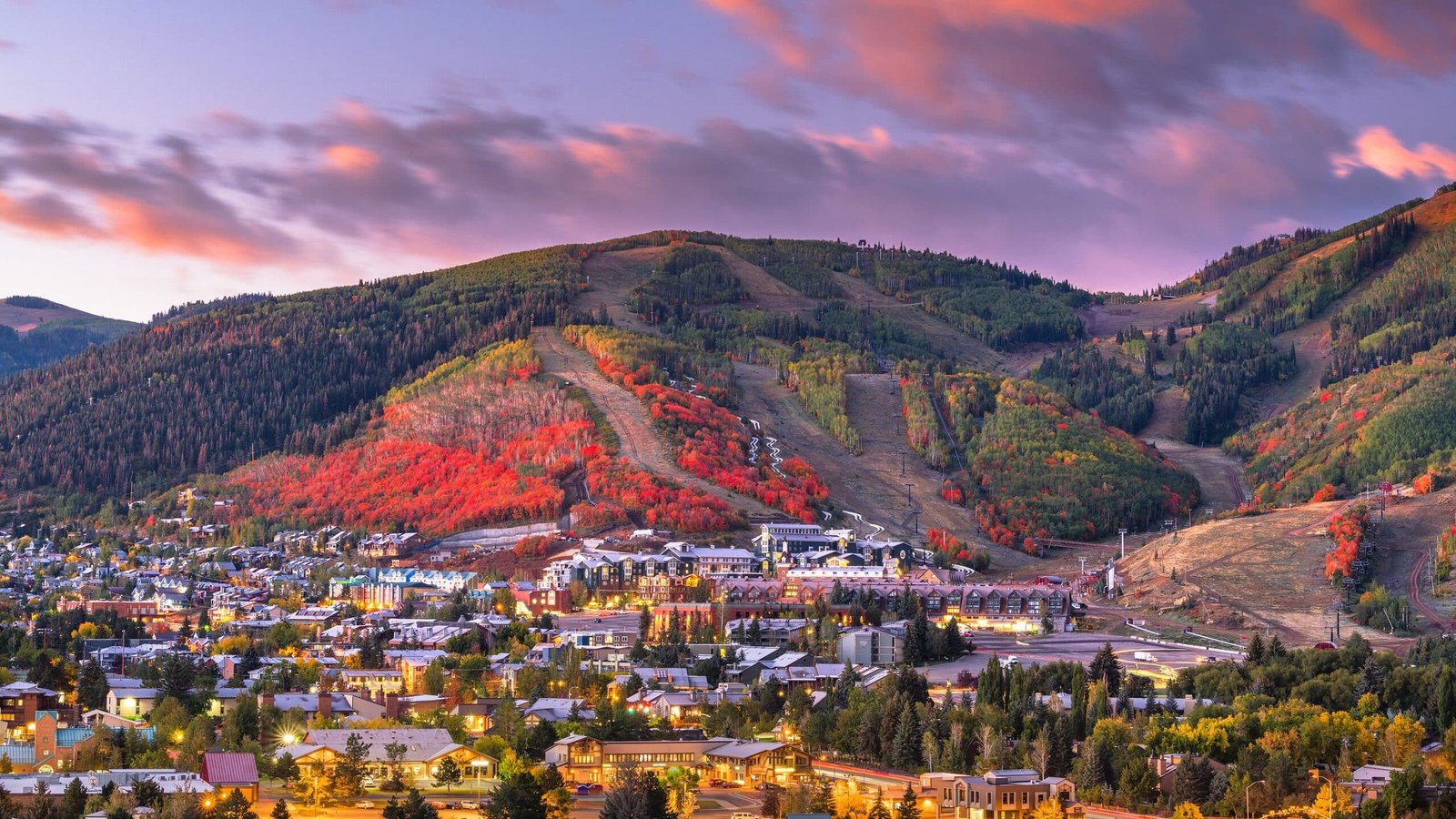
Utah’s Wasatch Mountains, rising abruptly from the Salt Lake Valley, produce aspen color that is accessible, dramatic, and set against some of the most striking mountain scenery in the West. Park City, the former mining town turned ski resort about thirty miles east of Salt Lake City, is the best base for experiencing it. The town sits at 7,000 feet in a valley surrounded by mountains that are thick with aspen, and in late September and early October, the golden groves light up the mountainsides in every direction. The combination of mining-era architecture, resort amenities, and mountain color makes Park City one of the most complete fall destinations in the Rockies.
The Guardsman Pass road, which connects Park City to Big Cottonwood Canyon, is one of the premier aspen drives in Utah. The narrow road climbs through dense aspen forest to a pass at 9,700 feet with views across the Wasatch Range and the Heber Valley that are extraordinary in fall. The Wasatch Crest Trail, accessible from the pass, offers mountain biking and hiking through alpine terrain with aspen color below in every direction. The Alpine Loop Scenic Byway, about thirty minutes south of town, connects American Fork Canyon to Provo Canyon through a corridor of aspen color set against the limestone cliffs of Mount Timpanogos.
Park City’s Main Street, lined with restaurants and galleries in restored 19th-century mining buildings, is at its most pleasant in fall when the summer crowds have left and the ski season has not yet begun. Handle serves creative small plates in an intimate space. Riverhorse on Main does upscale American cooking. The Washington School House Hotel, a converted 1889 schoolhouse, is one of the most distinctive lodging options in any mountain town. The Waldorf Astoria Park City offers a more conventional luxury experience. Park City in fall is the Wasatch at its golden best, a place where the color, the history, and the mountain air combine into a weekend that makes you wonder why everyone is waiting for ski season.
Vermont: Stowe
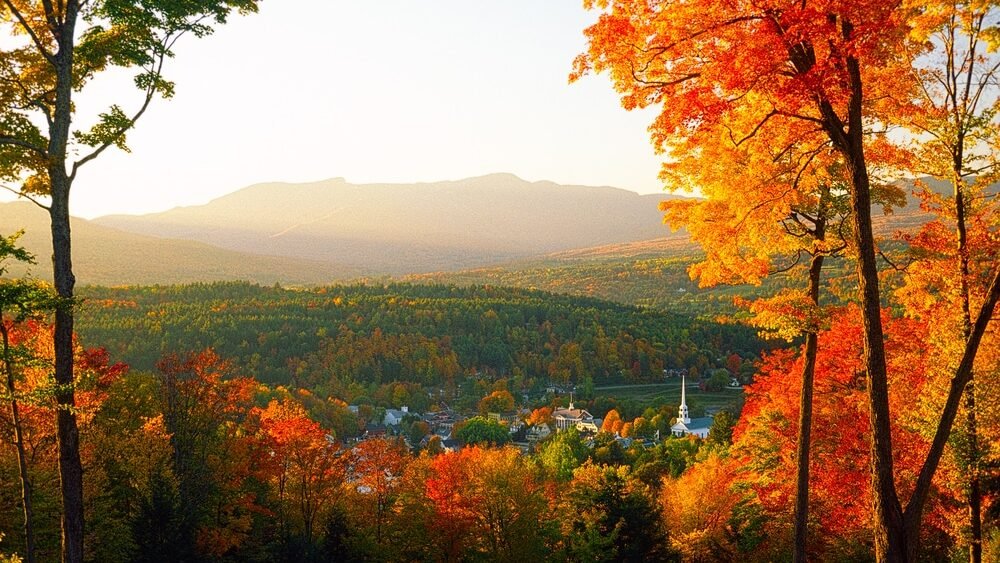
Vermont is synonymous with fall foliage, and choosing one town to represent the state is almost impossible. But Stowe, in the northern Green Mountains, has a case for the title that is hard to argue against. The town sits in a valley below Mount Mansfield, the highest point in Vermont, and the combination of the mountain backdrop, the white-steepled village, and the sugar maple forests that blanket every surrounding hillside creates the quintessential New England autumn scene. The color here peaks in late September to early October, and when it hits, the valley becomes a bowl of red, orange, and gold that draws visitors from around the world.
Mountain Road (Route 108), which runs from the village to the Stowe Mountain Resort, is the primary foliage corridor. The road passes through a tunnel of color for about seven miles, with the maples and birches forming a canopy overhead that glows when backlit by afternoon sun. Smugglers Notch, the dramatic mountain pass beyond the resort, is one of the most scenic and challenging drives in Vermont, winding through boulders and dense forest. The Stowe Recreation Path, a 5.3-mile paved trail that follows the West Branch of the Little River, offers an on-foot foliage experience through meadows and forest with mountain views at every turn.
The village of Stowe has a dining scene that reflects its status as a four-season resort. Hen of the Wood, widely considered one of the best restaurants in Vermont, serves a menu driven by local farms and foraging. Harrison’s Restaurant does refined American cooking on Main Street. The Trapp Family Lodge, the Austrian-style resort founded by the family that inspired The Sound of Music, sits on 2,500 acres of mountain terrain that is spectacular in fall and serves a menu of European-influenced cuisine. The Stoweflake Mountain Resort provides comfortable lodging with spa amenities. Stowe in fall is the Vermont that the postcards promise, and the reality, remarkably, lives up to the image.
Virginia: Abingdon
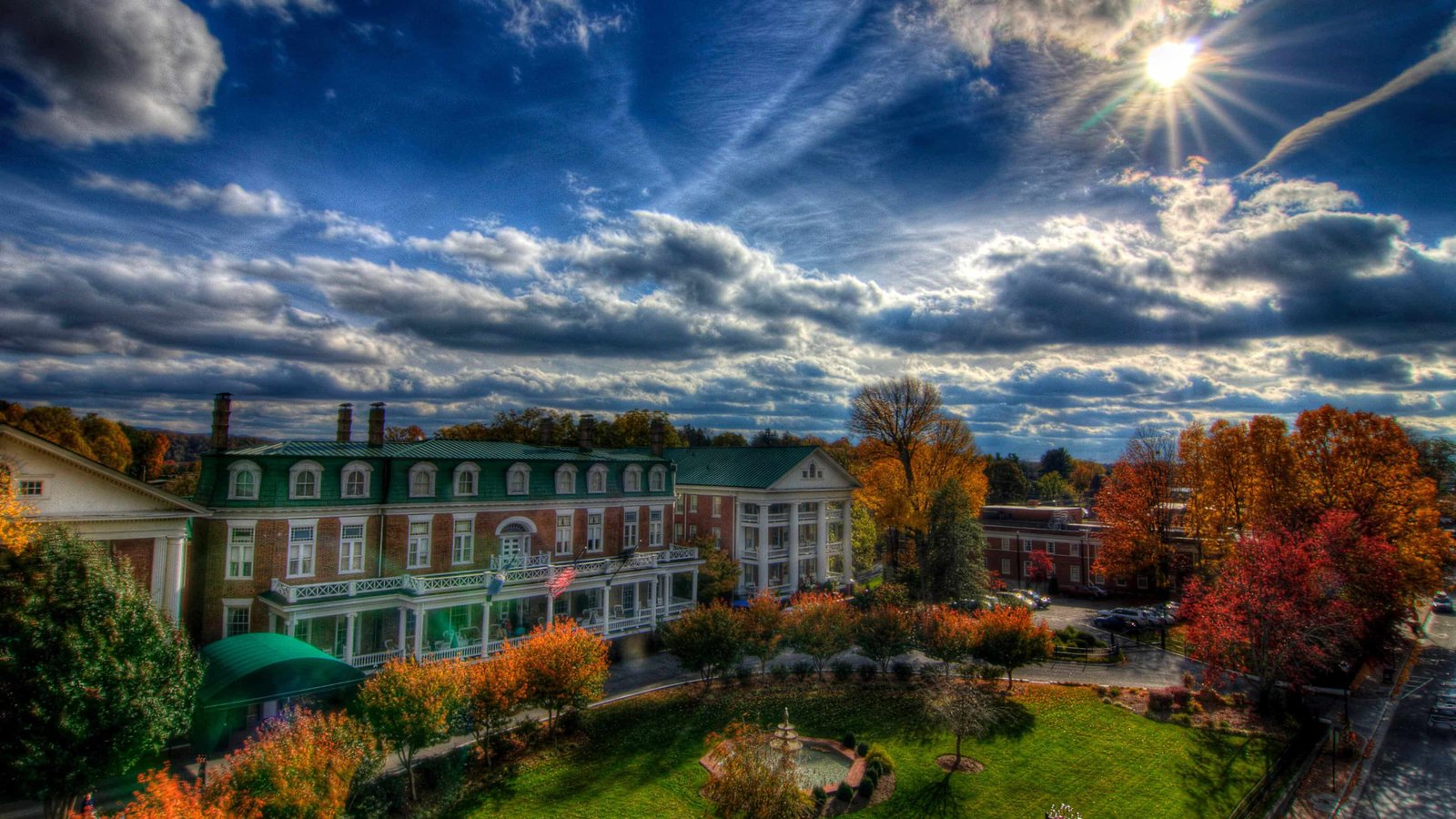
Virginia’s fall foliage runs the length of the Blue Ridge and the Shenandoah Valley, but the far southwestern corner of the state, where the Appalachian Mountains reach their widest and most heavily forested extent, produces color that is as good as any in the Commonwealth and seen by far fewer people. Abingdon, a town of about 8,200 on the western slope of the mountains, is the anchor of this region and one of the oldest towns in Virginia, with a brick-lined downtown that dates to the 18th century and a cultural life that includes the Barter Theatre, the longest-running professional theater in the country.
The Virginia Creeper Trail, a 34-mile rail-trail that runs from Abingdon to Whitetop Station near the North Carolina border, is one of the premier fall foliage trails in the eastern United States. The most popular section, from Whitetop down to Damascus, follows a gentle downhill grade through forests of maple, birch, and oak that peak in mid-October. Bike shuttles run from Abingdon and Damascus to the top, making the downhill ride accessible to almost anyone. The views from the trestle bridges, which cross streams and valleys along the route, are especially dramatic in fall when the canopy frames the water below.
Abingdon’s downtown has a dining scene that draws on both Appalachian tradition and contemporary influences. The Tavern, housed in the oldest building in town (built in 1779), serves New American cuisine. Rain Restaurant does farm-to-table cooking. The Martha Washington Inn, a grand hotel on Main Street that has been operating in various forms since 1832, offers historic lodging with modern amenities. Abingdon in fall is the quiet alternative to the more famous Skyline Drive and Blue Ridge Parkway destinations, a place where the color, the culture, and the sense of mountain community all come together without the crowds.
Washington: Leavenworth
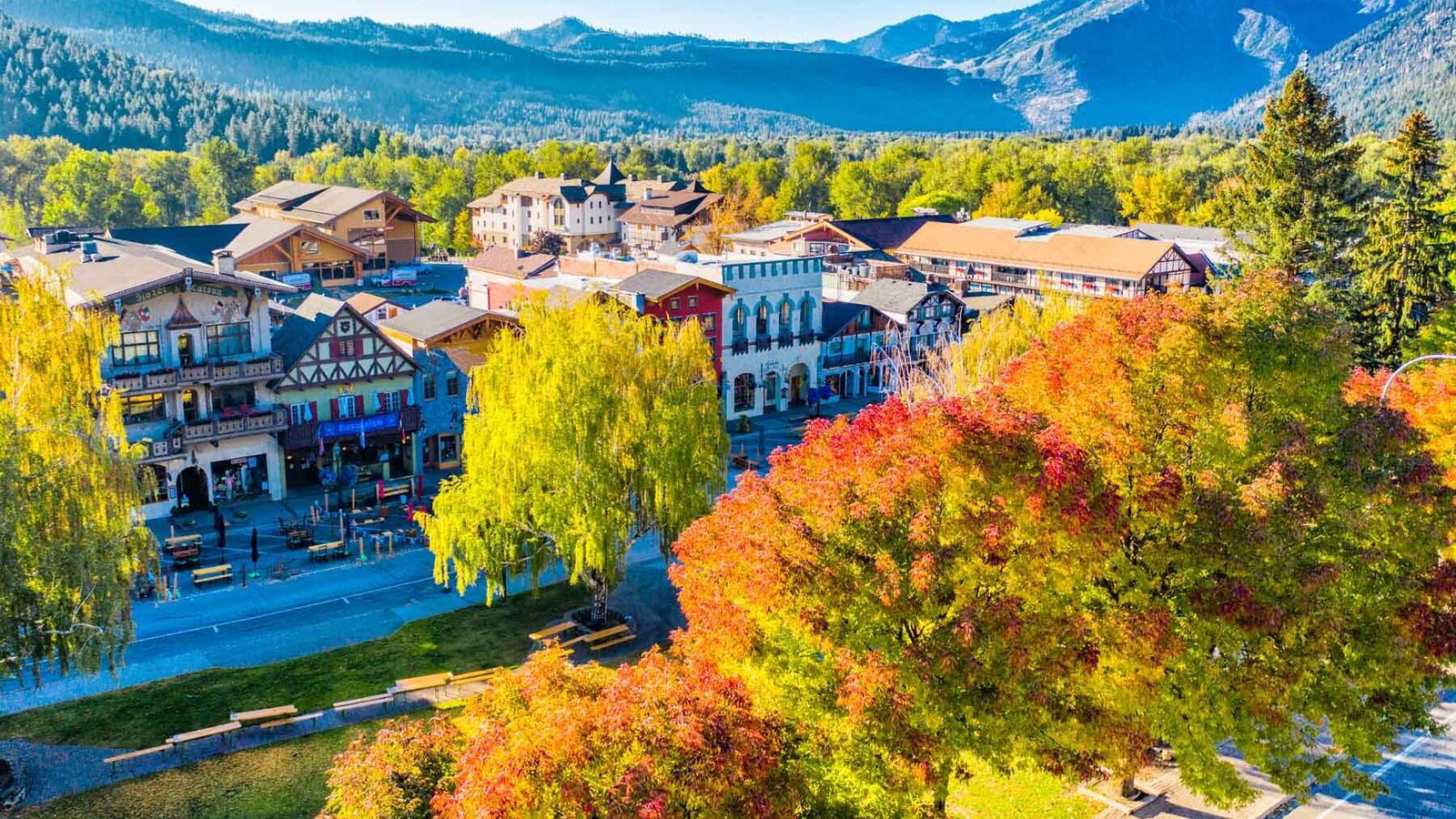
Leavenworth is a Bavarian-themed village in the Cascade Mountains about two hours east of Seattle, and while the alpine kitsch of the town’s architecture divides opinion, there is no argument about the fall color. The Wenatchee River valley, which the town occupies, is lined with cottonwood, vine maple, aspen, and western larch that turn vivid shades of gold, orange, and red in October. The contrast between the warm autumn tones and the dark evergreen of the surrounding Cascade forests creates a color display that is among the finest in the Pacific Northwest.
Tumwater Canyon, the stretch of Highway 2 between Leavenworth and the Stevens Pass corridor, is the signature foliage drive. The road follows the Wenatchee River through a steep-walled canyon where the vine maples and cottonwoods light up the riverbanks and the evergreen forest rises darkly on both sides. The Icicle Gorge Loop Trail, a few miles south of town, winds through old-growth forest along Icicle Creek with fall color concentrated along the water. The Enchantments, the alpine lake basin in the Stuart Range above Leavenworth, are famous among backpackers for their larch forests, which turn gold in October at elevations above 7,000 feet. Permits are required and difficult to obtain, but the color photographs from the Enchantments are some of the most stunning fall images produced anywhere in the country.
Leavenworth’s Bavarian Village concept means the town has no shortage of restaurants. Munchen Haus serves bratwurst and beer in a beer garden that is ideal on a crisp fall afternoon. Andreas Keller is a traditional German restaurant in a cellar setting. For dining beyond the Bavarian theme, South does Latin-inspired cooking. The Enzian Inn offers lodging in the Bavarian style with mountain views, and the Sleeping Lady Mountain Resort, just outside town, provides a more contemporary mountain-lodge experience. Leavenworth in fall is a place where the color of the landscape transcends the theme-park architecture, and the Cascades in October are beautiful enough to make you forget the dirndls.
West Virginia: Lewisburg
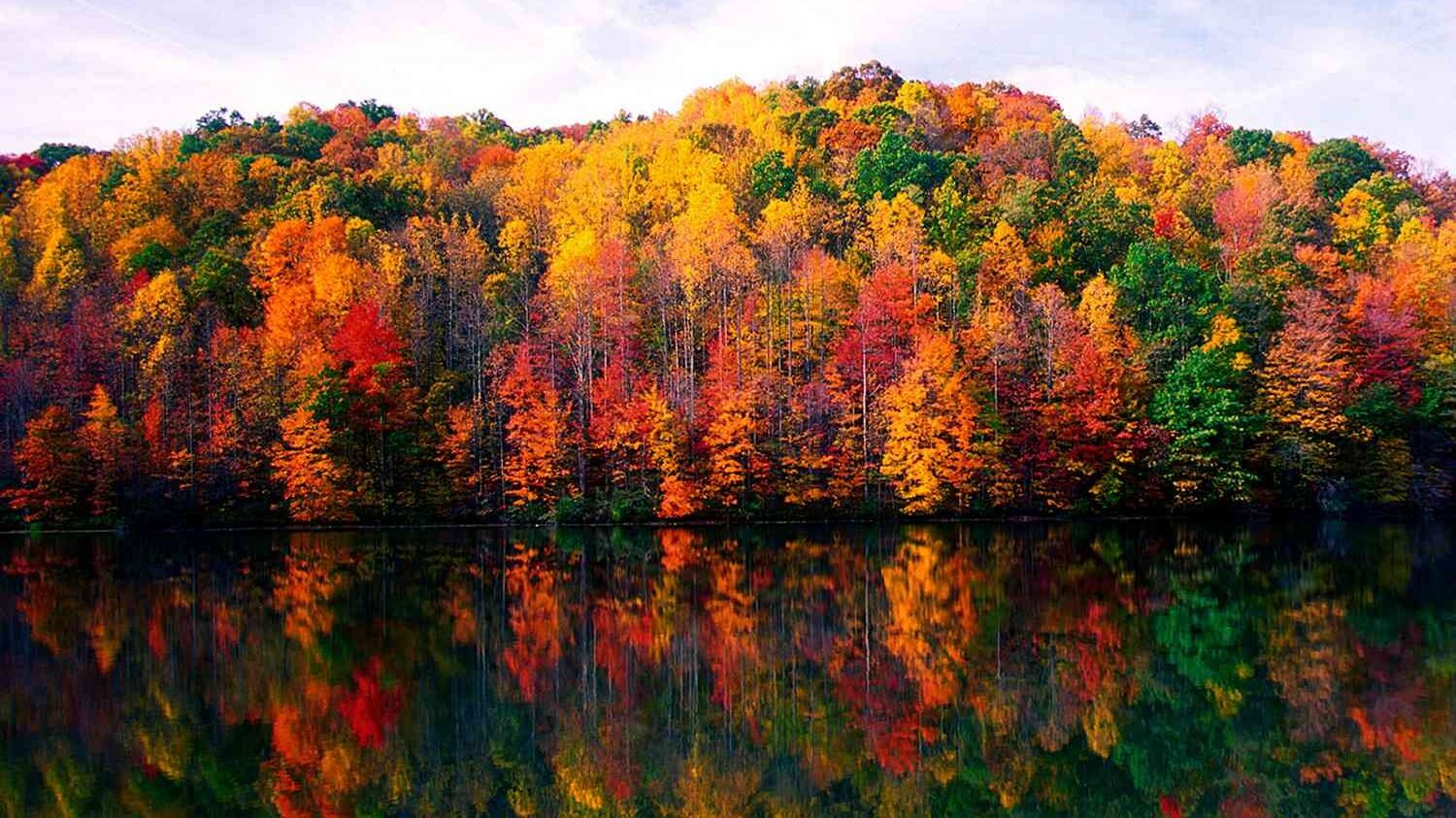
West Virginia’s nickname is the Mountain State, and its fall foliage, driven by the dense hardwood forests that cover the Allegheny Mountains, is among the most spectacular and least visited in the East. Lewisburg, in the Greenbrier Valley, is the ideal base. The town was voted the coolest small town in America by Budget Travel, and its compact downtown of limestone and brick buildings, independent shops, and restaurants has the kind of walkable, literary character that makes you want to extend your stay. In October, the surrounding mountains turn every shade of red, orange, gold, and brown in a display that rivals the Smokies or the Blue Ridge with a fraction of the visitors.
The Highland Scenic Highway (Route 150), about forty-five minutes north of Lewisburg, is one of the great fall foliage drives in the eastern United States. The road climbs to over 4,500 feet through the Monongahela National Forest, passing through spruce and northern hardwood forest with pullouts that offer views across miles of unbroken colored canopy. Cranberry Glades Botanical Area, along the route, is a sub-arctic bog where the fall color palette includes the deep reds of cranberry, the bronze of sedges, and the gold of tamarack. The New River Gorge, about forty-five minutes northwest of Lewisburg, offers yet another dimension of fall scenery, with color lining the walls of the ancient gorge.
Lewisburg’s dining punches above its weight. The French Goat serves creative seasonal cooking. Stardust Cafe does excellent breakfast and lunch. The General Lewis Inn, a historic hotel on the main street, provides classic accommodations and a dining room that serves Appalachian-influenced cuisine. The Greenbrier Resort, about fifteen minutes east in White Sulphur Springs, offers a more lavish experience. Lewisburg in fall is the gateway to some of the best foliage in the eastern United States, and the town itself, with its culture and character, makes the drive worthwhile even before you reach the mountains.
Wisconsin: Bayfield
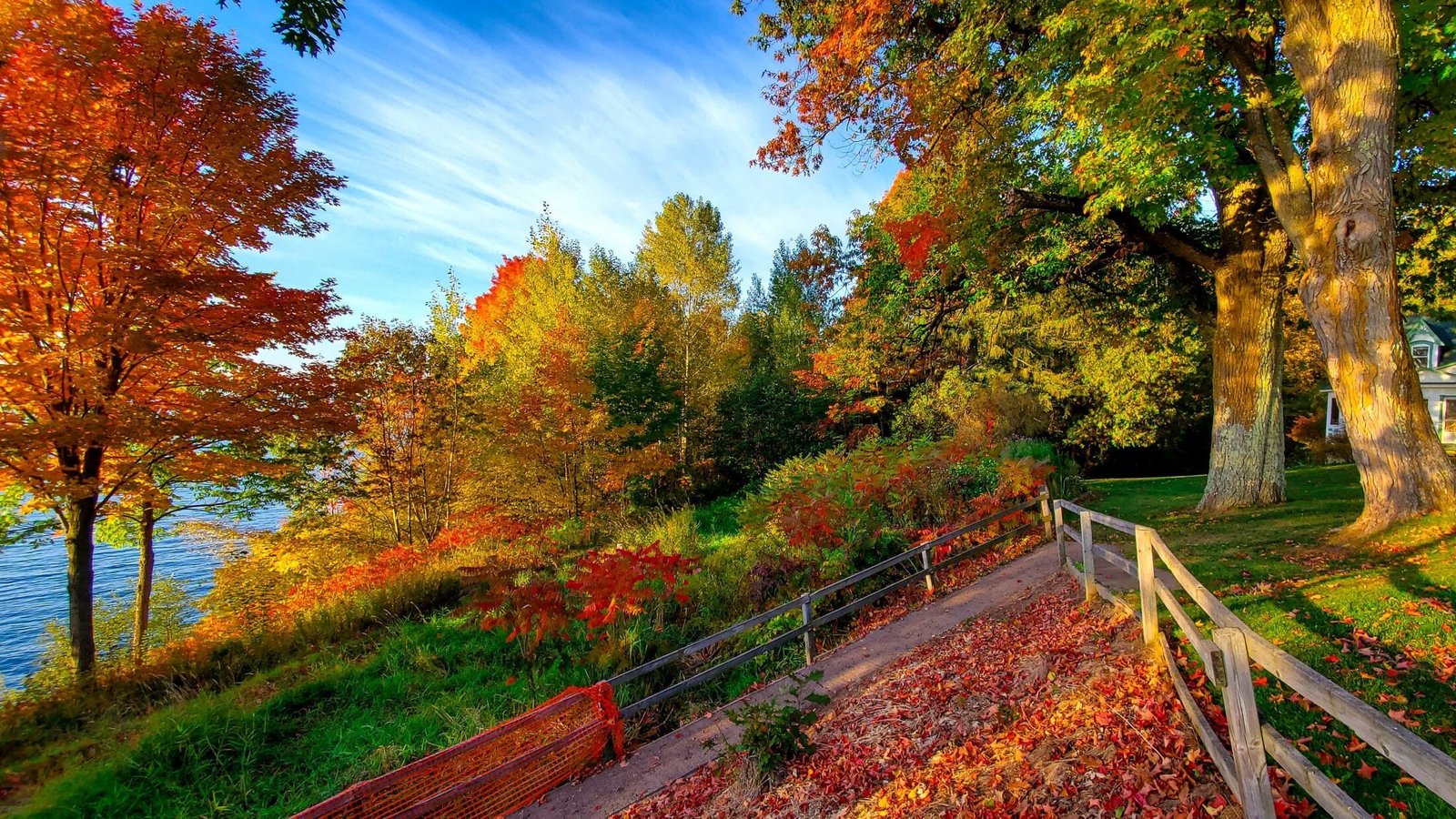
Bayfield sits on the shore of Lake Superior at the tip of the Bayfield Peninsula in far northern Wisconsin, and in autumn, this small town of about 500 people becomes the center of one of the most colorful fall foliage displays in the Great Lakes. The town overlooks the Apostle Islands, a chain of 22 islands scattered across the lake, and in late September and early October, the maples, birches, and aspens on both the mainland and the islands turn vivid shades of red, orange, and gold against the deep blue water. The combination of island scenery, lake light, and concentrated color makes Bayfield one of the most visually stunning fall destinations in the Midwest.
The Apostle Islands National Lakeshore offers boat tours that pass the islands and their sea caves, and in fall, seeing the colored forests from the water adds a dimension that land-based viewing cannot match. Madeline Island, the largest of the Apostles and the only one with a permanent community, is accessible by ferry from Bayfield and has hiking trails through forests that are spectacular in October. Big Bay State Park, on the island, offers camping and trails along sandstone bluffs with fall color reflected in the lake below. On the mainland, the Brownstone Trail and the trails in Mount Ashwabay provide elevated views of the lake and the islands framed by colored forest.
Bayfield’s downtown is a single waterfront street of restaurants, galleries, and shops that has an energy in fall that belies the town’s tiny population. The annual Bayfield Apple Festival, held the first full weekend in October, coincides with peak foliage and draws tens of thousands of visitors for apple-themed food, live music, and a parade. Old Rittenhouse Inn serves creative regional cuisine using local ingredients. Maggie’s serves casual fare. The Old Rittenhouse Inn also offers lodging in several restored Victorian properties around town. Bayfield in fall is the rare place where the color, the water, and the community celebration all peak at the same time.
Wyoming: Jackson
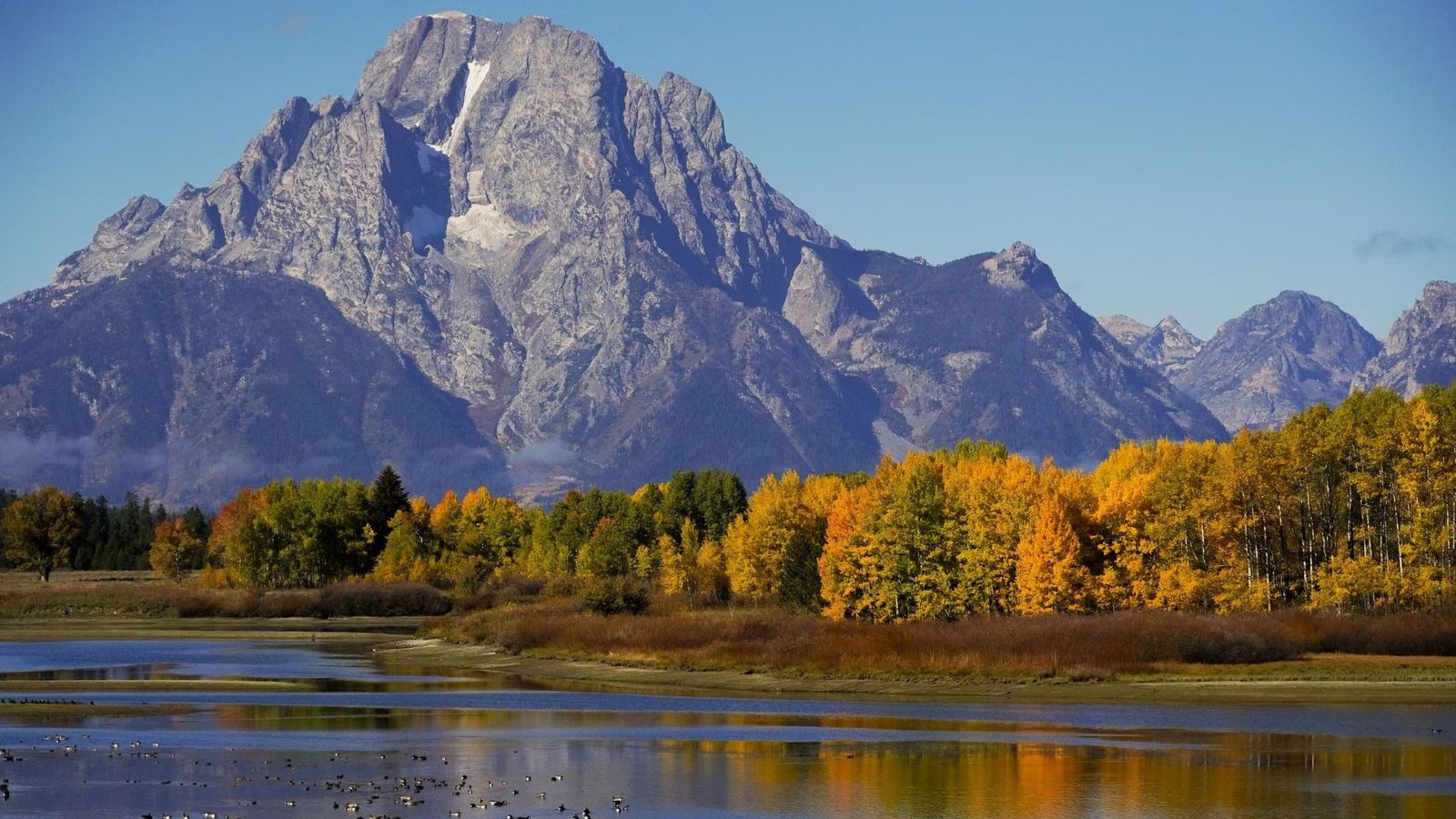
The valley of Jackson Hole, surrounded by the Teton Range to the west and the Gros Ventre Range to the east, produces fall color that is set against the most dramatic mountain backdrop in the lower 48. The town of Jackson, at the southern end of the valley, provides the base for an autumn experience where golden aspen and cottonwood forests contrast with the grey granite spires of the Tetons in a display that photographers travel thousands of miles to capture. The color peaks in late September and early October, and the clear Wyoming air gives the light a quality that intensifies every hue.
Grand Teton National Park, just north of town, is the centerpiece. The road along the base of the Tetons passes through meadows and riverbanks where the cottonwoods along the Snake River turn brilliant gold against the mountain wall. Schwabacher Landing, a pullout along the river, offers the most famous view in the park, where the Tetons are reflected in a beaver pond framed by golden aspens. The Gros Ventre Road, heading east from the park, climbs through aspen forests that light up entire mountainsides. For hikers, Taggart Lake and Bradley Lake trails provide access to glacial lakes at the base of the Tetons that are ringed with fall color.
Jackson’s town square, with its famous antler arches, anchors a downtown of restaurants, galleries, and shops that cater to a year-round tourism economy. The Gun Barrel Steak and Game House serves elk and bison in a rustic setting. Persephone Bakery does breakfast and pastries. Snake River Brewing has been a local favorite for years. For lodging, the Wort Hotel on the town square is a Jackson institution, and the Spring Creek Ranch, on a butte above town, offers panoramic views of the valley and the Tetons that are extraordinary in fall. Jackson in autumn is the American West at its most magnificent, and the golden aspen against the granite Tetons is one of the great natural sights on the continent.